Harry Mount

Harry Mount is a barrister, editor of The Oldie and author of How England Made the English (Penguin) and Et Tu, Brute? The Best Latin Lines Ever (Bloomsbury).

Unlock the churches!

From our UK edition

26 min listen

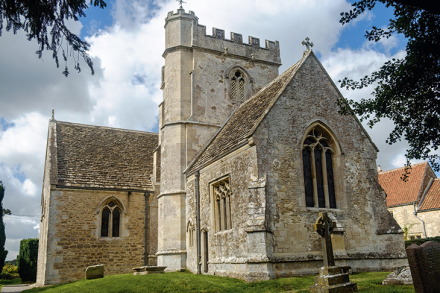
Harry Mount, the editor of The Oldie, is appalled that thanks to the coronavirus regulations, he can't seek spiritual comfort in any of Britain's glorious churches. And he's not a religious believer. Last week he wrote a short but withering piece on his magazine's website, with the headline 'Unlock the churches!' It began: At a time of national crisis, if only there were some big, empty buildings where people could go and reflect, in an atmosphere of beauty and calm. If only they were so big that you would automatically practise social distancing because there are so many chairs and so few people.Oh, hang on! Like magic, these buildings do exist in every village, town and city in the country.

Carve his name with pride: Andrew Ziminsky rebuilds the West Country

From our UK edition

Andrew Ziminski is the man who rebuilt the West Country. For 30 years, this skilled stonemason has renovated some of Britain’s greatest buildings. Along the way, he has acquired an unparalleled understanding of this country’s stones. He got hooked as a young man when a mason asked him if he noticed that tea tasted different in different parts of the country. That was because the land’s personality had an effect on its water; and so it is with stones. It’s oolitic limestone that gives Bath its golden tint. It’s granite that gives Aberdeen its mighty, hard-as-rock profile — fizzing, incidentally, with a batsqueak of radiation.

No presidency for old men

What a thrill! Last night, I was dining with a friend in Piccola Italia, a charming restaurant in Manchester, New Hampshire, when who should walk in but Bernie Sanders! He was having dinner (chicken parmigiana) with film director Michael Moore — more stardust! — and an entourage of about 15 people, including a low-level security detail. Half the restaurant stood up and cheered and clapped as he walked to his table. But then Bernie took the electric atmosphere and promptly switched off the power. As fans clutched his hand — one enthused, ‘Thank you for everything’ — Bernie looked like a rabbit trapped in the headlights, quietly saying, ‘Thank you’ and ‘All right’.

old

Show off and tell: the sad death of inconspicuous consumption

O America, how do I love thee? Let me count the ways. As an Englishman, I loved the two years I lived in New York as a correspondent for the Daily Telegraph over a decade ago. But I’m afraid I never fell for the American cult of conspicuous consumption — even if at times I thoroughly indulged in its worst excesses. At a party at one of the New York Armories, a huge military building now given over to parties and exhibitions (I forget which one, due to overindulgence), I watched, goggle-eyed, as two brave young blondes frolicked in an ice-cold pool around a larger-than-lifesized ice sculpture of a pair of swans. At another party in SoHo, I made my way to the dance floor to find dozens of twentysomethings dancing around a Range Rover — the car company was sponsoring the event.

consumption

Rod Liddle on Brexit: The Great Betrayal reviewed

From our UK edition

Rod Liddle has taken a huge gamble with this book. It could be out of date very soon. The book’s premise is a conversation he had with his wife on the day after the Brexit vote in 2016. She, like Liddle, is a Brexiteer and said to him that morning, ‘They won’t let it happen.’ Liddle agreed. ‘Betcha we don’t leave,’ he said. And that is the book’s principal argument: we’ll never leave the EU. The Great Betrayal was published in July and, so far, Liddle is right. But what about on 1 November: will this book be massively outdated and will Britain be out of the European Union? It’s anyone’s guess. Even now, quite a few of the references in the book are dated. It was published before Boris Johnson became Prime Minister.

Jog on

From our UK edition

Forget the cigar, the homburg and the V-for-victory sign. If Winston Churchill were around today, he’d be pounding the streets in T-shirt, shorts and chunky trainers. Jogging is an almost compulsory obsession for any Tory alpha male. Boris Johnson and Jeremy Hunt are forever out running; Michael Gove has lost a drastic amount of weight racing around west London; and Boris has revealed he’s down to 15 and a half stone, from 16 and a half. He’s also declared he’d freeze obesity taxes on fattening food — the answer to losing weight was more exercise, he said — and admitted to failing to keep up a vegan diet (he likes cheese too much). But he is certainly looking slimmer since he started going out with Carrie Symonds, 24 years his junior.

A tribute to Norman Stone

From our UK edition

Norman Stone has died at the age of 78. In 2007, Harry Mount paid tribute to the historian and author, republished here: It’s four in the afternoon in the Garrick Club and Norman Stone is steaming with rage. The steam is not alcohol-fuelled. Professor Stone — historically no flincher from the glass — is on the wagon at the moment but is feeling no undue withdrawal pangs. He is, though, longing for a cigarette, and his beloved Garrick has just outlawed smoking, in line with the new legislation. ‘It’s quite clear that cigarettes calm you down, the opiate of what was once the working classes,’ says Stone once he has lit up and sat himself down on a pavement stool outside a Covent Garden pub.

You can get the staff

From our UK edition

 Montego Bay, Jamaica When the Kennedy clan were children, JFK and his siblings would tear off their clothes before leaping from the pier at Hyannis Port, Massachusetts — safe in the knowledge their servants would pick up their discarded clothes. That used to strike me as the ultimate in entitlement before I ended up here in a hotel in Jamaica. I’m being waited on hand and foot in a way that wouldn’t have disgraced the Kennedys — or a 19th--century duke. Someone’s just rung to ask when would be a good time to fill my fridge with beer. A driver is waiting to take me on a tour of Montego Bay. When a friend, also staying here, forgot her diary, her butler brought it from her room to our breakfast table.

Britain’s Gothic cathedrals owe everything to Notre-Dame

From our UK edition

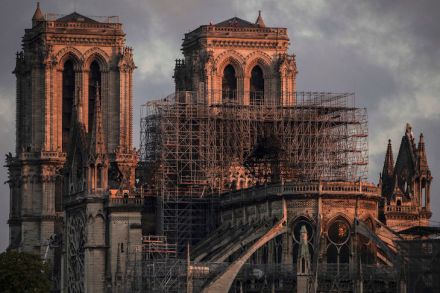
No wonder we feel the agony of Notre-Dame so acutely in Britain. Not only does the cathedral hold a special place in British hearts. But our greatest cathedrals and churches owe a huge stylistic debt to Notre-Dame. Most of Britain's great cathedrals are Gothic – and the Gothic style was born in northern France. And the greatest global example of French Gothic is poor, torched Notre-Dame. The Gothic style began in northern France in the 12th century AD. Notre-Dame wasn't quite the first Gothic building. That honour goes to Saint Denis Cathedral, four miles outside the Paris city centre. In 1144, Saint Denis was the first church in the world to have all the Gothic elements.

Irish ruins

From our UK edition

The Celtic Tiger has come and gone. Over the past 30 years, billions of pounds poured into Irish houses and then drained out again. The ruins of Ireland have slumbered on through the peak, the trough and the current blessed recovery. Medieval castles, Georgian country houses, Victorian lodges… They cling on, disappearing under the ivy, slowly crumbling, in demesnes across the island of Ireland. As Robert O’Byrne, aka the Irish Aesthete, writes in his new guide Ruins of Ireland, we tend to think Ireland lost most of its great houses as a direct result of the Troubles of the early 1920s. Several hundred did get burnt to the ground then.

A nervous traveller

From our UK edition

My 1982 photo album is full of pictures of a well-travelled, privileged 11-year-old boy. I was at North Bridge House prep school, a cream stucco Nash villa on the north-eastern corner of Regent’s Park, north London. That photo album shows me, unsmiling, in a ski-pass picture on a family holiday in the Tyrol in January. In April, I went on a school trip to Normandy: there’s a picture of me sitting on the turret of an Allied tank overlooking the D-Day beaches. But the holiday that really sticks in my mind from that year was a school trip to Amsterdam in October.

Is this finally Boris Johnson’s moment?

From our UK edition

Once more unto the breach, dear friends, once more. That was the message of Boris Johnson’s speech this morning at a JCB factory in Staffordshire. He admitted this week that he regretted bottling his leadership bid in 2016. This time is his last chance to have a go at swiping the ultimate prize – the keys to Downing Street – a prize he’s coveted since he was a boy. Boris’s earliest known quotation is when, asked by his sister Rachel as a child what he wanted to be when he grew up, he said, “World King.” He’s thinner and more smartly dressed than he’s been for years. That might have been influenced by the reported acquisition of his new 30-year-old girlfriend, Carrie Symonds.

The rock of ages past

From our UK edition

How lazy, snobbish and wrong it is to mock Gibraltar for the lager and fish and chips clichés. Yes, you can get lager and fish and chips there; nothing wrong with  that. The pint of lager I had in a pub in Gibraltar Main Street was excellent. And the funny thing is that, unlike consciously ‘British’ pubs in Rome or New York, there was no ersatz feel to it. It was exactly like a pub in Britain, down to the two middle-aged office workers in shirtsleeves, exchanging dull office chat, breaking off occasionally for low-level, awkward flirting with the barmaid, who was in her twenties. That’s what’s so gripping about Gibraltar: you move, in an instant, from carbon-copy Britain to a completely parallel, foreign universe.

Check your brags

From our UK edition

Over the past 20 years, the old British trait of self-deprecation has been killed off. And in its place, boasting is booming. Last week, I was told by an 80-year-old Scottish businessman what a successful shipping tycoon he is, how wonderful his poems are, and why young women find him so attractive. Over a three-hour dinner, he never drew breath, never asked a question and only ever talked about his brilliant self. Tycoon types have always shown off, but now the habit has migrated down the generations and from men — the traditional show-offs — to women. I can no longer face seeing one old friend in her thirties, because every time I see her she says: ‘You know what? I’m bloody good at my job.

Uncommon knowledge

From our UK edition

So farewell, then, to the Common Entrance Exam, bane of a million schoolchildren’s lives since it was introduced in 1904. Three of the biggest public schools — St Paul’s, Wellington College and Westminster — are giving up the exam. From 2021, they will do the pre-test: verbal and non-verbal reasoning, maths and English, taken at the age of ten and 11. Common Entrance was a more gruelling thing, involving up to 14 exams over three days. It’s under-standable that schools want to ease the strain on over-examined children. But all the same, it’s the latest blow to the Great British Eccentric Exam Question. I still cherish the eccentric questions from my own Westminster entrance exam in 1984:   1.

Bats in the belfry

From our UK edition

As the wordy title of this book and the name of its author suggest, this is a faux-archaic, fogeyish journey around England’s oddest vicars. The Reverend Fergus Butler-Gallie is, though, the real thing: a young curate in the Church of England. Yes, he’s given to sometimes tiresome jocularity: he describes himself as ‘a Bon Viveur first and foremost, with a soupçon of Roguishness and Prodigality’. But, still, his essential thesis is right: the Church of England has produced some real oddballs in its time, and this is an entertaining gallop through several centuries’ worth of them. For 400 years after the Reformation, the Church of England was the ideal Petri dish for nurturing eccentricity.

Boris’s gloating critics should be ashamed of themselves

From our UK edition

Am I the last person in the metropolitan elite bubble who likes Boris Johnson? You’d certainly think so, going on the reaction to the sad news of his divorce from his wife, Marina Wheeler, after 25 years of marriage. Every divorce is a whirlpool of misery for all those involved: parents, children, family and close friends. And yet the coverage of Boris’s sad news bubbles on a seething undercurrent of gloating and delight. ’Twas ever thus with Boris. For all his huge fan club, there have always been MPs who are jealous of his popularity; who were angry with him, when he edited The Spectator, that he didn’t accept their stultifyingly dull pieces on ‘Whither the euro?’ Boris is completely aware of all this.

Losing streak

From our UK edition

England didn’t just lose the World Cup. When it comes to male nudity, the country has also lost its sense of shame. Everywhere — on the Tube, in buses, on the streets, in the pub — men are striding around topless. On Sunday in north Oxford I saw a man skiing topless, on roller-skis, with poles, down the Banbury Road. It’s as if Adam and Eve never ate from the tree of knowledge. Yes, it’s very hot. And yes, in the summer of 1976, men took their tops off but only in particular situations: on the beach, on a building site or in their back garden. I must admit that I cycle with my shirt open in this heat. But because I’m moving at speed, no one is exposed to my mottled flesh for long.

All hail Æthelflæd!

From our UK edition

This week, Prince Edward was paying tribute to a much-loved Queen. Not ‘Mummy’ — but Queen Æthelflæd, Alfred the Great’s eldest child, the Lady of the Mercians and one of our greatest, if largely forgotten, Anglo-Saxon leaders. If it wasn’t for Æthelflæd kicking the Danes out of Mercia during her reign from 911-918, we’d all be speaking Danish. You could call her the first Brexiteer. Æthelflæd died in 918, 1,100 years ago this week, in Tamworth, Staffordshire, heart of her Mercian kingdom (roughly equivalent to Gloucestershire, Worcestershire, Herefordshire and Shropshire). In the West Midlands some people call her the Founding Mother of England.

Peter Stringfellow (1940 – 2018): the intellectual conservative

From our UK edition

When you think about Peter Stringfellow, aka 'Stringy', it's hard to think about anything other than topless women. Stringy, who's just died aged 77, made a fortune first out of music clubs - early bookings included the Beatles - and then out of women who'd mislaid their tops. Not the most salacious of pursuits, you might think. And the sleaziness of the image wasn't helped by the foot-long mullet and the taste for leopardskin-print outfits. Certainly, on the outside, all those trashy clichés rang true in 2000, when I interviewed Stringy for The Spectator shortly after his 60th birthday.