Gerry Hassan

Gerry Hassan is a political commentator from Scotland and is currently Professor of Social Change at Glasgow Caledonian University.  His latest book, Scotland Rising: The Case for Independence, is available to buy now.

Labour is already tearing itself apart. How would it cope in government?

From our UK edition

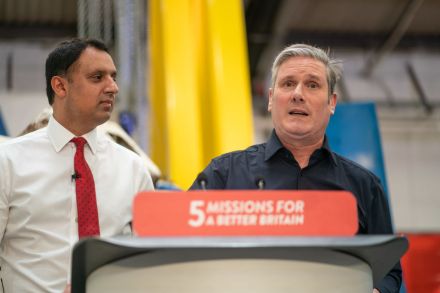
Keir Starmer’s chances of becoming the UK’s next prime minister seem to be improving by the day. From a huge win in the Rutherglen by-election to a ‘buoyant’ atmosphere at Labour’s party conference in Liverpool, the party of the opposition is on the up. The Tories and the SNP, meanwhile, continue to be distracted by chaotic messaging and party infighting. But could a Labour government pull together the fractured state that is Great Britain in a way the Tories haven’t been able to? Possibly – but it would mean repairing relationships within their own party first. In the politics of the Union, Welsh and Scottish Labour have been at loggerheads for quite a while – and reports suggest this has Starmer’s office pretty worried.

Why has Scottish politics forgotten about religion?

From our UK edition

During the SNP leadership contest, something unusual happened: religion became a talking point in Scotland. Comments made by leadership hopeful Kate Forbes, a member of the Free Church of Scotland, on issues like gay marriage, abortion and having children out of wedlock, dominated the newspapers. But it became clear, after the dust settled – and Humza Yousaf defeated Forbes – just how unusual this discussion was. Even people of faith find it hard to talk about religion. This summer, when reflecting back on the leadership contest, Forbes said 'there is a fear which characterises right now any discussions about faith'. But a Scotland which does not reflect upon the role religion has played in its cultural and political history is doing itself a disservice.

What does Scottish Labour stand for?

From our UK edition

North of the border, the long-anticipated by-election in Rutherglen and Hamilton West has finally been confirmed. This constituency is classic SNP-Labour swing territory, and though an SNP-held seat until recently, polls have shown that Labour support in Scotland is on the rise. The by-election will put these predictions to the test: can Labour’s candidate Michael Shanks not just win, but win well and capture the mood for change? Possibly, but for this to happen, Labour needs to present Scottish voters with a better vision — instead of continuing to rely on SNP failures. We can be assured that the longstanding SNP-Labour rivalry will come out in full force as the by-election date nears. The same tactics have all been used before.

The lessons Labour can learn from the SNP

From our UK edition

The Labour party should be experiencing its best time in recent politics with victory very much expected at the next election. Yet it's not all plain sailing at Labour HQ. Not only does the party still lack a convincing agenda, there is disquiet about the nature of the Starmer leadership, in terms of what it believes in, how it does politics inside the party and how it manages dissent. Discontent has been bubbling away for a while, with the left accusing the leadership of a plan to oust Corbynistas to create a new loyal Labour party. But now the internal fallout has burst into the open with the potential expulsion of Neal Lawson, head of the centre-left Compass pressure group for the past two decades and party member for 44 years.

The SNP needs a clean break from Sturgeon if it wants to survive

From our UK edition

The SNP meets in Dundee this weekend for a special conference on independence. Four months since Nicola Sturgeon resigned as leader and three months since Humza Yousaf narrowly became leader and the police investigation into party finances began, it's fair to say that the party is in a confused state. The mood is febrile. Some think that normalcy will return; others that the independence project can triumph in the near-future by some miracle fix. Many cling to the wreckage of Sturgeon, while a few still yearn for the return of the emperor over the water Alex Salmond. What is missing is an honest assessment and understanding of where the SNP is, the deep hole it occupies (much of it of its own making) and how it can begin to get out.

Keeping it in the family has been the making – and breaking – of the SNP

From our UK edition

The Scottish National party is described as many things, rightly or wrongly: a nationalist party and movement, ‘separatists’, a one-party state, even a 'cult'. Missing is the sense of what animates and binds the SNP together as a political force beyond the cause of independence. At its core, the SNP is a tribe underpinned by a sense of community and of being an extended family of sorts. It's true that this idea of the SNP as a family has provided a modus operandi throughout its history and rise to power. Now, though, this needs to be seen as a contributory factor in the scandals engulfing it. It cannot be entirely accidental that the two defining leaders of the modern SNP, Salmond and Sturgeon, have both been implicated in major scandals. The SNP was not always a mass party.

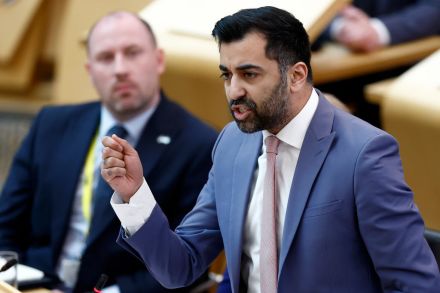
Humza Yousaf can’t save the SNP

From our UK edition

Under Nicola Sturgeon's leadership, the SNP was renowned for its discipline, unity and its impressive electoral success. Since the former first minister resigned, a series of revelations have chipped away at the party's reputation leaving Scotland's dominant party standing on shaky ground. If people had cared to look they would be forgiven for thinking that decay has always been present in the SNP – and the leaked video of the former first minister lecturing her politicians about SNP finances back in March 2021 doesn't help matters – but it is the extent of the rot that is hard to stomach.