Gavin Mortimer

Gavin Mortimer

Gavin Mortimer is a British author who lives in Burgundy after many years in Paris. He writes about French politics, terrorism and sport.

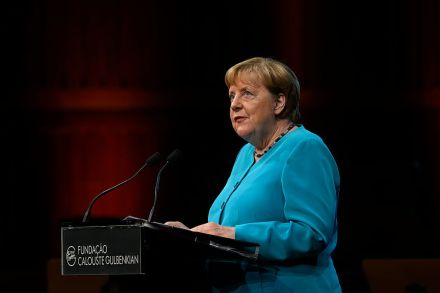
Can Ursula von der Leyen survive ‘Pfizergate’?

From our UK edition

Ursula von der Leyen faces the biggest test of her European Commission leadership as MEPs gather to vote on a motion of no-confidence. Today's vote, the first of its kind in 11 years, has been brought by right-wing MEPs in relation to von der Leyen's secretive negotiations with a pharmaceuticals boss during the pandemic. But while the European Commission president has tried to spin the no-confidence motion in her as ‘fuelled by conspiracy theorists’ – and seems set to win the vote – make no mistake: her leadership is badly damaged by this debacle, perhaps irreparably so.

Macron won’t fix the migrant crisis

From our UK edition

The French have so far been underwhelmed by Emmanuel Macron’s state visit to Britain. The late Queen was universally admired on the other side of the Channel. Less so Charles, who in the eyes of the French lacks Elizabeth’s grandeur and wisdom. There are also more pressing issues, such as the spreading wildfire that has covered the city of Marseille in a cloud of smoke and ash. Then there is the news, splashed across this morning’s Le Monde, that the poverty rate in France has reached 15.4 per cent, the highest level since records began in 1996. Furthermore, the gap between the wealthiest and poorest 20 per cent has increased to levels not seen for half a century.

Britain’s parliament doesn’t need to hear from Emmanuel Macron

From our UK edition

If ever a French president needed a state visit to Britain, it is Emmanuel Macron. All the pomp and ceremony will brighten his soul and help him forget the mess he has made of his own country. This week’s visit, which starts today, is the first of its kind to Perfidious Albion since Nicolas Sarkozy was a guest of the late Queen in 2008. These days, of course, there is nothing perfidious about Britain. It is one of the very few countries where Macron knows he will be treated with the courtesy he demands. ‘I demand respect,’ declared Macron The allure of the youngest president of the Fifth Republic has long since faded around most of the world. He is mocked in the United States, Russia and China, scorned by the Algerians and ignored by many central African leaders.

Corbyn is following in the footsteps of the French left

From our UK edition

Labour has reacted with scorn to the news that Zarah Sultana has resigned from the party to create a new movement with Jeremy Corbyn. It’s reported that the MP for Coventry South, who has sat as an independent since July 2024, is still discussing the details of the new party with Corbyn – who is yet to comment on the new outfit – but whatever its form, Labour is unfazed. Gurinder Singh Josan, the MP for Smethwick, mocked Sultana for returning to ‘the irrelevance of the far left’. Another MP, David Taylor said it was a case of ‘good riddance’ and suggested any other Labour MP opposed to the proscription of Palestine Action should ‘follow suit’.

John Connolly, Gavin Mortimer, Dorian Lynskey, Steve Morris and Lloyd Evans

From our UK edition

26 min listen

On this week’s Spectator Out Loud: John Connolly argues that Labour should look to Andy Burnham for inspiration (1:51); Gavin Mortimer asks if Britain is ready for France’s most controversial novel – Jean Raspail’s The Camp of the Saints (4:55); Dorian Lynskey looks at the race to build the first nuclear weapons, as he reviews Frank Close’s Destroyer of Worlds (11:23); Steve Morris provides his notes on postcards (16:44); and, Lloyd Evans reflects on British and Irish history as he travels around Dublin (20:44).  Produced and presented by Patrick Gibbons.

Is Britain ready for France’s most controversial novel?

From our UK edition

This Saturday is the centenary of the birth of one of France’s most controversial writers. Jean Raspail, who died in 2020, wrote many books during his long and varied life, but only one, The Camp of the Saints, is remembered. Even his admirers and sympathisers admit that the book isn’t a classic in the literary sense. In an article to mark the publication of a recent biography of Raspail, Le Figaro said the novel was guilty of a ‘certain kitschness, clumsiness, awkwardness and a nihilism that seems forced’. More than that, it has been accused of being overtly racist.

How the French left made Mamdani

It should come as no surprise that Zohran Mamdani’s surprise victory in last week’s Democratic primary for mayor of New York was celebrated so vociferously by the French far left. Jean-Luc Mélenchon’s La France Insoumise (LFI) regard the 33-year-old Socialist as a chip off the old block. In a post on X Mélenchon delighted in Mamdani’s defeat of Andrew Cuomo, saying: "Opposed to the genocide of the Palestinians, he is obviously already accused of anti-Semitism. He won against a figurehead of the centre-left backed by the local leaders of the cheating Democratic party." As in France, continued Mélenchon, the "traditional" left no longer speaks to the people; it is the radical left.

Melenchon

Meet France’s new anti-green movement

From our UK edition

A new anti-green social movement is gathering momentum in France seven years after the Yellow Vests rocked the establishment. The ‘Gueux’, which can be translated as ‘beggar, peasant or outcast’, held a series of demonstrations on Saturday at ports across France. The principal grouse are wind turbines, many of which are scheduled to be constructed offshore in the coming years. Fishermen are angry because the turbines will concrete the seabed, forcing them to fish further out and increasing their already hefty fuel bills.

Starmer’s ‘one in, one out’ migrant plan will fail

From our UK edition

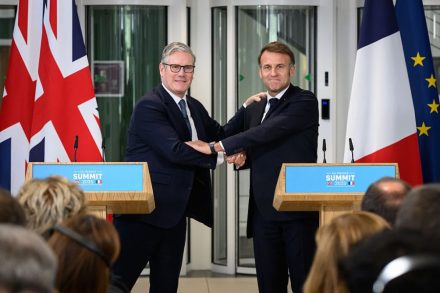
Britain and France believe they have found a solution to the small boats crisis. According to reports, Keir Starmer and President Emmanuel Macron have agreed to implement a ‘one-in, one-out’ system whereby Britain will return to France illegal migrants who have crossed the Channel in small boats. Britain, for its part, will accept migrants who have a legitimate case for joining family already resident in the UK. A government source told the Times: ‘It’ll start as a pilot but it’s to prove the point that if you pay for your passage on a boat, then you could quite quickly find yourself back in France.

France won’t stop the small boats

From our UK edition

The BBC have visited the French coast to see for themselves that Nigel Farage (and Coffee House) aren’t making it up: there is indeed a migrant crisis on the beaches close to Calais and has been for years. Britain certainly won't receive much in the way of help from the pro-migrant Emmanuel Macron, despite what Keir Starmer may claim The Beeb paid their call last Friday and encountered around 80 people waist deep in water. These weren’t locals having a dip to escape the June heatwave but migrants from Eritrea, Afghanistan and elsewhere. They were waiting for what the BBC described as a ‘taxi-boat’, one of the myriad vessels that cruise the coastline picking up passengers and transporting them across the Channel to England.

The quiet desperation of Macron’s Greenland visit

From our UK edition

Emmanuel Macron spent his Sunday in Greenland on what can best be described as an anti-Trump visit. The French president dropped in on the Danish autonomous territory en route to this week’s G7 summit in Canada. Flanked by Danish Prime Minister Mette Frederiksen and Greenland’s Premier Jens-Frederik Nielsen, Macron told reporters he was there in 'solidarity' with Greenland. Donald Trump has expressed his desire to annex the strategically important island but Macron said, ‘everybody thinks − in France, in the European Union − that Greenland is not to be sold, not to be taken.

Will the L.A. immigration riots reach Europe?

From our UK edition

The pro-immigration protests that erupted last week in Los Angeles have now spread across the United States. On Tuesday there were confrontations between police and demonstrators in Atlanta, Chicago and Denver, where tear gas was used to disperse a crowd. Police in New York City arrested 45 people as they came under attack from a variety of projectiles thrown by a mob that numbered several hundred. Demonstrators shouted ‘shame, shame’; one local councillor, Shahana Hanif, accused the Immigration and Customs Enforcement (ICE) of ‘attacking our communities’. The anti-ICE protestors are in the minority The protests began in L.A. last Friday when ICE officers began rounding up suspected illegal immigrants in the Hispanic districts of Westlake and Paramount.

Britain must learn from France’s e-scooter mistake

From our UK edition

An e-scooter revolution is coming to Britain whether the country likes it or not. “The revolution will hurt a little, but it’s necessary,” declared the vice-president of one of Europe’s leading e-scooter rental companies. Christina Moe Gjerde of Sweden’s Voi Technology has said her ambition was to have 50,000 more e-bikes and scooters on the streets of Britain. “You [Britain] are sitting on a gold mine,” said Moe Gjerde. “Get it right and there’s so much potential.” France was an early advocate of the e-scooter craze but also one of the first to fall out of love with it Private e-scooters are illegal on English roads but rental companies have been operating rolling trial schemes for a number of years in many towns and cities.

France’s border patrol is playing a losing game

From our UK edition

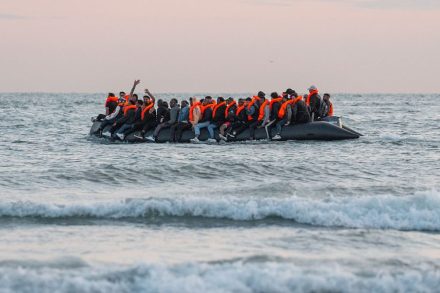
In a 24-hour period at the weekend, 184 migrants were rescued in the English Channel by the French coastguard. The most southerly group that got into trouble was picked up off Fort-Mahon in the Somme Department, and the most northerly were off Dunkirk, more than 80 miles up the coast. The coastguard was also called to incidents in Wimereux and Grand-Fort-Philippe. In other words, it is not just England that is being invaded. So is France, its rugged coastline saturated by thousands of predominantly young men all intent on crossing the Channel. I’ve written before of their violent desperation: the mob who last year attacked a group of hunters who had alerted the police to their presence in the dunes, and of others who assault police with cries of 'Allahu akbar'.

The real cause of French football hooliganism

From our UK edition

Soon after Paris Saint-Germain (PSG) thrashed Inter Milan five-nil to win the Champions League, Ousmane Dembélé urged fans not to go wild. ‘Let's celebrate but without breaking everything in Paris,’ said the PSG striker. His plea fell on deaf ears. Two have died, shops were looted, bus stops vandalised, cars torched and police attacked as Paris succumbed to an orgy of violence. The worst of the rioting was on the Champs-Élysées, where police came under fire from projectiles, including fireworks, and dozens of arrests were made. In total, 563 people were detained and the Interior Minister Bruno Retailleau labelled them ‘barbarians… who had come to commit crimes and provoke the forces of order.

Europe’s far-left terror threat

From our UK edition

France will increase its surveillance of all critical infrastructure after saboteurs wrecked two electricity sub-stations in Nice and Cannes last weekend. The arsonists deprived nearly 200,000 homes on the Cote d’Azur of electricity, disrupted traffic lights, interrupted the Cannes film festival, shut down cash distributors and brought Nice airport to a temporary standstill. Addressing parliament on Tuesday, Prime Minister Francois Bayrou declared that the attacks are ‘an extremely serious threat to public order, designed to impress and terrify those who organise such events.’ An extreme-left group claimed responsibility for the attacks in a statement published on the internet.

Could France’s next president come from the Yellow Hats?

From our UK edition

When Donald Trump first burst onto the political scene in 2016, comparisons were drawn with a 1950s Frenchman called Pierre Poujade. The BBC called him the ‘grandfather of populism’, the first post-war politician to lead a revolt against ‘being told what it is acceptable to think about issues like globalisation, migration and Europe’. Poujade was a provincial shopkeeper who was so fed up with what he saw as the corrupt and degenerate Paris elite that in 1953 he formed his own party, the Union de Defense des Commercants et Artisans. In the legislative elections in 1956, they won 2.4 million votes, enough to send 52 MPs to sit in the National Assembly. It’s the problem in general of French politics. Who speaks to the provinces?

France is waking up to the threat of the Muslim Brotherhood

From our UK edition

Emmanuel Macron assembled some of his top ministers at the Élysée on Wednesday. Their purpose was to devise a strategy to counter the growing expansion in France of the Muslim Brotherhood. The nebulous organisation, formed in Egypt in 1928, has as its aim a global caliphate and it is in Europe where it is enjoying its greatest success. In many Middle Eastern countries, including Saudi Arabia, the UAE, Jordan and Egypt, the Muslim Brotherhood is proscribed.

The EU’s power is waning. If only Starmer could see it

From our UK edition

Britain is back in the big time. Or at least it is according to Sir Keir Starmer, who was tickled pink with the ‘reset’ relationship agreed with the European Union on Monday. ‘It's time to look forward,’ declared the Prime Minister, standing alongside the EU Commission president, Ursula von der Leyen. ‘We're ready to work with partners if it means we can improve people's lives here at home.’ The Chancellor, Rachel Reeves, shared the PM’s delight at a reset she believes will be good for trade, defence and energy. Others weren’t so sure. Reform leader Nigel Farage – Mr Brexit – accused the government of selling out Britain to the ‘ever-diminishing political union’ that is the EU.

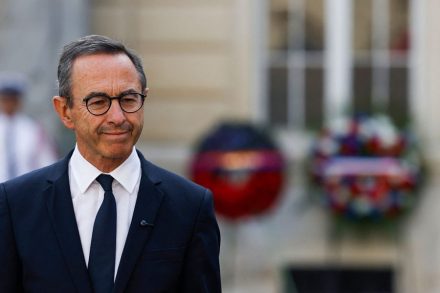
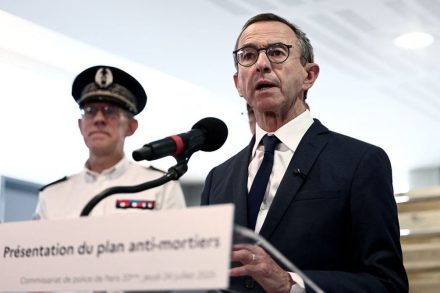
Could Bruno Retailleau become France’s next president?

From our UK edition

Emmanuel Macron appeared on French television last week and spoke for three hours without saying anything of interest. It was a damning indictment of his eight years in office. The country is up to its eyes in debt, ravaged by insecurity and overwhelmed by immigration, but Macron told the country that none of it is his fault. On the contrary, the President scolded the French for being ‘too pessimistic’. The disdain is mutual. A poll conducted in the wake of the President’s interminable television interview found that 71 per cent of the people consider him to be a ‘bad’ president.