Gavin Mortimer

Gavin Mortimer

Gavin Mortimer is a British author who lives in Burgundy after many years in Paris. He writes about French politics, terrorism and sport.

Emmanuel Macron’s fear of Frexit is bad news for Britain

From our UK edition

Emmanuel Macron launched his Big Debate on Tuesday and for the next two months the French people will have the chance to air their grievances in meetings and online. The consultation, in response to the Yellow Vest protest movement, has captured the media's attention but nonetheless it was knocked off the top of the news agenda temporarily by events in Westminster. There is an undoubtedly a touch of schadenfreude in the Élysée Palace at the Brexit farrago, a relief that another world leader is in torment. Macron learned that parliament had rejected Theresa May’s Brexit deal on Tuesday evening, as he was nearing the end of a seven hour debate in a Normandy town hall.

The yellow vests are at the vanguard of a politically incorrect uprising

From our UK edition

The ninth weekend of the gilet jaune protest movement was a mixed result for Emmanuel Macron. The nationwide demonstrations were relatively peaceful with only minor skirmishes between protestors and police, but numbers were up, with a total of 84,000 taking to the streets, 34,000 more than the previous Saturday. This is an impressive figure given that we are in the depth of the northern hemisphere winter, but what are rain, sleet and sub-zero temperatures when the future of one's country is at stake? With that in mind Macron launches his Big Debate on Tuesday in the hope that consultation will supplant confrontation and a consensus can be reached behind which the country can unite and move forward. The odds of that happening appear to be slim.

Macron’s prophet

From our UK edition

France’s literary event of the year took place this week with the publication of Michel Houellebecq’s new novel, Serotonin. Named after the brain chemical that regulates mood, his seventh novel has been described by one French newspaper as ‘prophesying the yellow vest movement’. The critics have lavished praise and the public are plucking it from the shelves. The initial print run was 320,000, which is quite something given that the average run for a novel in France is 5,000 copies. And it’s selling so fast that I haven’t been able to obtain a copy from the booksellers close to where I live in Paris. It’s a similar story in Germany, where the print run of 80,000 is virtually unheard of for a foreign author, and Spain.

Why Isis is a bigger threat to France than the yellow vests

From our UK edition

Where ever one looks in France at the start of 2019 one sees only ominous signs. In his New Year's message to his people Emmanuel Macron issued a robust warning to the gilets jaunes, elements of which he described as 'a hate-filled crowd'. Accusing them of having attacked the police, the media, Jews and homosexuals, the president vowed that 'Republican order will be ensured with no leniency'. That drew a swift retort from one of the self-styled yellow vest movement leaders, Maxime Nicolle, who in a facebook post, predicted an 'armed uprising', adding that 'a lot of people are ready to lose their lives in the hope of a better future'.

Where did it all go wrong for Emmanuel Macron?

From our UK edition

Twelve months ago Le Journal du Dimanche published an opinion poll in which Emmanuel Macron had an approval rating of 52 per cent. A fortnight ago the same paper ran a poll in which the president's popularity stood at 23 per cent. Where has it gone so wrong for the man once likened among sections of the French press to a cross between Jupiter and Christ? More to the point how could The Spectator get it so wrong in running a piece last December entitled 'Macron is becoming the darling of the Deplorables'? I can only assume that when I wrote that article, in particular the line about Macron having 'a wise head on those young political shoulders', I had come from a long Christmas lunch. In my defence I would like to point out that I did temper my praise with some cautious prognosis.

Why does Britain have to shut down for Christmas?

From our UK edition

Christmas in Britain means misery not merriment. It's why I prefer France, which doesn't shut down lock, stock and bauble. This year I'll be in Aveyron, as profonde as La France profonde can be, and the highlight will be the Quine – that's Bingo to Brits – which starts at 4pm on Christmas Day in the village hall. It's an annual event organised by the local rugby club and it pulls in punters from dozens of outlying villages, all desperate to win one of the prizes on offer. You know you're in France when the prize-winner who gets the most envious glares isn't the one who scoops the flat-screen TV but the lucky devil who makes off with the hind leg of ham.

The link between the gilet jaunes and the Strasbourg attack

From our UK edition

There are conspiracy theories doing the rounds in France among some gilets jaunes that Tuesday's Islamist attack in Strasbourg was somehow fabricated by the government. It was cooked up, so the social media conspirators say, to deter demonstrators from launching a fifth weekend of protests. The various theories are all very far-fetched. The alleged gunman, Chérif Chekatt, who was shot dead by police on Thursday evening, had a history of violent crime and, more significantly, is believed to have been converted to Islamic extremism while in prison. It's a back story shared by several other Islamists who have carried out attacks in France in the last six and a half years. Nonetheless, there may well be a connection between the Strasbourg attack and the yellow vest movement.

Has Macron done enough to stop the yellow vest protests?

From our UK edition

Emmanuel Macron spoke to the French people for thirteen minutes on Monday evening. It was an uncharacteristically sombre address from the president, one in which he admitted he had to take his 'share of responsibility' for the anger that provoked the yellow vest movement. As well as conceding he 'might have hurt people with my words', Macron also announced a series of measures that he hopes will defuse the discontent of his people and bring an end to the violent chaos across the country that has cost retailers alone upwards of €1b since it began on November 17. An additional €100 a month will be added to the minimum wage and pensioners receiving less than €2,000-a-month will be exempt from social security taxes scheduled to take effect next year.

How the Gilets jaunes movement could spread across Europe

From our UK edition

The eminent historian Emmanuel Todd was on the radio in France last week. He had much to say, none of which would have made for easy listening at the Élysée Palace, particularly his warning that Emmanuel Macron is facing a coup d'etat that has been fomenting for years. Todd believes that fundamental to the rise of the Yellow Vest movement is what happened in 2005. That was the year France, in the words of the Guardian at the time, "decisively rejected the new European constitution". The 'non' votes were 54 per cent (out of an overall turnout of almost 70 per cent) and jubilant campaigners demanded the resignation of Jacques Chirac as they celebrated in the Place de la Bastille.

My Saturday with the Gilets jaunes in Paris

From our UK edition

Not quite a ghost town, but when I emerged from the metro at Saint-Germain-des-Prés at midday central Paris was eerily calm for a Saturday in the festive season. I once lived in this district and December was always a nightmare for shoppers and tourists. Not today. Louis Vuitton was shut and boarded, so, too, Swarovski and a couple of banks and most cafes. I walked towards the Seine and on the Quai Voltaire I encountered my first riot police. They had a dozen Gilets Jaunes against the wall, frisking them in a courteous manner. Crossing the Pont des Arts I spotted a Father Christmas in a Yellow Vest walking briskly along the river path. Under the bridge and out of sight of the police, Santa Claus stripped.

Emmanuel Macron’s next fight could be his toughest yet

From our UK edition

In normal circumstances, Emmanuel Macron would welcome a trip to Marrakech in December as an opportunity to escape cold Paris and enjoy some North African hospitality. But his date in the Moroccan city next week could not have come at a worse time. France is burning and Macron's presence on Monday at the United Nations intergovernmental conference in order to sign France up to the global compact for safe, orderly and regular migration could add to the conflagration. The United Nations states that the global compact "comprises 23 objectives for better managing migration at local, national, regional and global levels". The document has been more than two years in the making and its aim is to help the 258 million migrants around the world living outside their country of birth.

Yellow fever

From our UK edition

I met a friend for lunch in Paris last Sunday. He and his wife had come up from the countryside for a weekend’s shopping. As we sat down, their nerves were still frayed from the previous day. It was, they told me, the most terrifying few hours of their lives. Trapped between the rioters and the police, they retreated to their hotel, where staff instructed them to stay in their room. The mob soon arrived and against a background noise of helicopters, police sirens, breaking glass and detonations, they tried unsuccessfully to force their way inside the hotel while singing an ode to the Révolution. It has been said that the gilets jaunes movement is to Emmanuel Macron what the miners’ strike was to Margaret Thatcher in the mid-1980s. Not in the slightest.

What’s the truth about the Gilets jaunes?

From our UK edition

Marine Le Pen spent last Saturday commenting on the scenes from the Champs-Elysées as the latest Gilets Jaunes demonstration turned violent. She also had the opportunity to respond to Christophe Castaner, the interior minister who, as cobbles rained down on the heads of the riot police, accused Le Pen of inciting the far-right to go on the rampage. Le Pen rejected the allegations, saying she had done no such thing; and anyway, as far as the National Rally leader was concerned, the people running amok in the capital weren't from the far-right.

The chaos is closer to home than Macron thinks

From our UK edition

Out and about in Paris on Saturday I passed scores of protestors on their way to the Champs-Élysées to vent their fury against Emmanuel Macron. Wearing their gilet jaunes (yellow vests), they were angry, determined and overwhelmingly white and middle-aged. The nationwide protest that pulled in nearly 300,000 demonstrators has been billed as a pushback against rising fuel tax but it goes much deeper than that; it's the revolt of the people against a president they believe holds them in contempt. As one demonstrator told Le Figaro: 'Macron is the president of the rich and not the poor. He should think also about the poor.' Macron rarely thinks about the poor, except to insult them.

Macron and Trump’s doomed bromance is good news for Le Pen

From our UK edition

Emmanuel Macron's hosting of sixty world leaders in Paris last weekend to commemorate the centenary of the Armistice has turned into a public relations disaster. The president of the Republic not only infuriated Donald Trump, but he also put the Serbian president's nose out of joint. According to reports, Aleksandar Vucic was not amused with the seating arrangements at Sunday's service of remembrance. While Kosovo's president Hashim Thaçi was behind the leaders of France, Germany, Russia, and the United States, Vucic was shunted off to the side. "You can imagine how I felt," Thaci is quoted as telling the Serbian media. "I couldn't believe what I was seeing before me, knowing the sacrifice that the Serbian people made in World War One.

The clash between Macron and Trump

So Donald Trump has come and gone, and he left behind a bemused French press. Frankly, they don’t know what to make of the American president other than he demonstrated yet again ‘his bravado and unpredictability’. The media class in France has always been close to the political establishment (hence the history of romantic liaisons between the two) and journalists have a reciprocal respect for the political class that borders on deference. That is why President François Mitterrand was able to keep both his love-child and his cancer secret until the final weeks of his 14-year presidency. Trump does neither deference nor respect, and from the moment he touched down in France on Friday evening he appeared intent on antagonizing his host.

macron trump

The cultural appropriation of the first world war

From our UK edition

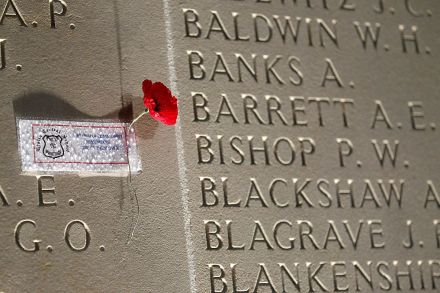
Last week I was in the Somme, visiting the first world war battlefields before the great and the good descend on the region this week to mark the centenary of the Armistice. In one cemetery I found propped against the headstone of Captain Frank Morkill a plastic folder, left two months earlier by a relative. Inside was a facsimile of his last letter home, written three days before he was killed in action on September 15 1916. 'I can truly say without any mock heroism that I am only too thankful to have seen the dawn of Germany's downfall,' wrote Morkill, a Canadian, who had been wounded twice in previous fighting. 'Also, that on the anniversary of my first year of war I am here to help in that overthrow, and here with several of my best friends.

Eclipse of the Sun King

From our UK edition

Emmanuel Macron was elated when France won the World Cup in July. The photograph of him leaping out of his seat at the Moscow stadium showed a leader at the peak of his power. Or so he thought. Ever since then, he has been bumping back to earth. Last week, the French President took the unusual step of retiring to Honfleur for four days’ rest and recuperation. ‘His face has changed, he is marked by the weight of power,’ confided one of his team; another expressed concern about the President’s weight loss. Part of his deterioration is self-inflicted. Macron likes to boast that he gets by on four hours of sleep, and his texts to ministers in the early hours are legendary.

France is fracturing but Macron remains in denial

From our UK edition

As chalices go, few are as poisoned as the one Emmanuel Macron has just handed Christophe Castaner. Minister of the interior is one of the most challenging posts in government. The former Socialist MP has cultivated an image over the years of a political tough guy, in contrast to his predecessor, the diminutive Gérard Collomb. But what passes for tough in the National Assembly won't intimidate the tough guys in France's inner cities. During his eighteen months in the post, Collomb was a diligent minister, but in the end the 71-year-old was worn down by the enormity of his task. He parted with a message that should cause his successor a few sleepless nights.

Grosse negligence

From our UK edition

A decade ago a book called French Women Don’t Get Fat took the Anglophone world by storm. It was a bestseller in Britain and America because, as the blurb explained, the French author ‘unlocks the simple secrets’ of why her people aren’t fat. So here is my sequel: Why French Kids Don’t Get Fat. Admittedly, there are a few who look like they know their way to the boulangerie, but in general most are slim, healthy and fit. The stats back me up. Last year, the French ministry of health reported that obesity levels among nine- and ten-year-olds had fallen to just 3.6 per cent. In Britain, an official report last year said ‘nearly a third of children aged two to 15 are overweight or obese’.