Gareth Roberts

Gareth Roberts

Gareth Roberts is a TV scriptwriter and novelist who has worked on Doctor Who and Coronation Street. He is the author of The Age of Stupid substack.

The staggering dullness of Sunak and Starmer

From our UK edition

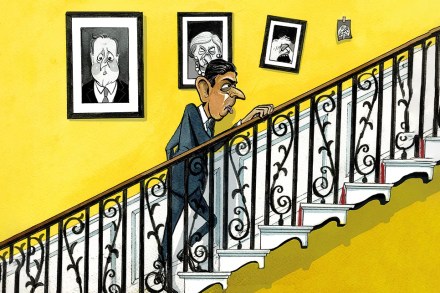
We’re now about halfway through the election campaign. I don’t know how we’re going to keep our excitement from bubbling over if this level of stimulation keeps up in the second half. The staggering mediocrity and dullness of Sunak and Starmer has lent this contest – despite its inevitably very different final outcome – the air of a no-score draw played between non-league Tier 11 teams. What terrible cosmic sin did the British public commit that we are lumbered with this pair of tailors’ dummies? This was made even more apparent by last night’s Sky interviews. Sunak and Starmer shied from confronting one another head-on – perhaps mindful of anaesthetising the population – but if they thought they were in for an easy ride, Beth Rigby was having none of it.

The trouble with ‘centrist’ Tories

From our UK edition

‘Elections are won from the centre ground,’ the Chancellor Jeremy Hunt has said. Perhaps he should have a word with his own party. The Conservatives have been in power for 14 years and, while they are nominally centre-right, many of the party's policies and positions will hardly strike the average voter as sensible and centrist. Maybe if the Tories really had stuck to the centre ground they wouldn't be 21 points behind in the polls and heading for electoral wipeout on 4 July. Nowhere is the Tories' refusal to adopt a sensible centrist position clearer than in the gender debate. The middle ground on this issue is surely that the safety of women and girls must be prioritised over the feelings of those who wish to change gender.

Even Nigel Farage will struggle to make this election exciting

From our UK edition

Unlike Brenda from Bristol, I usually love elections – but not this one. Theresa May’s self-destruction in 2017 was one of the most fascinating events I’ve ever seen. The high-stakes tension of Boris vs. Corbyn in 2019 had me gripped to the TV. Even as a child, I couldn't get enough of the high drama of politics: on Friday June 10 1983, I threw a sickie from school just so I could sit at home and read all the newspapers about Thatcher's triumph: it was my pitiful idea of fun at fifteen years old. Yet Sunak vs. Starmer feels like even more of a foregone conclusion than 1997, when Tony Blair's New Labour crushed the Tories. It's hard to get excited about the 4 July election.

Shakespeare wasn’t a woman

From our UK edition

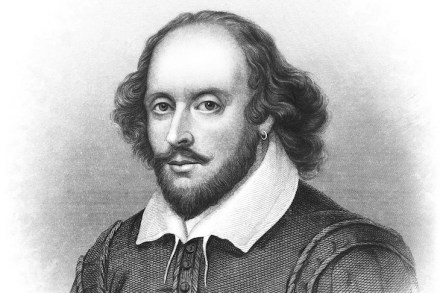
The American novelist Jodi Picoult has revealed that she thinks that Shakespeare’s plays were written by a woman, telling the Hay Literary Festival, ‘I think that, back then, people in theatre knew that William Shakespeare was a catch-all name for a lot of different types of authors. I think they expected it to be a joke that everyone would get. And we’ve all lost the punchline over 400 years.’ Apparently, a male writer couldn’t have written the ‘proto-feminist’ characters in some of the plays Apparently, a male writer couldn’t have written the ‘proto-feminist’ characters in some of the plays, which is a bit like saying that they must have been written by cruel, old-fashioned dukes because they sometimes have cruel, old-fashioned dukes in them.

The sad truth about ‘saint’ Nicola Sturgeon

From our UK edition

The Independent Press Standards Organisation found that Gareth Roberts's article breached Clause 12 (i) of the Editors’ Code of Practice. A link to the adjudication is here. The Spectator's response to the ruling can be found here. Nicola Sturgeon has finally come clean: ‘I was part of the problem,’ Scotland's former first minister has admitted, referring to the ‘trans rows’ that dogged the late stages of her time as First Minister. What’s this? Is this, at last, a frank admission of fallibility and regret from Sturgeon? A reflection on her own flaws? No, of course it isn’t. The sainted Sturgeon stepped down, by her own account, because politics in Scotland is ‘pretty polarised’.

The Tories have no right talking about ‘common sense’

From our UK edition

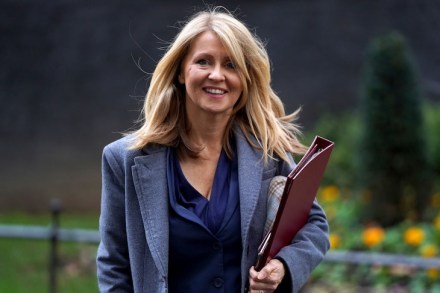
Esther McVey is minister without portfolio in the current cabinet, but has been dubbed the ‘minister for common sense’. In this capacity she made a characteristically half-baked, half-thought-through address earlier this week. There is apparently to be no more spending on external equality, diversity and inclusion (EDI) contracts without explicit sign-off from a minister, and no more EDI-focused Whitehall jobs outside human resources. This supposed stern crackdown is an admission that all of this harmful claptrap has ripped through the institutions, virtually unopposed This is the latest minor spectacle in the death throes of this clapped-out government. It’s taken them 14 years to notice that they’ve been utterly useless.

The attacks on Britain’s history have backfired

From our UK edition

UK university courses on race and colonialism are facing the axe due to cuts. ‘There’s not very much about race and colonialism on the curriculum to start with,’ fumed Professor Hakim Adi at the report, which revealed that Kent university's anthropology course and a music programme at Oxford Brookes is under threat. Adi, a former leader of Chichester university’s history of Africa programme, told the Observer: ‘It sends a signal from those in power that these types of subjects are not desired…they just won’t be taught in higher education, if this trend continues’. This empire obsession is very strange and unfair To which one is tempted to reply, in the words of Sergeant Major Williams from It Ain’t Half Hot Mum, ‘Oh dear, how sad, never mind’.

Penny Mordaunt won’t save the Tories

From our UK edition

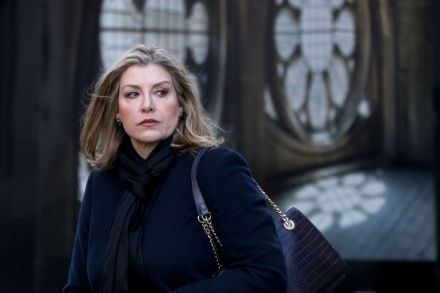
Rebellious Tory MPs, expecting a trouncing in Thursday’s locals, are apparently mooting a ‘100 days to save Britain!’ emergency turnaround strategy. A new leader, a payrise for doctors, defence spending up to 3 per cent. Having four prime ministers in one parliamentary term would be good for future pub quizzes, but who is apparently choice for that number four slot? Penny Mordaunt. To what problem is she the solution? Her worst quality is that she will follow whatever is fashionable or socially expedient, not her own judgement. Mordaunt is a model example of style over substance. And what style! Because she looks just right – the mane, the steely glare, the confident manner, the military uprightness.

Life was better in the 1990s

From our UK edition

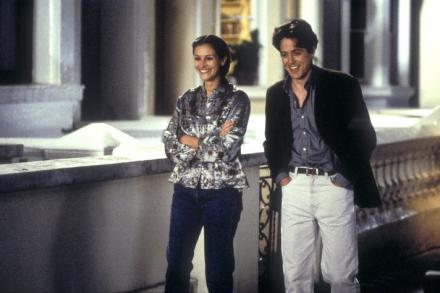
Does anyone else miss the nineties terribly? Everything seemed simpler in that pre-internet era of The Fast Show, the band Suede and heaving nightclubs. Twenty-five years ago today, one of the defining films of that decade – Notting Hill – held its premiere in London. In the years since, we’ve made progress, of sorts: technology has improved immeasurably and we’re all living longer. But are we any happier? I’m not convinced. It's true that the 1990s weren’t perfect: there was a sprinkling of identity-based grievance and envy, but it was still safely contained in the universities. We genuinely thought experts knew what they were doing. There were also vital cultural vents, like TV comedy, and our playful pop scene thrived; now, it's all bunged up.

The BBC Proms could do much better than Sam Smith

From our UK edition

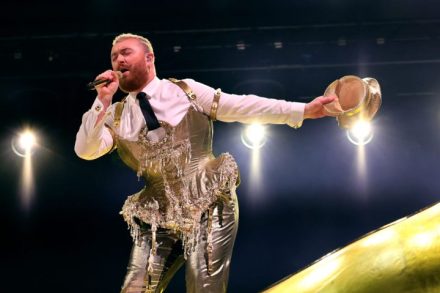
The BBC has struck upon a new wheeze to make the Proms accessible and inclusive: it has booked famously ‘non-binary’ singer Sam Smith. The pop star, best known for cavorting on stage in ill-fitting outfits, is joined in this year’s line up by Florence Welch. A disco prom will also take place, which for those of us of a certain age immediately brings back memories of the grotesquely naff ‘Hooked On Classics’. Robert Newman, who founded the Proms over 100 years ago, must be spinning in his grave. Smith’s inclusion is a remarkably odd decision by the BBC: yes, his appearance will sell seats and draw eyes. But then so would any concert by these artists. Does their appearance really make pop fans expand their musical horizons?

Why can’t Stonewall’s ex-boss come clean about its trans obsession?

From our UK edition

The few days since the publication of the Cass report – the probe into ‘gender identity’ services for young people – have been a revelation. The report, compiled by Dr Hilary Cass, has at long last, and so publicly it couldn’t be ignored, blown some of the gilt off the trans gingerbread, confirming that medical interventions on minors weren’t backed up by solid research. This has woken up some of the great and the good, who have finally realised that parroting phrases like ‘trans women are women' might not have been such a wise idea. It must be galling for Rutherford, the foremost science communicator, to have missed such a big medical scandal One of those who used those four words beloved of activists was Education Secretary Gillian Keegan.

The Tories deserve our contempt

From our UK edition

The Telegraph reported at the weekend that the Conservative party appears to be attempting, in its selection process for parliamentary candidates, to weed out anybody who might just possibly be a conservative. This strategy – with all its ineptitude and wilful blindness – is a perfect capsule of the parliamentary party and its upper echelons. A party can leap over disappointment and rage; contempt is a much higher hurdle to clear It’s hard to find the right word to describe what the Tories have done since their incredible election win in 2019. ‘Disappointment’ is polite, but too mild. ‘Rage’ is too hyperbolic. I think ‘contempt’ hits the mark best. And this is significant I think.

Anti-Israel virtue signallers should leave Eurovision alone

From our UK edition

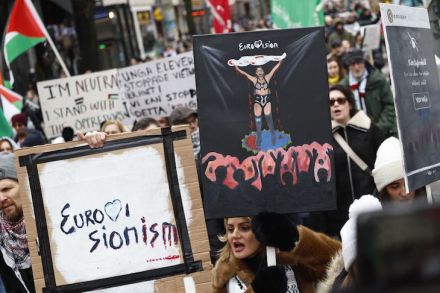
The 2024 Eurovision Song Contest – the final of which will be held in Malmö on 11 May – is the latest peculiar target of pompous virtue signallers. The hosts of the UK’s largest Eurovision screening have announced their decision to scrap the event. The reason? Israel, of course. 'We have collectively decided not to screen the Grand Final of the Eurovision Song Contest this year while Israel remains in the competition,' the independent Rio cinema in Dalston, east London, said in a statement. Reminder: they are talking here, not about the fall of the Berlin Wall, or the Good Friday Agreement, but The Eurovision Song Contest – which generates such excitement in Britain solely because it's an excuse to get absolutely potted with your pals while laughing at foreigners.

Let’s kick ‘racial justice’ out of the Church of England

From our UK edition

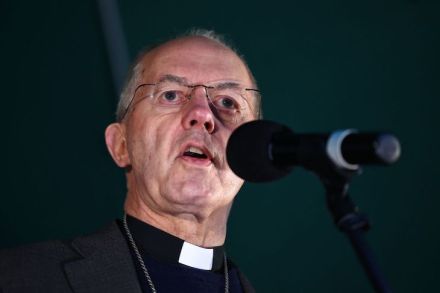
Holy Week is the most important part of the year for many Christians, but it will come as little surprise that some members of the Church of England appear to be focusing on racial justice rather than Jesus. ‘I went to a conference on whiteness last autumn,’ the Venerable Dr Miranda Threlfall-Holmes, archdeacon of Liverpool, wrote on Twitter. 'It was very good, very interesting and made me realise: whiteness is to race as patriarchy is to gender. So yes, let’s have anti-whiteness, & let’s smash the patriarchy. That’s not anti-white, or anti-men, it’s anti-oppression.

Steve Harley was no one-hit wonder

From our UK edition

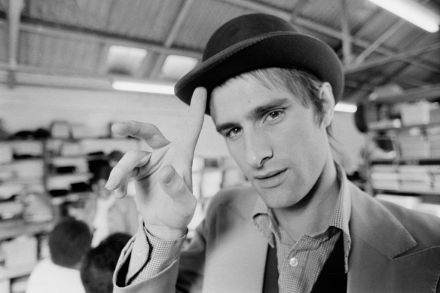
Celebrity deaths range from the ‘tragically young’ (Amy Winehouse) to the ‘I thought they’d gone years ago’ (Peregrine Worsthorne) and the monumental (Michael Jackson). But there’s another type: a more low-key one that knocks you a bit, as much as the death of a stranger can. Steve Harley, whose death was announced this weekend by his family, was one of those.  Everyone knows Harley and his Cockney Rebel band’s ‘Make Me Smile (Come Up And See Me)’. But Harley was no one-hit wonder: dig a little deeper than that 1975 song and it’s clear to see what a brilliant and underappreciated musician he was.  Vanishingly few endure in the pop music sphere.

Blame Prince William, not Kate, for the royal photo blunder

From our UK edition

The Princess of Wales has owned up. In a statement on X/Twitter, she revealed that she was the phantom photoshopper: ‘Like many amateur photographers, I do occasionally experiment with editing. I wanted to express my apologies for any confusion the family photograph we shared yesterday caused. I hope everyone celebrating had a very happy Mother’s Day.’ This Mothers’ Day photograph of the Princess of Wales and her children was intended to kill the rampant speculation about her absence from the public eye over the last few weeks. Instead, the photograph itself has now been ‘killed’ – in the parlance of the international news agencies that pulled it. These agencies have, understandably, a zero tolerance policy for manipulated photographs.

Rishi Sunak can’t save Britain

From our UK edition

The Tories have hit an all-time low: an Ipsos poll shows the party on a dismal twenty per cent, with the percentage of under-35s intending to vote for them in single figures. Never has a flush looked quite so busted as Rishi Sunak. It was against this bleak backdrop that the Prime Minister's lectern was trundled on to Downing Street on Friday night. There was something about the suddenness and urgency of this occasion – asking the press to assemble just as the pubs fill up at the start of the weekend – that put a little spring in the heart. After months of blatant antisemitism on the streets, and now with the intimidation of MPs by Islamists and their fellow travellers, was the PM finally going to actually do something?

The middle-class obsession with the miners’ strike

From our UK edition

The miners’ strike has struck again. It’s the fortieth anniversary of the protracted dispute of 1984-85, which means that you have to be about my age (55) to have had anything approaching an adult understanding of it at the time. The same old footage, the same old talking points, the same old grievances, excuses and myths regurgitated yet again As you get older, and time speeds up to a quite ridiculous and frankly unacceptable degree, anniversaries start to whip by like stations on a non-stopping train. It only feels like ten minutes since the thirtieth anniversary of the strikes, and now we have to go through the whole thing all over again.

The truth about John Lewis’s trans takeover

From our UK edition

John Lewis is, to most people, a department store that exists to sell toasters, cushions and lamps. But it turns out we have been labouring under a massive misapprehension all these years. John Lewis's internal magazine Identity reveals that the shop's purpose is rather different: it exists to affirm the bespoke identities of its staff. The publication, created by John Lewis's LGBT network, contains advice to parents on how to allow their child to express their gender identity. Identity includes testimony from the mum of a trans-identifying girl in a story titled 'Raising Trans and Non-Binary Children'. She writes that 'a (chest) binder is always safer than the alternatives.

Why progressives don’t face real consequences

From our UK edition

One of the most tedious and repetitive observations made in the often tedious and repetitive discourse around cancel culture is the notion that ‘freedom of speech doesn’t mean freedom from consequences’. This slightly sinister cliché is the progressive version of ‘well, think on, you wouldn’t have been shot if you hadn’t been trying to escape’. It is usually offered forth as if it is somehow a seismic statement. Some clumsy clots – the hapless Graham Norton last year, for example, when discussing JK Rowling – have even tried to frame cancel culture as ‘accountability culture’ or ‘consequences culture’. But it strikes me that there is a shadow image of cancel culture that we might call ‘no consequences culture’.