Fredrik Erixon

What does the European centre-right stand for?

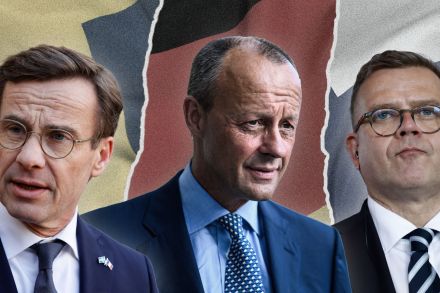
Friedrich Merz, the leader of Germany’s Christian Democratic Union (CDU), dropped the bomb last weekend. In a TV interview, Merz opened the door for collaboration with Alternative für Deutschland (AfD), the nationalist-populist party that is home to Germany’s cabal of crackpots and right-wing extremists. He didn’t say what form such co-operation would take, but talked about finding ways to run local councils when the AfD won democratic elections – which happened a few weeks ago when Hannes Loth won a mayoral race in a small town in Saxony-Anhalt. The reactions to Merz’s comments came thick and fast. Politicians from the left questioned his democratic credentials. He’s the ‘wrecking ball of democracy’, said Sara Nanni of the Greens.
Why Sanna Marin lost Finland’s election

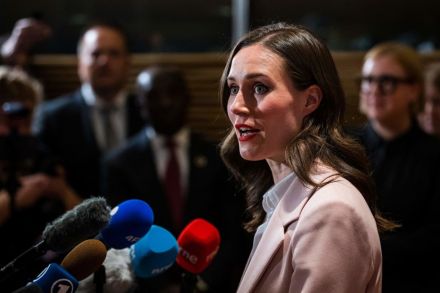
A journalist and observer of Finnish politics once said there is one headline that works for every Finnish election: 'Finland elects new government, nothing will change'. Few prime ministers have survived longer than one term in the Arctic nation. Just as day becomes night and that spring follows on winter, the rhythm of the country’s elections has been to hand victory to the main opposition party – depending on which of them that was outside the last ruling coalition. Finland’s major parties are all centrist and pragmatic, and the difference between the left and the right is hard to detect. Even the populist Finns party feels tidy and well-behaved.

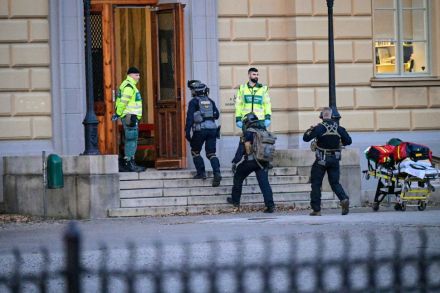
Are Sweden’s liberal laws incubating violent crime?

15 min listen

In his column for the Telegraph, Fraser Nelson says that Sweden has become a gangster's paradise, with its liberal approach to criminal justice allowing a shocking subculture of violence. He is joined by Katy Balls and Fredrik Erixon, Swedish economist and writer, to discuss how the country should respond to gun violence.

Is this the birth of a Nordic Nato?

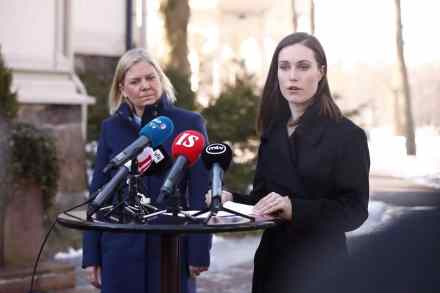
In the past six weeks, Finland and Sweden’s security policies have changed more than they have over the past six decades. In much of what they do, the two countries come as a couple and were militarily neutral during the Cold War – but their defence cooperation has only deepened since Russia’s invasion of Crimea in 2014. Now, the two are about to break with their long history of non-alignment. Their applications to join Nato are likely to come in the next two months. At a press conference in Stockholm this week, the prime ministers of the two countries – Sanna Marin and Magdalena Andersson – came close to admitting they want their countries to join the western military alliance. That declaration cannot be understated.

A mix of Corbyn, Greta and XR: Norway’s new coalition

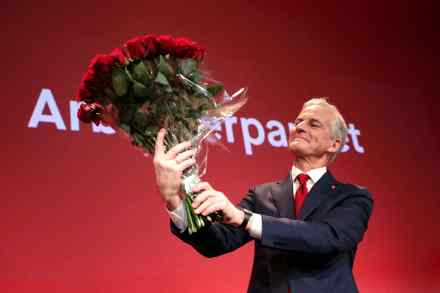
Norway has just elected a new Prime Minister. Erna Solberg, the convivial centre-right leader that has governed the country for eight years, is now on her way out. Her coalition — which included the populist Progress party, the liberals and the Christian democrats — took a heavy beating last night, losing almost ten percentage points since the 2017 election. It clearly didn’t help that Solberg is still popular around the country and is reckoned to have managed the pandemic well. Norwegian opinion has been moving to the left for quite some time. Now the voters have painted the country red. Jonas Gahr Støre, the leader of the Labour party, will be the new Prime Minister. He’s a safe pair of hands.

What Sweden’s political crisis says about Europe’s collapsing centre

Uppsala Nooshi Dadgostar is Sweden’s new political star. A young, softly spoken politician with Iranian immigrant parents and an unfinished degree in law, she became the leader of the Vansterpartiet (‘Left party’) late last year — taking over from Jonas Sjöstedt, a bleeding-heart version of Jeremy Corbyn who struggled to shake off the party’s communist past. Most of her predecessors have tried but failed to become a central part of the national political conversation. But this week, she succeeded: by taking out the Swedish Prime Minister. If he tinkered with rent controls, she said, she’d topple him with a vote of no confidence. She was as good as her word.

Orban and Macron, Europe’s new power couple

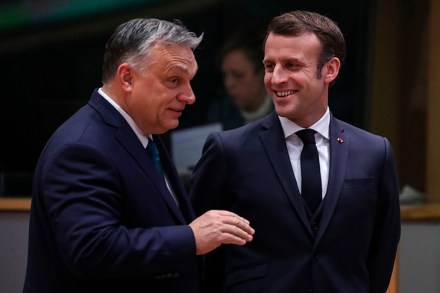
After Brexit, the general assumption was that France and Germany would take their place as the two rulers of Europe. But Angela Merkel’s influence has been waning and Germany is often an absent power — preoccupied as it is by redefining its own politics after 15 years of her rule. This suits Emmanuel Macron, who was never satisfied with sharing the stage with her. He has found himself another ally, one who is far more influential than people give him credit for — Viktor Orban. Macron and Orban have a monastic attitude to power: they both rule on the basis of there being a single orthodoxy that everyone must observe. They also like to behave like monarchs, treating voters as subjects and accepting few restrictions on their personal projects.

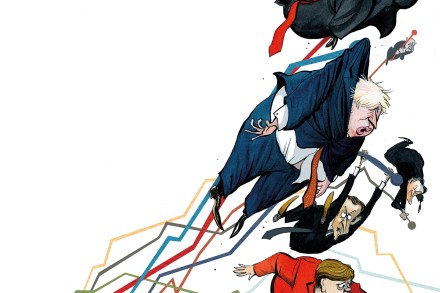
What does Europe teach the UK about a Covid second wave?

21 min listen

As the UK seems to enter a second wave of coronavirus infections, Europe is again the guide on the trajectory of the virus and the best strategy to tackle it. But from Sweden to Belgium, which European country should we follow, and is anyone in government listening? Kate Andrews talks to Fraser Nelson and Swedish economist Fredrik Erixon.

How countries suffered from ‘the lost months’ of Covid

43 min listen

Reporter at Canada's Globe and Mail, Robyn Doolittle, joins the panel this week to discuss what went wrong in Canada. Speaking to a series of infectious-disease experts, health officials and politicians, Robyn and her team pieced together an image of the 'lost months' - a period between January and March when more should have been done to prevent the pandemic. Also on the podcast: Kate Andrews gives an update on the latest in Leicester; Jennifer Creery reports on Hong Kong's latest worry - an influx of migrant workers; and Fredrik Erixon reflects back on Sweden's laissez-faire approach.

How the pandemic is contributing to social unrest

51 min listen

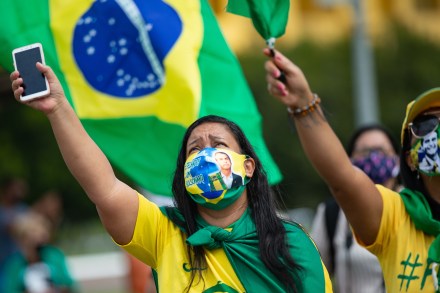
In this week's episode, the Coronomics panel discuss Brazil’s unknown death toll, Sweden’s cautious optimism for employment, the UK’s crawl out of lockdown restrictions, and the double standards uncovered in America’s lockdown rules. Kate Andrews is joined by Fredrik Erixon in Sweden, Nick Gillespie in New York City, and Mauricio Savarese in Brazil.

Can the EU survive this virus?

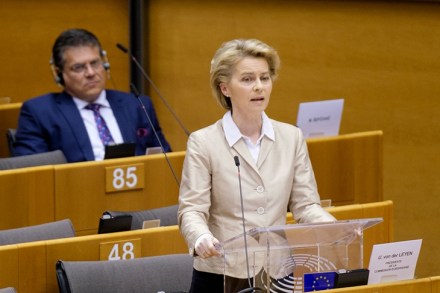
This coronavirus has been cruel to the European Union. The supposed fraternity of member states was the first casualty of the virus, as countries hoarded their medical equipment and banned exports to each other. When Italy’s borrowing costs soared Christine Lagarde, now president of the European Central Bank, said this was not her problem. After much soul-searching — and an apology to Italy from Ursula von der Leyen, the new Commission president — Brussels is trying to repair the damage. But in a way that is exposing new, deeper cracks. For weeks, Angela Merkel has been giving a resolute ‘Nein’ to the proposal that the eurozone should issue common bonds, so-called ‘coronabonds’, to help Italy, Spain and others to avoid a sovereign debt crisis.

Sweden has pioneered an alternative to lockdown – and it works

Uppsala The culture of social distancing does strange things to us. A few weeks ago I got an invitation to an offline work dinner, and I can’t remember the last time I had such a sudden rush of joy. Even if life in Sweden over the past two months have been surprisingly normal, the truth is that we all have hunkered down a bit. Many of us have worked from home. The first two weeks, I admit, felt as life in remission – like a sudden gift of time. But then we all sunk into the apathy of having our life on hold. It felt pointless to plan for the future. A reunion with the colleagues became a distant wish. Meeting a work contact for lunch? Surely that’s only something for the privileged few.

Audio Reads: Fredrik Erixon, James Forsyth, and Leaf Arbuthnot

25 min listen

On this week's Audio Reads, Swedish economist Fredrik Erixon reads his cover piece explaining how European nations are all flying blind in the pandemic. James Forsyth advocates a complete rewiring of the British state. And Leaf Arbuthnot, whose novel Looking For Eliza is released this week, extolls the joys of Zoom raves.

League of nations: guessing our way out of lockdown

38 min listen

European countries all seem to be doing something different, so what are the lessons from the continent (00:45)? Plus, how the West's lockdown impacts the developing world in a very real way (13:05). And last, rediscovering the joy of driving on the country's empty roads (24:55).With economist Fredrik Erixon, the Economist's Anne McElvoy, Stanford Professor Jayanta Bhattacharya, Indian economist Ashwini Deshpande, writer Alexander Pelling-Bruce, and transport journalist Christian Wolmar.

League of nations: the race out of lockdown

Uppsala Last week, Europe started its liberation from lockdown — and it all feels like a study in national political identity. Belgium took its first step towards ‘deconfinement’ but no one seems exactly sure what that means. France is opting for complexity rather than simplicity. Italy’s national plan for the easing of its lockdown is more convoluted still, but few regions bother to follow it anyway. Spain, goes a national joke, went more slowly and started with a reopening of the siesta. And in Germany, everyone is praising the country’s scientific approach to the pandemic, but as soon as they were allowed to roam freely again, many Germans headed for the beer gardens. Governments say their approach is ‘guided by the science’.

The crisis in Sweden’s care homes

Sweden’s refusal to embrace lockdown measures used elsewhere to deal with the threat of coronavirus hasn’t led to the steep spike in deaths and intensive care patients that some feared. Our death toll is, at the time of writing, close to 2,020 – and the rate of infections is slowly declining. The number of patients in intensive care has flatlined and the number of new patients in critical care has gone down sharply in the past week. If this development continues, Sweden will end up very far away from frightening estimates suggesting 80-90,000 people could die before the summer. The situation at our hospitals will be stressed, but under control. Sweden will then exit the pandemic with a tolerable death toll.

The Swedish experiment looks like it’s paying off

Two weeks ago, I wrote about ‘the Swedish experiment’ in The Spectator.  As the world went into lockdown, Sweden opted for a different approach to tackling coronavirus: cities, schools and restaurants have remained open. This was judged by critics to be utterly foolish: it would allow the virus to spread much faster than elsewhere, we were told, leading to tens of thousands of deaths. Hospitals would become like warzones. As Sweden was two weeks behind the UK on the epidemic curve, most British experts said we’d pay the price for our approach when we were at the peak. Come back in two weeks, I was told. Let's see what you're saying then. So here I am. I'm happy to say that those fears haven’t materialised.

No lockdown, please, we’re Swedish

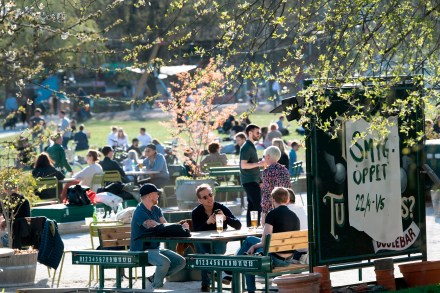
Uppsala Who would have thought that Sweden would end up being the last place in Europe where you could go for a beer? We have, in our normalcy, suddenly become an exotic place. Other countries are closing their cities, schools and economies, but life in our corner of the world is surprisingly ordinary. Last weekend I went to the gym, met up with friends, and sat in the spring sun at outdoor cafés. My foreign friends are stunned. They can’t fathom that there are still people enjoying the fruits of civilisation, as if the natural reaction to pandemics is to embrace totalitarianism. And they wrestle with another conundrum: how on earth did Sweden end up being the final bastion of liberty?

The death of the centre in European politics

It’s hard not to feel sorry for Leo Varadkar. He positioned himself as Ireland’s champion and even ended up with a decent deal. He expected some kind of electoral dividend in the snap election as he urged voters to stay away from the dangerous fringes occupied by Sinn Fein. Instead, they turned to Sinn Fein in record numbers — ending the two-party system that has governed Irish politics for a century. In Ireland, this is unprecedented, but it fits a trend for Europe as a whole. Voters have been rebelling against old, established ‘centre-ground’ politics, and all around Europe, established politicians have responded by attacking voters. They’ve called their own electorate extremists, fruitcakes, loons, racists — or worse.