Fraser Nelson

Fraser Nelson

Fraser Nelson is a Times columnist and a former editor of The Spectator.

Go on, George — scrap the 50p rate

Will George Osborne scrap the 50p tax in next week's Budget? Whispers to this effect have been getting louder, and now the Guardian is saying that it will come back down to 40p, and it makes a lot of sense. As I argued in my Telegraph column a fortnight ago, this is the perfect time to do it. Axing the tax paid by 1 per cent of the population will be unpopular with the remaining 99 per cent, so if Osborne is going to take a political hit he should do so now. Anecdotal evidence of its harmfullness has been getting stronger: multinational companies saying they can't persuade people to relocate to Britain, and early figures suggest a drop in tax from the rich in 2010-11.

The questions Alex Salmond can’t answer

Should Scotland be independent? I’d have thought that only a few people — most of them Scottish — would care enough about the question to come to a debate hosted by a think tank, but the Policy Exchange fight club was packed last night. The sole nationalist was the SNP’s Pete Wishart, allied with Sir Simon Jenkins making his English Nationalist points. Sir Malcolm Rifkind spoke against the motion, with yours truly his support act. As you might expect from a London audience, those opposed won easily. But two things struck me. The first is Sir Malcolm’s eloquence. He was brilliant, better than Salmond, a reminder of what was cut dead in the 1997 election — perhaps never to grow again.

The Bond Bubble’s getting bigger

George Osborne is planning to launch a 100-year bond, says the FT — a sure sign that the Bond Bubble is getting even bigger. These devices are usually used by American universities: the California Institute of Technology issued one at 4.7 per cent, MIT did one at 5.6 per cent, and a few American companies have tried at 6 per cent. The Mexcians sold a billion bucks' worth of century bonds a while ago at 6.1 per cent, so it would only be a matter of time before HM Treasury — a world leader in, ahem, novel debt vehicles — was going to do the same. The US Treasury Borrowing Advisory Committee suggested that the Fed does this last month. It’s not quite as crazy as it sounds: in today’s yield-starved environment you can get away with anything.

Cameron’s sub-prime thinking

You’d think the American sub-prime crisis would have taught politicians the world over not to try to rig the housing market. But no, David Cameron is back on it today — about how to ‘unblock’ the system so the debt geyser starts to gush again. ‘The problem today is that you have lenders who aren’t lending, so builders can’t build and buyers can’t buy,’ says the Prime Minister. ‘It needs the government to step in, and help unblock the market.’ The idea that lenders may not lend because they feel the housing market may fall, and people may be unable to repay, is instantly dismissed. He speaks as if debt is the solution, and unavailability of debt is a self-evident problem.

How Clegg outmanoeuvred Cameron over the ECHR

News that Nick Clegg has brilliantly outmanoeuvred Cameron over the British Bill of Rights will come as no surprise to CoffeeHousers — we told you so last March. The panel was stuffed full of ECHR enthusiasts, balanced by Tories most of whose competence lay in other legal areas. Perhaps Michael Pinto-Duschinsky, the most clued-up of the Tory appointees, didn’t realise this when he joined the panel. He has twigged now, and has quit (or was eased out, depending on whose version of events you believe); observing that the ‘Lib Dem tail is wagging the Conservative dog’. As was evident from the start.

Why Cameron should pay heed to Romney

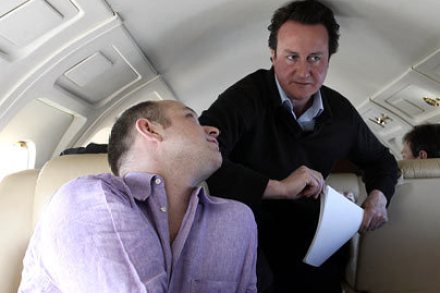
Cameron flies out to Washington on Tuesday, and when he gets there he’ll have no need to play the infatuated teenager. The days of Gordon Brown-style adulation are over, and Cameron has a more mature, less needy relationship with Obama. The truth is that there’s precious little he can learn from Obama, but there might be a thing or two he can learn from Mitt Romney. I look at this in my Telegraph column today. Cameron has never loved America, in the way that so many people in SW1 do. He toured America in his youth, but had never been to Washington until he became Tory leader. Cameron is more interested in the West coast, the latest theories from California about how information can change government. But from Obama? Not so much.

Ed Miliband just doesn’t get globalisation

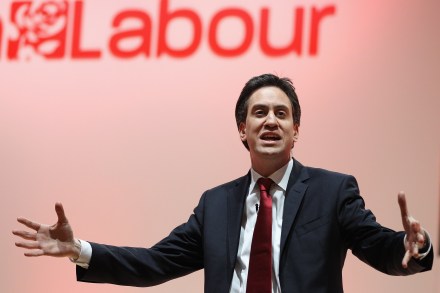
If you think things couldn’t get worse than Ed Miliband’s Five Live interview, read his speech on patriotism. It seeks to build on his ‘predators’ speech, which suggested a Manichean divide between bad companies and good companies. Labour MPs of Mr Miliband’s political heritage always place manufacturers in the latter camp. He hails the success of many of them. ‘You know better than I that this success has been achieved against the odds.’ I suspect they know better than he the effect that a 25 per cent devaluation has on exports. ‘Economic protectionism is what governments reach for when they don’t believe firms can compete. And we will never return to those days,’ he says – before doing just that.

The child benefit cut risks alienating striving families

Why should someone on the minimum wage subsidise the childcare arrangements of someone on £100,000? So runs the argument for abolishing child benefit for higher-rate taxpayers. You can see why George Osborne went for this: in theory, we are talking about the best-paid 14 per cent. If he was going to cap benefits, he had to be seen to hurt the rich too. The 50 per cent tax was not enough; axing child benefit would be just the tool he needed to say ‘we’re all in this together’. The problem is that the 40p tax band is set far too low in Britain, and now takes in policemen and teachers. People who can not really be described as rich, especially if one earner is supporting a family and paying off a mortgage.

Salmond chooses the Brownite way

Can you trust someone like Alex Salmond to save Scotland from future crashes? The First Minister appeared on BBC1’s Sunday Politics earlier, where he was challenged about how he sees it. And it seems he may just be a graduate of the Gordon Brown school of Scottish financial mismanagement. In a Times debate on Friday,  SNP deputy leader Nicola Sturgeon said they’d use sterling — whether the Bank of England liked it or not — and would not need the Bank to be a lender of last resort because Scotland would be so sensible it wouldn’t need it. An interesting suggestion, given that the 1707 Union between Scotland and England is the result of a bailout.

May’s quiet revolution

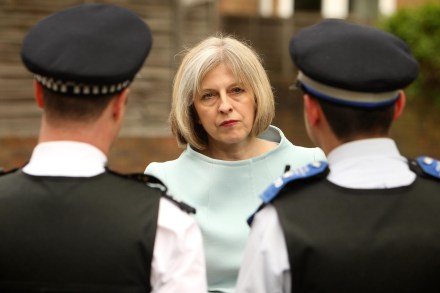
Do you remember the great parliamentary battle over privatisation of police services? Me neither, which is why Theresa May, the Home Secretary, is proving a better minister than Andrew Lansley, the Health Secretary. The drive for savings in the police budget is leading two constabularies, West Midlands and Surrey, to outsource certain services. The Guardian has got hold of the tender documents and splashed with the story today. Yvette Cooper is angry — but, crucially, there’s nothing she can do. Theresa May doesn’t need legislation to enact this reform; it’s not even being done under orders of the Home Office. This is two police forces who would rather save money by outsourcing back office functions than cut at the frontline.

25 February 2009: They wish we all could be Californian: the new Tory

With the news that Steve Hilton is heading back to the West Coast, we've dug up this piece from 2009 by Fraser Nelson. He discusses the last time Hilton decamped to California and the culture changes he could bring back to the Tories in Westminster. Once every fortnight or so, David Cameron’s chief strategist lands at San Francisco airport and returns to his own version of Paradise. Steve Hilton has spent just six months living in this self-imposed exile — but his friends joke that, inside his head, he has always been in California. Look at it this way: this is the place on Earth which fuses everything the Cameroons most like in life, where hard-headed businessmen drink fruit smoothies and walk around in recycled trainers.

Steve Hilton to leave Downing St

The Prime Minister's strategy chief is heading to California to teach for a one year sabbatical, we learn. But who takes a one-year sabbatical in the middle of what's supposed to be a five-year fight to save Britain? He did this before in Opposition, and came back. But this time, I doubt he'll be back. He's joining Stanford University as a visiting scholar, presumably to spend more time with his wife Rachel Whetstone who is communications chief for Google. Hilton's friends say that, in his head, he never quite came back from California — his aversion to shoes (and sometimes manners) has led to much mockery. But overall, he is — and has been — a force for good in No.10. David Cameron's government will be more timid without him. Since Hilton arrived at No.

The time for Osborne to shed Brown’s 50p rate is now

Will George Osborne have a better chance to abolish the 50p tax than this month’s Budget? It would be unpopular, so it’s the kind of move he’d be unlikely to make before an election. The Lib Dems have something they want to trade: permission to raise the tax threshold towards £10,000. And two recent reports, by the CEBR (pdf) and IFS (pdf), have reinforced that this tax is losing money. At the heart of the 50p tax is a deeper question: is Osborne a transformative Chancellor who will change the terms of debate? Or is he doomed to operate within parameters set by Gordon Brown? I look at this in my Telegraph column today. Here are my main points:   1.

Announcing the Matt Ridley Prize for Environmental Heresy

The 2013 Matt Ridley Prize is now open. Click here for more details. Matt Ridley has long deplored the wind farm delusion, and was appalled when a family trust was paid by a wind farm company in compensation for mineral rights on land on which it wanted to build a turbine. The trust would be paid £8,500 a year for it, and Matt couldn’t abide the idea of profiting — even in part — from this. So he is donating £8,500 in an annual prize to be given to the best essay exposing environmental fallacies. Entries open today. The rules are simple. We invite pieces from 1,000 to 2,000 words in length, to gore one of the sacred cows of the environmentalist movement.

Gove: ‘I’d never run for leader’

Michael Gove for leader? There have been several suggestions to this effect recently — not least from Toby Young in his debut column for the Sun on Sunday. But Tim Montgomerie today quotes one of Gove's advisors on ConservativeHome, saying that the education secretary has ruled himself out on the grounds that he doesn’t have the character for the job. This certainly squares with what Gove told me in September 2008. The interview was published here, but I’ve looked up my notes and can reprint his answer in a little more detail.   I put to him a Westminster rumour that he promised Sarah Vine, his wife, that he’d never run for leader. He threw his head back and laughed loudly.

What’s going on over the Lords — and where to read about it

Finally, Lords reform becomes interesting: it could be the issue that splits the coalition. Lord Oakeshott's admission of this yesterday has made the newspapers today — but it will come as no surprise to Spectator readers. James Forsyth drew out these battle lines for his cover story last week, and it's worth reprising his arguments as the rest of the press has yet to catch up.   Self-preservation is a powerful force in politics. Even if the Lib Dem vote recovers, it's likely to do so in different constituencies, meaning most Lib Dem MPs are likely to lose their seats. As Lembit Opik’s music career demonstrates, it's tough to find work out there. Making it to a revamped Lords is their best option.

Raise the tax threshhold and let youth prevail

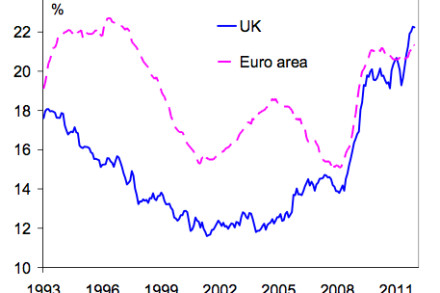
Youth unemployment is approaching crisis levels in Britain. For almost two decades, Britain’s more flexible labour market had favourable effects on youth employment. But the re-regulation of the British economy has narrowed the difference between our jobs market, and that of the continent. Meanwhile the British poverty trap has been strengthened by a dysfunctional welfare state: British workers can in some circumstances keep as little as 5p in every extra pound they earn if they find work. Who would break their back for less than 50p an hour? We’re paying people not to bother, so little wonder that most of the employment rise — in the last government, and under this one — is accounted for by a rise in foreign-born workers.

Travel – Sweden: Ice pick

Now is the time to skate Stockholm’s archipelago, says Fraser Nelson There are two times to visit Sweden: the height of summer or the depths of winter. If you have to choose, go now. Diving into the waters of Stockholm’s archipelago is a joy you can more or less imagine: skating across them, and having a snow barbecue afterwards, is something that has to be done to be believed. Every year, British lovers of winter sports do head off to the slopes in Italy, France, Austria or Switzerland — it doesn’t really matter what country, because the set-up is the same. But Sweden is unique. The Stockholm archipelago boasts something like 30,000 different islands and at this time of year you can skate between a lot of them.

The dark side of the Big Society

The A4e scandal is getting worse. Emma Harrison has quit as David Cameron’s back-to-work tsar, the police are still investigating a case discovered last year and there’s a suggestion their investigation is widening. This is, for David Cameron, the dark side of the Big Society. In my Daily Telegraph column today, I explain why. ‘The Big Society’ is a silly name for a good idea: that lots of companies, charities, etc will help provide government services. They are given freedom to innovate, to create — and the freedom to get things badly wrong. This is the freedom which A4e seems to have availed itself of. It grew like crazy, perhaps too fast. Its internal audit procedure found four staff who had been falsely claiming to get people back in work.

Why George should listen to Danny

In the new Spectator, we back the Liberal Democrats’ plans to raise the tax threshold to £10,000 — provided that the money is found by cuts in state spending rather than the pensions raid they propose. It’s not top of my list of tax cuts, but we have to accept the realpolitik. It’s the only tax-cutting option that has advocates in the Treasury. There are plenty of proposals around to cut taxes and wake the British economy from its ‘lost decade’ slumber. The need to use tax cuts as a remedy to the deficit will be familiar to anyone who has followed the American presidential debate: every candidate, even Romney, has their own list of radical tax cuts.