Fraser Nelson

Fraser Nelson

Fraser Nelson is a Times columnist and a former editor of The Spectator.

Just 6pc of the British realise that the national debt is rising

From our UK edition

And while we're on the subject of scandals in the British media, a pre-Budget ComRes poll just released by ITV News shows that just 6 per cent of the public realise what's happening to the national debt. You can (and I do) blame politicians who don't admit that the debt is rising massively - and then confuse "debt" with "deficit". We at Coffee House have called out David Cameron and poor old Nick Clegg for this. But the real responsibility lies with the media. Most people don't listen to politicians speeches, but depend on the way these speeches are reported. I suspect you can listen to ever single BBC News outlet tomorrow (save for Five Live and BBC2 Daily Politics) without being given an inkling that the debt is rising. The word "deficit" is to blame.

Who speaks for the British press?

From our UK edition

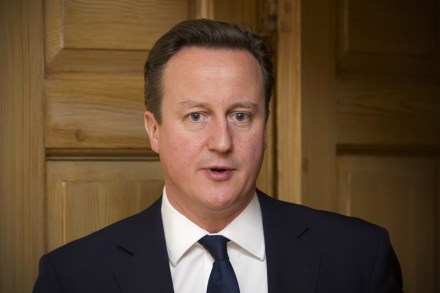
At the end of the editors’ meeting in 10 Downing St today, there was an awkward moment when someone asked if the past hour had been on or off the record. There was something odd about the idea of a bunch of journalists keeping something secret, and anyway there was anyway not much to reveal: it was just the start of a discussion. But a very important one that could yet decide whether Britain retains its ancient tradition of press freedom. David Cameron restated his position: that he’s instinctively against statutory regulation, but wants to see self-regulation along the lines of the Leveson Report. And could the newspaper industry deliver that?

Lies, damn lies, Nick Clegg and debt

From our UK edition

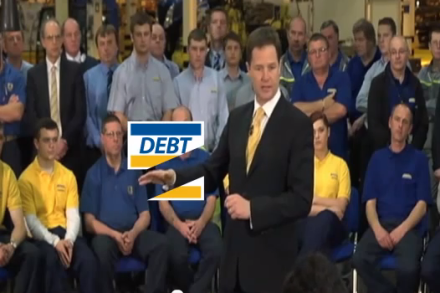
Is Nick Clegg lying about what he’s doing to our national debt? The L-word is seldom used in politics, and in spite of their reputation most politicians try to get it right. To lie is to deliberately mislead — but it’s hard to think of any other word to describe what the Deputy Prime Minister is now doing about our national debt. He is trying to give the impression that the debt is being reduced, when in fact it is rising faster than almost any European country. Here’s what he said today: 'We now know it’s going to take longer to clear up the mess left by Labour than we once hoped.

What shall we do with the drunken British?

From our UK edition

Being in government has forced the Liberal Democrats to decide whether they are liberal in the British sense of the word, or in the American, statist sense. Nick Clegg leans towards the latter, which is why he wants the state to regulate of the press. But Jeremy Browne, the Home Office minister, is emerging as a genuine Manchester-style liberal. In the Mail on Sunday today, he has come out against the illiberal strategy for the minimum pricing of alcohol. He can’t speak himself, but 'friends of Mr Browne' have this to say: 'Jeremy’s view is that the thug who has downed nine cans of lager is hardly going to think, “Oh dear, I can’t afford a tenth because of minimum pricing. I think I’ll go home to bed instead of starting a brawl.

The British press is still trapped in a fight for survival

From our UK edition

The newspaper industry is apparently working this weekend on a new response to the Leveson inquiry. This should be an interesting exercise. Throughout this imbroglio, the British press has proven itself almost comically incapable of collusion; to collectively agree on anything is not in the nature of our fiercely-competitive newspapers. This makes for healthy competition and democracy: no one can ‘square’ the press in Britain because there are too many newspapers who dislike each other too much. But this has been a problem for the press, in general, during the Leveson inquiry. Hacked Off produced a very well-run campaign and presented a united front. But as Charles Moore argued in The Spectator, the press got to work insulting and exposing each other.

Press freedom has just acquired its most important defender: David Cameron

From our UK edition

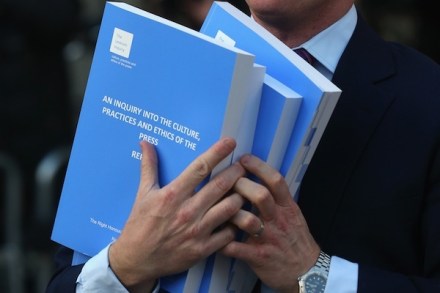
For precisely 99 minutes yesterday, it looked like press freedom in Britain was doomed. At 1.30pm Lord Leveson announced his plans for statutory regulation of the press – with his bizarre instruction that we were not to call it statutory regulation. Worse, respectable commentators seemed to buy it. A very clever compromise, it was being argued. Self regulation really was being given another chance, albeit with a device which puts a legislative gun to the head of the press. If they obeyed his demands, he would not apply the force of the state. But at 3.09pm, the Prime Minister rejected all this outright. The existence of such a device, he said, would mean politicians setting the parameters under which the press operates which it hasn’t done since 1695.

Leveson report: Cameron’s defining moment

From our UK edition

I do believe that David Cameron has just pledged to  protect press freedom – and, in effect, reject the most illiberal proposals of today’s Leveson Report. He has asked the media to reform itself, and radically. He accepts the principles of the report and asks the media to 'implement them, and implement them radically'. But he asks. He doesn’t want to tell. And he draws a very important distinction between the two: parliament hasn’t told the press what to do since 1695 and Cameron doesn't want to start now.

Why The Spectator will take no part in state licensing of the press

From our UK edition

Lord Justice Leveson reports at 1.30pm tomorrow and David Cameron has blocked out 90 minutes in parliament to respond. The big question is this: will he introduce state licensing of the media? A group of 42 Tory MPs wants him to, and No.10 apparently thinks they will rebel if he doesn’t. But this would mean revoking Britain’s 317-year history of press freedom, and give Parliament power to set the parameters under which the press operates. If the state seeks to compel publications to join the government scheme, then they face a choice: sign up, or defy the new law. In tomorrow’s Spectator, we make our choice. We say in our leading article that we would happily sign up to any new form of self-regulation which the industry proposes, no matter how onerous.

The City: a beacon of diversity

From our UK edition

Now, what would those in the Equalities industry say to an industry so diverse that it has — in proportion — seven times as many Hindus, five times as many Indians, three times as many atheists and three times as many gays or lesbians as the rest of the country? And that this was achieved not by a positive discrimination employment strategy, but by sheer hard-headed hunt for the best talent? It would likely be hailed as an exemplar of diversity, an example of how Britain is the most tolerant country in the world. But if they happen to be bankers? Well, that’s another issue altogether. The study from Astbury Marsden (cited in Allister Heath’s City A.M. column yesterday) sampled 1,655 City workers and the results are below.

Osborne’s coup: Mark Carney is the new Bank of England Governor

From our UK edition

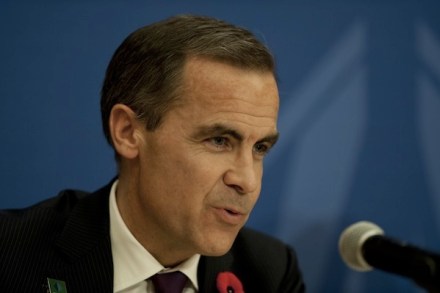
Hiring Mark Carney may just be George Osborne’s best move since becoming Chancellor. Britain badly needed a break from the failed economic consensus which still hangs around the Bank of England like a bad smell. In August, The Spectator implored the Chancellor to mount a global search. When Carney ruled himself out, I gave up hope and resigned myself to Paul Tucker, who would be likely to keep Britain on its current Faustian monetary path paved with freshly-minted banknotes. Instead, Osborne has succeeded in hiring one of the best-qualified of all the Queen’s 137 million subjects — from a country that knows a thing or two about economic crises and how to handle them.

Nadine Dorries: why I did it.

From our UK edition

What on earth was Nadine Dorries thinking? Soon after being liberated from the jungle, she kindly agreed to be interviewed by me for Radio Four's Week in Westminster and explain her rationale. The show broadcast at 11am and you can listen to the whole thing here, but I thought CoffeeHousers may be interested in Nadine Dorries' quotes as she raises interesting points about politics in general. Appearing on ITV's I'm A Celebrity, she says, was the first time she had taken time off from Westminster - while many of her colleagues sneak off the whole time. She singled out the ex-Chief Whip, Andrew Mitchell:-  “What I’ve missed from parliament is three sitting days and no legislation whatsoever.

David Blunkett warns MPs against regulating the press

From our UK edition

David Blunkett, the former Home Secretary, has has his private life in the newspapers often enough to yearn, Hugh Grant-style, for a world where the press is not free but obliged to operate within parameters outlined by the government. But I’ve interviewed him for Radio Four’s Week in Westminster (it airs at 11am this morning) ahead of next week's Leveson report and he has come out against the idea state-mandated regulation. It was an unusual discussion: the supposedly illiberal Blunkett, himself a compensated victim of hacking was defending press freedom. A Tory, Nadhim Zahawi, was urging David Cameron to act. As a former Home Secretary, Blunkett’s words carry some weight.

How Lynton Crosby could save the Tories in 2015

From our UK edition

Over the summer, the balance of probability nudged away from a Cameron win towards a Miliband win in 2015. The collapse of the boundary review deal lifted the bar for Cameron, who might have struggled anyway. The Cameron operation - for all of its strengths elsewhere - has proven weak at campaigns. Failing to win a majority in a recession against a loathed opponent was one sign, the disastrous mayoral referenda another and the tragicomedy of the PCC elections completed the hat-trick. And then there were the U-turns, many of them defeats at the hands of ad hoc groups running a decent week-long campaigns: 38 Degrees on health reform, etc. The prospect of the 2010 team running the 2015 election would encourage only Labour.

Will Osborne have the luck of the Irish with his 4G auction?

From our UK edition

Could George Osborne be in line for a genuine windfall? The Chancellor is getting quite good at conjuring fake ones (Post Office pensions, raiding £35 billion from the Bank of England) but he has yet to sell the 4G licenses. This could be more significant than next month's mini-Budget. The stunning success of Ireland's 4G auction (here) suggests that the UK auction may yield a lot more than is currently expected. A decade ago, governments world over pocketed massive windfalls auctioning the 3G licenses to mobile operators. This time Ofcom has put a reserve of £1.3 billion. But the Irish government expected to get just €170 million from its licenses. In the end, it raised €482 million in upfront fees with €373 million more to come by the end of the next decade.

Eurozone enters double dip recession

From our UK edition

The Eurozone is now in recession – this, at least, is what is implied by today’s avalanche of dire economic data. Eurostat has not (yet) made this calculation; but Capital Economics has. Take into account the relative size of the Eurozone economies who have declared figures and it suggests a fall of 0.1 per cent for Q3 which, which, coming after the contraction of 0.2 per cent in Q2, would meet the test for recession (two consecutive quarters of negative growth). So, like Britain, a double-dip recession. Greece and Portugal are still in meltdown. The Germans are doing okay, with growth of 0.2 per cent for Q3. This is mainly because of the fact that their currency would be worth about a third more if they had the Deutschmark.

The coming showdown

From our UK edition

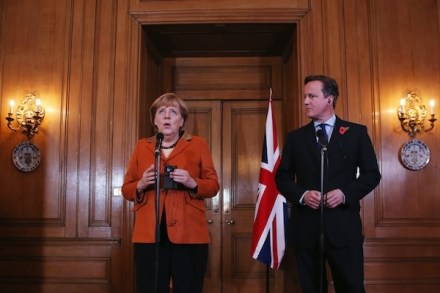
Angela Merkel is running out of nice things to say about David Cameron and the Tory rebels who are dictating his European policy. Der Spiegel magazine recently compared the British to ‘at best spectators in the gallery like Statler and Waldorf, the two old men on The Muppet Show’. This was apparently after a briefing from Merkel’s office. If she thinks the Tories are bad, the public are much worse. Over the summer, the European Commission asked 32,000 people across the continent what they thought about the EU. The Poles are still enthusiastic, the austerity-stricken Irish less so. The Italians are smarting from having lost their prime minister and the Greeks are a bit raw over the sado-austerity. But the most hostile EU member state, by a clear margin, is Britain.

The great City of London exodus gathers pace

From our UK edition

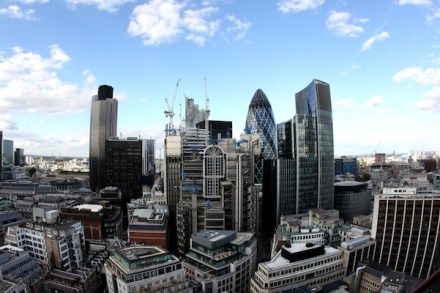
Why not tax the bejesus out of the City and tighten regulation? Yes, the bankers will moan — but it’s not as if they will go abroad. The tax rate may be low in Zug, but do our pinstriped friends want to actually live there? The City's elite have their kids in British schools, the time zone is right for business and the global phenomenon of Planet London has attractions that outweigh marginal tax rates. So let bankers moan: they’ll stay. This is, more or less, the argument that you hear from MPs on all benches as they take a carving knife to the golden goose that is the City of London. But a report from the CEBR today shows that the exodus has already started.

Harman: I cannot vouch for the strength of Tom Watson’s evidence

From our UK edition

Tom Watson’s Twitter feed has gone a bit quiet recently. Strange, as he is normally quite vocal about media ethics and their failings. But his silence is well-judged: when he stood up in PMQs and referred to a 'a powerful pedophile network linked to Parliament and Number 10' and referred to 'senior aide of a former Prime Minister' he started a massive and tawdry guessing game, just as the Newsnight investigation did. And was his evidence any stronger? Harriet Harman has just been asked on BBC Sunday Politics, and she didn’t know.

Now that George Entwistle has quit, the BBC needs an outsider

From our UK edition

After just 54 days in the job, George Entwistle has quit as BBC director general. In a career-ending interview with John Humphrys this morning, Entwistle admitted that he didn't know in advance about, or even watch, the Newsnight investigation which which led to Lord McAlpine being falsely named as a child abuser. Nor did he read Friday's newspapers which revealed the Newsnight claims were false. ("Do you not read papers?' asked Humphrys. "Do you not listen to the output?").