Fraser Nelson

Fraser Nelson

Fraser Nelson is a Times columnist and a former editor of The Spectator.

Politics vs. experience

From our UK edition

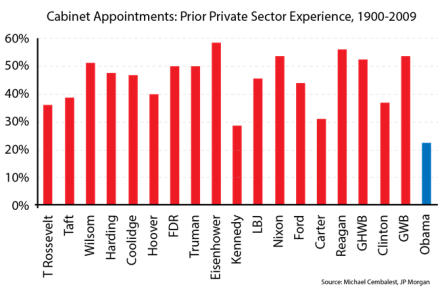
Only in politics could you get someone appointed to a top job with zero experience. Quite often, you hear laments about how the UK has a defence secretary who has never fought, a Chancellor who has never run anything bigger than a raffle, a health secretary who has only ever been a user of the NHS. In America, by contrast, the president gets to pick who he likes — so you can have genuine experts. But there are exceptions to this rule. One is John Nash, an entrepreneur and venture capitalist who runs a charity which has set up a very successful school. He has just been appointed schools minister: a round peg in a round hole. And Barack Obama has shown less interest in outside experience than any modern president (as the above graph from JP Morgan shows).

David Cameron reads blog comments

From our UK edition

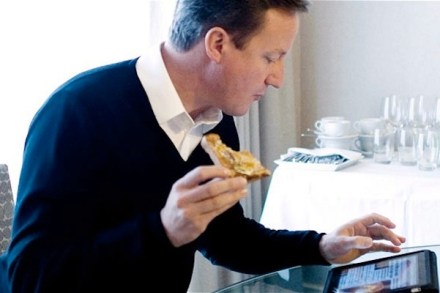
The Cameron/Clegg press conference did not teach us very much — save that the chemistry between the two is as good as ever, that they can still finish each other's sentences and exchange bad jokes. The Prime Minister's bad joke related to one of the comments under his interview with Matthew d'Ancona yesterday where he (in effect) said he wanted to stay in No10 until 2020. When asked about this today, the PM replied that a commentator on the Telegraph Online complained: ‘It's already 20:51 and you're still here.’ The assembled journalists treated his joke with the same respectful silence that they did to Clegg's ‘unvarnished truth’ joke. ‘You're all very slow today,’ Cameron chided.

How Oliver Letwin lost his Kyoto bet with Nigel Lawson

From our UK edition

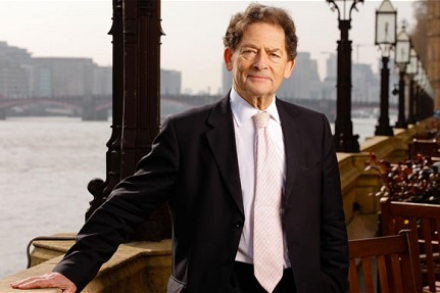
Not that anyone has noticed, but the Kyoto Protocol expired on 31 December, with  carbon emissions up by 58pc over 1990 levels - instead the 5pc cut the signatories envisaged. All that fuss for worse-than-nothing. Kyoto has not been replaced, because a new era of climate change rationalism is slowly taking root. As Nigel Lawson predicted, the hysteria of the last few years is cooling. There’s no point legislating for change that’s not going to happen. No point taxing the poor out of the sky (or off the roads) if it won’t make the blindest bit of difference to the trajectory of global warming. To be sure, countries responsible for 15pc of emissions have signed an extension of Kyoto.

The genius of William Rees-Mogg

From our UK edition

At my first-ever Tory party conference, I saw William Rees-Mogg leave a reception and chased him down the corridor like a groupie. I asked him if he had any tips: since college days, I'd marvelled at how he managed to write so clearly, compellingly and accessibly on such a variety of subjects. He had no reason to talk to a nonentity like me, but was kind enough to offer three tips. He said he took inspiration from Ben Jonson's essays: the originals, he said, were still the best. Next, he had about six topics on the boil at any one moment. There wasn't time to properly research a topic and write it up in one day, so he'd spend the week working up topics that were interesting. Having done the research and thought through the arguments, he'd wait for a news peg and then run it.

Gove to Treasury: let schools borrow!

From our UK edition

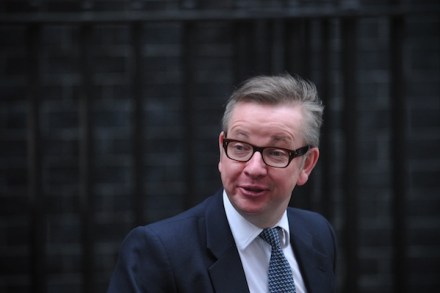
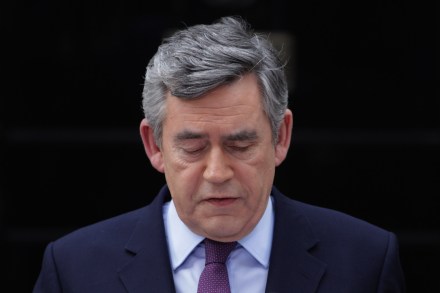
For all the good intention of Michael Gove's school reforms, there have been only a few dozen new schools so far. When I interviewed him for The Spectator earlier this month, I asked if there was much point to all this if the successful schools could not expand (and, ergo, add capacity to the system). Crucially, Academies cannot borrow because the Treasury doesn't allow it - a relic from the Gordon Brown control freak days. How much of an impediment is this? I didn't run his answer in the magazine version of the interview as this is a fairly technical point. But as Brown knew, it's on seemingly dull issues like borrowing powers that can decide the success or failure of public sector reform that he so loathed. Anyway, here's the exchange.

Michael Gove: why I won’t allow profit-seeking schools (yet).

From our UK edition

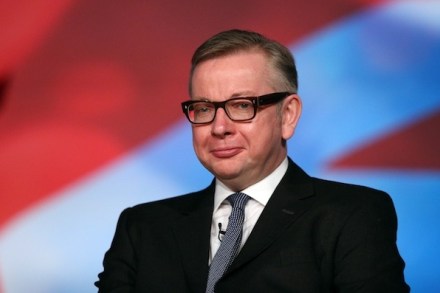
Why aren’t there more free schools? Halfway through this coalition government and we have just 72; we’d need 400 opening a year simply to keep pace with population growth. When I interviewed Michael Gove for our Christmas double issue, I asked him about all this. I didn’t put it in the magazine as this is a rather technical issue, but I thought some Coffee Housers may be interested. Gove said he expected free school project to follow Moore’s Law of semiconductors (ie, capacity doubling every two years).

Guns and tinsel: Christmas 1940

From our UK edition

White Christmas, a wartime Christmas no1, sold an distinctly American vision of yuletide bliss. The below video shows what Britain was going through a the same time: short Christmas trees being sold, because tall ones could not fit into the air raid shelters. Toy shops still open, selling Spitfires while dust gathers on the models of the Maginot Line forts, which proves so useless against German attack. Church bells were silent that year; if any rang, it would have been a signal that the invader had come. Watching this video each Christmas has become a tradition chez Nelson. My in-laws grew up in war-torn Czechoslovakia where life was even worse and the defeat of Hitler just meant a new form of oppression - as Anne Applebaum describes so vividly in her brilliant new book, 'Iron Curtain'.

Osborne’s “cuts” in full: an update

From our UK edition

An friend of mine in the City just sent me what is perhaps the shortest email I've ever received. The text just read "WTF?" with an attachment: the below graph, from today's borrowing data, showing that underlying state spending was up 5.5pc in the three months November, compared to the same period last year. The graph speaks best for itself:- So what the, em, blazes is going on? Simply that there is a detachment between the government's rhetoric (preaching against the evils of debt) and what the government is doing (cuts averaging <1pc a year and national debt rising faster than that if any Eurozone country). This combination is making credit rating agencies increasingly uneasy as they decide whether 2013 will be the year of the British downgrade.

No, Mr Bond, I expect you to settle out of court

From our UK edition

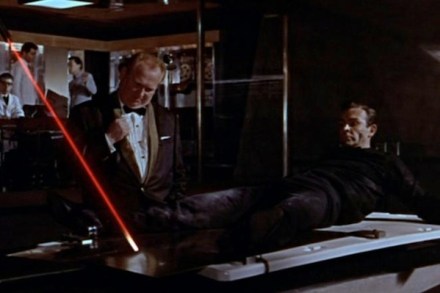
Right now, there are about 60 assorted cases of people trying to sue Britain's intelligence services. Is that because our spies are unusually wicked, cavalier or brutal? Or because they may be caught in a legal trap with the laser beam of the human rights lobby moving ever-closer to their vitals? I argue the latter in my Telegraph column today, effectively a defence of what is wrongly described as 'secret courts'. For some years now, a game of British spy-catching has been going on. The rules are simple. Say a bomb goes off in Pakistan this Christmas and the police round up suspects with their, ahem, usual care and attention. They are all released, without charge. But it is now standard operating procedure to sue the Brits - especially if one had spent some time in London.

Was Andrew Mitchell framed?

From our UK edition

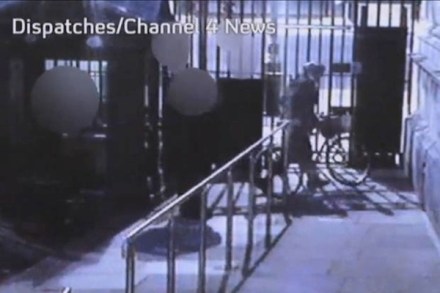
Did the police stitch up Andrew Mitchell like a kipper? I was at a No.10 reception earlier this evening and a section of a room drained when Michael Crick's extraordinary report about Plebgate came on Channel 4 News.The police claimed that Mitchell's swearing shocked 'several members of public': CCTV footage, released by the Cabinet Office, showed there was only one onlooker (below, with his head blotted out). This looks stranger still when you compare it to the account of supposed witness — who we now know to be a copper. He emailed John Randall, the deputy chief whip and his local MP: 'I was with my nephew and was hoping to catch a glance of a famous politician.

Why the Poles keep coming

From our UK edition

Yes, Britain’s employment figures are strong but most of the rise in employment so far under this government is accounted for by foreign-born workers (as was 99pc of the rise in employment under Labour). The recession has not diminished employers’ appetite for immigrant workers and today’s Sunday Times magazine has a long piece asking whether there is a “fundamental difference in our attitudes to work”. It’s still one of the most important questions in Britain today: what’s the use of economic growth if it doesn’t shorten British dole queues? And should we blame these industrious immigrants; aren’t the Brits just lazy? I’d urge CoffeeHousers to read the whole thing, but one passage jumps out at me.

The Brown bubble: the truth emerges

From our UK edition

Remember the Lawson boom? Gordon Brown did not let you forget it. His phrase to describe the Lawson-Major-Lamont era, 'boom and bust', was hammered relentlessly into voters' minds. But only now, five years after the crash, is the full extent of the Brown bubble becoming clear. A note from Citi today throws this into focus - with obvious implications about the future. If the past 'prosperity' was a debt-fuelled illusion, then what's to say we will 'recover'? The below is an 'output gap' graph that shows the size of the UK economy, relative to its potential. The Lawson boom is there, in blue. But the Brown bubble has only recently been discovered. It's a hell of a thing to miss. In pink is what those muppets at the IMF told us at the time.

Gay marriage: no culture wars, please, we’re British

From our UK edition

Ever since the issue of gay marriage returned to British politics, we have seen the debate become crazier and crazier.  When Tony Blair handled this with his Civil Partnerships Act 2004, he did so with care and discretion, mindful of deeply-held opinions on either side of the debate. David Cameron seems to pursue gay marriage as some kind of defining mission statement, and seems to have driven his party quite mad. Nick Clegg released a speech drawing a distinction between the supporters of gay marriage and 'bigots'. He revoked the b-word, but his tactic was clear. We are witnessing an attempt to bring American-style culture war to a country that has never known it - and is utterly unsuited to it. I look at this in my Telegraph column today.

S&P puts George Osborne a step closer to losing the AAA rating

From our UK edition

Standard & Poor's has delivered its verdict on George Osborne's mini-Budget. It has reduced its outlook to negative, as per Citi's predictions (which I blogged about last week). Citi said the S&P thumbs-down would happen in the new year: it took days. S&P now thinks there's at least a 33pc chance that the UK will lose its AAA rating. Little wonder, given that UK debt is rising faster than any country in Europe. S&P says the UK could lose its coveted AAA status... "in particular as a result of a delayed and uneven economic recovery, or a weakening of political commitment to consolidation." I suspect this refers to what James Forsyth refers to as Osborne's St Augustine approach to deficit reduction: Lord, give me fiscal discipline. But not yet.

BBC vs Fracking

From our UK edition

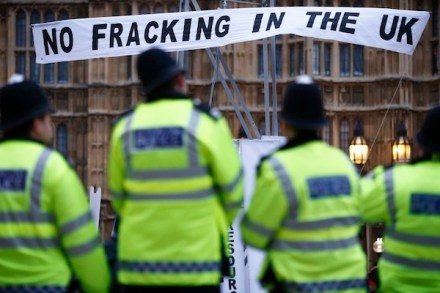
There was something odd about George Osborne offering tax breaks for fracking when it was still banned by another part of his government. The ban has been lifted and exploration can begin again in Lancashire, in what could be the most important piece of economic good news since the discovery of North Sea oil. But listening to the BBC reports this morning, it's striking how the corporation already seems to be against it. Fracking has begun, it says. And the two things is listeners need to know about fracking? That it has been accused of polluting water in America and causing earth tremors. The upside, especially for Blackpool and its environs, was not mentioned.

The ‘Stop Boris’ Hunger Games: an interview with Michael Gove

From our UK edition

On Monday, I interviewed Michael Gove for the new Christmas double issue of The Spectator. It’s out tomorrow but here’s a longer version, arranged in subheadings so CoffeeHousers can skip over bits they’re not interested in. This is the picture that stands behind Michael Gove’s desk: an imposing McCarthy-era poster which saying: 'Sure, I want to fight Communism - but how?' In their less charitable moments, Tories may argue that his Department of Education is as good a place as any to start. The strength of its grip over state schools has long been the subject of political laments and Yes, Minister sketches. Confronting the educational establishment was too much for the Blair reformers and even the Thatcher government.

Maria Miller’s adviser reminds us why politicians can’t be trusted with press regulation

From our UK edition

An email from an Asian friend last night pointed me to a piece in the Telegraph  saying: 'This is the kind of thing they do in Singapore! I’m amazed it’s happening in Britain.' She was referring to Maria Miller, the Culture Secretary, whose adviser told the Daily Telegraph to be careful about exposing her expenses because the minister now has power over press regulation. The story is here: a classic example of the 'chilling effect'. As soon as you give these politicians a hint of power over the press, they will abuse it. As Maria Miller’s case has shown, they will abuse it even before they get power. They will abuse it even while they decide whether to give themselves power of statutory regulation.

The unlikely revolutionary

From our UK edition

Behind Michael Gove’s desk stands an imposing McCarthy-era poster which says: ‘Sure I want to fight Communism — but how?’ In their less charitable moments, Tories may argue that his Department of Education is as good a place as any to start. The strength of its grip over state schools has long been the subject of political laments and Yes, Minister sketches. Confronting the educational establishment was too much for the Blair reformers and even the Thatcher government. But Gove, the least likely of political warriors, finally appears to be making progress. ‘Some things I never imagined we’d be able to accomplish alone, let alone in a coalition government, so relatively quickly,’ he says, when we meet in his office.

Citi: Osborne “no longer has credible plans” to tackle debt

From our UK edition

Britain will lose its AAA rating within 18 months because George Osborne 'no longer has credible plans to put the debt/GDP ratio on a stable or declining path' according to Citi. Its verdict is worth reading in full (pdf) and is important because it adds weight to the idea that — as a result of Osborne’s lack of progress on the deficit — 2013 will be the year of the British downgrade. What did it for Michael Saunders, the Citi analyst, was seeing Osborne take what James Forsyth refers to in this week’s political column as the St Augustine approach to deficit reduction: 'Lord, let me balance the books but not yet.' This eats away at Osborne's credibility.

Osborne’s ghost of Christmas future

From our UK edition

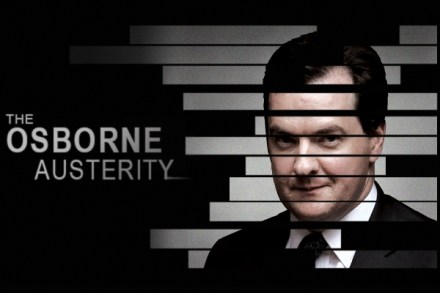
There was plenty to welcome in George Osborne’s budget, from the proposed corporation tax cut to scrapping the 3p fuel duty rise. But to read Jonathan’s seven-graph summary is to realise that Osborne's 2010 plan is not now enough. I look at this in my Telegraph column today. Here's a festive summary of my pain points:- Osbrownism - the ghost of Christmas Present  Osborne’s words – tough on deficit, dealing with debt – are very encouraging. The figures: not so much. The main features of Osborne’s plan are identical to the Brown plan he inherited.