Fraser Nelson

Fraser Nelson

Fraser Nelson is a Times columnist and a former editor of The Spectator.

Introducing the Coffee House Evening Blend

From our UK edition

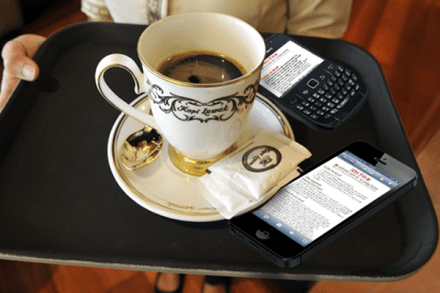
For the last few weeks, your baristas at Coffee House have been crafting an email summary of the day's news and tomorrow's events — combined with a few vital statistics from the markets and bookmakers, from borrowing costs to the Eastleigh by-election odds. You can read the last few here, here and here. We're now opening the newsletter up to anyone who wants to sign up. It's put together by Isabel Hardman, Coffee House editor, with contributions from her dutiful staff (myself included). If you want to keep abreast of what's happening in politics and don't want to wait for the next day's papers, then Evening Blend is just for you.

Nigeria’s Cardinal Francis Arinze: the next Pope?

From our UK edition

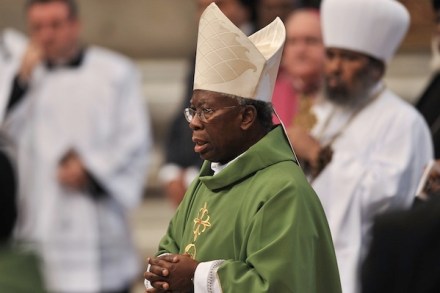
The first papal resignation since 1415 will throw the world's attention on Nigeria's Cardinal Francis Arinze, who is the bookies' favourite to succeed Benedict XVI. Not so long ago, the candidates would all be Italians. Now, the odds on a pope from the third world are quite high. Europe now stands out as a secularist anomaly in a world where religion is strong and growing stronger, as we argue in this week's Spectator. There is an saying in the Vatican: young cardinals vote for old popes. This bodes will for the 80-year-old Cardinal Arinze, an Igbo Nigerian who spent 25 years in the Vatican. He was, once, the world's youngest bishop. He is quite conservative, as the last two Popes were, and was seen as a runner last time.

The Daily Telegraph’s verdict: Osborne isn’t working.

From our UK edition

The Daily Telegraph is more supportive of the Conservative Party than any British newspaper, which is why its leader today – urging George Osborne to change course - is important. “The coalition’s economic policy is not working” it says, and goes on to urge a rupture with the failing policy. Its central recommendation is that corporation tax drops below Irish levels so Britain offers the lowest company tax in the European Union. Osborne could announce this on his 20 March budget. And he could spend 21 March listening to the sucking sound as companies started relocating to Britain.

Yes, Gove has lost a battle. But he’s winning the education war

From our UK edition

Michael Gove's enemies will have savoured his defeat yesterday, and enjoyed every second of his Commons speech admitting that his pet project, the EBacc, was ‘a bridge too far’. Gove is fighting a war on many fronts — and he lost a battle. It doesn't happen often, which is precisely why it's memorable. I look at this in my Telegraph column today. Here are my main points: 1. The passion of Gove — and Adonis. Gove is just as passionate about the transformative power of education as Andrew Adonis and, I suspect, for the same reason. Both were born in modest circumstances: Adonis to a single father in Camden, Gove to a woman in Edinburgh who gave him up for adoption. Both had the very unusual opportunity of a first-class education.

David Cameron rebuked for telling porkies about the national debt

From our UK edition

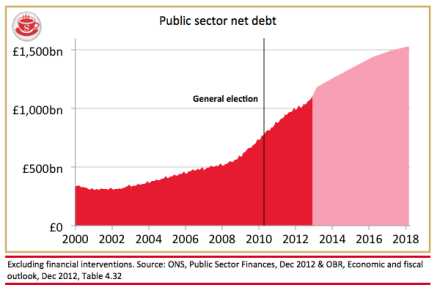
Where was Andrew Dilnot in the Gordon Brown era? The head of the UK Statistics Authority has just rebuked the Prime Minister for telling porkies about debt on his ITV broadcast last week. CoffeeHousers will remember that the PM made the flatly untrue claim that: ‘though this government has had to make some difficult decisions, we are making progress. We’re paying down Britain’s debts.’ The truth is that his government will  increase Britain’s debt by 58 per cent, and by more over five years than Labour did over 13 years.  Just last week, we learned the national debt had hit £1,111 billion and it’s heading to £1,534 billion. Put this into perspective: the Libya campaign cost £200 million.

The Cameron doctrine: Britain’s new foreign policy

From our UK edition

David Cameron is continuing his tour of Africa today and is — according to the New York Times — ‘boasting a sheaf of commitments to new partnerships in the fields of defense, counterterrorism, intelligence-sharing and military training’. He was in Tripoli yesterday, where his approval ratings ought to be sky high having been instrumental in the operation to depose Gaddafi. He was urging a no-fly zone at a time when even the Pentagon was mocking him for the idea. Last week, he upped the stakes and spoke of a ‘generational battle’ in Mali. The PM is turning into quite the hawk: after Afghanistan and Libya, the decision to contribute C-17s and 330 troops to the French effort can count as his third war in just over two years.

Live blog: Guido & Littlejohn vs Bryant & Mosley at The Spectator’s free press debate

From our UK edition

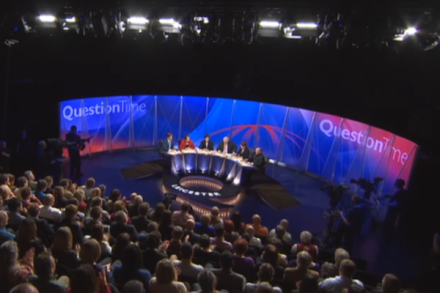
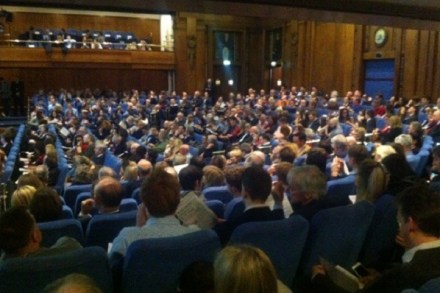
7.15pm A full house here at the IET in Savoy Place - our free press debate, sponsored by Brewin Dolphin, has been a sell-out. A stunning venue and an outstanding lineup. For the motion: Guido Fawkes, Richard Littlejohn and Tory MP John Whittingdale. Against: Max Mosley, Chris Bryant and the celebrity lawyer Charlotte Harris. Chaired by Andrew Neil. And the motion: Leveson is a fundamental threat to the free press. RICHARD LITTLEJOHN is up first. The Leveson inquiry, he said, was a cross between a Soviet show trial and Graham Norton show. The self-regarding liberal elite seized on an opportunity for this. Leveson was picking over the bones of a corpse: the News of the World was shut down by reader revulsion.

See no crime, hear no crime and speak no crime

From our UK edition

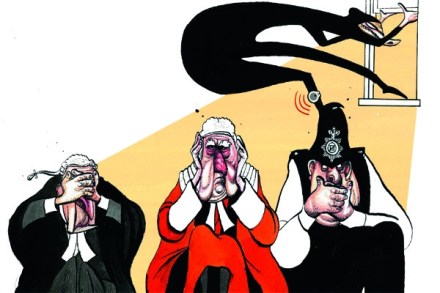
In the current issue of The Spectator, we put on the cover four words that sum up the coalition government's approach to crime: pretend not to notice. Today's Birmingham Mail offers a snapshot of what we mean: 'The data, released under the Freedom of Information Act, showed the crimes were committed by 11,422 lawbreakers – meaning on average each carried out three offences within 12 months of being released on licence or receiving a community sentence.' That's an astonishing 33,000 offences in West Midlands committed over two years by those on the alternatives to jail: suspended sentences or community sentences. Or by those released from jail early, in what's supposed to be a cost-saving strategy. The symbol of England's failure in the fight against crime is the tag.

Tony Blair and David Miliband warn Cameron: voters are not to be trusted on Europe

From our UK edition

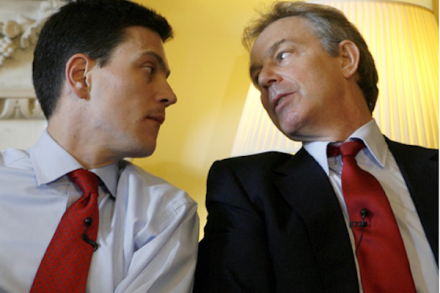
Frustrated with David Cameron? The perfect remedy lies in your newsagents today. Tony Blair has a a piece in the Mail on Sunday and his aspirant jedi padawan, David Miliband, has one in the Sunday Telegraph. Both serve a refreshing reminder of the stale, elitist, failed thinking that David Cameron swept aside with his historic referendum pledge last week. Having taken a break from frontline politics, both Blair and Miliband might have returned with fresh ideas for connecting Labour to the voters it alienated. Instead, both seem to have spent their time hanging out with business jet-set and, increasingly, speak as their envoys.

Why The Guardian has got it wrong – on cuts and on Boris.

From our UK edition

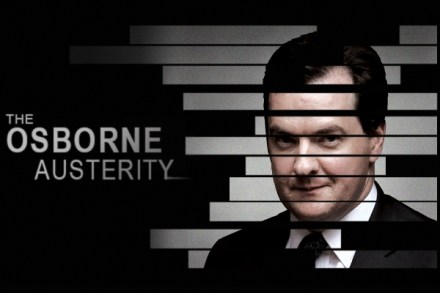
'George Osborne is under pressure to tear up his austerity programme after Boris Johnson called on the government to drop its ‘hair-shirt, Stafford Cripps agenda,' reports the delighted Guardian today. Even Boris is against it! Even he can see that the obvious solution to our debt crisis is even more debt! Except, as you’d expect, it’s all nonsense. Kamal Ahmed at the Telegraph got it right: Boris’s problem is with Osborne’s language: talking about pain, rather than recovery. He quotes Boris: 'We need to junk the rhetoric of austerity and be confident.

Worst recovery in history: British GDP shrinks by 0.3 per cent

From our UK edition

Now we know why David Cameron delivered his Europe speech on Wednesday. It’s time for bad headlines again: the GDP figures just announced show that the British economy is contracting yet again — by 0.3 per cent in the final three months of last year (see above graph). Now, you’ll hear a lot of people tell you today that quarterly data does not matter. The ONS say this is a fallback from the Olympics, which sucked economic growth forward. And they’re right: the ONS usually revises quarterly data, often dramatically. What matters more is the long-term trend, and this is pretty appalling. It now seems inarguable that Britain is going through the worst recovery in history. Slower and longer even than the 1930s.

David Cameron tells porkies about Britain’s national debt

From our UK edition

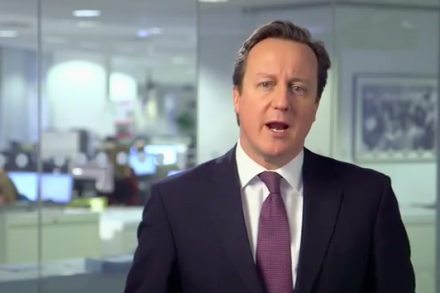
And then David Cameron has to go and spoil it all by telling porkies about what his government is doing to our national debt. The party election broadcast the Conservatives have just released is so astonishingly dishonest that it really would have disgraced Gordon Brown. In it, the Prime Minister tells an outright – how to put it? – untruth. He says:- “So though this government has had to make some difficult decisions, we are making progress. We’re paying down Britain’s debts.” listen to ‘David Cameron: "We're paying down Britain's debts" 23 Jan 13’ on Audioboo David Cameron’s policy is to increase Britain’s debt by 60 per cent, more than any European country. To increase it more over five years than Labour did over 13 years.

Austerity latest: spending up, deficit up.

From our UK edition

We can all overdo it a little at Christmas, but the government's monthly overdraft statement — which came in this morning — is of a different order. In December, HM Treasury spent £15.4 billion more than it received in tax, a worse result than December last year where the monthly deficit was £14.8 billion. And why? Well, growth has been sluggish (we may learn on Friday that the UK economy is shrinking again) so tax revenues have fallen. But, more worryingly, state spending seems to be running out of control too. The below graph, from Citi, sums it up. The blue is what is expected (from those fiscal Mystic Megs at the Office for Budget Responsibility) for 2012-13 and the pink is what we have seen in the first nine months of that period.

In 2013, Obama sees peace. Cameron sees war.

From our UK edition

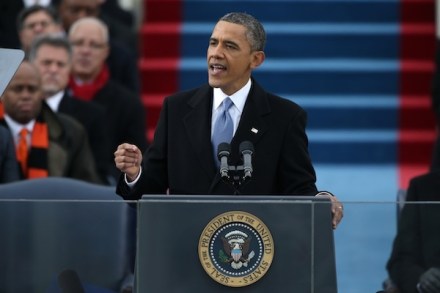
Barack Obama has just delivered an upbeat inauguration address, proclaiming that a “a decade of war is ending”. Just a few moments earlier David Cameron gave MPs a blood-sweat-toil-and-tears speech, preparing us all for a “generational" struggle against African jihadis. So what's up? Freddy Gray spells it out in a brilliant and timely analysis: Britain and America’s global interest are diverging. Obama is now, in effect, a Pacific president rather than an Atlantic president (as almost all of his others have been). Hawaii-born, Indonesia-schooled, he has always grown up seeing the world in a slightly different way. And he just doesn't see these African tribes as so big a deal, certainly not an existential threat that Cameron appears to speak about.

Big Brother (and HMRC) is watching you

From our UK edition

It's the anniversary of George Orwell's death today - and HMRC seem to be marking the occasion with adverts in cashpoints celebrating their emerging status as the Big Brother of Britain. The above picture, which I took the other day from a cashpoint, shows a pair of female eyes staring and blinking at you as you take our you money, with the clear message from the taxman: be warned, we have the power to pry. Not yet they don't: the Snooping Bill has been attacked in parliament and looks like it may not survive. The disingenuous rationale for the Bill was that it would help MI5 crack down on terrorists who use new ways of communicating. As the jihadis change their tactics, ran the argument, you need to let our spies do the same. This is bunkum.

Liam Fox: I’d vote to leave the EU

From our UK edition

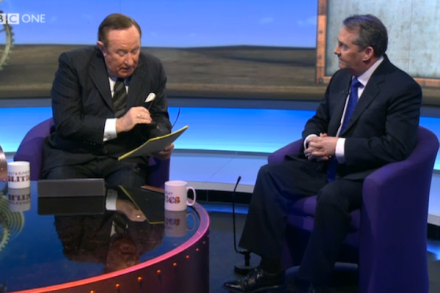
Not that it’s a great surprise, but Liam Fox has come out as an out-er - i.e., he'd vote to leave the European Union if it cannot be reformed. He has hinted at this before, writing that the idea of leaving the EU “holds no terror” for him but on Sunday Politics he explicitly told Andrew Neil that he’d prefer independence to the status quo. Once, that would made Fox a minority voice but now it’s the mainstream position – and one shared, I suspect, by at least a dozen of his Cabinet colleagues who have no yet gone on the record. If you’re happy with Britain’s EU membership, you occupy a fringe position in British politics. And you want to keep the status quo, Fox said with a not-entirely-respectful chuckle, ‘vote Liberal Democrat’.

The Spectator: the case for subscribing

From our UK edition

For three months now, we have been operating without a paywall throughout the website. It has, as we had hoped, brought thousands more people to The Spectator who have discovered the most entertaining and best-written magazine in the English language. From now, we’re offering a limited number of free magazine pieces per month and asking those who want more to join us and subscribe – from £1 a week. We’re pretty confident that, if you read five of our pieces, you’ll be hooked. Our blogs will remain free, and I know not all CoffeeHousers are fans of the concept of paid content but it’s working — for us at least. Thanks to a new generation of digital subscribers, we’re now within touching distance of our all-time high.

The London helicopter crash reminds us how vulnerable London still is to terrorist attack

From our UK edition

To have a helicopter crash so near the site of the new American Embassy and the headquarters of MI6 raises obvious concerns for national security. I was on a train when I first heard the news, and my fellow commuters all hit their mobiles. Everyone's first reaction seemed to be to ask if this was another terrorist attack. It wasn't. But for a lot of Londoners, the incident will have been a reminder of how vulnerable the capital city still is. We choose to have the headquarters of our spies in one of the most visible locations in the country. In Prime Minister's Questions, we put the entire British government under the same roof at the same time each week — making us about the only country in the world to do this. What prevents someone renting a helicopter and doing their worst?

Could Mali become Cameron’s third war?

From our UK edition

For a man cutting the military budget so much, David Cameron does seem to like using the Armed Forces. His personal conviction to act in Libya played a major part in deposing Col Gadaffi - after Afghanistan, his second war. And tonight, it looks like there may be a third. He has just offered the RAF support to the French, whose military is trying to oust al-Qaeda from their former colony in Mali. No10 has just released the following statement:- “The Prime Minister spoke to President Hollande this evening to discuss the deteriorating situation in Mali and how the UK can support French military assistance provided to the Malian Government to contain rebel and extremist groups in the north of the country.

Honda job losses should be put in perspective

From our UK edition

News of 800 job losses at Honda’s Swindon factory are making the headlines — factory closures always do. They can leave scars that never quite heal, and for those affected it will be no comfort at all to know that there are today more people working in the UK economy than ever before. But it's true. As the below graph shows, the British economy is not actually shedding jobs at a particularly high rate. Even during the boom years, there were about 1,500 redundancies every day. What mattered was that the number of jobs created was greater. But there is an in-built new bias, because the jobs created tend to happen on a far smaller level and don't make headlines. Factory closures do.