Fraser Nelson

Fraser Nelson

Fraser Nelson is a Times columnist and a former editor of The Spectator.

Why the confusion between debt and deficit?

Polls show that, depending on how you ask the question, just between 8pc and 12pc of us realize that debt is rising. It’s not hard to work out why: first, politicians – even the Prime Minister – says that debt is falling. They say they get it confused with ‘deficit’. But this morning, I tweeted that blame lies with the BBC and its failure to mention this basic point when reporting on the public finance. Its narrative tends to be one of fast, deep cuts. It tends to use language that no one understands, and not just conflating ‘debt/gdp ratio’ with ‘debt’. Most normal people don’t know what ‘deficit’ means, for example, and nor should they. It’s a Westminster wonk word, not even used in business.

Why The Spectator said ‘no’ to David Cameron’s Royal Charter for regulation of the press

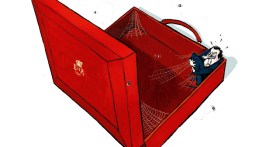
After due consideration, we at The Spectator have decided our response to the proposed Royal Charter system of press regulation. Our answer is given on the cover of the new magazine (above). We fully supported David Cameron’s response to the Leveson Report and agreed with him that the press regulation needs a major overhaul.  But, he said, this ought not to be done by politicians. The press was willing to implement the regulatory changes that Lord Justice Leveson wanted: up-front apologies, £1m damages, everything. Statute would not be necessary. The press would do it themselves, and did not need to be suborned by the politicians. Our ancient press freedom would be protected.

The BBC and religion

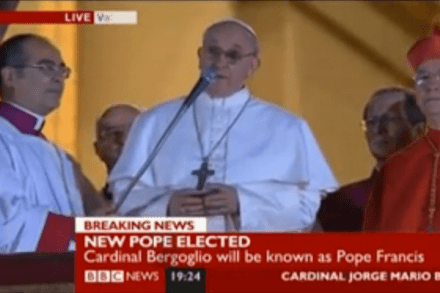
It is to David Lammy’s credit that he hasn’t deleted what my Spectator colleague, Hugo Rifkind, describes as his new all-time favourite tweet. For those who haven’t come across it yet, this is how the Tottenham MP responded to the BBC’s coverage of the papal election where it mentioned "white smoke": This tweet from the BBC is crass and unnecessary. Do we really need silly innuendo about the race of the next Pope? twitter.com/DavidLammy/sta… — David Lammy (@DavidLammy) March 12, 2013 There were more solid grounds for criticising the BBC that day: the corporation again showed its problems understanding religion. It managed to find a translator for the Vatican election who didn’t know the Lord’s Prayer.

Why it’s time to stop the generational jihad

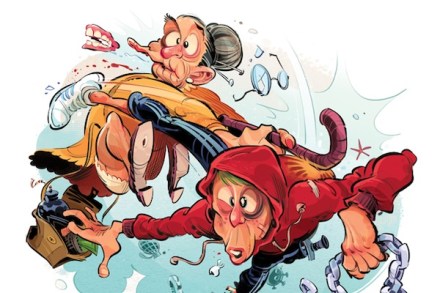
The ‘clash of generations’, depicted above by Anton Emdin, was the bestselling issue of The Spectator last year. It’s a new and potent force in British politics: the idea that the young will end up having to foot the NHS and care bills for the old: the working-age will have to support the pension-age as they sit in their hugely valuable houses and run up NHS bills. There is talk about ‘intergenerational fairness’, one of the more sinister ideas to emerge of late, and one worth rebutting. I look at this in my Daily Telegraph column today, which has drawn a response from the author of that cover story, The Economist’s Daniel Knowles. Here are my main points: 1. Oh my God, we’re all going to live.

How do you get more tax from the rich? Cut their tax rates. Lessons from Lawson, 25 years on.

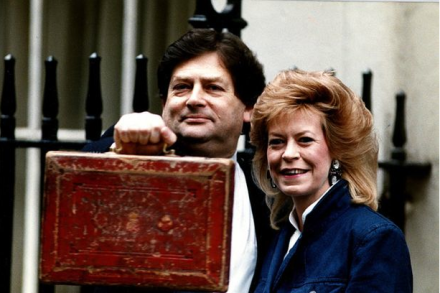
I've just returned from a dinner given by the TaxPayers' Alliance for Nigel Lawson to celebrate the silver anniversary his 1988 Budget, a great event with an all-star cast. Two of George Osborne's ministers — Sajid Javid and David Gauke — were there at the Carlton Club alongside several of the brightest stars of the Tory backbenches*. The 1988 Budget is remembered as the high water mark of Tory radicalism: Lawson's speech was stopped twice by protests in the Commons as the implications of his reforms sunk in to his opponents. History was being made, and they were on the wrong side of it.

Liam Fox’s Plan A++

It’s been a day of competing economic prescriptions from two doctors: Vince Cable  (‘debt’s so cheap it’d be rude not to borrow more!’) and today Liam Fox, who has delivered a speech to the Institute of Economic Affairs. Here are Dr Fox's main points. His main proposal is a freeze on state spending, so it would not rise with inflation (right now, it's rising by just under 1pc less than inflation each year). This would set Britain on a far faster path of fiscal consolidation: the high road, if you like, versus the current low road where there is no longer a published plan to balance the books. It’d mean the government spending about £90bn less.

Five ideas for George Osborne’s 2013 budget

The idea of an ‘empty budget’ later this month is disappointing those who backed George Osborne in the hope of his fixing the problems he so eloquently outlined in opposition. If Brown proposed cutting the deficit by 33 per cent over two years, newspapers who criticised him at the time for lacking ambition — as Osborne did — can hardly be expected to applaud the Chancellor for cutting it by just 25 per cent over three years. Faster progress is needed: on the deficit, and on economic growth. There are many tools that can be used and the Sunday Telegraph describes a few of them today in its leading article. It’s an important contribution to the debate. Here are its main points, and my take: 1. Cut taxes, especially corporation tax.

Can the posh Tories ever win working class votes?

At the Conservative Home Victory 2015 conference today, a panel was asked: how can the Tories avoid being seen as a party of the posh? 'Well, a lot of you are pretty posh,' replied the journalist Anne McElvoy. 'Open a cupboard in No10 and an Old Etonian falls out.' The success of Boris, of course, shows that class isn't necessarily a handicap. The issue is whether voters believe that a party, or its leadership, shares their values. So what to do? The conference held a session on this theme later chaired by Peter Hoskin, late of this parish. Here's a summary. Philip Davies, MP for Shipley and a former Spectator backbencher of the year, read a quote from Lord Ashcroft's research.

Lord Ashcroft’s message to the Tories: you’re doomed in 2015

I'm at the ConservativeHome 'Victory 2015' conference today, which after Lord Ashcroft's presentation should perhaps be renamed Annihilation 2015. He started the day with one of his mega expensive polls of marginal seats, a survey of 19,200 suggesting the Tories would lose 93 seats to the Labour Party alone, giving Miliband a total of 367 MPs and a majority of 84. 'I don't want to see a Labour majority of four, let alone 84, but I hope this puts the challenge into some sort of perspective,' Ashcroft said. The perspective being: give up! Go home! Wait for 2020! The noble lord didn't quite put it like that (update: you can now read his account here) but here are his main points.

Fear, loathing and the coalition government

The success of Britain’s coalition government over the last two years has been extraordinary. That two parties could come together, in Westminster’s adversarial system, was itself unusual. That they could agree a radical programme of government: school reform and welfare reform, was exceptional. But in my Telegraph column today, I say suggest that the battles over the spending review suggest that this spirit of co-operation is ending – and that the condition might be terminal. Here are my main points: 1. The constructive phase of coalition. When I served a tour of duty in the Scottish Parliament, I was struck by how the LibDems profited from coalition with Labour. They had control of departments: justice and rural affairs.

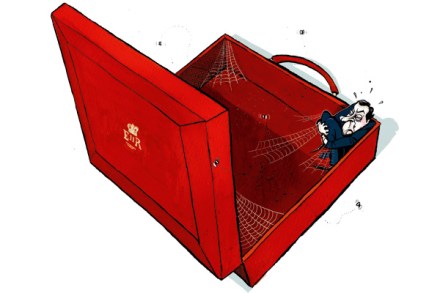
Budget 2013: How George Osborne ran out of ideas

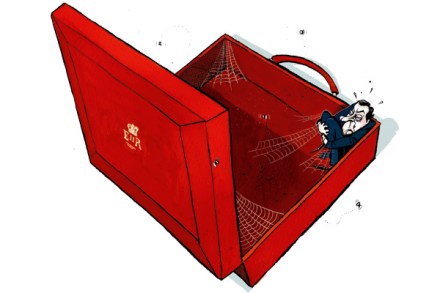
Before every Budget, George Osborne always seeks the advice of various MPs. He usually doesn’t heed it but it’s a good way, he thinks, to keep the troops happy. As the economic headwinds have strengthened, this advice has tended to be increasingly radical and in a recent meeting with the Free Enterprise Group of Tory MPs, the Chancellor made clear he was in no mood for it. ‘Look,’ he told them, ‘I tried radicalism in last year’s Budget, and I had blowback for it. So I’d take quite some persuading to do something radical this time.’ The MPs left with the clear impression that he is now preparing what will be, in effect, an empty Budget. If Osborne were planning to change course before the next election, he’d have to do it now.

David Cameron vs the Middle Ground of politics

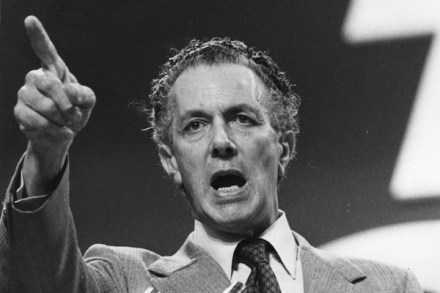
The Prime Minister's article in today's Sunday Telegraph is, like all of his major speeches, an uplifting read. It references Sir Keith Joseph, a giant of Conservative thought. Three years ago, I had the honour of delivering the Centre for Policy Studies annual Keith Joseph lecture, as did Cameron three years before that. Here is what Cameron has to say about Sir Keith in his piece today: 'But the battle for Britain’s future will not be won in lurching to the Right, nor by some cynical attempt to calculate the middle distance between your political opponents and then planting yourself somewhere between them. That is lowest common denominator politics – and it gets you nowhere.

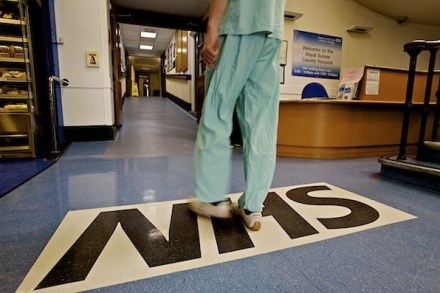
The NHS cancer surgeon who blew the whistle on foreigners scamming the NHS

Today's Sunday Times splashes on news that David Cameron is going to crack down on health tourism - that is, foreign nationals coming to Britain primarily to claim free treatment on the NHS. There have been anecdotal reports of this for some time, but the official figures suggest that there is no health tourism problem, because the number of foreign nationals treated amounts to less than 0.5 per cent of the NHS budget. Of course, the official figures wouldn't show a problem. The scam involves people being marked down as eligible, even though they are ineligible. Statistics are, as so often, unreliable witness. More reliable are those who work in the NHS and see the abuse with their own eyes every day.

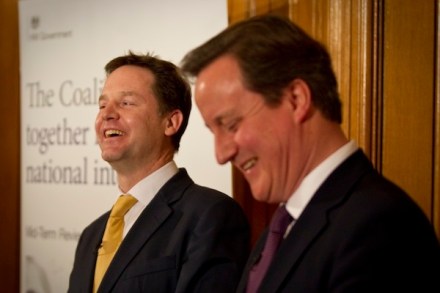
Nick Clegg drags Danny Alexander into the Rennard allegations

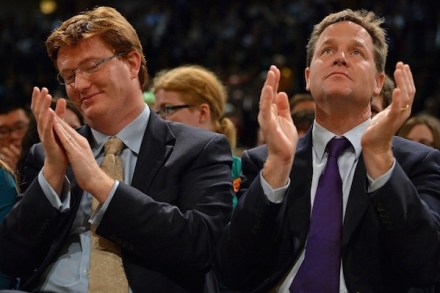
Nick Clegg has come back from Spain to admit that he did know about the allegations about Lord Rennard's behaviour towards women - and, for good measure, has told us all that so did Danny Alexander, the Chief Secretary to the Treasury. In a statement, he has this to say: 'I am angry and outraged at the suggestion that I would not have acted if these allegations had been put to me. Indeed, when indirect and non-specific concerns about Chris Rennard's conduct reached my office in 2008, we acted to deal with them. My chief of staff at the time, Danny Alexander, put these concerns to Chris Rennard and warned him that any such behaviour was wholly unacceptable. Chris Rennard categorically denied that he had behaved inappropriately and he continues to do so.

Can Ed Balls really crow about the downgrade?

As George Osborne digests the news of the Moody's downgrade, he can thank his lucky stars for Ed Balls. The Shadow Chancellor's statement, just released, neatly illustrates why he is the single biggest obstacle to Labour's regaining economic credibility:- "George Osborne said keeping the credit rating was the key goal of his economic policy. As his economic plan has floundered, it has been the last thing he has clung on to. And bizarrely his response tonight suggests he is not reflecting on why things have gone so badly wrong, but using this downgrade as one more reason to plough on with his failing plan - regardless of the damaging impact on struggling families and businesses. Bizarre?

Why Britain lost its AAA rating

Even the pessimistic analysts had given Britain until September to lose its AAA rating. That it has happened now, before the Budget, shows just how fast things are moving. Moody's has tonight downgraded Britan from AAA to AA1 and has also told us why. Don't expect economic hell to break loose as a result: these ratings tend to follow, rather than lead, the markets. But this is politically devastating for George Osborne, given that he has asked us to judge him by the preservation of this rating (and made it a manifesto pledge). So what went wrong? 1. The markets now doubt that Osborne has a credible debt strategy. The below graph, released earlier today from Citi, shows how things have gone pear-shaped. It shows debt as a share of GDP, which has risen as growth has evaporated.

Why Britain is, still, the world capital of decency

In the Wall Street Journal today there is a wonderful piece by an American tourist struck by the level of friendliness and civility he found amongst the British people. He starts with our tube etiquette: 'Three times in the space of 24 hours young men offered their subway seats to my wife, who is neither elderly nor pregnant. They seemed to do this out of a sense that giving up one's seat to a person at least one generation older was the sort of thing gentlemen did, even though not one of them fit the narrow technical definition of a gentleman. One guy looked like a gangster.' And then again... 'At the Kensington High Street tube station, we had trouble figuring out the Oyster Card transit payment system.

What if the stop the war protesters had got their way?

It's the 10th anniversary of the Stop the War protest today, which led me to think about a point Christopher Hitchens once made: how the world would look if the 'stop the war' protests - in their various forms - had their way? Saddam Hussein would be lord and master of the annexed Kuwait, his terrorised citizens living in a country once described as a concentration camp above ground and a mass grave below it. The Kurds may not have held out against him, the Shi'ite south still brutally repressed. Slobodan Milosevic would be a European dictator, having made Bosnia part of a Greater Serbia and ethnically cleansed Kosovo. Afghanistan still would be run by the Taleban, with al-Qaeda as their guests.

Reagan, Keynes, Question Time and tax cuts

I was on the panel of BBC Question Time this evening, in Leicester. Ed Balls' tricksy 10p tax proposal was raised, and I raised my reservation: it does very little for the low-paid. Balls says £2 a week, but Policy Exchange showed earlier how benefit withdrawal makes this a derisory 67p a week. And  this is the best the Labour Party could do to help the low paid? There should, I suggested, be a significant tax cut for the low-paid. That is to say: the equivalent of one extra month's salary a year. So how, David Dimbleby asked, would this be funded? Any which way, I replied: it could be by finding greater savings in the still-gargantuan government budget. And, if needs be, by temporarily extending the deficit.

Sales of The Spectator: 2012 H2

The Spectator’s sales figures are out today, and I thought Coffee Housers may be interested to know how things are going here in 22 Old Queen Street. It’s a tough time for print. Newsweek has now gone off to a digital afterlife and even The New Yorker is down 17 per cent on newsstand. As more readers change their habits – on Kindle and iPad – the Spectator has been changing too. The below chart shows how we’re getting on: The bit in blueshows the print sales, taken from our ABC certificates over the years. It does not include copies given away free, which I’ve never quite seen the point of.