Fraser Nelson

Fraser Nelson

Fraser Nelson is a Times columnist and a former editor of The Spectator.

Exclusive: Clement Attlee backs Michael Gove’s free schools

Great news for all progressives: a private school has been effectively been nationalised. Queen Elizabeth Grammar in Blackburn, founded in 1509, is to enter the state sector as one of Michael Gove's free schools. Education that had previously been affordable only by the rich will now be open to all in Blackburn. It's one of 104 free schools expected to open in 2014, bringing choice in education to a total of 130,000 pupils. This policy stands  firmly in the progressive tradition. Clement Attlee put it clearly: 'There is plenty of room for pioneer work and experiment.

Britain can now afford to send a man into space. Pity we can’t afford a proper navy

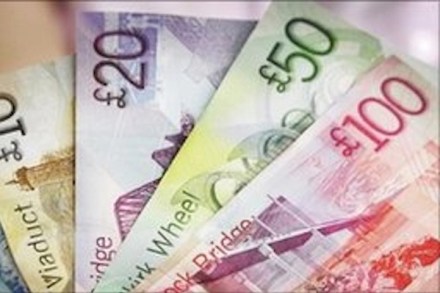
HMS Ark Royal leaves Portsmouth for Turkey today to be dismantled and sold for scrap; the Harrier jets she once carried are being sold to the Americans for spare parts. She’s being decommissioned early as we can’t afford to keep her now. Times are tough, and hard choices need to be made. The same bulletin had, as its preceding item, news that the coalition government has decided it can now afford to spend £16 million of the money it’s borrowing to send an astronaut into the EU's space station. The Labour government deemed this unaffordable in the boom years, but the well-informed BBC report explained how thinking has changed:- “For decades, successive governments have kept out of Europe’s space programme believing it to be a waste of money.

Scotland’s 2013 Eurovision triumph

Last night’s Eurovision was, as always, a collision of music, culture and politics. As always, the official British entry was dire – but, as always, the invisible hand of Britain’s world-class musicians lay behind many acts that did well. So it was with Denmark’s winner, Emmelie de Forest, whose song Only Teardrops won by quite a margin. For CoffeeHousers who didn’t catch last night’s awards, here it is. From the first note, you can tell something is up. If this is a Danish entry, why the Celtic flute? It wasn’t a homage to Belfast Child. Ms de Forest has, since the age of 14, been learning from and performing with Fraser Neill, one of Scotland’s world class folk musicians. His influence was audible last night.

Andrew Feldman denies calling Tory activists ‘swivel-eyed loons’

What a strange day. Lord Feldman, the Tory co-chairman, appears to have identified himself as the unnamed Cameron ally reported by several newspapers as referring to party activists as 'swivel-eyed loons'. He strenuously denies making the comments, and for good measure says he is  consulting lawyers. Here's what he has to say: 'I am very disappointed by the behaviour of the journalists involved, who have allowed rumour and innuendo to take hold by not putting these allegations to me before publication. I am taking legal advice.' It’s not clear why he thinks the journalists should have put the allegations to him if does not think they were referring to him.

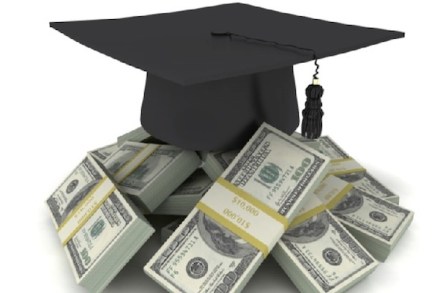
Britain’s great university rip-off

The mis-selling of higher education is one of the least remarked-upon scandals of our time, but anyone under 40 should be familiar with the concept. You’re told, at school, that a degree will make you far better-off. Politicians even put a price on it: a degree will make you, on average, £100,000 better-off in your lifetime. But this is a fake figure, produced by mashing together law and medicine degrees with others. And when you get to university, you find the ‘tuition’ involves being asked to sit in crowded lecture theatres (or watch on a video in an overflow room) and be told to go read books.

Britain’s Eurovision problem

Britain is a stickler for tradition and each May we now observe a relatively new one: we bomb in the Eurovision Song Contest. The protocol now is well-established. Our entry is chosen by a BBC bureaucrat who appears to see the whole thing as a bad joke. We send out Bonnie Tyler/Engelbert Humperdinck etc to face an army of talent from countries who have studied the art of winning and take it very seriously indeed. Electro Velvet (more on them here) can at least reassure themselves that they will not be Britain’s worst-ever entry. That honour goes to Jemini, a Liverpudlian duo who in 2003 made history by being given nul points by tout le monde.

How Cameron’s only black adviser was ‘frozen out,’ by his ‘friend’…

The Daily Telegraph has an interesting splash tomorrow. Its headline reads: 'Shaun Bailey, the Prime Minister's only black aide, was 'frozen out by David Cameron's clique'. It quotes a 'friend of' Mr Bailey, a Hammersmith candidate once given the prime warm-up slot to Cameron in the Tory conference. This friend says rather a lot, and below is a summary: 'They just didn’t get what Shaun was saying. He kept challenging them saying, 'Why are we not saying this?’ … He went into Downing Street and the first thing he said was, 'The only political conversation you need to have publicly is about the cost of living’. He also gave plenty of warning that if they wanted to talk about being a diverse party, people have to see it.

To stay in the global race, British universities may have to go private.

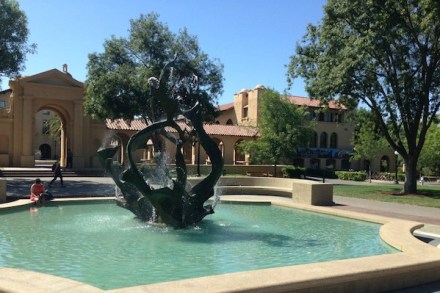
If the devil were to conduct an experiment into mankind’s ability to resist temptation, it would look something like Stanford University. It is built in one of the world’s most agreeable climates and everyone dresses as if they have just stepped off the beach - which lies only half an hour away. Hammocks lie between trees, as if to tempt the weak-willed on their way to lectures. There are jazz clubs, golf courses and swimming pools - and 1,700 students are added each  year, to see if they get any work done. But they do, enough to make Stanford one of the world’s best universities. In fact, 22 of the top 30 are American – and its universities are pulling way ahead of Britain in the world intellectual league tables.

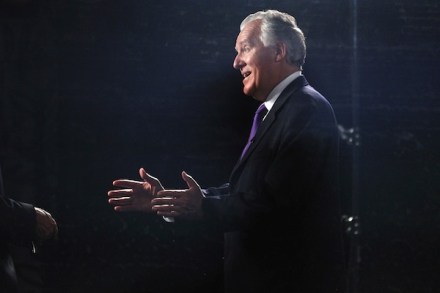
Peter Hain wants more debt — another policy stolen from the Tories

Peter Hain is pessimistic about Ed Miliband's chances, in spite of what the bookies say*. 'If a general election was held tomorrow, Labour wouldn't win a majority,' he writes in Progress Online. 'The truth is if we want a majority in 2015, we need to be performing better than we are now.' He also zeroes in on the problem: Ed Balls, and how few of his Shadow Cabinet colleagues will support him: 'We cannot afford to be equivocal about our economic policy. We need to be more upfront with the public about our intentions. Yes, we will borrow more in the short-term, in order to generate growth that will reduce borrowing in the medium-term. It makes sense to do so with interest rates so low.

Tonight: Charles Moore in conversation with Andrew Neil

You know something is going right with the world when Charles Moore’s biography of Margaret Thatcher is Number 1 in the Guardian bookshop. Little wonder: even if you’re no fan of The Lady, it’s one of the best political biographies that you’ll read. And tonight, Charles will discuss his book with Andrew Neil at Cadogan Hall in Chelsea. It looks set to be a beautiful summer evening so if any CoffeeHousers will be in London this evening do come and join us — and stay for a drink afterwards. Tickets are £45 including the book, and £25 without it. Click here, or call us on 020 7961 0044.

The coalition should have extended anonymity on rape cases

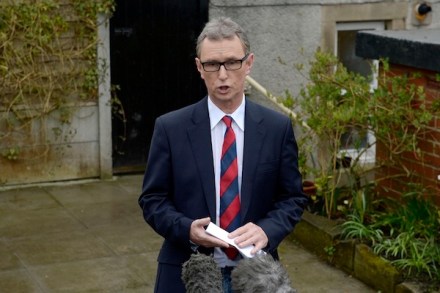
No one can ever recover from being wrongly accused of sexual assault, which is why I welcomed the government’s plan to 'extend anonymity in rape cases to defendants'. Turns out that Coalition Agreement pledge was a blunder: the Tories thought it was a Liberal Democrat idea and vice versa. When they worked out that neither of them wanted it, the idea was dropped – even though three-quarters of the public back it. Had this policy been introduced we might not know that Nigel Evans, a Tory MP and deputy speaker, was last night released on bail after being held on suspicion of raping one man and sexually assaulting another. He has not been charged but a man publicly accused of such an offence can expect his life, as he knew it, to end.

Local elections: UKIP’s ‘phenomenal performance’

What few results there have been so far suggest that UKIP has scored about a quarter of the vote and gained more seats than Labour.  A 'phenomenal performance' says Prof John Curtice. Nigel Farage now looks like the main winner, suggesting that his party is mutating from an EU protest party into a being broader party of the working class. The local elections have nothing to do with the European Union so there's no rational reason that one-in-four voters would chose UKIP — unless they believed the party was addressing their concerns on wider issues. The reason that David Cameron's referendum pledge did not shoot the UKIP fox is that Farage has adopted a broader agenda, and one he has successfully communicated to millions of voters.

The report the Department for Education does NOT want you to read

One of the better policies of this government is its offering massive databases up for public scrutiny. Sunlight is the best disinfectant, argues David Cameron, and outsiders can scrutinise what the government is doing and point to flaws. With commendable openness the Department for Education asked Deloitte to look at its massive pupil database last year, which has records on half a million kids factoring in exam results, postcode, ethnicity and poverty. And also the bizarre variation in English spending-per-pupil figures which vary from £4,500 to £10,000 per pupil (odd, given that teachers operate on national pay bargaining). Crucially, Deloitte was also asked to look at spending.

Osborne warns Salmond: it’s ‘unlikely’ we’d let an independent Scotland use the pound.

Given that the Bank of England was set up by a Scot, Alex Salmond may expect that an independent Scotland would be automatically eligible to use the pound. Not so, George Osborne has replied, in fact it's unlikely that England would let it.  The Chancellor takes a surprisingly keen interest in the campaign to save the union, and has chosen today- St George's day - to travel to Glasgow and release a paper saying that the pound will remain property of Her Majesty’s Westminster government. And if Scots want to keep using it, post a 2016 secession, they'll have to allow financial control to remain in London.

Britain and America face a new enemy: the lone wolf terrorist

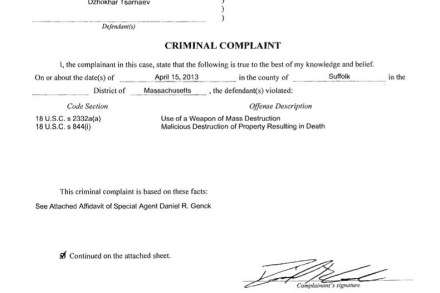
Yesterday, thousands of runners in the London Marathon converged on the greatest target in the world. Winston Churchill was the first to see the problem. ‘With our enormous metropolis here… [we are] a kind of tremendous fat cow, a valuable cow tied up to attract the beasts of prey,’ he told the Commons in 1934. But ‘we cannot possibly retreat, we cannot move London.’ New enemies, from the IRA to al-Qa’eda, have come to do their worst — but since the London Underground bombing of 7 July 2005 none has succeeded. The average British urbanite would be forgiven for thinking the threat has subsided. It has not. The atrocity at the Boston Marathon last week is a reminder that such threats never vanish — they just get intercepted. Most of the time.

Skills are the problem. But does anyone have a solution?

For years, words ‘skills’ and ‘crisis’ have been joined in British political discourse. It’s a problem that no one seems able to crack and on May 2nd, The Spectator is holding a conference to get to the bottom of it. Labour excelled at explaining the problem. When Gordon Brown went through his phase of ennobling bankers and asking them to decide government policy, he asked Lloyds’ Sandy Leitch to conduct the Skills Review which found that Britain does well at educating its elite, but not well with others. Germany, by contrast, has 60pc of youngsters in upper secondary education in vocational training.

Westminster School opens a free school

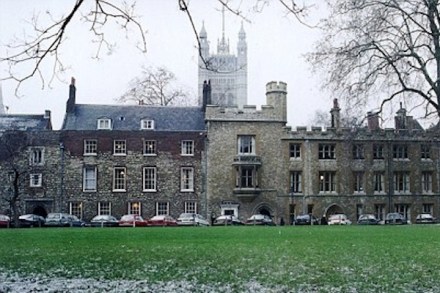
Guests at The Spectator's schools conference on  Thursday arrived via the stunning grounds of Westminster School (above), one of the best not just in the country but  the world. It was fitting setting. The great irony about the British schools debate is that while our state schools may languish at 25th place in the global rankings, our private schools are first. It's not as if Britain can't do teaching: we can, better than anyone. What we can't seem to do is expand what's good. Michael Gove's Academies Act allowed any private school to open a state school and expand — but they have been slow to respond. Now Westminster School has teamed up with the Harris Federation  to open a sixth form which will educate 250 pupils for free.

Thatcher didn’t really save Britain. She allowed Britain to save itself.

Thatchermania has died down now, and I’ve personally stayed out of it. The quality of commentary from people around at the time has been outstanding, not least  The Spectator’s own Charles Moore. The Thatcher drama is one where I can’t even claim to have been a spectator. I was not into politics when I was young, not listening to Budget speeches on the school bus like the young George Osborne. Strife didn’t hit us much in the Highlands. I once crossed a picket line with my mum when teachers at my school, Nairn Academy, went on strike. She was a special needs teacher there and didn’t talk much about it, except to say she didn’t believe pupils should be made to suffer in disputes between adults.

Why Fitch downgraded Britain from AAA, in three graphs

Fitch has today followed Moody's in downgrading Britain from AAA to AA+. The reason? George Osborne is borrowing far too much.  In its verdict, it said that gross debt "will peak at 101% of GDP in 2015-16...and will only gradually decline from 2017-18." The Chancellor, of course, had once set a rule to "ensure that debt is falling as a percentage of GDP by 2015". This has been abandoned, and the downgrades are the consequence. Fitch doesn't break down its forecasts, but it's likely they follow those made by Michael Saunders at Citi:-                       For all Labour's talk of austerity, George Osborne is borrowing more over five years than Labour did over 13 years.

Is Gove’s school reform genie out of the bottle?

Will Michael Gove's reforms outlast him? They are perhaps this government’s single greatest accomplishment. Within three years it has gone from legislation to a nascent industry, and much of it on display at yesterday's Spectator education conference, which the Education Secretary addressed. But towards the end, he raised an important point: how much of this agenda is due to his personal patronage? Is the school reform genie out of the bottle? He thinks so. I disagree, and explain why in my Telegraph column today. Here are my main points, with some highlights from yesterday's conference. 1. The energy and thoroughness of the Gove reforms are remarkable, and go way beyond free schools.