Fraser Nelson

Fraser Nelson

Fraser Nelson is a Times columnist and a former editor of The Spectator.

We need a British Bill of Rights – so we can hear less from the likes of Keir Starmer

From our UK edition

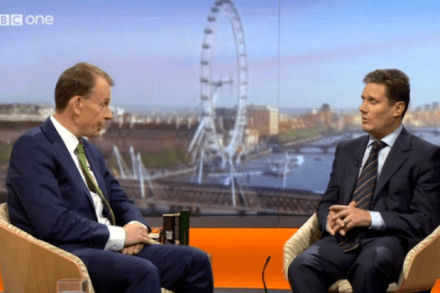
In his five years as Director of Public Prosecutions, Keir Starmer  has shown a striking appetite for (self-) publicity and given the job a higher profile than ever. He’s just informed the world, from Andrew Marr’s sofa, that he’s opposed to plans by the Justice Secretary, Chris Grayling, to tear up the egregious Human Rights Act which is playing havoc with the English justice system. I can see why he's alarmed: the confusion caused by superimposing European law on English law gives huge power to people, like him, who adjudicate. It has encouraged, in England, the emergence of American-style judicial activism.

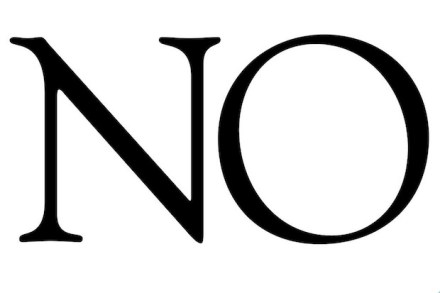
The Spectator’s two-letter response to politicians’ plans for licensing the press

From our UK edition

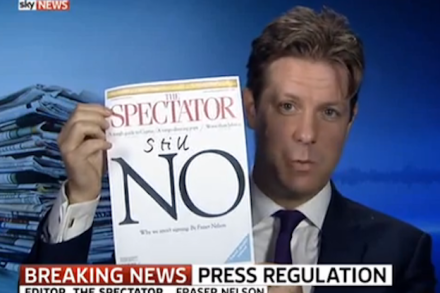
What part of ‘no’ don’t they understand? Our politicians have proudly unveiled their new plan to license the press, as if this was is in their power to do so. In fact, the press in Britain has been free from political interference for generations. The British government simply does not have the power to regulate the press, so it’s not clear why ministers have wasted their time acting as if this is their problem to solve. The mechanics of the new charter released today are not the issue. What the politicians propose is a near-duplication of the regulation which the press has already  to set up: the £1 million fines, the toughest system in the Western world.

Good capitalism vs. Bad capitalism

From our UK edition

The Royal Mail privatisation has been a resounding success: shares were priced at the top range of 330p and are now trading at 440p. The 99.7 per cent of Royal Mail staff who took shares have today seen the value of their stake jump by a third. Ditto the 15,000 Royal Mail middle managers who applied for a medium-term share programme and will keep the stake for three years. For once, I disagree with Spectator associate editor Allister Heath: he’s appalled that the government denied any shares to those who asked for £10,000 or more so all of those who applied for £750 could be satisfied. I’m delighted, and say in my Daily Telegraph column today that it represents the triumphant return of popular capitalism.

Libya’s PM, Ali Zeidan, has been kidnapped

From our UK edition

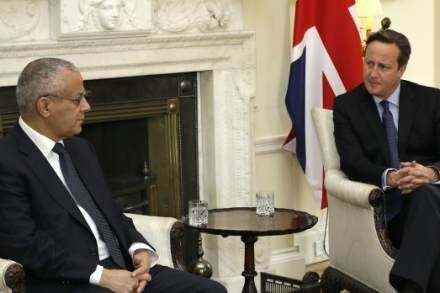
A few weeks ago the Prime Minister of the liberated Libya, Ali Zeidan was sitting in 10 Downing St talking to David Cameron. A few hours ago he was kidnapped, in what appears to be retaliation for the seizure of an al-Qaeda leader by the Americans in Tripoli a few days ago. The Libyan government has said Zeidan was 'taken at dawn this morning by gunmen to an unknown place for unknown reasons.' He had been living staying in the Corinthia Hotel, sister to the luxurious Corinthia Hotel in Whitehall. One guard at the hotel described it as an 'arrest' according to Reuters. Libya's justice minister says it was a kidnap, and that there are CCTV stills of Ali Zeidan being hauled out of the building by heavies (right). Word is that the heavies were loosely connected to the government.

Sorry, Maria Miller. We still won’t sign

From our UK edition

The very fact that a Cabinet member has stood up in the House of Commons to make a statement on the future of newspapers suggests there's something going rather wrong in our democracy. For three centuries, newspapers have not been toys in the political train set. Britain has operated on an unspoken principle of liberty, so firmly embedded in the national DNA that the separation between government and the press did not need spelt out in a constitution. Today, a medieval group known as the Privy Council (in fact, an octet of politicians) has decided to reject the newspaper industry’s plans for self-regulation in favour of politicians' plans for press regulation.

Sorry, Privy Council – press freedom was never yours to reject

From our UK edition

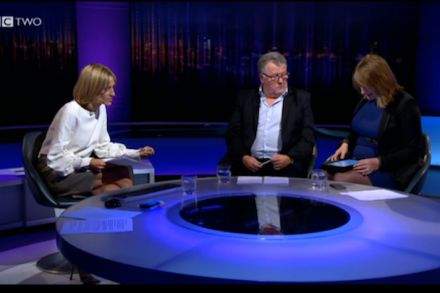
The Queen need not bother attending Wednesday’s meeting of the Privy Council: the decision over press regulation has already been taken according to BBC Newsnight. And it has leaked. An octet of MPs has decided to reject the newspapers’ attempt to preserve press freedom (or self-regulation) and defer until 30 October  judgment on the politicians’ rival plan for press regulation.

Vultures are circling Britain’s free press. Again.

From our UK edition

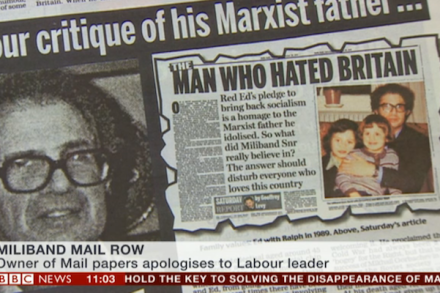
My first job in journalism was with the Glasgow Herald, which then had a bar built in to the complex. I was taken under the wing of the legendary James Freeman, who taught me the ways of the jungle. 'You see that journalists always drink in groups of three?' he told me in the bar one lunchtime. 'That’s so, when one goes to the toilet, the other two can slag him off.' And it’s true: my profession is notoriously bitchy. I was reminded of this when switching on the BBC news to find, yet again, that the transgressions of the Daily Mail and its spat with Ed Miliband is deemed the most important story of the day. I look at this in my Daily Telegraph column today. The intro to Rod Liddle’s column in the magazine this week will strike a chord with many commentators on Fleet St.

Cameron’s class war: only snobs dislike my Help to Buy

From our UK edition

David Cameron has just been interviewed by Sarah Montague on Radio Four, who rather put him through his paces. She teased out an interesting position he is adopting to the growing concern about his Help to Buy mortgage subsidies. He defends himself by saying he will liberate those 'trapped' in rented accommodation and casts his critics as cold-hearted rich kids.

Guardian CEO: my newspaper can’t survive in the UK

From our UK edition

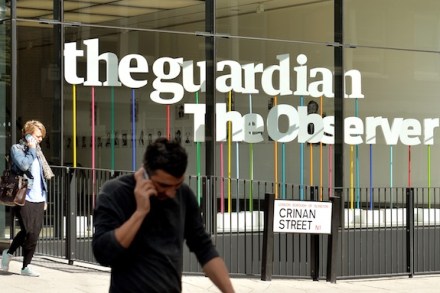
The chief executive of The Guardian has delivered a rather grim verdict about the newspaper's future (or lack thereof). 'At the moment, I believe we could not survive in the U.K,' says Andrew Miller, blaming the 'oversupply' of newspapers and the omnipresence of the BBC. He has been speaking to the New Yorker magazine which has run one of its brilliant investigations (read it all here) and his verdict is reinforced by the editor, Alan Rusbridger, who (the piece says) ‘can envisage a paperless Guardian in five to ten years'. Rusbridger can also 'imagine...printing on only certain days'. So the newspaper that came out with the slogan 'we own the weekend' may soon have to add an appendage: 'Mondays to Fridays... Not so much.

We’ll balance the books!! (By 2020) George Osborne speech analysis

From our UK edition

You have to hand it to George Osborne: he’s great at turning massive setbacks to his advantage. He pledged to get rid of the deficit over one parliament, now he’s boldly saying he’ll do it over two. Be had said he’d sort out the economy over five years (after all, Britain won a world war in six) but now - in a well-delivered and well-received speech - he’s solemnly declaring that we’re 'not nearly finished' and he should be re-elected to finish the job. So to prove it, he had a new plan for 2018-20: a new deficit pledge. As ever with Osborne, it's political.  He calculates that Ed Miliband plans to run permanent deficits, as Gordon Brown did.

Tax cuts R us! Ten points from David Cameron’s Marr interview

From our UK edition

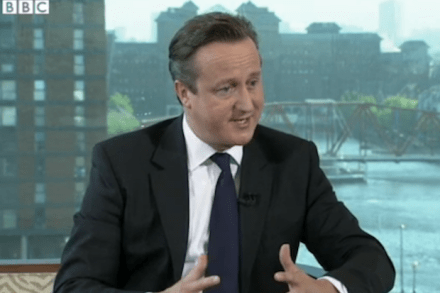
Here’s what jumped out at me from David Cameron’s interview with Andrew Marr in Manchester this morning: Tax cuts: the Tory weapon 'As this economy has started to recover, it’s very difficult for people to make ends meet. Their wages are relatively fixed, and the prices are going up. That’s why cutting people’s taxes is so important. That’s why lifting people out of the first £10,000 of income tax is so vital. That’s why freezing the council tax matters.' So Cameron acknowledges Miliband's premise, that the cost of living is an issue, then presents tax cuts as the solution. Precisely the right strategy, as tax cuts are bankable and Miliband's claim to freeze energy bills is less so.

Come on ladies, cheap cheap debt! George Osborne opens Tory conference hawking loans

From our UK edition

Come and have a look – cheap, cheap debt! Very, very good – cheap, cheap debt! The £1 fish singer may have been deported, but his spirit lives on in George Osborne's launch announcement today. The Tory response to Ed Miliband’s cost-of-living pledge seems to be more adventures into sub-prime. The Chancellor will press ahead with a second phase of his deeply controversial Help To Buy scheme - and three months earlier then he planned. Recent history has taught us to worry when vote-hungry politicians try to manipulate the housing market to provide loans to people who otherwise could not afford them. This is why so many economists are amazed at what Osborne is doing.

Making it Happen: the staggering story of the RBS downfall

From our UK edition

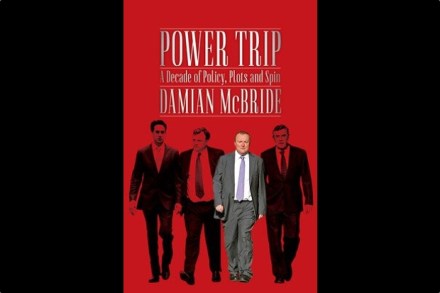
For political junkies, autumn is bringing a fix of three big books. Damian McBride’s expose of Gordon Brown has come out, Matthew d’Ancona’s inside story of the Cameron government will be serialised tomorrow. But I’ve just finished the other biggie: Iain Martin lifting the lid on RBS. Finally, Britain has an answer to Andrew Ross Sorkin’s  Too Big To Fail – except it’s set in Edinburgh rather than Manhattan, and the story is if anything even more mind-boggling. You have as much greed, ego and testosterone as there were in Wall St. But you have, thrown into the mix, the no-less-maniacal ambitions of Gordon Brown whose greed for tax revenues was as great as any banker’s greed for bonuses.

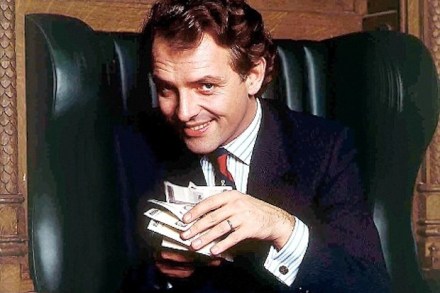
To see off Ed Miliband, the Tories need to do better than an Alan B’stard stimulus

From our UK edition

A banker of my acquaintance went to Switzerland skiing this winter. A luxury he normally could not afford, but he’d just remortgaged thanks to George Osborne’s Funding For Lending scheme and saved a packet. To his amazement, he was being bailed out by the Chancellor – he didn’t need the money but thought he’d take it if it was going. The cash certainly tricked down - to the après-ski champagne bars of Verbier. The Chancellor’s stimulus makes the cheapest loans only available to the rich (ie, those with at least 40 per cent equity in their house) and like all of the Treasury’s cheap debt wheezes it was just another subsidy to a grossly overpaid consumer who really, really didn’t need it.

Damian McBride tells The Spectator: I spoke to Ed Balls every week

From our UK edition

When the Damian McBride scandal blew up, Ed Balls was quick to distance himself from his former colleague saying he spoke to 'Mr McBride' once or twice and had dealings with him when they worked in Treasury but had not had much contact since. I remember Ben Brogan (then at the Mail) blogging: 'Liar, liar, pants on fire' (they have taken his blog down since). It summed up the reaction of most  at Westminster. The widespread assumption was that Damian McBride and Ed Balls were key members of a close-knit group of people (eight of them, I later found out) around Gordon Brown. McBride is a guest in this week's Spectator podcast, and I asked him about Balls. His account is difficult to reconcile with Ed Balls's 'Damian who?

Ed Miliband’s speech: the backlash begins

From our UK edition

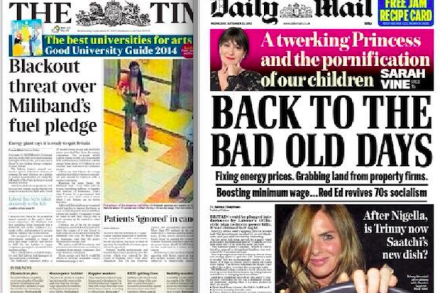
In his Guardian column tomorrow, Jonathan Freedland writes that Ed Miliband reckons he’ll "get a kicking from the Daily Telegraph" for his lurch to the left, but his ‘gamble’ is that he’ll survive it. The Times and the Daily Mail have not given his remarkable speech much of a better reception (above). All three newspapers can see what’s at stake here: a very dangerous principle, dug out of its 1970s grave and held up for applause at the Labour Party conference. It is now okay for a PM to govern by issuing edicts to private companies and having them do what he wants. Today, Miliband has said his government would issue two kinds of threats. One is to property companies: ‘build more houses, or we’ll confiscate your land!’.

Red Ed is bringing back populist socialism

From our UK edition

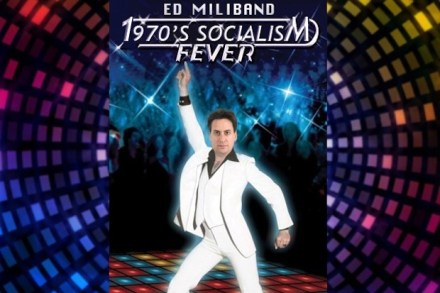
'Red Ed is back,' said the Daily Mirror’s Kevin Mcguire, and it’s a fair summary of today’s speech. He has pledged to use state power to force the hand of property companies: "use it or lose it" he said, reviving the idea of compulsory purchases. His new flagship policy is imposing a 20-month price freeze on domestic energy prices, ordering private companies around. He won a standing ovation when he pledged to reverse the Conservative (and Tony Blair) liberal reforms of the NHS. Now, you can say a lot about Ed Miliband's shortcomings but you can't call him vacuous. He now has an identifiable mission: to bring back 'socialism', as he pledged to do Sunday.

Labour’s Jon Cruddas: I’m a conservative

From our UK edition

Why does the right like Labour’s Jon Cruddas so much? Because he’s actually a conservative. He’s just admitted as much in a fringe meeting, hosted by my colleagues at the Centre for Social Justice. He was talking about his own politics: conservative, he said. But in a Labour way. 'I don’t go in for the self-analysis that much,' he said, but he liked the 'romantic traditions' of Labour and part of it was always about defence of family and traditions from 'relentless commodification of our lives... and that’s the tradition I come from'. A tradition which had been crushed by the Fabian element in recent decades, he said, but one that’s making a comeback.

Analysis: Ed Balls is right on HS2, wrong on almost everything else

From our UK edition

I will admit to a grudging admiration for Ed Balls. He’s wrong about most things, dangerously so. But his speeches are always well-considered, full of substance and usually part of a strategy that he keeps up for months if not years. For that reason, his speeches are always worth reading. This was a good speech, full of substance and forceful expositions of classic leftist errors. Aside from his bizarre towel joke, here’s what jumped out at me from his speech here at the Labour conference in Brighton:- 1. Back to the 1970s! Balls pledges to reverse reform and return to the pre-Blair Labour. Ed Balls was always against the Blair-era reforms of health and education, and now describes them as Tory ideas which he would abolish.

Audio: Ed Balls jokes about David Cameron’s ‘surprisingly small towel’.

From our UK edition

As Ed Balls knows, people tend only to remember one thing about a speech. A word if you’re lucky, a sentence if you’re really lucky. Or an image. Perhaps he was relyijg on HS2 to grab the headlines because the image he conjured up for us today was David Cameron getting changed in the beach with a Micky Mouse towel: not a fat Prime Minister, you understand. Balls tells us that his wife, Yvette Cooper, was impressed at how “for a 46-year-old man, David Cameron looked rather slim. Slim? What on earth she mean? And here’s the Jim Davidson-style punchline: “I just thought for a Prime Minister, it was a surprisingly small towel.