Fraser Nelson

Fraser Nelson

Fraser Nelson is a Times columnist and a former editor of The Spectator.

Blow to Salmond as Nairn Academy votes to save the union

From our UK edition

Where Nairn goes, so goes Scotland. And it’s bad news for Alex Salmond because my old school, Nairn Academy, held a mock referendum on Scottish independence yesterday and the white smoke has just come out. They voted 71/28 to stay in the union with a 64 per cent turnout. This is more than a stunt from a Highland comprehensive: next year’s independence referendum is one in which 16 and 17 year olds will be voting so the opinion of Scottish school pupils matters. When Salmond decided to extend the franchise in this way, he obviously assumed the young would be all on his side. Not much. This is the Facebook (or Instagram) generation: their world is digital and their horizons are global.

Osborne increases debt more than Labour did over 13 years

From our UK edition

The national debt figures are out - £1.2 trillion and rising – and although I hate to say it, the Labour Party has a valid point to make. If you don't adjust for inflation, Osborne has borrowed more in under four years than the Labour Party borrowed over 13 years. It’s unusual for Ed Balls to talk about debt accumulation as a bad thing, perhaps because his policy remains the accumulation of even more debt. But here’s the story so far:- Labour is, as ever, spinning too much. As they know, you need to adjust for inflation to make any meaningful comparison in public spending. But the overall point holds. Now, things are going pretty well for Osborne. Today , a CBI survey shows the strongest orders for manufacturing since 1995 (note from Citi here, graph below).

Two cheers for Nick Clegg’s tax cuts

From our UK edition

It’s tempting to see Nick Clegg as a champion of lower taxes. He's nudged the tax threshold up over this parliament and in a letter sent out to Liberal Democrat members  (while David Cameron is out of the country) he suggests the state should only start to confiscate earnings from people when they hit £10,500 a year, higher than his current target of £10,000, from April 2015. He has this to say: Think of it as a workers' bonus. The British people have lived with austerity for three years. Your sacrifices are making it possible for us to fix the economy*. This is your recovery and you deserve to feel the benefits - without delay." While I applaud his focus on those on low incomes, this is a rather weak solution.

The economy is booming, says the Bank of England. So why won’t it raise rates?

From our UK edition

Yet another survey suggests that Britain is booming – this time, it’s from the Bank of England’s Monetary Policy Committee. They’re the guys who kept interest rates too low for too long – creating the last boom. It sees another boom now."For the first time in a long time you don’t have to be an optimist to see the glass is half full," said Mark Carney, the new BoE Governor. "The recovery has finally taken hold." Citi has crunched latest BoE figures (pdf) and says this envisages real GDP growth of a stonking 3.4 per cent next year and 2.8 per cent the year after, which it says is one of the MPC's biggest-ever upgrades. (They had been expecting 2.7 per cent and 2.5 per cent for 2014 and 2015.) It’s also substantially above the consensus. Happy days.

The Spectator wins the top gong at the 2013 BSME awards

From our UK edition

Last night, The Spectator won the top gong from last night’s British Society of Magazine Editors awards. It’s a thrill for us here at 22 Old Queen Street – ours was the last of 24 awards and each of them showed the incredible vitality of the British magazine industry. To win the final gong, in such illustrious company, was a real honour. Newspapers are having a horrid time of it, but magazines are holding up rather better - as was demonstrated by the quality and range of entries last night. The full Condé Nast stable was well-represented, as were the magazine supplements of the national newspapers. There were trade magazines galore, and new titles opening with plenty fresh ideas (Exhibit A being N, the in-flight magazine of Norwegian airlines).

Help to Buy mortgage subsidies show how little politicians learnt from the bubble years

From our UK edition

Gordon Brown used to joke that there are only two types of Chancellors: 'those who fail and those who get out in time.' Inside this joke lay his strategy: he was stoking a debt-fuelled bubble that was going to burst, but he hoped it would do so after the election or on someone else’s watch. It’s the textbook definition of putting party over country. I’m afraid that we can see its reflection in Help to Buy. David Cameron’s article in the Sun today shows this politicking is back. Look, he said, this policy shows I’m on the side of aspirational voters. If you want to get on in life, the Tories are on your side – they’ll kit you out with a sub-prime housing loan. After all, what could possibly go wrong?

Is Islam so weak that Malala’s book has to be banned in Pakistan’s schools?

From our UK edition

The autobiography of the Pakistani schoolgirl shot by the Taliban, Malala Yousafzai, has been banned by Pakistan’s private school association. No small matter given that Pakistan's hugely popular independent schools teach half of its pupils.Today's Independent on Sunday reports it saying that I am Malala would have a "negative" effect on its pupils due to the way it talks about Islam - so it's being banned from the libraries of 40,000 affiliated schools. I’ve read it – a great book, but scathing about jihadis. Specifically, jihadis who ban books. Here’s Malala:- “My father’s college held a heated debate in a packed room. Many students argued that the book  [The Satanic Verses] should be banned and burned and the fatwa upheld.

How the foreign aid industry demeans Africa

From our UK edition

The Norwegian students' group which  last year came out with the brilliant 'Africa for Norway' spoof video has again released a hilarious film lampooning the aid industry for the stereotypes they perpetuate. The video makes a serious point. That the aid industry uses pictures of starving babies to trigger donations, even if it means spinning a misleading and patronising view of Africa. All this is Western self-indulgence if the aid doesn't actually help Africa (as African authors like Dambisa Moyo have demonstrated). There are many African countries with a wide array of problems - chiefly, bad governance. These videos raise a potent question: what's the point of all these charity appeals? To actually help Africa, or make Westerners feel better about themselves?

The CSJ awards show what’s going right in Britain

From our UK edition

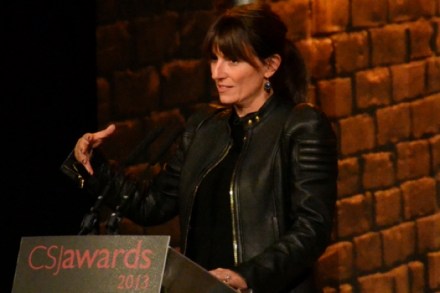
The (other) big awards ceremony yesterday was that held by the Centre for Social Justice. CoffeeHousers will be familiar with the problem: if you want to donate to a charity, which ones are actually helping society rather and which wasting their money on tedious political campaigns? Name recognition tends to drive donations, and the CSJ awards (which I had the honour of being involved in) are aimed at giving more profile to small charities. And cash awards for each. It was a brilliant evening. God knows there's plenty going wrong with this country, but this was an evening dedicated to what's going right. Here were a few of the winners. JAN Trust is run by a few staff and 25 volunteers who help women (especially BAME women) who arrive in Britain without much knowledge of the country.

Boozy, druggy adults. Sober, serious kids. Welcome to Ab Fab Britain

From our UK edition

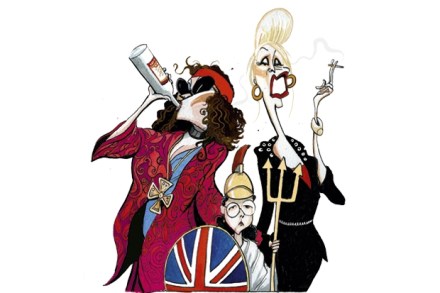
Twenty-one years ago this week a sitcom arrived on British television involving three characters so improbable that they held the nation in thrall. It had started as a French and Saunders comedy sketch about a hedonistic ‘modern’ mother (Eddy) and her appalled, straight-laced daughter (Saffy). To spin this out into a series, Jennifer Saunders added Joanna Lumley as a hard-nosed, hard-drinking best friend (Patsy) and two essential props: Bollinger champagne (Bolly) and Stolichnaya vodka (Stolly). Absolutely Fabulous was born. It was never intended as a piece of social commentary — yet it has turned out to be bizarrely prophetic. Over the past two decades, Britain has steadily witnessed precisely the change in generational behaviour adumbrated by Saunders.

Sorry, Ed. But it looks like Britain is now booming

From our UK edition

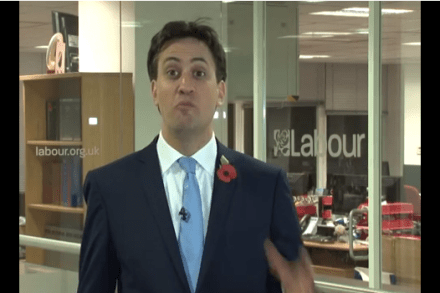
Things are lining up nicely for George Osborne’s Autumn Statement next month (and fairly badly for Ed Miliband, who's making his economic speech today). For the first time since he became Chancellor, he will be able to report forecasts better, not worse, than his previous suggestions. The European Commission has just upped its UK growth forecast for next year to 2.2 per cent, up from 1.7 per cent – the largest upgrade of any European country. The Eurocrats are, of course, just catching up with the changing independent consensus. The graph pictured above (from the Treasury) shows how the consensus for 2014 growth has been revised upwards month after month. So where will it end up?

Introducing the Coffee House Lunchtime Espresso email

From our UK edition

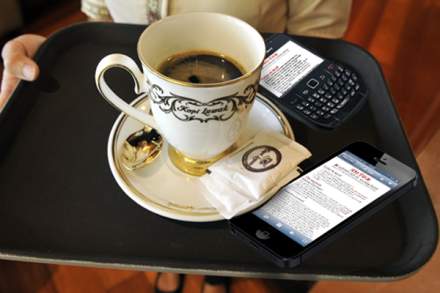
For some time now, we at  Coffee House have been running an Evening Blend email which sums up the day's goings-on in Westminster. It has proven so popular that we're launching a lunchtime version today. Every day at 1pm, the Lunchtime Espresso briefing will bring you you up to date with what's been happening in and around SW1. If you prefer the latest delivered to your inbox, then do sign up below. Like the Blend, the Espresso is free to sign up for and will run every day when Parliament is sitting. Tomorrow's news, by lunchtime today. Sign up for the emails here.

Northern voters turn against HS2

From our UK edition

When George Osborne first announced his plans for high speed rail, I was all for it. I’ve spent too much of my life on broken-down trains between Inverkeithing and London – and, like many Scots, resented the way that most transport money seemed to be spent in the imperial capital. As I say in my Telegraph column today, the key to staying happy about HS2 is not to think about it much further: don’t contemplate the costs, don’t ask if transport can be helped in other ways. This is what Westminster is doing: all its parties have signed up to the project. They won’t have a proper debate about it. We at The Spectator did out bit last night, with yet another highly successful debate on HS2.

The new press Royal Charter must be ignored

From our UK edition

The foxes have voted, and after careful deliberation concluded that they should be in charge of the chicken coop. No one should be surprised by the outcome of tonight's Privy Council meeting: a group of politicians, masquerading as the voice of crown, has just approved a Royal Charter which gives them power to set the terms under which the press operates in Britain. The decision was taken in secrecy and the newspapers are suing. It's a royal mess, but one with a very clear solution. This new Royal Charter does not force newspapers to join. It's a bizarre new club, looking for members. It must now be ignored.

Unions vs Grangemouth

From our UK edition

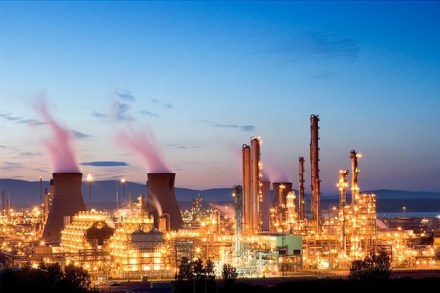
For months, the Unite trade union has been calling the bluff of Grangemouth's management. Ineos has said the plant is losing £10 million a month and it has offered to invest £300 million upgrading it – but they wanted workforce reforms, including a two-year pay freeze and the end of final-salary pension schemes (ie, pretty much what the rest of us have been used to for years). The unions refused, and wanted the cash anyway. The owners said no: shareholders were already losing money and could not afford to lose more. Calum MacLean, chairman of Ineos Grangemouth, was fairly stark in his assessment: 'People need to realise that as a site, this site’s lost £150 million per year for the last four years.

Gove and Laws slap down Nick Clegg over free schools

From our UK edition

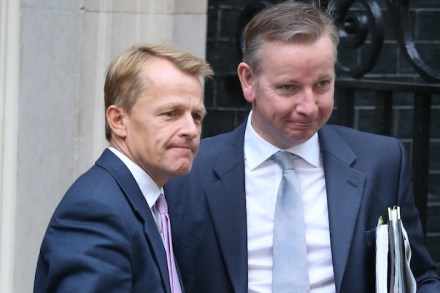
The Department for Education has just released a statement about free schools, which can be translated as saying: Oi Clegg! Free schools: clue's in the name. They don't have to listen to what you or any other politician thinks about the curriculum and they're as free as private schools to take on staff who have not gone through the QTS teacher training programme. So speculate as much as you like, Cleggy, about the liberties you'd like to extinguish after 2015. The genie of school freedom is out of the bottle and won't be put back in under this government. (My understanding is that David Laws is at one with Michael Gove over this, and made statements last week to this effect - I suspect Laws be just as appalled over the implications of Clegg's overtures to the teaching unions).

Nick Clegg vs school freedom

From our UK edition

Nick Clegg’s aides have been briefing the Sunday newspapers saying (in effect) that he that he's had enough of this school freedom malarkey. Certain head teachers are using their new liberties in ways of which he disapproves. So if he's in government after the next election, he'll curtail these freedoms somehow. He's chosen to enter the squabble over 'qualified' teachers (a canard, explained below). He also proposes curtailing freedoms teachers have been given over the curriculum. But the more important overall point is that he's positioning himself as being opposed to Michael Gove's reforms. 'Clegg turns on Michael Gove over his 'ideological' school reforms' says The Observer (right). The Independent on Sunday has a similar story.

The Spectator website passes one million unique monthly users

From our UK edition

It’s a red-letter day here at The Spectator: figures in this morning show that we are now read by more than a million people a month. The popularity of the magazine’s digital edition is surging. Since its relaunch last year, our visitors (or, in the digi-lingo, ‘unique users’) have trebled. Now, as the  chart below shows, we are into seven figures: The introduction of a paywall seems to have done nothing to deter our growing army of readers – it’s annoying, of course, to encounter a subscription barrier. But what we offer is a simple and cheap remedy. Our online visitors are converting into paying subscribers at a fast rate – and understandably, given our ridiculously good value of £12 for three months.

Why does the Guardian only get worked up about the press’s freedom to leak?

From our UK edition

Alan Rusbridger, the editor of the Guardian, has been busy tweeting comments from Jill Abramson, the new executive editor of the New York Times, basically in support of his newspaper’s Snowden disclosures. For some reason, he does not seem as interested in her comments about press freedom given on Newsnight last night. Perhaps this is became New York Times has given the reaction that the Guardian should have: that any involvement of politicians in the regulation of the press is appalling and should be rejected. As Abramson put i:- 'I think that the press in Britain has more restrictions on it than we do. The framers of our country, in the US, had a big fear of too much power put in the central government.