Fraser Nelson

Fraser Nelson

Fraser Nelson is a Times columnist and a former editor of The Spectator.

In defence of Channel 4’s Benefits Street

From our UK edition

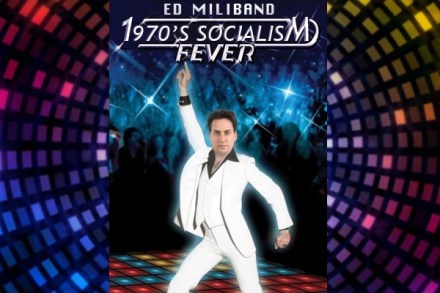
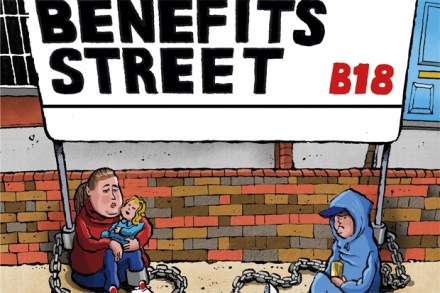
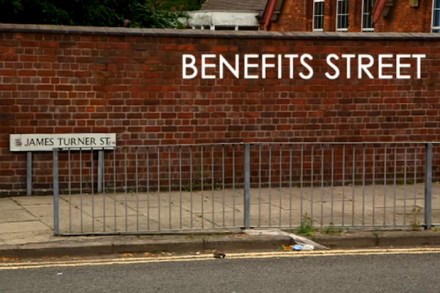
Few subjects are more unfashionable than British poverty. And judging by the reaction to Channel 4’s brilliant documentary Benefits Street, it seems as if the left believe that it ought not to be discussed at all. This five-part series focuses on the inhabitants of James Turner Street in Birmingham, which has 99 houses, the majority of whose inhabitants are dependent on welfare. For two years, a TV crew let the camera roll and Ch4 now tells the story – giving a complex, uncomfortable view of what life is like at the bottom in Britain. The left's charge is that the wicked media is ‘demonising’ those on benefits, portraying them as scroungers – then claiming this represents everyone on welfare. This claim is impossible to reconcile with Benefits Street.

Britain is booming. So do we still need ultra-low interest rates?

From our UK edition

Car sales are up 11pc, making the FT splash this morning. House prices are soaring again, up 8pc last year. And the British Chamber of Commerce has this morning released its Q4 survey showing a startling surge in investment, orders and employment (graph, above). Good news for George Osborne’s plan for a ‘balanced’ recovery: manufacturers' capacity use, confidence and employment difficulties are at the highest since the survey began in 1988. The upshot, as Citi says (pdf) is that the UK economy will likely grow far faster this year than Osborne’s cautious official expectation. He will most likely have another healthy upgrade to announce in his next budget. Citi expects growth of more than 3 per cent this year.

Fisking George Osborne’s ‘hard truths’ speech

From our UK edition

Today, George Osborne used a speech to administer what he called ‘hard truths’ about the economy. But in some cases, the truth was even harder than he let on. Here is a Fisk of his speech... 1. Size matters — ‘Government is going to have to be permanently smaller – and so too is the welfare system.’  This phrase — 'permanently smaller' — is designed to appeal to Conservatives. But in isolation, it's pretty meaningless: smaller than what? The Brown peak? The below graph tells the story. The size of the British government (in red) used to be around average for a developed country (in blue).

David Cameron: Alistair Darling is the right man to lead the battle for Britain

From our UK edition

Today's Sunday Times revives reports that senior Conservatives are concerned that Alex Salmond will prevail in next year's referendum and that David Cameron will be the last British Prime Minister. Personally, I'd be concerned if they were not concerned - Salmond is a formidable late-stage campaigner and the 'no' side is, in effect, being led by the parties out of whom he made mincemeat in the last Scottish Parliament election. The future of our country is at stake: now is not the time to take anything for granted. Especially at a time when unionist parties in Scotland have been collectively spanked by a formidable and well-funded SNP campaign. But what about specific concerns about Alistair Darling's leadership of the campaign?

The biggest shocker of 2013? That it really is a wonderful world

From our UK edition

Next year marks a millennium since the sermon given in 1014 by Archbishop Wulfstan in York where he declared that “the world is in a rush and is getting close to its end." Ever since, people (especially clergy) have had a similar story to tell: the world is moving too fast, people are too selfish and things are going to the dogs. The truth is that the world is in a better shape now than any time in history - a claim which may sound bizarre, but it's borne out by the facts. I was on LBC radio earlier, discussing the leading article in the Spectator Christmas special which explained why 2013 was the best year in human history. Never has the world been wealthier, never has the growth been more fairly distributed.

David Cameron: the press may regret its defiance over regulation

From our UK edition

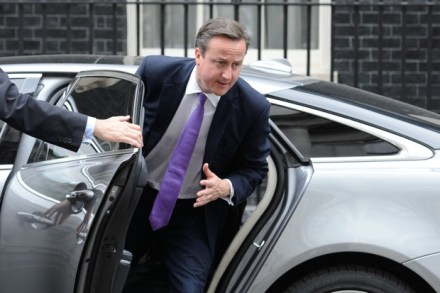
In my interview with David Cameron in the current Christmas edition of The Spectator, there wasn't enough space for everything - including his thoughts on press regulation. We did discuss it, in the back of his car, and he warned that the press is playing a dangerous game in its defiance — i.e., refusing to sign up to the Politicians' Charter. This was an elegant and voluntary compromise, he said, and the alternative may be compulsory statutory regulation enforced by an illiberal Labour government. After the publication of the Leveson Report in November last year, Cameron spoke very eloquently about the danger of statutory regulation - rejecting regulation which 'has the potential to infringe free speech and a free press'.

WATCH: Christmas under fire – Britain, 25 December 1940

From our UK edition

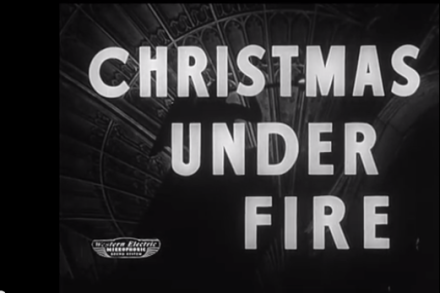
This has become a Christmas tradition for me: watching this extraordinary four-minute film about 25 December 1940. Its narrated by an American - at the behest of the British government, who wished to persuade Americans that our fight against Hitler was worth joining. The script is beautiful, almost poetic. "For the first time in history, no bells ring in England to celebrate the birth of the Saviour. No church bells are allowed to be rung in England. If they are, it will mean that the invader has come… At Christmas, England does what England has done for a thousand years - she worships the Prince of Peace." Do watch the film. It's more moving than anything you'll see on television today.

Christmas Eve special: Susan Hill reads The Boy on the Hillside

From our UK edition

Every Christmas, The Spectator runs a short story but for the first time this year we're having it read — and by the author. We're delighted that Susan Hill, whose many books include The Woman In Black and The Mist in the Mirror, has agreed to read her new story, The Boy on the Hillside, which we are releasing as a special podcast. If you can wire up your computer or telephone to the sofa, it's the perfect way to spend some time on Christmas Eve.

Scottish or British? The identity debate the SNP does not want to have

From our UK edition

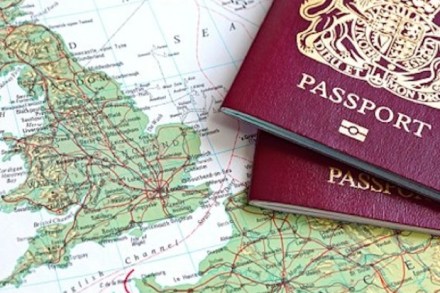
Earlier on today, I was asked by Angus MacNeil, a Scottish National Party MP if I would choose a Scottish or a British passport should they win the referendum. As he knows, the choice is anathema to those of us who are proud to be both Scottish and British and don’t see any antagonism that needs to be resolved by separation. SNP politicians, in my experience, are some of the nicest people in politics on either side of the border. Moderate, friendly, intelligent, open-minded, gentle: such decent types that you can end up being blinded to their agenda. Which is to destroy Britain, to force people to choose between being Scottish or British, to advocate a narrow-minded nationalism that involves putting up borders when the rest of Europe has been taking them down.

ONS admits UK economic recovery is stronger than it thought

From our UK edition

The ONS has today revised upwards its growth for most of 2013, to show a recovery far stronger than it admitted at the time. This fits a trend: in economics, good luck tends to come in waves. And the tools economists have to work out what's happening are so crude (and often useless) that it takes years to work out what really happened. Only in 2011, for example, was it clear that Gordon Brown had incubated the worst economic overheating since the war - hence the crash. But by the time this was clear, everyone blamed bankers for the crash - when, in fact, it was just reckless economic management. Which all the economists, with their 'output gap' spreadsheets, missed. Remember the triple dip? The above graph, from Citi (pdf), shows what nonsense that turned out to be.

Ten things that went badly right in Britain in 2013

From our UK edition

This was supposed to be the year of strife, strikes, misery and more. Instead, to the surprise of Britain's politicians, things have instead gone badly right. I look at them in my Telegraph column today, and here are the top points:- 1. Crime plunges With the austerity and the unemployment, internal government reports predicted that Brits would respond by unleashing a crimewave. Instead, recorded crime has fallen to the lowest level in 25 years: [datawrapper chart="http://www.seapprojects.co.uk/charts/3571387552215.html"] 2. We're doing more with less People think public services are getting better, in spite of substantial cuts in local authority spending. The doomsayers were wrong - thanks to resourceful British public servants, more is being done with less. 3.

David Cameron on tax, coalition, ‘green crap’ and Team Nigella

From our UK edition

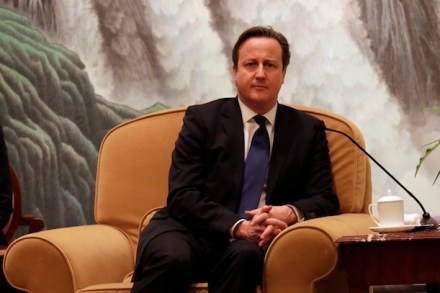
It’s 9.30 a.m. on a Friday and David Cameron is about to head for his Oxfordshire constituency and work from home. This is precisely the habit that his Cabinet Office minister, Francis Maude, is trying to beat out of the civil service, but the Prime Minister has a reasonable claim to some downtime. In the past five days he has met 150 businessmen and toured four Chinese cities. This morning, he has paid a visit to Tech City, London’s answer to Silicon Valley, and travelled to South Africa House to pass on his condolences following Nelson Mandela’s death. His last appointment, which will last for as long as it takes to drive to Beaconsfield service station, is an interview with The Spectator.

David Cameron interview: tax, ‘green crap’ and #TeamNigella

From our UK edition

A sneak preview from The Spectator's bumper Christmas issue, out this Thursday... It’s 9.30 a.m. on a Friday and David Cameron is about to head for his Oxfordshire constituency and work from home. This is precisely the habit that his Cabinet Office minister, Francis Maude, is trying to beat out of the civil service, but the Prime Minister has a reasonable claim to some downtime. In the past five days he has met 150 businessmen and toured Chinese cities. This morning, he has paid a visit to Tech City, London’s answer to Silicon Valley, and travelled to South Africa House to pass on his condolences following Nelson Mandela’s death. His last appointment, which will last for as long as it takes to drive to Beaconsfield service station, is an interview with The Spectator.

George Osborne’s 2013 Autumn Statement in graphs

From our UK edition

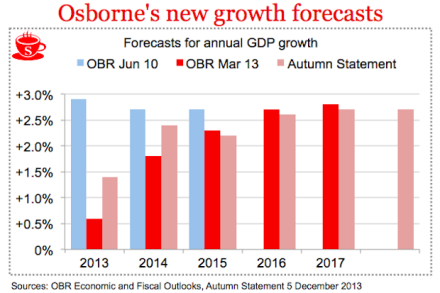
1. Growth has been re-forecast, again (above). This year and next, it's a lot better than Osborne forecast last time (in the red). A little worse thereafter. 2. The projected deficit is, as a result, smaller than he forecast in March. But still way ahead of his original Plan A. 3.  Debt as a share of GDP, Osborne will still miss his target: to have the ratio falling by 2015/16. It's worth remembering that he's still going slower on debt that the Darling plan that he attacked in the last election. 4. Employment: the bright spot. Public sector workforce has fallen by 640,000 but George Osborne rightly points out this is more than offset by 1.3 million more workers hired by companies. Result?

Any questions for David Cameron?

From our UK edition

I'm interviewing the Prime Minister tomorrow - he is a keen reader of Coffee House (or so he says!) and is always happy to take some questions from CoffeeHousers. So please do leave some suggestions below. I'll choose some, put them to him and report back.

In praise of John Woodcock MP

From our UK edition

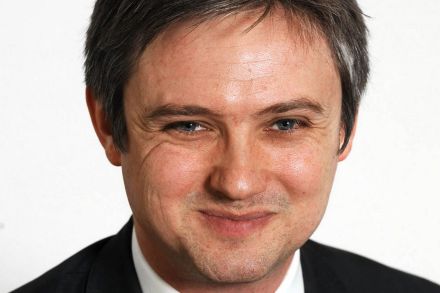
Earlier on this evening, I bumped into John Woodcock who I’ve known since my days at The Scotsman. He’s swapped journalism for politics and is now Labour MP for Barrow and Furness. We met in an ITV studio, and I asked what he was going on to talk about. “Popping pills,” he replied. He has decided to go public about the fact that he is being treated for depression – which is no small decision for an MP. It has, historically, been the sort of thing people keep quiet about. And that's what John is trying to change. At any one time, about two million of us are being treated for depression. But people don’t tend not to talk about it – which, of course, can create the impression that it’s something to be embarrassed about.

Finally, Osborne cracks the tax cutting code

From our UK edition

When George Osborne releases the bumpf accompanying his Autumn Statement tomorrow, I understand that there will be one paper that will be quite unlike anything presented by a previous chancellor. There will be a study on dynamic tax scoring: ie, recognizing that tax cuts stimulate the economy, and that the Treasury can expect to claw back money when it liberalises. This paper is seen by Team Osborne as something of a quiet revolution in the Treasury. The machine they inherited was programmed to see tax cuts as a permanent loss to the government, when in fact most tax cuts recoup some of their cost in the extra activity they unleash. The new Treasury paper shows a brand new way of thinking about tax – and one which, if you follow the logic, paves the way for a lot more tax cuts.

Brits are not idle – they’re just taxed to death

From our UK edition

Today's Times has a headline designed, I suspect, to make the blood boil. "Idle Britons are allowing Romanians to take jobs," it says - paraphrasing the conclusion of Mariana Câmpeanu, Romania's labour minister. This echoes a widespread idea repeated even by some British politicians. Especially those who argue that we need mass immigration to grow the economy because our own people won't do the jobs. It's true that many Brits don't work: the number on out-of-work benefits never fell below four million during the Labour boom years and 99.9 per cent of the rise in employment during 1997-2010 can be accounted for by extra immigration.

The Spectator’s 2013 carol concert: an open invitation

From our UK edition

It’s December, advent calendars are on the wall and being prematurely raided (in my house, anyway). And it’s just ten days until the event of month: the Spectator’s carol concert with the amazing choir of St Bride’s. It's a stunning church but quite a small one: we only have 200 tickets and most have been sold. But there are still a few left, which you can buy online. It’s in aid of Cancer Research UK and a warm invitation is extended to any Coffee Housers who’d like to come and join us. The evening is our own (condensed) lessons and carols – the lessons being read by our own saints: Rod Liddle, Jeremy Clarke Melissa Kite and others. And the music: well, here’s a sample.

BBC vs newspapers – who wields the power?

From our UK edition

David Yelland, a former Sun editor turned a PR director, is today giving a lecture to Hacked Off’s parent group lamenting what he sees as the absence of proper press regulation. He was invited on the Today programme to talk about it, and they kindly invited me on afterwards.