Fraser Nelson

Fraser Nelson

Fraser Nelson is a Times columnist and a former editor of The Spectator.

What it is to be British

From our UK edition

What is it about the British and flag waving? I ask after watching last night's superlative BBC Proms, a brilliant end to the best season for years. On HD and wired to the hifi, it was all the better. As the end approached, my Czech mother-in-law asked: if this is Britain's flagship musical event, why are there so many foreign flags? It's hard to explain. Britain has a mutating relationship with flags and nationality. Twenty years ago, the Union flag was used in England matches, then devolution came and the St George's cross made an emphatic comeback. I'm sure I saw a Cornish flag last night, and at least one Saltire, so part of it is regionalisation.

Thank you

From our UK edition

All the baristas here at Coffee House would like to thank those who voted us no1 in Total Politics magazine list of top 60 media blogs. It's a real honour, especially given the quality of the company we're in. And two of our other stablemate blogs are also in the top20: Melanie Phillips at 14 and Rod at 17. Had Alex Massie's blog been in this category (it's not, for some reason) I'm sure it would have made the cut as his superlative blog on Scotland's recent football match demonstrates. But as CoffeeHousers will know, the quality of a blog is often judged by the comments - and we have some of the best comments in the world. I was reminded of that the other day, when I blogged about seeing "two Spitfires" only to be told that one of them was a Hurricane.

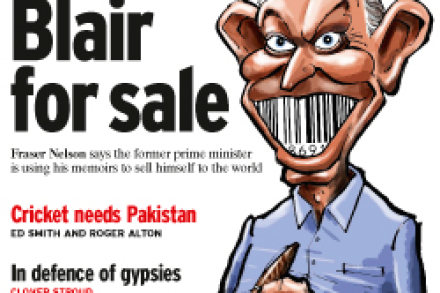
The rise and rise of Blair Inc

From our UK edition

This memoir is not a requiem for Tony Blair’s past, says Fraser Nelson. It’s a manifesto for his future — as a highly paid freelance statesman with no electorate to hold him back Many prime ministers view their memoirs as their pension, but Tony Blair always had far greater ambitions. In the three years that it has taken him to write A Journey, he has become so wealthy that he does not need the royalties — and is giving them to charity. As his memoirs reveal, he has long thought it a shame great world leaders should have to retire. The example he cites is Condoleezza Rice. ‘She is a classic example of the absurdity of people with experience and capacity at the highest level not having big political jobs after retirement from office,’ he writes.

Tony Blair, freelance statesman

From our UK edition

Say what you like about Blair, but he is something of a political entrepreneur. He detects a gap in the market and fills it: he did with New Labour in the mid-1990s. And he detects a trend in the globalised world: a system where governments don't matter so much and power is held by a global elite. This, CoffeeHousers, is what he's up to with his memoirs. He is presenting himself in new incarnation, a statesman without a state, able to move without being tied down to an electorate. There's a very revealing passage in his book where he talks about Condi Rice: “She is a classic example of the absurdity of people with experience and capacity at the highest level not having big political jobs after retirement from office,” he writes.

Will Labour boldly go with ‘Red Ed’?

From our UK edition

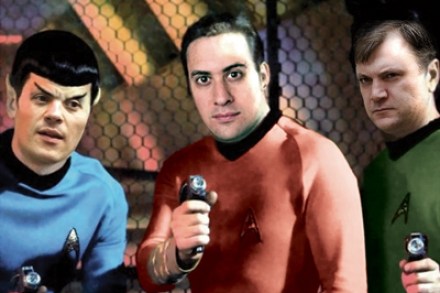
  David Cameron has dismissed the Labour leadership election as a "Star Trek convention" with policy wonks battling out to go where no spad has gone before. That caricature has some currency (see picture, left). But as he'll know, a deeper choice faces Labour. David Miliband may be the geekier one - playing Spock to Ed's Kirk. You can argue that Ed speaks better human, that he's more plain-speaking. But when he does speak, it's worth listening to what he has to say. And his piece in the Observer makes clear why so many Tories want him to win. He says he will "make capitalism work for the people" - who has it been working for so far? The government? He proposes to ration corporation tax cuts for companies if they up the minimum wage to £7.

Who governs Britain? | 28 August 2010

From our UK edition

CoffeeHousers may like to see the full leaked letter (pasted below) to which I referred in The Spectator's cover story this week. It shows how the NUT is using Freedom of Information to try and force school heads to hand over a list of names of anyone who might support a campaign to opt out of local authority control and become quasi-independent Academies. We have blacked out any information that may reveal the source. This letter helps explain why Michael Gove will have so few names next week, when he lists the list of schools who have succeeded in their fast-track application. Out of the 3,000 eligible, a few dozen will have made it.

Revealed: the secret school wars

From our UK edition

Britain’s state school system is a national disgrace. Not because we don’t have excellent schools: we do. But only for those who can afford to move to the good catchment areas. The comprehensive system gives the best service to the rich, and the worst to the poor. It is a system which harbours bad teachers – only 18 have been struck off for incompetence in 40 years. Compare this to the USA where 252 bad teachers were sacked in one day last week. Our world-class private schools show that England can be a world leader in education. But we have one of the biggest gaps in the world between attainment in private and public sector.

A New Labour landmine detonates

From our UK edition

Has Mark Hoban just become the first victim of the New Labour landmines? He was asked on the Today Programme whether the Treasury had conducted a formal study assessing the impact of the cuts on ethnic minorities. Hoban was speechless - as well you might be. But the assessment, he was told, is required under Harriet Harman's Equalities Act. Has it been carried out? He avoided the question and was asked it again. And so it continued, a la Paxman v Howard. When Labour retreated, it sewed several landmines in the political territory it was about to cede. One of them was Harman's Equalities Act, which - as Pete blogged a while ago - mandates government "to consider how decisions might help to reduce inequalities associated with socio-economic disadvantage".

Today’s GCSE results prove that academies work

From our UK edition

Today's GCSE results demonstrate the tremendous success of City Academies, a hugely heartening trend given that this formula - which was so slowly rolled out under the Labour legislation which introduced them - can now be rapidly implemented under the new Academies Act. It's always been a con to look at the absolute results of Academies, as under Labour the only schools given such status were schools that were doing poorly. What matters is improvement. Let's take the three Academies groups and look at the ratio of  pupils winning five good GCSEs (i.e. A-C including English and Maths). In the The Harris Federation, which now runs nine schools, there was a 10 point increase. In the ARK academies, a 13 point increase. In the ULT Academies, an 8 point increase.

In praise of British ingenuity

From our UK edition

Two spitfires have just flown over our offices at The Spectator, to commemorate the Battle of Britain. The aircraft are deservedly iconic, but it's a bit of shame that over the years they've eclipsed the de Havilland Mosquito in the public memory. They were developed too late for the Battle itself, but were incredible aircraft when they were deployed. And, crucially, privately-developed. In 1937, the British had only 46 bombers where the Germans had about 800 – and the speed at which the RAF developed was extraordinary. The battle of Britain exposed the weaknesses in the Luftwaffe – and Nazi procurement policy. Hitler relied on a vast, unwieldy bureaucracy to produce a heavy bomber and it failed him.

Exclusive: Gordon Brown launches his public speaking career

From our UK edition

While Tony Blair has been pledging a slice of his massive post-PM earnings to The Royal Legion, a tale reaches me – from an impeccable source – about what Gordon Brown is up to. He once indicated he'd devote his post-PM life to modest good works, but it appears he is also trying to build up a large nest egg of his own: in the world of public speaking, with six-figure fees. He's asked a London speaking agency to tout for speaking engagements for him in the Middle East and Asia. And the price? He's been offered at $100,000 a pop and is promising to speak on areas covered by his new book, The Financial Crisis, which is due out soon. That should have 'em roaring in the aisles.

There is no Cabinet rift on benefit reform

From our UK edition

Here's me about to go on holiday, and the welfare wars seem to be opening up. Neil O'Brien has a piece on it over at the Telegraph website. And Hopi Sen, one of the better leftie bloggers, has written a response to my post yesterday. Partly, he wants to stir: it's not so much that the Treasury want to block IDS's reforms, he says, but rather that they are following Osborne's orders to reduce the deficit. And so it's one part of the government at war with another. By contrast, the Whitehall wars I outlined are hangovers from the Brown days, where the Treasury set policy for all other departments and its instinctive reaction was to destroy any proposal it did not come up with.

Cameron must take this chance to end the giant evil of welfare dependency

From our UK edition

There’s been plenty political drama in these past few weeks, but the most crucial agenda – and by some margin – is Iain Duncan Smith’s proposed overhaul of welfare. It doesn’t deserve to be categorised as just another political tussle. As I say in the News of the World today, it is easily the most important issue in Britain, and it is overlooked because of an affliction which most of our political class suffers: that of moral long-sightedness. No one wears wristbands for the British poor, Prime Ministers pledge to “eradicate illiteracy” in Africa yet are strangely indifferent to the illiteracy on our own doorstep.

Pakistan’s double game in Afghanistan

From our UK edition

So what is Pakistan up to? Cameron has a point: it is playing a dangerous double game which I once outlined in a piece. But in today's Spectator, it is all spelled out by a writer who is - in my view - the best authority on this mess and by some margin. Ahmed Rashid, whose book Descent into Chaos is the definitive work on the Afghan war, explains that Karzai has effectively switched sides - he's given up on Nato (as, it seems, has Cameron) and now wants Pakistan to preside over talks with the Taliban: " A few months ago Hamid Karzai would have been thrilled to have confirmation that American officers are speaking openly about how divisions of Pakistani intelligence are helping the Taleban.

The immigration battle

From our UK edition

Why is Vince Cable kicking off about immigration? Sure, to cause trouble – this is what he sees as his role. His ego can’t quite fit in that department. But the pledge to have immigration in the “tens of thousands” was not in the coalition agreement. At the time, David Cameron said this was an oversight and that it was still government policy. But as James said in his political column in the magazine, a great divide has emerged between policies in that bald coalition agreement and those mentioned verbally. The policies in the documents are now deemed sacrosanct, and things not in it – like the extraordinary pledge to take immigration to the tens of thousands – are up for negotiation. So what else is up for negotiation?

System failure aids another EU power-grab

From our UK edition

David Cameron's so-called “referendum lock" is supposed to ensure no more powers are handed to the EU. His thinking, bless him, is that if he just keeps a low profile and doesn't sign any extra treaties then things won't get worse. This fundamentally mistakes the way the EU works. As we say in the leader for this week's magazine, ever-greater integration is hardwired into the system. An example we cite is the coming European Investigatory Order, which Theresa May has naively described to other ministers as a tidying up exercise (Jack Straw said the same about the EU constitution).  As we put it: “Another power grab is looming. Plans are being drawn up for a European order that would mandate British police officers to follow requests lodged from overseas.

Will GDP rise be Osborne’s get out clause?

From our UK edition

Alistair Darling has been on Sky News doing a lap of honour for today’s GDP growth figures. “Vindicates everything we did,” he said - his narrative being that the extra debt did indeed boost the economy and produced 1.1 percent growth in this quarter. This chimes with what I wrote in the Daily Telegraph a few weeks ago: that the economy is better, not worse, than the Tories thought. Even if, or should I say when, the ONS say the figure was wrong and needs to be revised downwards it will still mean tax revenue churning in at a far faster rate than thought. This will give Osborne a get-out clause if he wants to go softer on the cuts, or the tax rises (any adjustment would have to be consistent with his 80/20 split between cuts and taxes).

In this week’s Spectator | 23 July 2010

From our UK edition

The new edition of The Spectator is out, and I thought CoffeeHousers may appreciate a rundown of what's in it. 1) Cameron, the accidental radical. James Forsyth's political column is, as always, choc full of original insights and insider info. James explains how this coalition is far more reforming than anything Tony Blair led - yet the weird thing is that, whereas Blair would talk with evangelical zeal, Cameron says almost nothing. At times, it's almost like he has no idea about how radical his government has become. James reveals how Clegg has become an ally for IDS on welfare reform.

An odious spectacle

From our UK edition

Seeing Nick Griffin playing the ostracised martyr on television is sickening, and underlines the futility of banning him. Some 8,000 are invited to the Queen’s garden party, there was zero chance that Her Majesty would allowed within 50 metres of him. So his daft blog, asking readers to suggest questions he’d put to the Queen, was an irrelevance. His whole political schtick is that ‘I represent a million ordinary people, and the establishment won’t listen to them’. The more you ban him from things, the louder he shouts this message. What happened today is grist to his mill.   Sky News interviewed guests outside, who thought it unfair that he was banned, given that all MEPs are automatically invited and have been for years.

Clueless Chuka

From our UK edition

Given that the Labour leadership campaign is so dull, we should thank Chuka Umunna for cheering us up with his comedy economic analysis. Now on the Treasury Select Committee, he has regaled us with an ‘Open letter to George Osborne' where he makes many entertaining points. It’s worth looking at, because it sums up a few errors swirling around the Labour benches.   1)   During our exchange, you insisted your budget was "progressive"… you stood by your decision to apply a 10 percent cut to the housing benefit of those who have been on JSA for more than 12 months. Osborne has to use words like “progressive" to assuage the LibDems, but by their definition he is right.