Fraser Nelson

Fraser Nelson

Fraser Nelson is a Times columnist and a former editor of The Spectator.

Which side are you on? | 26 October 2010

From our UK edition

At last, The Guardian is reporting the grassroots rebellion in education. It has picked up on the story of Fiona Murphy who blogged on Coffee House yesterday about her trouble with the Tory-run council in Bromley. But hang on... the "grassroots revolt" of which the Guardian speaks is the councils, trying to protect their monopoly control over state schools. Here is the extract: "A flagship government policy has provoked a grassroots revolt against the coalition, with senior Conservative and Liberal Democrat councillors lining up to attack the introduction of free schools, one of education secretary Michael Gove's most cherished projects...

Osborne’s Paul Daniels strategy

From our UK edition

Is George Osborne the first British Chancellor to hide good news in the small print? I ask this in my News of the World column (£) today, and ask what he’s up to. Listening to Nick Clegg on Marr this morning, even he can’t quite say that the same forecasts that predict 500,000 public sector job losses also envisage three times as many jobs created in the private sector. Why so coy? I suspect because it would spoil the magic. That there is a deliberate gap between what this government is saying and what it believes it is doing.   James Forsyth was the first to write (in his political column, now available to non-subscribers) about ‘Gordon Osborne’, using Brownite tactics. But whereas Brown hid the bad stuff, Osborne is hiding the good stuff.

Living costs – where the real threat lies

From our UK edition

Déjà-lu is a feeling that Spectator subscribers become familiar with. Part of the reason for subscribing (which you can now do from £12, including free iPad access) is to get ahead of the competition - and read today what the newspapers will be saying tomorrow. We’re delighted that the cover story of Thursday’s edition, by Allister Heath, is the main OpEd slot in the Daily Mail today - and with good reason. All of the focus has been on the cuts, 500,000 jobs to go etc. As CoffeeHousers know, jobs are not expected to be the issue over the next few years: the same forecasts suggest 1.5m jobs will be created. (This 3-1 ratio may sound optimistic, but it is what happened under Major.

Sticking up for free schools

From our UK edition

I'm on the train back from doing Radio Four's Any Questions – broadcast live from Derby, repeated at 1.10pm tomorrow – where I had a bust-up with Christine Blower of the NUT. CoffeeHousers may recall she was the star of a cover story we ran a few weeks back, about the campaign of bullying and intimidation levelled against headteachers who are trying to seek Academy status. She raised that article during recording, and things kinda kicked off. I told her she should be ashamed of the way her union thugs try to intimidate young teachers who seek to break away from local authority control and reach independence. She denied writing the words ascribed to her, I sought to read them to her – and things descended from there. Anyway, a few thoughts... 1.

More to Osborne’s plan than gambling

From our UK edition

Paul Mason's review of the cuts for Newsnight last night (from 10:20 into the video here) was one of the most powerful critiques of Osborne from the left. His package majored on Osborne's decision to cut a further £11 billion from welfare and pensions, to soften the departmental cuts. Adopting a rather funereal tone, Mason declared that, "if you are poor, your life is about to change". He produced a decile graph, showing the poorest are hit second hardest. It foreshadowed this morning's Guardian cover: "Axe falls on the poor". Danny Alexander was fed to Paxo: "You said you would not balance your budget on the backs of the poor - when did you change your mind?" (Alexander performed very well - stunningly, even, given what he was doing only six months ago).

Ten points about the Spending Review

From our UK edition

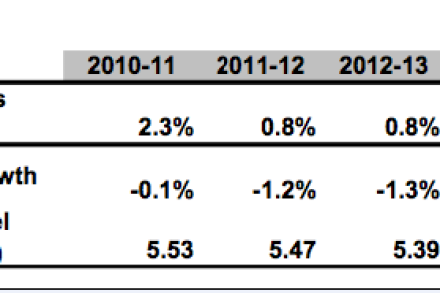
In the end, George Osborne didn't flinch. The Chancellor is a clever political operator – too clever, sometimes – but the result is a cuts package that has surprisingly broad popular support. And this has been achieved, in part, by including measures that strike the likes of me as economically unwise. So much of this budget was known in advance that we didn't find out much new today. The below points are my thoughts not on the overall package – which I strongly support – but the pieces of it that we learned today: 1) Total state spending is falling by 3.3 percent in real terms over the next four years, at a lower level than the 3.7 percent forecast in the Budget.

Exclusive: 1.5 million jobs to be created during the ‘cuts’

From our UK edition

Almost every newspaper today leads on the chilling figure of 500,000 jobs to go. This was taken from a briefing paper held by Danny Alexander – a “gaffe” says The Guardian. Indeed: it was top secret - to anyone without internet access. “The OBR’s Budget forecast was for a reduction in public sector workforce numbers to 490,000 by 2014/15”. Read the offending sentence. This was not private advice, but posted online (here) and this is what it said…   But hang on. The same forecasts predict that the number of jobs in the economy will rise – by 1.08 million over the same timeframe. So by the same forecasts, the economy will create three times as many jobs than the public sector is shedding.

The unavoidable cruelty of necessary cuts

From our UK edition

Even though the SDSR promises that it "will be used by units returning from Germany or retained for other purposes," the loss of RAF Kinloss will still be a body blow to Moray. For years, it has sustained hundreds of airforce families in Elgin, Forres and Nairn - mine amongst them. And I can picture the bakeries, shops and other small businesses that will be hit by losing so many clientele. About 6,000 jobs depend on the RAF up there: not just Kinloss but Lossiemouth, 15 miles away, whose future also looks bleak. Jet fuel for the Tornados in Lossie is sent via Inverness harbour, so it would mean job losses there. The downgrading of Kinloss, of course, means the end of Nimrods.

Putting the cuts into context

From our UK edition

Having been accused of being a “pain denier” by Tim Montgomerie yesterday, I’d like to quickly defend myself. In my News of the World column, I sought to put this in some perspective. I put in the fact that has been reported nowhere: that we know what the cuts will be. Total cuts to government spending will be 3.7 percent, spread over four years. It is debt interest which forces departmental cuts down to an average of 13 percent, again spread over four years. There will of course be real pain, for thousands of workers facing redundancy. For commuters facing a huge 30 percent rail fare increase.

What about the Home Office?

From our UK edition

The less we hear from Theresa May, the more I worry about the Home Office budget. I’m hearing rumours of her taking a 30 percent cut, which I first dismissed as a piece of expectations management. But now I’m beginning to wonder. We know that defence is settled - about an 8 percent real-terms cut. The NHS, which absorbs a quarter of government spending, will have real-terms increases (something even the left-leaning IPPR doesn’t back). The schools budget has escaped relatively unscathed, we read. So what’s left? Again, there’s so much deliberate misinformation out there that I hesitate to give a rumour round-up. But here goes.   One major victim is expected to be Transport.

The immigration game

From our UK edition

The Fake Sheikh, Mazher Mahmood, has a good wee scoop in the News of the World today. The papers’ reporters posed as would-be immigrants, and heard immigration advisers tell them how to game the system. The quotes speak best for themselves.   1. Official from the International Immigration Advisory Service in Manchester. "Floods have come in Pakistan. Say you have lost your family and your home. That’s the best story I can see … Just get me a few photos of the floods and we can say your relatives drowned and your home is gone. The British are very sympathetic."   2. The same official, to a second undercover reporter. "Find a European girl and marry her.

Highlights from the latest Spectator | 15 October 2010

From our UK edition

I thought CoffeeHousers might appreciate a selection of a half a dozen pieces in the new edition of The Spectator. I know it is, in many ways, a tough task persuading online audience to part with cash for a magazine (or our new iPad edition, available for free to subscribers) - but this week's issue really is the perfect something for the weekend.   1. The Coming Dutch Explosion. Tensions in Amsterdam are at bursting point - with Geert Wilders on trial soon, the English Defence League sending their skinheads out to aid him, and jihadism on the rise. We did the best thing we could to defuse the situation: dispatched Rod Liddle. His cover story tells of a place where the police send people out disguised as Jews, to catch anyone who gives them abuse.

Tories defying the profligate European Union

From our UK edition

Anyone who thought the new intake of Tory MPs were a bunch of automatons should take a look at the House of Commons order paper today. MPs have been asked to sign away 60 percent more of British taxpayers’ money to Brussels, in defiance of British public opinion. For years, they have done so without qualms. But the Conservatives, who were so rightly outraged at the way Labour whipped through the Lisbon Treaty, are challenging this. In an age of austerity, when we’re cutting child benefit and asking if Britain can afford to be a world-class military power, why should MPs sign off a 60 percent increase in the amount of money transferred from British taxpayers to the EU authorities?

Rochdale, revisited

From our UK edition

Putting Ed Balls into Home Affairs is like trapping a bee in a jar: he’ll come out furious, and anxious to sting. In his new brief, he has immigration. And he’ll know Cameron’s vulnerabilities. The greatest threat facing the coalition doesn’t come from Ed Miliband. It comes from a deep dysfunction in Britain’s economy: that when it grows, we just suck in more workers from overseas. Balls knows this, and the resentment it causes in affected communities – which is why he was talking tough on immigration during the leadership contest. He knows where the economic bodies are buried: he dug the graves. He also knows that unless Cameron manages to make work pay, he’ll end up with what is – for UK workers – a jobless recovery.

Abbott caps Miliband’s defensive reshuffle

From our UK edition

Those months of campaigning have finally paid off for Dianne Abbott. She has been made a Shadow Health Minister – which resembles a proper job. She was against the Blair-Milburn reforms in the NHS, regarding them as too pro-market – so let’s see if she keeps this position in opposition, thereby throwing more soil on the grave of New Labour. One can imagine the fear running down Andrew Lansley’s spine at this new team: John Healey and Abbott. It’s just baffling. In the bars at conference last week, I met many Tories who are increasingly worried at the pace and preparedness of Lansley’s proposed NHS reforms. But instead of marking him with some forensic, vicious attack dog (or his wife), Miliband chooses someone, well, rather less than forensic.

Who speaks for Scotland?

From our UK edition

Ten years ago, when I was doing my tour of duty as a reporter in the Scottish Parliament, I had a talk with an SNP figure, who shall remain nameless, about their grand plan. Scotland was to be a nation, and that means its politicians perform in certain ways. They wanted to look like statesman, with a state. Their opportunity lay in crisis. “So when there is a disaster overseas, we will have Scottish aid leaving a Scottish airport,” he said. “When a Scot dies overseas, we have the Scottish First Minister sending condolences.” He didn’t say that, when a Libyian murderer wants to be released, the SNP can use this to thumb their nose at Wicked America and posture on the world stage.

The battle for the low-paid working class

From our UK edition

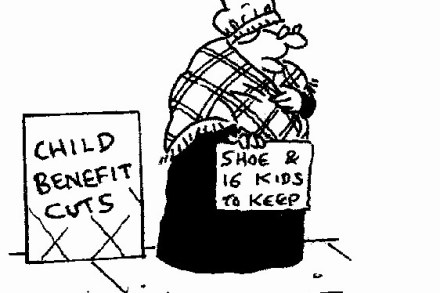
  Should families on welfare limit the number of babies they have? Jeremy Hunt suggested so last night - kicking off a debate fuelled by our disclosure in today’s Spectator about just how many out-of-work claimants have 6, 7 and 8+ children. The moral argument is pretty clear. Before a worker wants to expand his family, he usually thinks about whether he can afford it. It’s far from uncommon to hear people say that they’d like, for example, three kids - but this brings with it a certain financial requirement (size of house, car, etc) which is prohibitive (and far bigger than can be offset by child benefit). Yet the reverse financial incentives exist for parents on benefits. The more children they have, the more the state gives you.

Hunt the heretic

From our UK edition

Eureka, the science magazine from The Times, is in many ways a brilliant accomplishment. Advertising is following readers in an online migration - but James Harding, the editor, personally persuaded advertisers that a new magazine, in a newspaper, devoted to science would work. And here it is: giving the New Scientist a run for its money every month. That's why it's such a shame that today's magazine opens on an anti-scientific piece denouncing those who disagree with the climate consensus. My former colleague Ben Webster, now the paper's environment correspondent, is an energetic and original journalist - so it's depressing to see his skills deployed in a game of hunt-the-heretic.

Cameron resuscitates the Big Society

From our UK edition

This was the perhaps the lowest-octane speech David Cameron has ever given to the Tory conference. He didn't need to give the speech of his life, for once - so he didn't. He dutifully ran through all the various points of government policies, but there were too many of what Art Laffer calls MEGO figures (my eyes glaze over). It's odd, because Cameron can speak so well when he needs to. Compared to the speeches we heard yesterday - from Gove and IDS - it was oddly uninspiring. He spoke about his government's "beating, radical heart" with no real enthusiasm - as if he received the speech only recently, and didn’t rehearse too much. It was too long, was repetitious in places.

Britain’s welfare families

From our UK edition

We have a new facts and figures column in the magazine, Barometer, and I thought CoffeeHousers might like a preview of one of the data series we have dug up for tomorrow’s edition. George Osborne has this week pledged that, from 2013, no family on benefits should receive more than the average family does through work. But how many will it affect? Those living in expensive areas, for example, but also those with large families. CoffeeHousers may remember Karen Matthews, who lived on benefits with seven children. She was demonised, understandably, but I was left thinking: we paid her to do that. The more kids she has, the more money she received – so shouldn’t the system take some of the blame?