Fraser Nelson

Fraser Nelson

Fraser Nelson is a Times columnist and a former editor of The Spectator.

A massive failure of communication

From our UK edition

I have farmer friends in the Highlands who are forbidden from felling trees in their own backgarden - and, ergo, can’t extent their house. The poor souls have to wait until there’s a windstorm and head out with their chainsaws at 3am to fake the death of trees - and, even then, it’s touch-and-go if they are later caught by the tree coroners. The regulation of privately-owned trees is extraordinary, which is why the fuss about forests - and yesterday’s climbdown - is such a farce. The government’s decision to postpone the selloff of the treeland estate that it proposed fits a pattern of u-Turns that I wrote about last weekend. But it is, fundamentally, a colossal failure of communication.

And more from the world’s press on Egypt

From our UK edition

Here are a few more pieces from around the world on the Egyptian revolution and its aftermath. Andrew Neil: More about the Muslim Brotherhood. Charles Krauthammer says a freedom plan is not enough, America needs a freedom doctrine. Foreign Affairs: Who are rest of the Egyptian opposition? Bikyamasr: Israel’s take on Egypt’s new army government. The Middle Eastern Media Research Unit reacts critically to Obama’s intervention. Washington Post: A power vacuum in the Middle East. The Diplomat: Echoes of Cairo In Tehran. Silk Road Economy: What drought in China means for politics in Egypt. PS: If any CoffeeHousers see other pieces worth noting, do please link to them.

Which way will Egypt turn?

From our UK edition

The world is full of jubilation this morning, and I wish I could join in. Perhaps we are indeed witnessing Egypt on its way to democracy, thereby inspiring a similar wave of uprisings in the Arab world. It’s not hard to be mesmerised by the prospect of the Arabs rejecting the dictators foisted on them by the West in the name of security, and choosing their own democratic future. The ‘Wind of Change’ narrative is one we in the West are familiar with, as memories of the 1989 revolutions are still fresh.   You can see the Egyptian events in two ways.

It’s China’s world. We just live in it.

From our UK edition

Yesterday was momentous, but we should not lose sight of the head of the IMF saying that the Chinese renminbi could take steps to becoming a global reserve currency. To be specific: Dominique Strauss-Kahn has in mind adding renminbi to the IMF’s Special Drawing Rights system. In itself, no big deal - but a notable kiss being blown to Beijing. It fits a trend. The Chinese, notoriously, manipulate the value of their currency to keep their goods cheap, so they can’t have their currency treated with reserve status. But power is shifting - and America’s fiscal misbehaviour has unsettled international investors. John Peace, chairman of UK bank Standard Chartered, put it well the other day: “the last decade was characterized by ‘made in China’.

Osborne bests the Man With A Past

From our UK edition

Balls is a bit like a vampire – he has bite, but he works best in the darkness. In the House of Commons, with those lights shining on him, his powers drain. George Osborne had the better of him in their brief exchanges at Treasury Questions. Balls led on the snow joke. But Osborne had pre-empted that earlier, when he first stood up. Balls teased him about going to Klosters in the winter, but these things only work in newspapers where you can run a picture of Osborne in ski gear. It leaves the House cold.   The key Osborne line was that Balls is “the man with a past” – and how. It was said with just the right touch of menace. And he had a fairly decent gag: that Eds Miliband and Balls both “know what's it's like to be people's second choice.

What has Osborne done today?

From our UK edition

In October last year, Osborne announced a new levy on banks’ balance sheets. It was 0.05 percent for this calendar year, before rising to 0.075 percent from 2012 onwards. But, today, the Chancellor has announced that the ‘introductory’ rate has been abolished – so banks will be charged the 0.075 percent rate on all liabilities. Here's my nine-point Q&A, by way of delivering my take: 1) So, a retrospective tax? Not quite. He’s imposing a 0.05 per cent rate on balance sheets in January and February. But he’ll up the charge to 0.1 percent for March and April to compensate. It will go back to 0.075 percent in May. This is a move clearly intended to generate revenue, rather than change behaviour. 2) How much will he nab?

King’s credibility is faltering

From our UK edition

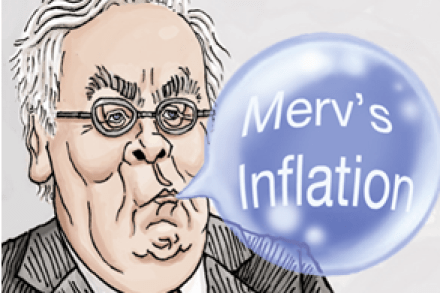
We at The Spectator have not had much company in criticising Mervyn King for the failure of his monetary policy. The Bank of England governor has a status like the Speaker used to: someone whose position must command respect, otherwise the system collapses. And yet there are Octopuses with a better track record in inflation forecasting. People have been repeating that the Bank’s independence is a great success for so long that it has become a truism. Why? We’ve just had a huge crash, the result of a credit bubble - fuelled by dangerously low lending rates. And the recipe for restoration? Even cheaper debt, with resurgent inflation. The British economic commentators agree with King that inflation is not a problem; 0.

The laddie is for turning

From our UK edition

In opposition, one of David Cameron’s strengths was the speed at which he dumped bad ideas. But, now, he is starting to acquire a habit for U-Turns – especially those called for by minor celebs. We’ve seen Scottish school milk, NHS Direct, BookStart, school sport – and soon, I suspect, forests, World Service cuts and (the biggie) NHS reform. A depressing pattern is emerging: anyone with a decent two-day campaign and a splattering of celebrities can probably force a concession out of the government. I make this case in my News of the World column (£) today. Here is a summary of my main argument. 1. Cameron seems to be pioneering the Celeb-induced U-Turn.

In this week’s Spectator | 4 February 2011

From our UK edition

What to think about Egypt? Pick up most newspapers and you see a flood of words, but a trickle of information. Not so with this week’s Spectator, which has everything you need to know - and nothing more. Here are some pieces that I thought may interest CoffeeHousers. 1.  What you need to know. Our lead feature is an interview with a dozen people who know their onions. Anne Applebaum on whether it can be compared to Poland, Charles Glass on fifty years of Egyptian dictators, Douglas Murray on neo-conservatism and Islamism, Professor Stephen Walt on the geopolitical fallout and Andrew Roberts on the alarming power of the Cairo mob. 2. What to make of the Muslim Brotherhood. John R Bradley didn’t just predict the Egyptian uprising but wrote a book on it.

Treading the road to recovery

From our UK edition

It will have been a quiet morning in the Balls household. Fresh economic indicators suggest that the British economy is not in some cuts-induced recession but, instead, doing rather nicely, thank-you. As I said last week, economic health is assessed by all manner of indices – and the ONS (which is forever having to tear up its GDP forecasts) might just have boobed last week with its preliminary Q4 GDP figures. Today we have the Manufacturing PMI surging to heights not even reached in the early 1990s:   Now, this might be a flash in the pan, you say. But then consider corporate liquidity – that is, how much debt Britain’s companies have lurking on their balance sheets. The figures out today are not too bad either.

The jihadis thrive on a lack of definition

From our UK edition

The Guardian’s Sarfraz Manzoor was on Aled Jones's show on Radio Two this morning (titter ye not – it’s great Sunday music) discussing how members of his Muslim family shunned him after he married a Christian. He had this to say: “It hasn’t made me doubt my faith. What it’s made me do is feel angry that some people are so closed-minded that they don’t even understand their faith. Before our wedding I spoke to a Muslim expert, an imam. He told me that a Muslim can marry a Jewish person, a Christian person – we’re all children of Abraham. It’s all fine. The problem is that parents and families are not experts in religion. They’re just experts in their own opinion.

A Wind of Change down Arab Street?

From our UK edition

I wish I could be more enthusiastic about the events in Egypt and Tunisia – but, as I say in my News of the World column (£) today, the citizens of the Arab world all too often have a choice between a Bad Guy and a Worse Guy. Egypt looks like its choice is between the status quo, the Muslim Brotherhood or a military coup. This is not a 1989-style revolution, there is no Arabic equivalent of Scorpions singing Wind of Change. Successful revolutions normally have a well-organised alternative government, with a clear route towards democracy. Where is the Egyptian Lech Walesa, or the Tunisian Vaclav Havel?

In this week’s Spectator | 27 January 2011

From our UK edition

The new issue of The Spectator is out in the shops today – subscribers can read it online, or on Kindle/iPad – and here are a few pieces that I thought might interest CoffeeHousers.   1. The death of meritocracy. Social mobility - or the lack thereof - is a subject that no political party feels comfortable with. And why? For the very good reasons that Andrew Neil outlines in the cover story of this week's Spectator. One vignette is that when Cameron's inner circle convened to discuss the recent school sports fiasco, the conversation turned to who played which positions in the Eton Wall game. If you missed his documentary last night, and even if you didn't, it's a must-read.   2. Why Cameron should adopt a King's Speech strategy.

What to make of the GDP fall?

From our UK edition

"Recession here we come, a snow-dabbed double-dip" tweeted Faisal Islam, Channel Four's economics editor. He summed up much of the hysterical reaction. It may spoil a good story, but here is what I suspect the broadcasters won't tell you today. 1. Erratic GDP swings are common when recovering from a recession. Remember how stunned everyone was with the surging quarter three data? Now, we're all shocked by plunging quarter four figures. I'd advise CoffeeHousers to treat these two imposters just the same. After the 80s recession, quarterly growth rates swung between -0.7 percent and 1.5 percent. Following the ERM-induced recession in the 90s, growth rates swung between -0.2 percent and 0.5 percent. A swallow does not make a summer.

Exposing the con man

From our UK edition

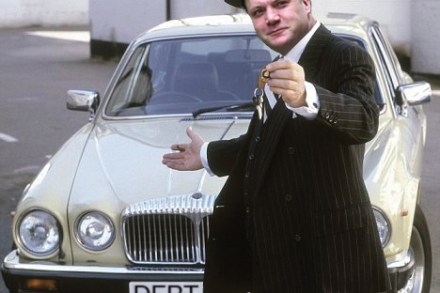
  To the chagrin of CoffeeHousers, I have long rated Ed Balls and his abilities. He has a degree of brilliance, albeit tragically deployed in the services of a destructive economic agenda. But as we welcome him back, it’s worth reminding ourselves that his abilities are of a specific type. He understands economics (even though he did PPE) but his speciality is in creative accounting. His only tactic is to spend, borrow and cover both up by cooking the books. He is a trickster, not an economist. More Arthur Daley than Arthur Laffer. In my News of the World column today (£) I say he is dangerous to Labour as well as the Tories, perhaps more so. But it’s worth recapping what we’re dealing with.

How do you snare a spin doctor?

From our UK edition

So, who’s next after Andy Coulson? This question is oddly important, and will certainly influence the direction of his government. It shouldn’t, but you have to understand the way the Cameron operation works – and of how life looked before George Osborne persuaded Coulson to come on board (hoodie hugging, husky-riding, etc). Coulson was an advocate of fundamental conservative values (crime, tax cuts, Europe) and emphasised their mass appeal. Tim Montgomerie has a list of possibles for this job. But how to persuade them? Whoever does it can kiss goodbye to their life (and family) for the duration. No.10 is a pressure oven, and there’s a horribly large chance that you’ll turn out like Alastair Campbell.

Renaissance Balls

From our UK edition

Balls is back. The author of Gordon Brown's economic policies for 15 years. The man who bears more responsibility for anyone else - other than Brown - for the asset bubble and the consequent crash. But I suspect that, right now, Theresa May is doing cartwheels and George Osborne cursing. Balls, for all his many drawbacks, is the most ferocious attack dog there is. His brilliance (and I hate using that word) at using numbers as weapons far surprassed anything the Tories could manage in Opposition. His policies are reckless: to borrow, and to hell with the consequences. His modus operandi is to launch around-the-clock attacks. He has powerful media contacts, and uses them to full effect. He is the most able fighter in Labour's frontbench, as he proved in the leadership contest.

The inflation crisis deepens

From our UK edition

How big does inflation have to get before our politicians admit that it’s a problem? Once again, it has “surprised” on the upside - the CPI index stood at 3.7 percent for December, against a supposed target of 2.0 percent. And the RPI index, which the nation called “inflation” until Gordon Brown asked the media to use CPI instead, is running at 4.8 percent - almost twice its former target of 2.5 percent. That is the painfully high figure to which George Osborne has just added a juicy VAT increase, which is bound to take CPI above 4 percent. Inflation has been above target for three of the last four years - and still Mervyn King says it’s a blip. This is how he justifies the UK’s low interest rates (0.

How it’s going right for Ed Miliband

From our UK edition

Ed Miliband has had three launches in three months – but, much as I hate to admit it, things are getting better for him. His party are now consistently ahead in the polls, so in my News of the World column today I look at what’s going right. Here are my main points: 1) Cameron’s embrace has, alas, proved toxic for the Lib Dems. I have been impressed by Nick Clegg since he entered government. I’d like to see him rewarded for the tough decisions he took, and in more ways than being named ‘politician of the year’ by the Threadneedle/Spectator awards. But it just isn’t happening. The ‘merger’ model of coalition that they have chosen (as opposed to the Holyrood model used in Scotland in 1999-07) has robbed them of their identity.

The death of the Lib Dems

From our UK edition

The latest issue of The Spectator is out today, and I thought CoffeeHousers might like to read the cover story by Nick Cohen. Its theme is brilliantly captured by Jonathan Cusick's cover image (left) of the yellow Lib Dem bird shot through its heart with a Tory arrow – but there's more to it than that. The era of spending cuts is returning us to two-party politics, says Nick, and the Lib Dems are being squeezed out of the equation. Here it is in full: Liberal England dies again, Nick Cohen In 1935, George Dangerfield published The Strange Death of Liberal England, one of those rare histories that survive long after the author’s death.