Francis Pike

Francis Pike is a historian and author of Hirohito’s War, The Pacific War 1941-1945 and Empires at War: A Short History of Modern Asia Since World War II.

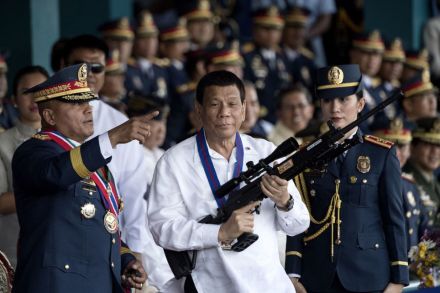
Duterte Harry: why is he the Philippines’ most popular ever leader?

From our UK edition

If you thought Donald Trump was rude to journalists, hang on to your hats. Miffed by a journalist’s temerity in asking about his health, president Rodrigo Duterte of the Philippines exploded: ‘How is your wife’s vagina? Is it smelly? Or not smelly? Give me a report.’ Duterte, a 75-year-old provincial politician who revels in the sobriquet ‘Duterte Harry’ after Clint Eastwood’s cop, arrived in national politics in June 2016 with all the media hullabaloo of other internationally reviled populist leaders such as Viktor Orbán and Recep Erdogan. The foul-mouthed Duterte, clearly a coprolaliac, is just as brutal with his political opponents.

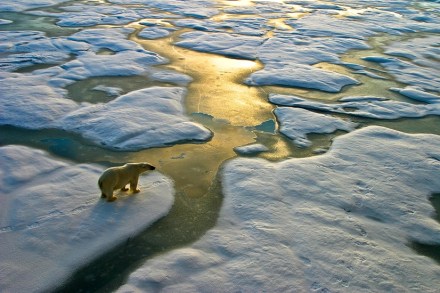
Cold war: Russia’s bid to control the Arctic

From our UK edition

It may be time for Father Christmas to look for a new home, before the Russians kick him out. ‘This is our Arctic,’ declared the Russian explorer Artur Chilingarov when he went to the North Pole in 2003. Four years later, another Russian expedition, again led by Chilingarov, planted a titanium flag on the seabed 2.5 miles below the Pole. It was a symbolic gesture of a geopolitical ambition. The jingoistic Chilingarov proclaimed: ‘Our task is to remind the world that Russia is a great Arctic and scientific power.’ Since 2013, Russia has invested heavily in seven military/naval bases along its Arctic coast to strengthen the country’s power and influence.

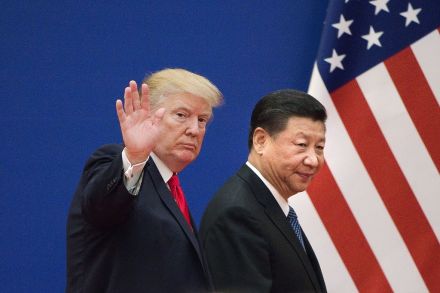
Was 2008 the year China triumphed over the West?

From our UK edition

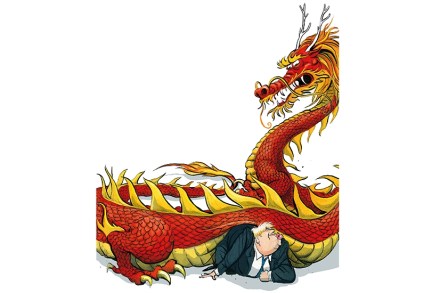
Although China's economy remains smaller than the United States’s in terms of nominal GDP (albeit ahead of the US in terms of GDP on a purchasing power parity basis) has it already surpassed it in another sense? Since 2008, China's energy and momentum has arguably led to it overtaking its rival. A hundred years from now, historians are likely to look back at the financial crash as the turning point in the balance of power between the West and China. The sub-prime mortgage crisis of that year, followed by president Obama’s high-tax, over-regulated economic management, saw America cast into a prolonged recession and an anaemic recovery.

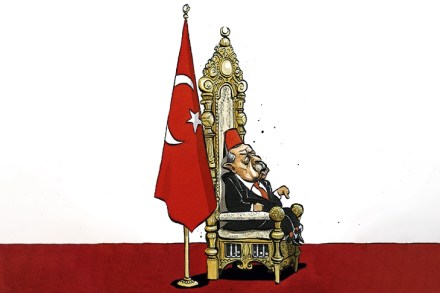
Erdogan’s game: why Turkey has turned against the West

From our UK edition

Six years ago, at the celebratory opening match of the new Basaksehir Stadium in Istanbul, an unlikely football star emerged. The red team’s ageing, six-foot tall centre-forward lumbered toward the white team’s goal; a delicate chip over the advancing keeper brought a goal that sent the stadium into ecstasy. The scorer was Prime Minister Recep Tayyip Erdogan. It was the run-up to an election in which he expected to become his country’s 12th president. For Erdogan, a former semi-professional footballer, it was brilliant self-promotion.

erdogan

Erdogan’s game: why Turkey has turned against the West

Six years ago, at the opening match of the new Basaksehir Stadium in Istanbul, an unlikely soccer star emerged. The red team’s aging, six-foot center-forward lumbered toward the white team’s goal, and a delicate chip over the advancing keeper brought a goal that sent the stadium into ecstasy. The scorer was Prime Minister Recep Tayyip Erdogan. It was the run-up to an election in which he became his country’s 12th president.For Erdogan, a former semi-professional footballer, it was brilliant self-promotion. Like Fidel Castro’s baseball pitching or Chairman Mao’s ‘world-record’ Yangtze river swim, Erdogan’s contrived sporting prowess helped make him as much a cult as a politician.

Divided nation: will Covid rules tear the country apart?

From our UK edition

37 min listen

In this second round of restrictions, the lockdown is no longer national. But a regional approach is full of political perils (00:45). Plus, the real reason to be disappointed in Aung San Suu Kyi (12:50) and is Sally Rooney's Normal People just overrated (26:15).With The Spectator's political editor James Forsyth; Middlesbrough mayor Andrew Preston; historian Francis Pike; the Myanmar bureau chief for Reuters Poppy McPherson; journalist Emily Hill; and The Times's deputy books editor James Marriott.Presented by Cindy Yu.Produced by Cindy Yu and Max Jeffery.

The truth about Burma’s ‘imprisoned princess’

From our UK edition

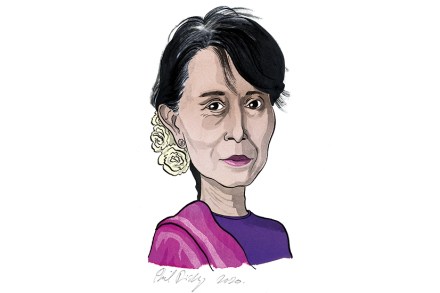
As Perseus was flying along the coast on his winged horse Pegasus, he spotted Andromeda tied to a rock as a sacrifice to Poseidon’s sea monster Cetus. It was love at first sight. Perseus slew Cetus and married Andromeda. Thus began the damsel-in-distress archetype that has been a mainstay of western culture ever since. Riffs on the archetype have been used by Chaucer, Shakespeare, Dickens and Wagner. Perhaps it was these examples that inspired the global liberal establishment (the BBC, Hollywood and the Nobel Peace Prize committee among others) to create, in the 1990s, the mythical version of Aung San Suu Kyi, Burma’s ‘imprisoned princess’, the saintly spiritual heir to Mahatma Gandhi, as Time magazine described her.

Douglas Murray, Francis Pike and Philip Hensher

From our UK edition

32 min listen

On this week's episode, Douglas Murray asks - why would anyone want to be a government adviser, given what's happened to Tony Abbott? The historian Francis Pike reads his piece on Thailand's Caligula; and Philip Hensher reviews a new book on Wagner.Spectator Out Loud is a weekly audio collection of three Spectator writers reading their pieces in the latest issue.

Winning shot: how the vaccines race has become a power struggle

From our UK edition

34 min listen

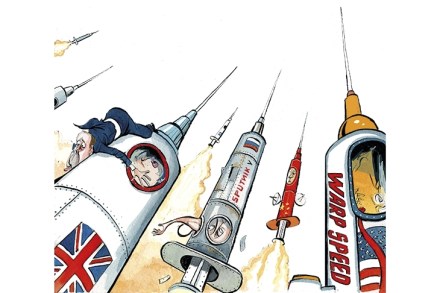
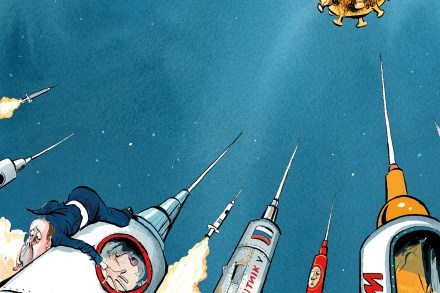
Vaccines are normally in the realm of scientists; but not this time as world leaders race to be the first. (00:50) Brexit is heating up, but is the government in a stronger position than it seems? (13:35) And a modern day Caligula - the life and times of the Thai king Rama X. (22:40)With journalist Matthew Lynn; immunologist Beate Kampmann; our political editor James Forsyth; YouGov pollster Marcus Roberts; and Asia historian Francis Pike.Presented by Cindy Yu.

The depraved rule of Thailand’s Caligula king

From our UK edition

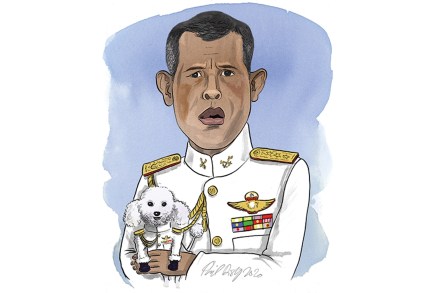
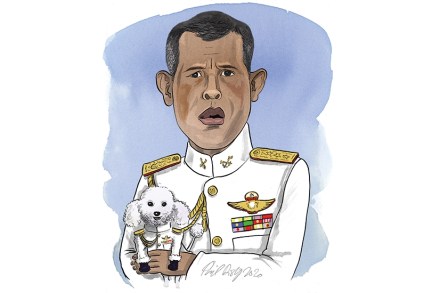
The Roman emperor Caligula was renowned for his extravagance, capricious cruelty, sexual deviancy and temper bordering on insanity. Most famously, before he was assassinated, he planned to appoint his favourite horse as a consul. This is probably a legend. But King Maha Vajiralongkorn, who ascended the Thai throne in 2016, adopted Caligula’s playbook for real. In 2009 the then crown prince promoted his pet miniature poodle Foo Foo to the post of air chief marshal, in which capacity he served until his death in 2015, aged 17. Foo Foo’s cremation was preceded by four days of formal Buddhist mourning.

Hirohito, the war criminal who got away

From our UK edition

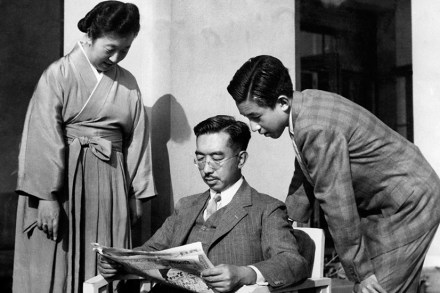
This month the global media marked the 75th anniversary of the dropping of atomic bombs on Hiroshima and Nagasaki. The cities’ destructions were momentous indeed, but the coverage has squeezed out other memories of the Pacific War. Who remembers Japan’s genocidal campaign in China that killed more than 20 million people — thousands of them by poison gas and canisters containing plague and typhus? Or the murder of 35 per cent of the 200,000 soldiers and civilians held in Japanese prisoner-of-war camps that meted out unspeakable cruelties? Certainly not the BBC, which failed to put Hiroshima and Nagasaki into any kind of historic context.

Can London survive coronavirus?

From our UK edition

44 min listen

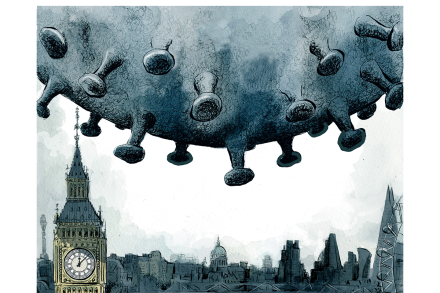
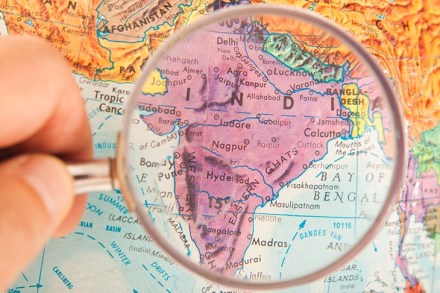
London is the motor to Britain’s economy, so how can it rebuild after the pandemic? (00:55) How can the new Tory leader in Scotland, Douglas Ross, keep the United Kingdom together? (17:50) And why the looming conflict between India and China isn’t in Kashmir, but rather in the Bay of Bengal. (29:33) With economist Gerard Lyons; historian Simon Jenkins; The Spectator’s Scotland editor Alex Massie; The Spectator’s political editor James Forsyth; historian Francis Pike; and author Jonathan Ward. Presented by Katy Balls. Produced by Gus Carter and Max Jeffery.

Sea change: China has its sights on the Bay of Bengal

From our UK edition

Pangong Lake is the most unlikely of places for a naval conflict between two of the world’s nuclear-powers, India and China, with a third, Pakistan, looking on with not a little interest. Lying some 280 miles east of Islamabad, 360 miles north of New Delhi and 2,170 miles west of Beijing, Pangong Lake is in the remote northern Himalayas. In 1905, the explorer Ellsworth Huntington said that its beauty could ‘rival, or even excel, the most famous lakes of Italy or Switzerland’. It is a harsh world, frozen in winter, inhabited by a sparse indigenous population of hardy goat herders.