Elliot Wilson

Who’s in charge? It’s hapless Hank

From our UK edition

It’s becoming harder and harder to believe that anyone is really in charge of the world’s largest economy. Each day brings a new catalogue of woes, miscues and missteps, each of which should have been foreseen long ago. And at the centre of each fresh foul-up stands one man: Treasury secretary Hank Paulson, ‘Hammerin’ Hank’, once boss of mighty Goldman Sachs, now reduced to a sort of Frank Spencer figure, constantly bemused by domestic disaster. Only in Hank’s world it’s the American mortgage industry that’s falling apart, not just the kitchen table.

Business as usual with the Burmese generals

From our UK edition

Elliot Wilson explains why international condemnation of Burma’s brutal military leaders is so ineffectual: because many other countries are eager to do deals with them The satirist P.J. O’Rourke once noted that the more references to democracy a country has in its official title, the greater the chance it is run by a grubby totalitarian regime. Hence the People’s Republic of China and the Kim dynasty’s heroically misleading ‘Democratic People’s Republic’ of North Korea. Burma — or Myanmar, as its leaders prefer — has its equivalent in the State Peace and Development Council (SPDC).

Funding a path out of poverty

From our UK edition

Elliot Wilson explores how investors can back ventures that lend to the world’s poorest entrepreneurs Prathminda Kaur is the modern version of the Little Match Girl, only with a twist: instead of perishing in a Victorian winter, she’s making a nice living for herself selling red onions and bell peppers in a Mumbai market. Kaur arrived in the Indian coastal city eight years ago. To start with she slept on the street, borrowing money from a loan shark at dawn, handing him more than 90 per cent of her profits at dusk. On an average day, the interest on her loans worked out to an annual rate of 10,000 per cent. But two years ago a friend introduced her to SKS Microfinance, an Indian lender that makes millions of tiny loans to local entrepreneurs like Kaur.

The military millionaires who control Pakistan Inc

From our UK edition

Elliot Wilson says Pakistan’s economy is dominated by a ruthless business conglomerate that owns everything from factories and bakeries to farmland and golf courses: the army Sometime in late 2004, Pakistan's all-powerful army made a curious decision. Under mounting pressure from London and Washington to capture Osama bin Laden, believed to be hiding in Baluchistan, Islamabad's fighting forces instead turned their attention to a far more profitable venture: building golf courses. In itself this wasn’t particularly unusual. With 620,000 soldiers, Pakistan boasts the world’s seventh-largest standing army, but its senior officers long ago realised the perks to be gained from commercial ventures.

In Tianjin

From our UK edition

The Wangdingdi market on the outskirts of this fast-growing port city in north-east China is an extraordinary sight. It might be the world’s largest bicycle market; it’s certainly the loudest. In the roiling heat of a Chinese summer, touts at the market gather in a liquid throng, moving like mercury, urging — sometimes almost rugby-tackling — you into their stalls. Each shop is virtually identical, smelling in equal measures of garlic, vinegar and armpits, and packed to the gills with every type of bicycle: some designed for the town; some for mountain trails; some, to judge by their battered appearance, for the scrapheap.

Slums for the masses, fortunes for the few

From our UK edition

Hu Bin is your archetypal Chinese real-estate entrepre­neur. Built like a bull, with a huge, moon-shaped head, a permanent grin and tiny, nicotine-blackened teeth, he is also the embodiment of Beijing’s sudden determination to use its huge capital reserves to buy the world. Despite an estimated £5 billion fortune, Hu Bin would normally have remained a low-key figure, even in China. His company, Shanghai Zhongzhou International Holding, is the unlisted owner of isolated packets of high-end residential property dotted around Shanghai.

Find another planet and plant it with soybeans

From our UK edition

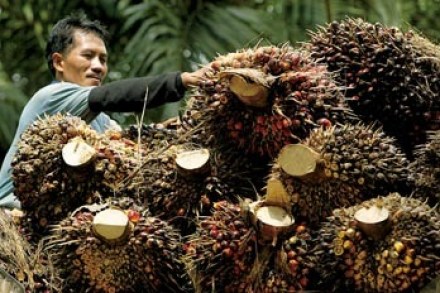
Elliot Wilson says there isn’t enough arable land in the world to make plant-based fuels a viable alternative to oil ‘Biofuels?’ Ricardo Leiman gives an imperious snort, his eyebrows wobbling. ‘Bio­fuels?’ he repeats in an offended tone, as if asked to perform a lewd act. ‘There’s about 20 million tonnes of processed edible oil on the planet right now — not enough to fulfil 5 per cent of Europe’s energy needs, let alone any of the huge demand in the US, China, India or anywhere else.’ If Leiman doesn’t believe that biofuels are a viable solution to our energy needs, one wonders why anybody does. As chief operating officer of Noble Group, a Hong Kong-listed trading giant that crushes and refines close to 2.

The scourge of Hong Kong

From our UK edition

Every city needs a David Webb. Hong Kong, a heaving, sweating shrine to capitalism, cronyism and cartels, is lucky it has the real thing. Shareholder rights and corporate governance remain largely alien concepts in this former British colony, which is about to mark the tenth anniversary of its return to China. It sometimes feels that Webb, a former London investment banker who moved to Hong Kong for Barclays, is the only person who cares about the rights of small shareholders, or about checking the corrosive influence of the city’s all-powerful tycoons. Lean and acerbic, Webb resembles a thin David Shayler, the former MI5 officer. He doesn’t do small talk, and stares at you with disturbing concentration.

What if it rains on Beijing’s Olympic parade?

From our UK edition

No official visit to China’s capital is complete these days without paying homage at a large and rather shabby building in the sprawling northern suburb of Haidian. The Beijing Olympic Tower is the nerve-centre of a seven-year, $48 billion project that has the potential to define China’s rapid ascent to economic superpowerdom — or to turn into the greatest public relations disaster the world has ever seen. Dignitaries and politicians fly in from all over the world to be welcomed, and lectured, by mid-ranking Chinese officials. The chief executive of UK Sport popped in for a pot of green tea in May, as did minor dignitaries from Canada, Australia and Greece.

Why come to Kazakhstan?

From our UK edition

Russia may have set the bar pretty high, but Kazakhstan still has to be one of the most extraordinarily business-unfriendly places on the planet. A visit to this vast Central Asian state is like a modern reworking of Malcolm Bradbury’s satire Why Come to Slaka?, which catalogued the dubious attractions of a fictional East European state in the Cold War. On the surface, this giant, underpopulated nation is doing remarkably well. From being virtually bankrupt a decade ago, the two main cities — Almaty in the south, and the northerly capital of Astana — now brim with confidence and cash. Mercedes and Bentleys jostle for road space with Ladas and Moskvitches; octogenarian babushkas take out loans with HSBC and Citibank to refurbish their plush inner-city apartments.

How to avoid the Shanghai surprise

From our UK edition

When China sneezed on 27 February, the whole world caught cold. Within a few hours the Shanghai composite index plunged 8.8 per cent, its biggest one-day fall since February 1997, causing Hong Kong’s markets to shiver. The contagion quickly spread to Japan, Korea, Australia and India. Before the day was out, leading stocks in Europe and then in the United States had joined the sick list. Shanghai’s unwelcome surprise was a new development in global markets more commonly shaken by American ailments — and it has served only to raise the level of unease many investors already felt about buying Chinese stocks directly.

It ain’t half hot in Mumbai

From our UK edition

Elliot Wilson explains how to navigate India’s rigid investment rules and buy into a dazzling growth story Sweat was pouring off the commodities broker sitting next to me in the sauna of the Taj Mahal Hotel in Mumbai. ‘India is shining,’ he thundered. ‘You must invest in it — everyone in England must. The economy will always go up; it will never come down. We’re on top in information technology, in financial services, in infrastructure.’ Was he just overheating — India’s infrastructure, after all, is indisputably among the worst in Asia — or offering a fair assessment of one of the world’s great emerging economies? Certainly India’s economy has begun to dazzle: it is on course to grow 9.