Elisa Segrave

Elisa Segrave is an author whose books include The Girl from Station X: My Mother's Unknown Life.

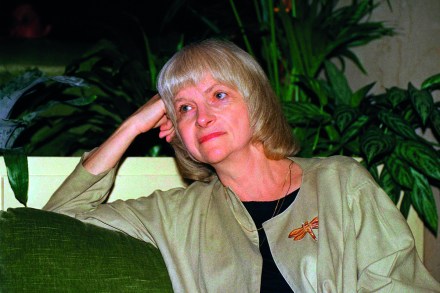
Alison Lurie, 1926-2020

I first experienced Alison Lurie’s generosity remotely. In December 1989 my friend Janet Hobhouse was renting Alison’s tiny house on Stump Lane, Key West, and I visited. Janet was terrified after a break-in. Alison, away teaching at Cornell, Kindly arranged for a private security guard. I first sighted the celebrated novelist on her deck in February 1996, breakfasting on what looked like cereal and Marmite. Stump Lane was sold, and she had bought a house on Reynolds Street, near the Casa Marina Hotel — opened in1920 for travelers on the Flagler Railway from Miami to Key West. The poet Judith Kazantzis and her husband Irving Weinman had arranged for me to rent the second part of Alison’s house, across her deck. She invited us to dinner.

alison lurie

A beastly cold country: Britain in 1962

From our UK edition

Like this author, I was happily snowbound at a beloved grandparent’s house during the big freeze that began on Boxing Day 1962 and ended in early March the following year. I was in Sussex, she at Sissinghurst in Kent. Juliet Nicolson, then eight, describes the morning of 27 December: ‘The snow was still there, turning the landmarks of the garden — the walls, lawns, statues, urns — into something unrecognisable but unified. The sight was beautiful.’ Her grandmother, Vita Sackville-West, had died in June, leaving the house to Nigel Nicolson, Juliet’s father. It was his family’s first Christmas there. In The Perfect Summer: England 1911 Nicolson wrote of an earlier period on the cusp of social change.

Peregrine Worsthorne: 1923-2020

From our UK edition

Peregrine Worsthorne died peacefully at home on 4 October 2020. Two weeks earlier I had visited him with my son Nicholas, at his home in Buckinghamshire where he lived with wife Lucinda Lambton and devoted young Croatian carer Luca. It was a beautiful day and we arrived for lunch after a long drive. Perry was brought into the garden, with its animal topiary, and we sat with him in the sun. By the French windows, Lucy picked orange baby tomatoes. My son then fed them, one by one, to Perry, who opened his mouth like a baby bird while Lucy brought out lemonade. Perry seemed pleased to see us. I first met him in the 1990s. I had recently divorced and Perry had just met Lucy, at a party of Cynthia Kee’s. The two then made a couple of attempts to matchmake me with Peter Vansittart.

Horrors of the plantation

I am not American and I am not descended from British slave owners, but I was shocked when I read a letter from the 1860s that my Irish great-grandfather wrote to his brother from Peru, acknowledging receipt of a ‘shipment of Chinese coolies’ in the guano trade. John Cummings III of Louisiana is also of Irish origin, and his ancestors never owned slaves either. But in 2014, Cummings, a retired lawyer, and his wife Donna used $8.6 million of their own money to create the Whitney Plantation Museum at Wallace, just under an hour from the French Quarter of New Orleans. The Whitney museum is America’s first and so far only museum of slavery. My cousin and I drove there from New Orleans on a bitter winter’s day. There is no café.

plantation

Lockdown can be overwhelming for those with autism

From our UK edition

National Autism Month in April coincided with our strictest phase of lockdown. My son, 36, who has Asperger’s, has consequently been unable to stick to all his routines — one being the Sunday car boot sale on Brighton Racecourse — and I was worried about how he’d cope. He suggested we watch classic EastEnders together from our separate homes and text each other about the personalities and plot. It worked. The episodes from the early 1990s are fast-moving and the characters very real. One scriptwriter then, Susan Boyd, born in Glasgow, hung out with the Jamaican community in Ladbroke Grove in the 1970s. She died at only 55. I looked up her obituary. ‘The woman comes across as unassuming and unmaterialistic and also very talented. Son.

My wild Key West

This article is in The Spectator’s December 2019 US edition. Subscribe here. Key West was originally called Cayo Hueso (Bone Island in Spanish) either for its bleached limestone rock or because the Calusa Indians used it as a burial ground. The first European here was Spain’s Ponce de León in 1521, on his spiritual quest for the Fountain of Youth. Lt Cmdr Matthew Perry planted the American flag on March 25, 1822. By the 1880s, Key West was the richest town in Florida. I first came on a Greyhound in November 1977. I knew no one. An American boyfriend in London had talked about breakfasting with fishermen, and of the Southern writer who was his mentor.

key west

Wisdom of the ages: we must keep listening to the elderly

From our UK edition

My beloved grandmother died at 90, and my mother at 89, after having Alzheimer’s for 11 years. So I am not rattled by the old; I find their memory lapses challenging rather than frightening. (If I were the full-time carer of an elderly husband, it might be another matter. One woman described it as being strangled slowly by a python.) I recently visited 96-year-old Sir Peregrine Worsthorne, former columnist, journalist and editor of the Sunday Telegraph, at his house in Bucks. In May, his wife (writer Lucinda Lambton) and a kind Croatian carer were present. This time, the two of us were alone for three hours. Perhaps this made it easier for Perry, and me, to focus. I brought up key figures from his past.

All by myself

From our UK edition

As I get older I find the idea of wanting to be in a couple more and more bizarre. I’m not talking about sex — which anyway often becomes less frequent after years of familiarity — or marrying for financial security. No, I’m puzzled about people’s obsession with getting a permanent companion. There are all sorts of websites and advice columns purported to help us reach this goal. I used to receive ‘taster’ emails from Rori Raye, a bubbly American lady with blonde curls, author of How to Have the Relationship You Want. She offered to show us, for a fee, how to be the woman men always fell for. Our ultimate aim should be to ‘get the ring on the finger’ — basically, to entrap the elusive male.

Drunken confessions

From our UK edition

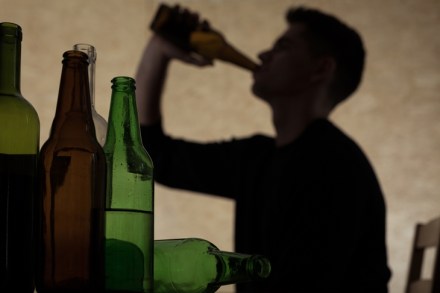
I have always found the parable of the Prodigal Son sickeningly unfair, and I felt this again while driving a close relative down a motorway in a frightful gale at night to a residential rehab. -That morning I’d had an emergency consultation in London on behalf of the said relative, with the head of the rehab place, who I’ll call Dr X. Throughout, I’d had the uneasy feeling that Dr X was subtly trying to make me feel at fault for not being sympathetic enough to my relative’s situation. Actually, I have suffered for years from his wild and selfish behaviour while on cocaine and alcohol, and have often tried to help him. Dr X is an expert on addiction, and a self-confessed addict (though not to drugs or drink).

Fish in troubled waters

From our UK edition

‘Help!’ I thought, when I read the Author’s Note. ‘It’s about salmon, and I hate fishing.’ But by the first page I was hooked. Adam Weymouth writes well. He is poetic, but also precise. His subject is the return of the ‘king’ salmon to their birthplace and final destination, the north ridge of McNeil Lake in Canada. These fish are many pounds of muscle, toned from years of swimming headlong into Pacific storms, and their flesh is as red as blood. They force against the Yukon’s current, shouldering their way upriver, setting their fins like sails. Eventually they will push thousands of miles into North America’s interior. They will reach mountain lakes; they will reach the clouds.

A curious violence in America’s heart

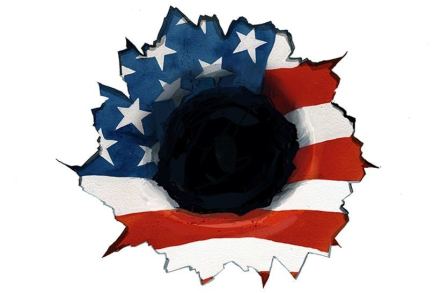
As a British woman, I love Americans’ kindness, generosity and energy but am often thrown by their exaggerated politeness and euphemistic speech. They use ‘passed’ for ‘died’ and always say ‘excuse me’ if they brush against you in a shop. They sentimentally refer to ‘your puppy’ when the dog is patently over three years old. They refer to a dog’s ‘going to the bathroom’. And why say ‘a grown man’ instead of just ‘man’? Wads of paper napkins are handed out unnecessarily in cafés and at parties (where one is sometimes offered ‘a beverage’ instead of a drink). But Americans can also be unexpectedly bloodthirsty and violent and I find this contrast disconcerting.

Wham bam, thank you Ma’am

From our UK edition

I love Americans’ kindness, generosity and energy but am often thrown by their exaggerated politeness and euphemistic speech. They use ‘passed’ for ‘died’ and always say ‘excuse me’ if they brush against you in a shop. They sentimentally refer to ‘your puppy’ when the dog is patently over three years old. They refer to a dog’s ‘going to the bathroom’. And why say ‘a grown man’ instead of just ‘man’? Wads of paper napkins are handed out unnecessarily in cafés and at parties (where one is sometimes offered ‘a beverage’ instead of a drink). But Americans can also be unexpectedly bloodthirsty and violent and I find this contrast disconcerting.

Let Katie speak

From our UK edition

I had an all-day ticket for the Lewes Speakers Festival at the All Saints Centre on Saturday. I was keen to hear the writer Damien Lewis on the wartime Special Interrogation Group who’d disguised themselves as German soldiers and stormed Tobruk, Andrew Monaghan on his book Power in Modern Russia, and Theodore Dalrymple, ex-Spectator columnist and a former prison psychiatrist. The last speaker, scheduled for 6.45 p.m., was to be Katie Hopkins. I was curious: is she autistic, does she have a narcissistic personality disorder, or is she just a horrible person and a show-off? I had hardly read her stuff, but after the food writer Jack Monroe won a libel case against her in March 2017 (Hopkins thought Monroe had desecrated a war memorial), my daughter showed me an interview.

Dangerous liaisons | 19 October 2017

From our UK edition

Lothario, Don Juan, philanderer, ‘naughty’, ‘plays away’ — all terms for men who have an overwhelming drive to seduce scores of women, take no responsibility, and often get away with it. In the recent allegations about Harvey Weinstein’s predatory sexual attacks on more than 30 females, mainly actresses, whose careers seem to have depended on them being compliant, most of his victims now complain too of his physical unattractiveness. One, the Italian actor and director Asia Argento, who went on to have ‘consensual sex’ with Weinstein on and off for five years, says she was ‘a fool’. Those who have come forward with their stories and condemned Weinstein, often several years later, are being heaped with praise for their courage.

Brava Bella

From our UK edition

I like Bella Pollen for her open-mindedness, self-deprecation and verve. Given her early success as a fashion designer — top client Princess Diana — her memoir is extraordinarily modest. Now in her mid-fifties, she has also published five novels — one, Hunting Unicorns, a bestseller. Unusually, this had a dead narrator, and Meet Me in the In-Between also begins with an unearthly creature — a ‘demon’ sexual predator, who won’t leave our memoirist alone. It also deals with writer’s block.

The Atomoxetine year

From our UK edition

Driving my son’s snake, Todd, a 3ft python wrapped in a pillowcase, to a Brighton vet in August was child’s play compared to the rest of what had gone on that summer. My son, who is 32 and has Asperger’s syndrome, had been served with an eviction notice from his rented flat, having been on what was effectively speed for the previous eight months. Since early July, when his three young carers resigned, he had been visited by the NHS mental health crisis team twice a day. This team, with great skill, calling on him in twos, had managed to get him off what — for him, and for anyone associated with him — had turned out to be a pernicious drug, Atomoxetine.

Body and soul

From our UK edition

Emma Donoghue’s novel Room was short-listed for the 2010 Man Booker prize and made into a film in 2015. Inspired by Josef Fritzel’s incarceration of his daughter Elisabeth, it described a mother and son held captive in one room for several years. It depicted their intense, private world and focused on maternal love. The Wonder also inhabits a small, claustrophobic space, whose inhabitants cling to idiosyncratic rules and beliefs. Set in the Irish Midlands soon after the potato famine, the story shows the reliance of the poor and often starving on a mostly joyless and self-punishing Catholicism. The Wonder, as Room did, depicts maternal love, this time distorted, but no less intense.

Dear diaries

From our UK edition

I am a compulsive diarist and have been since I was 16. My daughter fantasises that even as a mad old lady in the attic I will still be tapping out my diary. I have to do it. If I don’t, I feel almost ill, as if I am only half living. Do I want my diaries published? Yes, I do, though I did not write them for that purpose. I am 66 and, due to the sheer number of words, they would fill 20 volumes. I feel that if they are not read, my life as a writer will have been wasted. The diarists with whom I most empathise were also compulsive, though I admire those who deliberately chronicle an important period of history.

Neighbours and strangers

From our UK edition

Margaret Forster, who died on 8 February, excelled at writing about complex relationships between women. Even old friends, she demonstrated, can experience jealousy, disapproval or dislike. Here, ‘Sarah’ has changed her name to live incognito on the west coast of Cumbria, in a town chosen at random. When she gets locked out of her house, a bond is formed between her and her elderly neighbour Nancy — whose deceased friend Amy once owned Sarah’s rental and left Nancy a key. Although Sarah is ostensibly the one with ‘a past’ (prison), it was Nancy whom I found most interesting.

The rarest blend of white and gold

From our UK edition

This unusual book is beautifully written, produced and illustrated, but its subject — the small Slender-billed curlew — is strangely absent. In his ‘introduction to a ghost’, Horatio Clare explains that, when he was commissioned to tell the story of the western world’s rarest bird, it did, at least officially, still exist. This grail of the birding world, which he has never seen, he describes as a beautiful creature, a species of curlew plumaged in a blend of whites and golds, with dark spots on the flanks, slim and graceful of form, more refined than the plump common curlew, with a thinner down-curving beak which makes it look as though it is chewing a stem of grass. He tries to trace it in Sicily, Italy, the Peloponnese, the Balkans and Turkey.