Eliot Wilson

Eliot Wilson

Eliot Wilson was a House of Commons clerk, including on the Defence Committee and Counter-Terrorism Sub-Committee. He is contributing editor at Defence On The Brink and senior fellow for national security at the Coalition for Global Prosperity

Marco Rubio’s defence spending call is nothing new

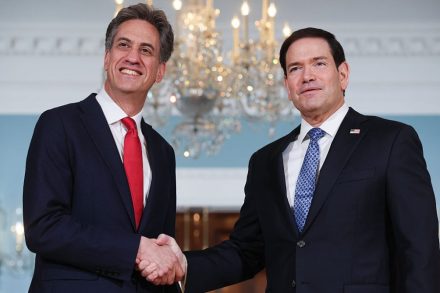
This week Ed Miliband made his first trip to Washington D.C. since becoming Andy Burnham’s Foreign Secretary. He is 56 now, an MP of more than 20 years’ standing in his fourth cabinet role, yet there is something both boyish and gauche about him: the eternal younger brother. How would he fare as Britain’s envoy to President Trump and the cult of Maga? Miliband had been invited to Washington by Secretary of State Marco Rubio after the pair met at an Association of South East Asian Nations foreign ministers’ conference in the Philippines last month. It had been rumoured that the Trump administration was disappointed at Burnham’s selection of Miliband as Foreign Secretary, insofar as it is possible to imagine President Trump displaying much interest in the matter at all.

Is Reform serious about using the Navy to control migration?

It is 70 years since Donald McLachlan’s Daily Telegraph leader urged prime minister Sir Anthony Eden to demonstrate 'the smack of firm government', and there has always been an element of the British electorate which thrills at the idea. This is a constituency Nigel Farage knows well and has long courted, the same one that looked at the chaos of the mid-1970s and wondered whether activist groups calling for a 'strong leader' might have a point. Reform UK has returned to this mood music once again as it sets out new policies on illegal migration. Its home affairs spokesman, Zia Yusuf, has been laying out the basic features of what is posturingly dubbed 'Operation Fortress': Britain is being invaded. Tory and Labour governments responded with a free ferry service and free hotels.

We still know little about Andy Burnham’s defence stance

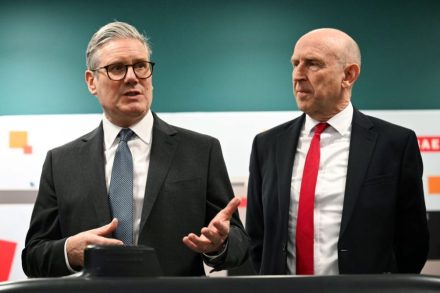
It was a bare-bones demonstration of politics as theatre. Today, the Prime Minister went to Barrow-in-Furness on the Cumbrian coast to visit BAE Systems Submarines. The shipyard there has built all but three of the Royal Navy’s nuclear-powered submarines – the others were turned out by Cammell Laird of Birkenhead – and are undertaking the construction of the four Dreadnought-class ballistic missile submarines which will carry Britain’s nuclear deterrent through the 2030s and beyond. The theatricality came from the fact that Andy Burnham went to Barrow to make an announcement which was inevitable and predictable.

Why won’t Burnham commit to the 2030 defence target?

It is hard to imagine many people will miss Sir Keir Starmer now he has gone. Perhaps, like phantom limb syndrome, he will continue to cause pain even though it was generally agreed that amputation was the best option. This week, however, after new boy Andy Burnham delivered a windy address on social care in Golders Green, there were exchanges in the subsequent question-and-answer session which made it feel as if Sir Keir had never left at all. The new Prime Minister was asked whether he would commit to spending 3 per cent of GDP by 2030. He would not. Wes Streeting, the new Defence Secretary, has also refused to make such a promise, although he has said more vaguely that he would resign if the Defence Invetstment Plan is not ‘fully funded’.

Wes Streeting has much to prove as Defence Secretary

Reshuffles vary in significance. When John Healey was spotted in Downing Street yesterday, there was an obvious question: was Andy Burnham reinstating him as defence secretary? Was this a coded message that Healey had been right on the need to increase defence spending beyond that in the Defence Investment Plan (DIP) and Keir Starmer wrong? It was more surprising than that. Healey became Chancellor of the Exchequer, a move unanticipated by a commentariat watching a two-horse race between Ed Miliband and Shabana Mahmood. When the bottle stopped spinning later last night, 43-year-old Wes Streeting was the new Defence Secretary.

This Nato summit will be Starmer’s final humiliation

Sir Keir Starmer attended his first Nato summit in Washington, DC four days after becoming Prime Minister in July 2024. Now, almost exactly two years later, he will join alliance leaders in Ankara with probably less than a fortnight until he leaves Downing Street. There is a certain piquancy, either sad or laced with schadenfreude, according to your point of view, in Starmer’s premiership being bookended by major defence summits. He has spent a great deal of time and effort on foreign affairs and security, including a heavy burden of international travel, and Ankara will be his 47th and final overseas visit in 24 months.

Why does Starmer think he could become Nato chief?

When the incumbent prime minister – presumably Andy Burnham – lays a wreath at the Cenotaph on Remembrance Sunday this year to honour 'the glorious dead', he will potentially be joined by a record number of the glorious undead. If everyone who is eligible attends, there will be nine former prime ministers at the ceremony. Yes, nine: John Major, Tony Blair, Gordon Brown, David Cameron, Theresa May, Boris Johnson, Liz Truss, Rishi Sunak and Keir Starmer. This is a statistically significant proportion of the 59 prime ministers there will have been since Sir Robert Walpole established the position on his appointment as First Lord of the Treasury in April 1721. Their average age is just under 65, still too young for the state pension. What does a former prime minister do?

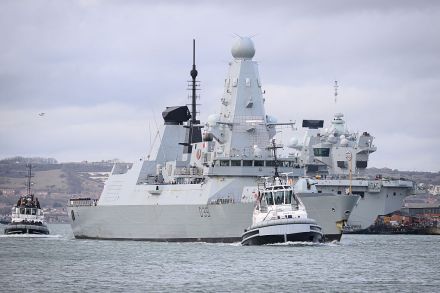
The problem with swapping the navy’s destroyers for drones

It can be hard to believe, but it is only three weeks since John Healey resigned as defence secretary, saying that Keir Starmer had proven himself, ‘unable… to commit the resources that the nation needs to defend the country at this time of rising threats.’ It is insanity to give the armed forces half the funding they need and expect them to deliver all the missions to which they are committed The financial settlement for the Defence Investment Plan offered an additional £13.5 billion for the armed forces. The Ministry of Defence had said that it would need £28 billion.

Starmer is leaving Britain unprepared for future conflicts

Sir Keir Starmer came to office in July 2024 on a manifesto which played heavily on defence. The Labour party, it proclaimed, had an absolute commitment to the UK’s independent nuclear deterrent and, 'as the party that founded Nato… [would] maintain our unshakeable commitment to the alliance'. It would also 'apply a Nato test to major defence programmes to ensure we meet our obligations in full'. The party would conduct a Strategic Defence Review (SDR) within its first year of office, 'set out the path to spending' 2.5 per cent of GDP on defence and publish a Defence Industrial Strategy. It is hard to overstate the degree to which Starmer's government has fallen short of its lavish and tough-talking promises.

A new defence minister won’t solve Starmer’s DIP problem

Thursday was a bad day at the office for Sir Keir Starmer. The Prime Minister is already fighting fires on several fronts: the forthcoming Makerfield by-election, which is likely to return Andy Burnham to the House of Commons; an outbreak of anti-immigrant mob violence in Northern Ireland; the cost of living rising due to the ongoing US/Israel/Iran conflict; the continuing toxic fallout from Starmer’s appointment of Lord Mandelson as British Ambassador to the United States. Starmer has been under sustained fire over the grotesquely late Defence Investment Plan (DIP) and the level of additional public expenditure on defence it contains for some time.

Britain’s slide down the Nato league table is an embarrassment

The Strategic Defence Review (SDR), published a year ago and meant to be the fundamental framework of the government’s defence policy, was not a faultless document. On one issue at least, though, it was very clear: the United Kingdom’s steadfast commitment to Nato should be the primary focus of its strategic posture. The primacy of the alliance was emphasised so often it almost felt like subliminal suggestion. Keir Starmer’s foreword promised Britain would 'lead in Nato'; the Defence Secretary John Healey said 'our defence policy is "Nato First’", referred to 'our unshakeable commitment to Nato' and pledged to 'provide leadership in Nato'. Meanwhile, the SDR's authors said that 'Nato is the bedrock of our defence' and 'at the forefront of the UK’s many valuable alliances'.

Trump is hollowing out America’s intelligence agencies

Donald Trump never loses the ability to astonish. Many people will have breathed a sigh of relief last month when the United States Director of National Intelligence, Tulsi Gabbard, announced that she was stepping down at the end of June. The former Democratic congresswoman for Hawaii’s 2nd district had tacked dramatically to the right after a dismal but controversial bid for the party’s presidential nomination and threw in her lot with Donald Trump. The reward was to be nominated to his cabinet in November 2024. The post of Director of National Intelligence (DNI) was established by George W. Bush in 2005 to be the executive head of the US intelligence community, a collection of 18 organisations, including the CIA, the FBI and the National Security Agency.

Keir Starmer is not serious about defence

Today marks a year since the government published its Strategic Defence Review (SDR). From the outset, it was clear that the review was hampered by its terms of reference, and the government’s heavy and shameless leaking of its contents to generate positive publicity was disgraceful. But it was a useful statement of intent, a framework on which to build Britain’s future defence capabilities. None of it, however, was going to have much impact without considering expenditure. The Defence Secretary, John Healey, in his foreword to the review stated that 'we will develop a new defence investment plan (DIP) to deliver the SDR’s vision'. That was critical: the DIP would contain the facts and figures, the calculations of hard cash, and was to be completed 'in Autumn 2025'.

Why is Andy Burnham asking Sue Gray for advice?

As Andy Burnham, who is still mayor of Greater Manchester in his spare time, campaigns to win the Makerfield by-election in fewer than four weeks, he knows how much is at stake. It is not simply an opportunity to return to the ‘London-centric’ House of Commons he left nine years ago in order ‘to make a change, to challenge the status quo from the outside’. If he is returned to Parliament – as the odds very narrowly suggest he will be – there is a strong chance he will replace Sir Keir Starmer as prime minister within a short period of time. It is a staggeringly foolish decision by Burnham to seek her advice Given the situation, it is perfectly reasonable that Burnham has devoted some time to thinking about what his premiership would be like.

The Ministry of Defence is failing to prepare Britain for war

In the last 20 or 25 years, there has been a much greater understanding that a country’s 'national security' encompasses much more than the traditional duality of diplomacy and military power. Trade routes, public infrastructure, energy supplies and societal cohesion are all at play in terms of assessing threats and designing ways of defending against them. One key issue to emerge has been the concept of resilience: how well-prepared is Britain? What risk mitigation have we undertaken? How would we respond to a sustained conflict? What is the public mood? At the beginning of the year, the House of Lords appointed a select committee on national resilience, chaired by former adviser on corporate responsibility and self-regulation Baroness Coussins, to report on the subject by November.

Trump’s Nato troop reduction isn’t Europe’s biggest problem

Before Donald Trump returned to the White House last year, there were many commentators who sought to sanitise the President. Take him seriously but not literally, they said. Some hinted that his cruder and wilder hyperbole was not the ignorant, boorish reflex it seemed but a shrewd and daring negotiating tactic in Trump’s beloved 'art of the deal'. It has been reported that the United States is planning to announce a reduction in the number of troops it will make available to Nato in Europe. America is planning to shrink its commitment to the Nato Force model, under which troops 'carry out the alliance’s operations, missions and other activities during peacetime'.

Why Trump is threatening the Falklands

There are still those who argue that President Trump’s aggressive, impulsive and inconsistent foreign policy is radical and disruptive, and because of this delivers results. The jury remains out on that. But there is one aspect of international affairs in which Trump is at a marked disadvantage. The US President is often governed by impulse, satisfying his instinct of the moment. That has been underlined by a leaked email from the US Department of Defense, setting out a list of potential punishments for countries which so far have failed to support Trump’s military action against Iran, Operation Epic Fury.

War bonds won’t fix Britain’s creaking defence

The Chancellor Rachel Reeves is reported to be considering proposals to issue war bonds to fund a splurge in defence spending. We have been here before when it comes to the Labour government suggesting that it is willing to put its money where its mouth is on defence. Only 14 months ago, Sir Keir Starmer seemed to have seized the initiative when he announced that the government would not only fulfil but accelerate its manifesto commitment to spend 2.5 per cent of GDP on defence. That was brought forward to 2027, while he 'set a clear ambition' to go further to 3 per cent of GDP 'in the next parliament'. But what seemed like a bold act of leadership is now much diminished as other Nato member states have made greater commitments to defence.

Treasury squabbles are harming Britain’s national security

The symphony of criticism aimed at the government for failing to live up to its promises of boosting Britain’s defences came to its crescendo this week. The lead author of last year’s strategic defence review (SDR), former Labour defence secretary and Nato secretary general Lord Robertson of Port Ellen, gave a speech at Salisbury’s Guildhall in which he savaged Sir Keir Starmer’s administration: he identified 'a corrosive complacency today in Britain's political leadership' and accused ministers of paying 'lip service' to 'the risks, the threats, the bright red signals of danger'. One of the mainstays of the criticism aimed at the government is the months-long, ongoing delay in publishing the defence investment plan (DIP).

Starmer is being ‘corrosively complacent’ about defence

The old joke runs that you can tell when a politician is lying because his lips are moving. It is unfair – our elected leaders rarely indulge in flat-out, unambiguous untruths – but part of politics is certainly about presenting complex issues in a favourable light. The current government has its own strange and maddening approach to this, but I will come back to that. Robertson’s rebuke is especially important because he was the lead author of last year’s Strategic Defence Review which Sir Keir Starmer hailed as a ‘landmark’ document Outside the arrogant utopianism of Zack Polanski’s Green party, there is a widespread consensus that the United Kingdom needs to spend more money on defence.