Eddie Cross

How the attack on Emmerson Mnangagwa backfired

From our UK edition

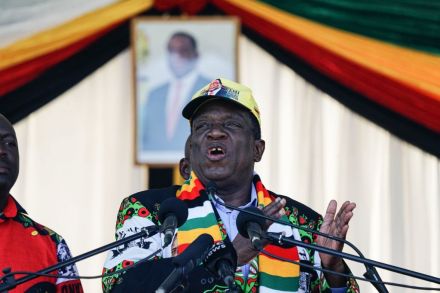
Emmerson Mnangagwa's path to the presidency has earned him no shortage of enemies. His succession alienated many within his Zanu PF party, not least the Mugabe stalwarts who had stood by their man for 37 years. As if that was not enough, Zimbabwe's president is also facing competition from his former colleagues and subordinates in the junta, in particular from General Chiwenga, his vice president. In this complex tussle for power, Mnangagwa is doing his best to hold things together while addressing his country's growing economic and social problems and rebuilding international and regional relations that were left in tatters by his predecessor.
Mugabe’s successor faces an uphill struggle

From our UK edition

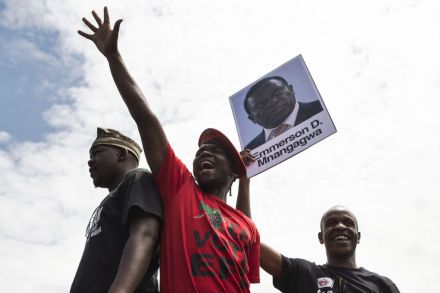
Even for a veteran of the struggle for freedom and democracy in Zimbabwe, the events of the past week continue to shock. When Robert Mugabe refused to step down in his rambling TV address on Sunday, it seemed impeachment would be the only way to remove him from office. Proceedings to do just that started in parliament yesterday. We didn't get far. The debate had been going for 40 minutes when the speaker interrupted proceedings to announce that he had received a letter from the president. When it came to the part about Mugabe 'tendering his resignation with immediate effect', the place exploded. It took several minutes to restore order and by the time we filed out, it seemed the entire country was out on the streets celebrating.

Robert Mugabe’s desperate denial continues

From our UK edition

Robert Mugabe nearly gave the entire country a heart attack last night. In the late afternoon, a ZTV broadcasting unit was driven into State House, where Mugabe and the military commanders were negotiating his departure from office. After Saturday, when millions of Zimbabweans took to the streets to call for his retirement – and then the Sunday meeting of the Zanu PF Central Committee at which he was summarily dismissed from the leadership of the Party and replaced by Emmerson Mnangagwa – we all expected a humble and contrite Mugabe to announce he was stepping down. We waited from 7pm to 9pm for him to come on television live; when he finally did, the setting was quite bizarre.

Zimbabwe’s coup has been seamless, ruthless and virtually bloodless. What now?

From our UK edition

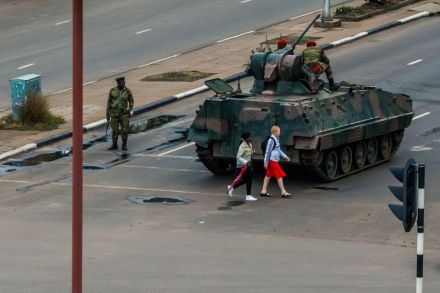
Last week, I predicted that the Mugabe era was at its end and that all that remained was how, when and who? Well we now know: it was Emmerson Mnangagwa, it took just 48 hours and it was in the form of a disguised coup. The leadership of the G40 faction in the ruling Party has been detained, many are in hiding or on the run; some resisted and last night there was some gun fire and explosions. This morning there was a clear statement by the army that they have taken charge. How did this happen? Mnangagwa has been in the Cabinet for 37 years, vice president for 3 years and a close confidant of Robert Mugabe for over 50 years.

The rule of law is disappearing in Africa

From our UK edition

Harare, Zimbabwe At a meeting in Harare in early August, Mr. Mugabe stated quite clearly, that the persons responsible for the murder of white Zimbabwean farmers during the land invasions would 'never be prosecuted'. Tens of thousands of people who were members of Zapu and lived in the south west of the country were murdered, beaten, raped, tortured and harassed between 1983 and 1987 during a campaign that Mr. Mugabe named 'Gukurahundi' or the storm that 'washes clean'. Over a million-people fled the genocide and moved to South Africa and Botswana. Not a single person has been prosecuted for any of these crimes. During the campaign that Mr. Mugabe called 'Murambatsvina', which roughly translates as getting rid of the 'rubbish', another 1.