Ed West

Ed West

Ed West writes the Wrong Side of History substack

What the experts got wrong about migration

From our UK edition

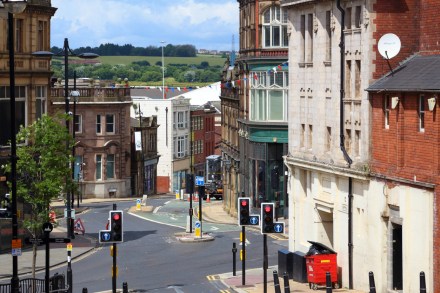
On New Year’s Day, 2014, during those sunny, innocent times of Cameron, Clegg and Miliband, Labour MP Keith Vaz headed down to Luton Airport to greet new arrivals coming off the planes. There he met a rather bemused young Romanian man, Victor Spirescu, who had no idea he was going to become the face of migration on the day that citizens of Romania and Bulgaria were allowed free movement within the EU. It was a sort of mini-publicity stunt by Vaz, but all for a good cause: a response to fear mongering by the Right-wing press who warned that we’d be ‘flooded’ by Romanians, and predictions by MigrationWatch that’d we have 50,000 new arrivals a year from the A2 countries (as Romania and Bulgaria were called).

Why the Tories are more diverse than Labour

From our UK edition

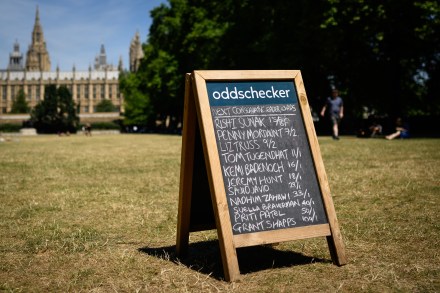
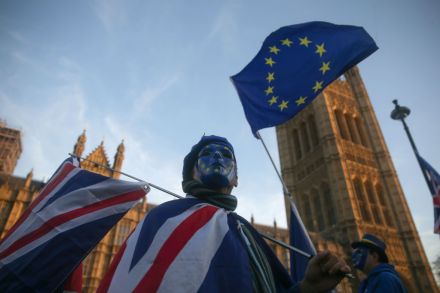
‘The candidates fighting to replace Boris Johnson as Conservative party leader and Britain’s prime minister reflect the country’s rich diversity,’ the England-hating New York Times put it earlier this week, through gritted teeth, ‘with six having recent ancestors hailing from outside Europe.’  It might seem initially curious that it’s the Conservatives who are so ethnically diverse. In British politics the realignment over Brexit caused identity to replace economics as the crunch issue, so that the gap between Labour and Tory voters on the issues of immigration and diversity has significantly grown, even if immigration’s salience has declined and remains low.

Boris Johnson’s classic fall

From our UK edition

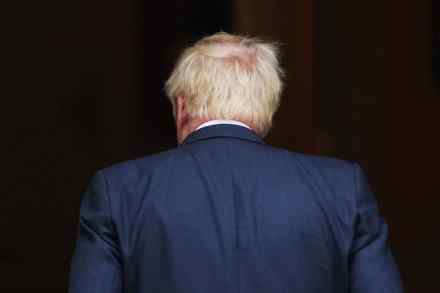
Farewell then, Boris Johnson, and to paraphrase another leader who had rather lost the support of his front bench, what an artist dies with him. Johnson was the most amusing prime minister in living memory, but also the most historically aware. The first British political leader since Harold MacMillan to read classics, he was hugely influenced by the ideas of the ancient world, in particular Fortuna. And as Tom Holland reflected in last Friday’s The Rest is History podcast, this obsession with the classics guided his career. Classics, Holland said, had once been a ‘how to do politics’ course, from the time of Machiavelli to the aristocrats of the 18th and 19th centuries, seen as a guide to ‘how to behave morally and politically’.

What is the point of Boris Johnson?

From our UK edition

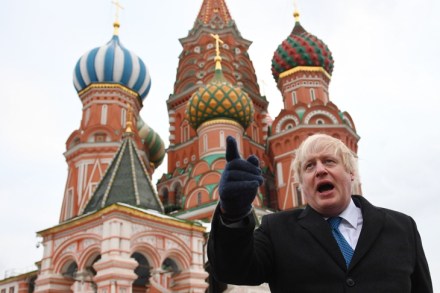
However badly Boris Johnson’s career ends, it will surely be a better finale than that of his great-grandfather, the Turkish journalist, editor and liberal politician Ali Kemal. Almost exactly a century ago, following the trauma of defeat and the end of the Ottoman Empire, Kemal was attacked by a mob of soldiers, hanged from a tree, his head smashed in with cudgels before being beaten to death. I can’t imagine that the Tory backbenchers will go that far. There is something charming and colourful about Johnson’s background, the mixture of Turkish, Russian, Jewish and even a Circassian slave just a few generations back (according to Boris Johnson, and if you can’t trust his version of events, who can you trust?).

Why the Vikings are winning the culture war

From our UK edition

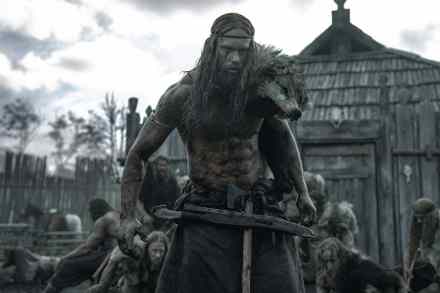
The young woman’s screams were drowned out by the sound of drums. No older than her teens, she had been drugged and raped before being tied down and strangled by four men, while repeatedly stabbed by the older woman in charge. This was the scene in perhaps the most famous accounts of life among the Vikings, written by a traveller and diplomat called Ahmad ibn Fadlan after his mission in 922. Sent by the Abbasid Caliphate in Baghdad, ibn Fadlan was part of a delegation to deliver a message to the ruler of the Volga Bulghars, and along the way he had spent time with a people he called al-Rusiyyah, known to historians as the Rus’. These were the eastern Vikings who settled along the rivers flowing into the Black Sea, drawn to the riches of Constantinople and the Islamic world.

The phoney war

From our UK edition

39 min listen

In this week’s episode: Will Putin invade Ukraine? For this week’s cover story, Owen Matthews argues that if Putin is going to invade Ukraine, he will do so later rather than sooner. He joins the podcast, along with Julius Strauss who reports on the mood in Odessa for this week’s magazine. (00:42)Also this week: Is Brexit working?This week marks the second anniversary of Brexit. But how successful has it been? Joining the podcast to answer that question is Lord Frost who was Chief Negotiator of Task Force Europe from January 2020 until his resignation in December last year - and the journalist Ed West, who runs the Substack, Wrong Side of History (13:12)And finally: What is the allure of a classified ad?

The mind virus killing academia

From our UK edition

We lost a giant last month with E.O. Wilson’s passing. A man who stood on Darwin’s shoulders, Wilson had that rare distinction of inspiring a whole discipline in the form of evolutionary psychology. The great sense of loss did not seem to be shared by Scientific American, however, which soon afterwards put out a piece reflecting on the ‘complicated legacies of scientists whose works are built on racist ideas’. Among the ‘problematic’ aspects of Wilson’s work, the author argued, was the ‘descriptions and importance of ant societies existing as colonies’. This was ‘a component of Wilson’s work that should have been critiqued’ because ‘context matters’.

What really matters in the Covid culture wars?

From our UK edition

During the grimmest days of the First Crusade in 1098, the western Christians found themselves besieged by the Turks in Antioch. They had travelled more than a thousand miles from France, and countless fellow believers had died in the almost impossible trek across the known world; now running out of food and water, they were tired, hungry and desperate. At their lowest point, and ready to give into despair, Christian spirits were raised by the arrival of one Peter Bartholomew, a poor man from Provence who claimed he had been visited by the Virgin, promising them victory. The noblemen in charge were suspicious, as Peter was not only an illiterate farmhand type but also quite shifty, yet soon momentum built around his cause. He had an audience.

Brought to book | 15 November 2018

From our UK edition

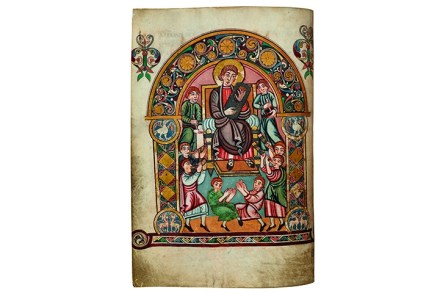
‘The barbarians drive us to the sea, the sea drives us to the barbarians; between these two means of death we are either drowned or killed.’ So wrote the British monk Gildas in his 6th-century proto-polemic On the Ruin of Britain, recording the arrival of the hated ‘Germans’ to the island. Bad news for the Britons, but fantastic for visitors to the British Library, now running perhaps the most significant exhibition of recent times, Anglo-Saxon Kingdoms. Historians dislike the term ‘Dark Ages’, but by any measurement western Europe saw a collapse in living standards, literacy, population, trade and significant cultural output from 500 ad. Yet that only makes the flame that appeared all the more striking, and the exquisite art so inspiring.

Only a British Rudy Giuliani can rescue the Tories in London

From our UK edition

Our road was closed last July so that pipes could be installed underground, a mundane bureaucratic procedure that, for my children, led to the most memorable summer of their lives. For weeks they played in the street with friends while our front door was left open, strangers instinctively smiling at kids being able to run around with the freedom of the city. It felt so much like the 1950s that I thought about sending my eight-year-old down to the shops to buy me some Woodbines. We even organised a street party but – predictably – the great British rain god rose up in anger and stopped it. Just five minutes away our high street more resembles 1980s New York.

Will Britain stand up to Russia?

From our UK edition

A Russian man convicted of spying for Britain has mysteriously been taken ill due to an ‘unknown substance’ – I wonder who could be responsible? Of course one can’t assume at this point, and the Russians will express bafflement as to why they’re being accused of poisoning Sergei Skripal and his daughter Yulia. No doubt the London Embassy’s perky Twitter feed will make light of western paranoia in that surreal way international politics is conducted these days.

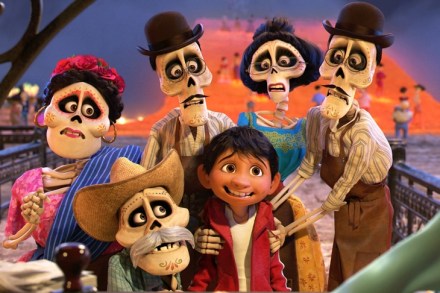
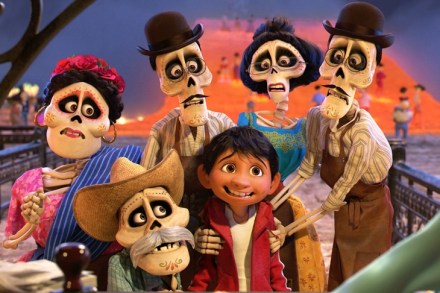
Children’s cinema is conservative – and brilliant

The Oscars promise to be truly unbearable this year, with vomit-inducing levels of sanctimony followed by the usual gibberish from the commentariat. The results and speeches and even clothes will be subject to endless politicised scrutiny, and whatever the film industry does to stay Woke, the Buzzfeed headline will inevitably be ‘and people aren’t happy about it’. I’m not sure actors really appreciate how their moralising, once simply tedious, is now grotesque; how there’s something almost darkly funny about members of the film industry presenting themselves as an ethical authority on anything, now they’ve been exposed as modern-day Borgias.

Citizenship is dead

Once in a while some Socialist Worker people set up a stall outside my local Tesco to shout slogans at the progressive middle-class folk who make up much of the local demographic. One of the phrases I’ve heard them use is ‘Refugees welcome! Tories out!’ which is great and everything, except – what if the refugees are Tories? But then there are Sacred Groups and Out Groups, and each has their role to play in the modern morality play that is leftist politics. Ideological tribalism is the subject of a new book by Yale’s Amy Chua, who argues that politics has replaced national or religious identity as a source of division.

Children’s cinema is conservative – and brilliant

From our UK edition

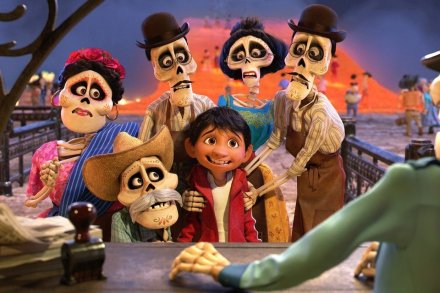
The Oscars promise to be truly unbearable this year, with vomit-inducing levels of sanctimony followed by the usual gibberish from the commentariat. The results and speeches and even clothes will be subject to endless politicised scrutiny, and whatever the film industry does to stay Woke, the Buzzfeed headline will inevitably be ‘and people aren’t happy about it’. I’m not sure actors really appreciate how their moralising, once simply tedious, is now grotesque; how there’s something almost darkly funny about members of the film industry presenting themselves as an ethical authority on anything, now they’ve been exposed as modern-day Borgias.

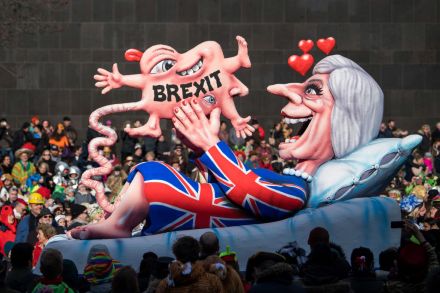
A tale of two Brexits

From our UK edition

At one point during Boris Johnson’s speech today he asked the audience: ‘We all want to make Britain less insular, don’t we?’ Silence. Media-training experts use an initialism to try to get journalists and other talking-heads to come across well on television – BLT. Does the audience believe you? Do they like you? Do they trust you? The Foreign Secretary has never had a problem with the middle one, perhaps the most important of the three, but during the EU referendum there was certainly an issue with belief, since some of the more nationalistic rhetoric of the campaign clearly sat ill at ease with this ‘esoteric product of millennia of Eurasian toff miscegenation’, as Rod Liddle once described him.

Children’s cinema is conservative – and brilliant | 14 February 2018

From our UK edition

The Oscars promise to be truly unbearable this year, with vomit-inducing levels of sanctimony followed by the usual gibberish from the commentariat. The results and speeches and even clothes will be subject to endless politicised scrutiny, and whatever the film industry does to stay Woke, the Buzzfeed headline will inevitably be ‘and people aren’t happy about it’. I’m not sure actors really appreciate how their moralising, once simply tedious, is now grotesque; how there’s something almost darkly funny about members of the film industry presenting themselves as an ethical authority on anything, now they’ve been exposed as modern-day Borgias.

Why is porn ok but grid girls aren’t?

From our UK edition

I guess there comes that time in every man’s life when he realises he is in fact a dinosaur and he’s never going to keep up with social mores. May as well just get use to your children’s gritted teeth every time you open your fat, opinionated mouth on anything. I find myself reaching that point in regards to the abolition of Formula One grid girls, a tradition that is no longer ‘relevant’ to the sport and how it wishes to be portrayed; which is presumably as an egalitarian, environmentally friendly and incorrupt cultural event which does not at all attract the worst rich people on earth.

The Bayeux Tapestry is coming home at last

From our UK edition

The Entente Cordiale is alive and well, it seems. It was announced today that, thanks to the benevolence of Emmanuel Macron, the Bayeux Tapestry will leave France for the first time in nine centuries, and be loaned to Britain. Strictly speaking, though, you could say the tapestry was coming home, since it was almost certainly made in Kent, by English women toiling under the Norman patriarchy. It tells the story of the most famous battle in English history, an event that helped to define not just Anglo-French relations but also England’s ingrained class differences.

Is political correctness speeding up?

From our UK edition

One of the most influential and popular ideas of the post-war era was that of the Authoritarian Personality, which linked fascism with a number of personality traits, including conventionalism, anti-intellectualism and prudery. Conservatism, in other words. It has become popular to believe that being right-wing is synonymous with being authoritarian. Society may have no common culture or religion or body of literature, but everyone knows who the Nazis are. So as Nazism has pushed out everything else in the collective memory, it has become an attractive weapon against conservative ideas. And yet authoritarianism is probably found both equally on the left and right; it just manifests itself in different forms.

Does alcohol make us more right-wing?

From our UK edition

Although I wrote in my last post that social media makes people miserable, Twitter is also a fantastic resource for acquiring knowledge from experts and specialists in different areas. One of my favourite accounts is Rolf Degen, who daily tweets a number of scientific studies into human behaviour. Just before Christmas he linked to a story concerning the impact of alcohol consumption on politics, suggesting that booze makes us more right-wing. According to the paper ‘alcohol strips away complex reasoning to reveal the default state of the mind’ and drunkenness therefore encourages ‘low-effort, automatic thought’ and so promotes political conservatism.