Duncan Fallowell

David Bowie, 1947 – 2016: the only Englishman to have landed on the moon

From our UK edition

David Bowie has died at the age of 69. In 1972, Duncan Fallowell was quick to highlight his merits in The Spectator's pop column: I am writing about David Bowie, and had originally intended to do so by jotting down on pieces of paper all the appropriate epithets and phrases, putting them into a silver top hat, shaking it all about, you know, selecting them at random and typing out the results with a dash between each. It began as follows: Deciduous/carnivorous — sleeve as tattooed prophylactic — erectile lyric, retractile music — car mechanic catamite — henna in the works — lurex (that word contains everything) — butch drag inverted to reveal its true nature: sequins and axle-grease — cult then fashion . . . and so on for another four pages.

Hermitage director Mikhail Piotrovsky knows all the secrets of his museum, and he’s keeping them

From our UK edition

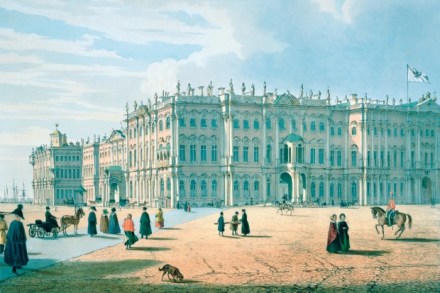
The front cover of this book describes the Hermitage as ‘the Greatest Museum in the World’. That sobriquet must go to the Louvre. The Hermitage is perhaps the second greatest, one which its current director Mikhail Piotrovsky calls an ‘encyclopaedic’ museum, housing ‘the culture of humanity, which is represented in all its variety...’ Not quite. Like the Louvre or the other encyclopaedic museums, the Met in New York say, or the Kunsthistorisches in Vienna, it does not incorporate primitive or folk art. London doesn’t have anything directly comparable: it would be as though the British Museum, the National Gallery, the Victoria and Albert, the Royal Collections and a bit of Tate Modern were all rolled into one.

Rio’s rococo genius

From our UK edition

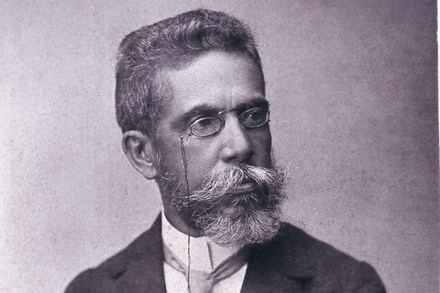
The surname is pronounced ‘M’shahdo j’Asseece’. There are also two Christian names — Joaquim Maria — which are usually dispensed with. K. David Jackson, professor of Portuguese at Yale, confines himself to ‘Machado’ and has invented an adjective ‘Machadean’. Stefan Zweig, who committed suicide in the very Machadean town of Petropolis, called him ‘the Dickens of Brazil’ which is not true — he has not Dickens’s range or sustained ebullience.

Toujours la politesse

From our UK edition

Robert Cumming’s opening sentence is: ‘Kenneth Clark and Bernard Berenson first met in the summer of 1925.’ One is then transported to terraces of cypress and statuary, sunshine and high art, Edith Wharton and Paul of Yugoslavia cooing over a balustrade. Clark was 22 and had just finished at Oxford; he was ‘doing’ Italy with Charles Bell, Keeper of Fine Art at the Ashmolean. Lunch at I Tatti, Berenson’s citadel of aesthetic endeavour near Florence, was arranged. By the end of it, Clark had been taken on as Berenson’s assistant for the revision of the master’s classic The Drawings of the Florentine Painters.

What’s to become of Pedro Friedeberg’s letters?

From our UK edition

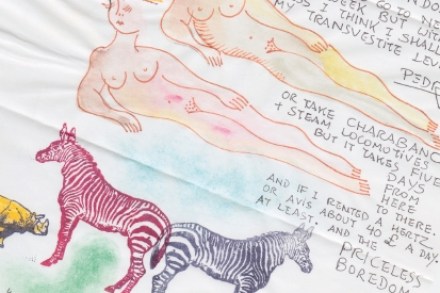
The year 2015 has been designated one of Anglo-Mexican amity, with celebrations planned in both countries by both governments. But it looks as though one name will be missing from the list: Pedro Friedeberg’s. ‘Who?’ you may ask. Well, in 1982 I was in Mexico City to interview Gabriel García Márquez after he’d won the Nobel Prize for Literature. At a party given by a Mexican art-collector, I noticed several zany pictures on the wall. ‘They’re all by Pedro Friedeberg, my favourite Mexican artist,’ said the collector. I stared at one large framed square after another, at pictures in which the Old World and the New seemed conjoined in a frantic, electrified marriage. The following week the Mexican currency collapsed.

An ill-waged war against the war on drugs

From our UK edition

Since drugs became popular, there have been countless books on what to do with them. The most interesting are those of a creative kind by high-profile writers: De Quincey, Baudelaire, Aldous Huxley, Henri Michaux, William Burroughs, Carlos Castaneda. The most useful, so far as social policy is concerned, are those by low-profile operators in the field: scientists, doctors, psychiatrists, social workers, police. The least interesting or useful prove to have been the polemical books in neither category, so I wasn’t thrilled by the prospect of this one, written by a political journalist, and hyped by Elton John, Noam Chomsky, Stephen Fry and Naomi Klein.

The fruitcake island of Sicily and its legion of literary visitors

From our UK edition

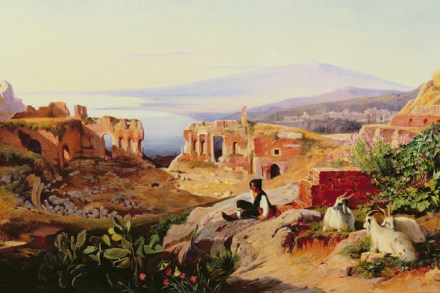
At the opposite end of the Continent to ourselves, Sicily has always been an attraction for the English who, from the vantage of Europe’s historically most stable society, have gazed with fascination at perhaps its least stable. There were already links between us in the age of the Normans, who conquered Sicily at roughly the same time as they conquered us. The revival of classical learning in the Renaissance made the English increasingly familiar with the Sicilian connections of Homer, Plato, Archimedes, Aeschylus, Pindar, Empedocles, Theocritus, Virgil and Cicero, and with the island’s mythological and classical geography. Shakespeare set several plays there. English travellers and reprobates were among the first to make Naples and Sicily their playground.

William S. Burroughs was a writer – not a painter, prophet, philosopher

From our UK edition

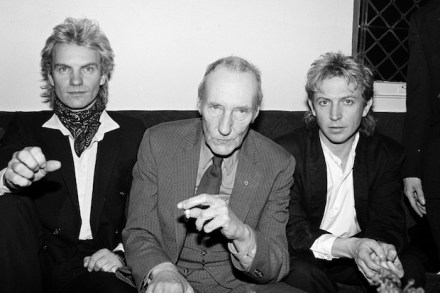
William S. Burroughs lived his life in the grand transgressive tradition of Lord Byron and Oscar Wilde and, like all dandies, he had a nose for hedonistic hot spots which he could mythologise along with himself. On the occasion of his centenary, Barry Miles takes us through these gorgeous, macabre scenarios with an attention to detail reminiscent of Dadd or Bosch: the boyhood in suburban St Louis; Harvard and early trips to Europe; the war, Greenwich Village and the Beats; Latin America and exile in 1950s Tangier, Existential Paris, Swinging London; the return to the USA and emergence as a literary celebrity adored by Warhol.

The World According to Karl, edited by Jean-Christophe Napias – review

From our UK edition

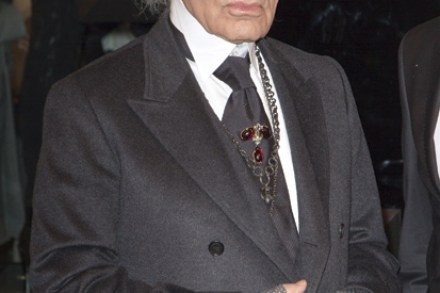
Every fashion era has its monster and in ours it’s Karl Lagerfeld, a man who has so emptied himself on to the outside that there is no longer any membrane between what he is, what he does and what he looks like: a macabre dandy for the electronic age, a Zen businessman as effective as Andy Warhol or Michael Jackson or David Bowie in propagating product and persona as one. ‘I enjoy the luxury of being at the centre of this complete universe that’s mine,’ he says with the concentrated generosity of a narcissist who wants to thrill the whole world in order to make it his pool.

Backing Into the Light, by Colin Spencer – review

From our UK edition

Colin Spencer first came to my notice in the Swinging Sixties when a fellow undergraduate alerted me to his larky romp Poppy, Mandragora and the New Sex, the first novel since Woolf’s Orlando to treat of transexuality. It was published in 1966, two years before Gore Vidal’s Myra Breckinridge, and I associated Spencer with the ‘sexual allsorts’ group around the publisher Anthony Blond at that time. But he didn’t build on it and seemed to fade away. Now I know why: he never quite knew what he wanted to be — gay or straight, a family man or a rover, a writer, musician, painter or horticulturalist. The next time I came across him he was married to a friend of a friend and living in a Regency cottage in Hammersmith, writing food articles for the Guardian.

The Garden of Eros, by John Calder – review

From our UK edition

John Calder is Britain’s most distinguished living publisher, and at the age of 86 he’s still at it. He first set up in business in 1949 and went on to publish 18 Nobel Prize winners, as well as classics and works on music. Why doesn’t he received a knighthood? Perhaps because his distinction lies chiefly in his role as champion of the avant garde. At a time when the heights of literary achievement are said to be the kitsch historical novels of Hilary Mantel, it is salutary to be reminded of a period not long ago when literature was a vital part of the contemporary world, replete with glittering transgressive texts which explored areas previously forbidden or unknown.