Dr Waqar Rashid

Dr Waqar Rashid

Dr Waqar Rashid is a consultant neurologist at St George's University Foundation Hospital NHS Trust, London. This article is a personal view and does not necessarily represent the views of the Trust. He tweets at @DrWaqarRashid1

Dexamethasone isn’t a coronavirus breakthrough

From our UK edition

It’s welcome news, of course, that dexamethasone can reduce mortality in people with moderate to severe respiratory complications due to Covid-19. But to hail it as a big breakthrough – as the Health Secretary Matt Hancock did this week – is a step too far. Perhaps next week, Hancock will be shouting about the use of paracetamol as a treatment for headaches. Dexamethasone has been around for decades – which explains why it is relatively cheap and there is lots of it – and is already used widely for those suffering from respiratory distress. In other words, it is pretty much a standard treatment for those afflicted with symptoms similar to those caused by Covid-19.

Is the R number a flawed measure?

From our UK edition

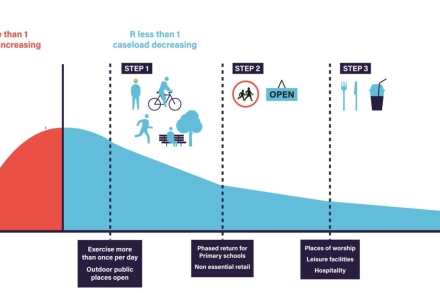
Boris Johnson’s address on Sunday was always going to be challenging. The effects of Covid-19 – in terms of its horrific death toll and the drastic measures we’ve taken to prevent more loss of life – meant it was one the biggest and most important political statements in living memory. But what was also required was transparency and the explanation of very difficult scientific and medical concepts. In his statement, Boris Johnson drew attention to the R value, which he said was key to the changing lockdown measures over the coming weeks. If it crept above 1 this meant Covid-19 was spreading and the lockdown measures would remain in place, and if it fell below 1 it was an indication we were beating the virus.

The NHS should be wary of being used as a political tool

From our UK edition

When I heard politicians insist they were being ‘led by the science’ in their response to coronavirus, it worried me for a couple of reasons. Firstly, a scientist will happily lead you down the path they believe in, but it is rare to have only one scientific view. It would be far more accurate for politicians to say we are being led by ‘one hypothesis’ from ‘one scientific group’. The modelling from Imperial that led to the current lockdown policy informed ‘the science’ but it’s now clear it was not the only scientific view. Secondly, if the situation calls for an intervention and there is no cause and effect – i.e.

Where have all the non-coronavirus patients gone?

From our UK edition

Where have all my patients gone? I’ve been asking myself this question increasingly over recent weeks. We’ve heard a lot since the arrival of Covid-19 about illness, health and disease, but the conditions I treat appear to have disappeared. As a busy neurologist I normally see over 1,500 people every year as part of my job. Many of these people will have long-term conditions such as multiple sclerosis, Parkinson’s disease, epilepsy or migraine which affect millions in the UK. New cases are diagnosed all the time and flare-ups occur for existing patients, even when they have the best treatment. Yet this is no longer happening.