Douglas Murray

Douglas Murray

Douglas Murray is associate editor of The Spectator and author of The War on the West: How to Prevail in the Age of Unreason, among other books.

The ‘academics’ criticising the Prevent strategy are nothing of the sort

From our UK edition

This is how the madness spreads. While some politicians of the left continue to pretend that the situation in the Labour party and on the British left in general is salvageable, they seem not to realise that all their sluices are up. Take a piece in Thursday's Guardian written by Alice Ross. The headline is ‘Academics criticise anti-radicalisation strategy in open letter.’ Of course only in the Guardian does an ‘open letter’ by such ‘academics’ as these merit a newspaper article. For only in the Guardian would the reporting be so piss-poor that the ‘academics’ in question would include people who are not even academics.

When Boris finally meets Erdogan, I hope they discuss his rude poem

From our UK edition

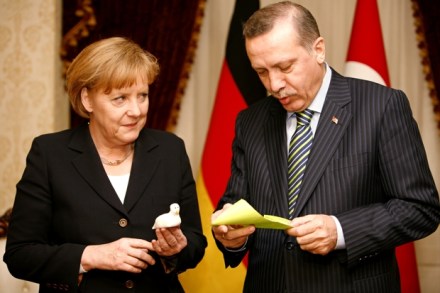
In March of this year the Turkish government complained about an item on German television which was critical of Recep Tayyip Erdogan.  A fortnight later – to prove that Germany was a free country – Jan Boehmermann read out a poem that was rude about Erdogan on his evening comedy show.  Not only did the Turkish government complain but the government of Germany acceded to the prosecution of Boehmermann in Germany. Boehmermann himself had to enter police protection. Happily the fate of poets is different in Britain to that of our kind in Germany and in the wake of the affair I instituted the ‘President Erdogan Offensive Poetry Competition’ to celebrate this fact.

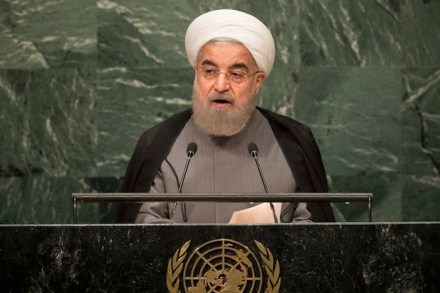
Can President Rouhani really be described as a ‘moderate’?

From our UK edition

Mark Twain once said that if you give a man a reputation as an early-riser he can sleep in till noon. The same is true of calling someone 'a moderate'. Call someone 'a moderate' and they can rant like a fascist any day of the week without reprimand. President Rouhani of Iran has been called a moderate by most of the Western press and most of the Western governments. And so when he appeared at the UN this week and railed once again about the 'Zionists' controlling the U.S. Government including the U.S. Congress, it barely raises headlines. Surely a 'moderate' wouldn't make such outlandish claims? And so the extremist statements of the 'moderate' are simply ignored.

The Islamophobic attacks you don’t hear about

From our UK edition

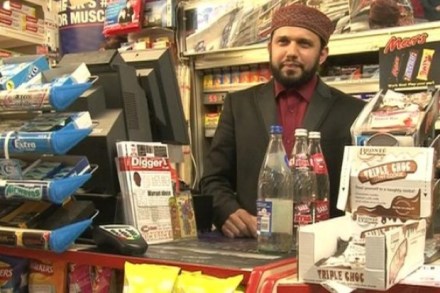
Incidents of ‘Islamophobia’ are really getting out of hand in Britain. In fact there has been such a wave of attacks that it’s amazing that politicians and commentators across the political spectrum, (not to mention all those supposed ‘anti-fascist’ groups) aren’t grand-standing like crazy. Perhaps their problem is that this wave of attacks does not consist of people writing nasty and mean things on Twitter, but of Muslims killing other Muslims and still other Muslims extolling such killings. It’s only a couple of weeks since a Sunni Muslim from Birmingham called Tanveer Ahmed was sentenced to prison for murdering an Ahmadiyya Muslim shopkeeper from Glasgow called Asad Shah.

The ‘cultural appropriation’ brigade can’t even cope with fiction

From our UK edition

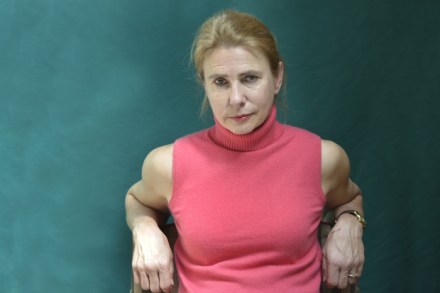
Here is one of those stories that matters even though it preoccupies the Guardian.  Last week the celebrated novelist Lionel Shriver gave an address at the Brisbane book festival.  It was heralded as being about ‘community and belonging’ but ended up being about ‘fiction and identity politics’.  In particular Shriver (the author, most famously, of We Need to Talk About Kevin) addressed the issue of ‘cultural appropriation’.  As well as being a condemnatory term for wearing a sombrero or eating Thai food, this is also the current term for ‘making things up’ and ‘using your imagination’.  Surely this is something novelists ought to do, you ask? Apparently not.

Sarkozy’s tough talk on Islamic radicalisation lacks conviction

From our UK edition

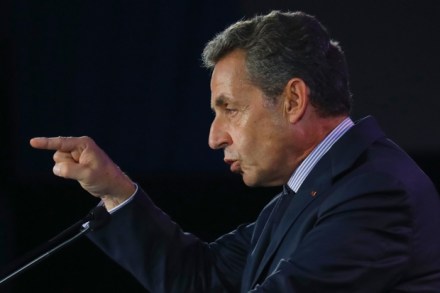
The French Prime Minister, Manuel Valls, has announced that the French police and intelligence services have identified 15,000 people across France who are either ‘radicalised’ or in the process of becoming radical. In response to this Nicolas Sarkozy (who is of course in campaigning mode) has given an interview to Journal du Dimanche in which he has said that anybody who ‘regularly consults a jihadist website, or his behaviour shows signs of radicalisation or because is in close contact with radicalised people, must be pre-emptively placed in a detention centre.’ This is an interesting step-up in rhetoric from the former President, but very far from being a policy.

Are Isis Islamic? Hillary Clinton seems to think so

From our UK edition

Here's a strange thing. In a TV interview on Thursday morning, Hillary Clinton said that Isis want Donald Trump to become President of the United States. In her words, Isis are currently saying, 'Please, Allah, make Trump president of America'. Personally I have no idea which ticket Isis will be campaigning for, come November. But I do find this all very confusing. We all learnt from President Obama that Isis have absolutely nothing to do with Islam. Indeed, when the group decapitated the American hostage Peter Kassig a couple of years ago, the Commander in Chief insisted that ‘Isil’s actions represent no faith, least of all the Muslim faith’. But if Isis are not Islamic, why would they be praying to Allah? Has Hillary 'mis-spoken'?

Keith Vaz’s rent boys have done a valuable political job

From our UK edition

Why do people always fall from grace for the wrong reasons? I had always hoped that if Keith Vaz finally fell from whatever form of grace he could lay claim to, it would be for really good reasons.  Regular readers will know that my detestation of him dates back to 1989 when as a young MP he first offered support to Salman Rushdie in the business of the Ayatollah’s fatwa and then a few weeks later led a demonstration of thousands of angry British Muslims in opposition to Rushdie and his novel. Someone who is capable of that is capable of absolutely anything.

The burkini ban is a political ruse

From our UK edition

Private Eye used to run a column called the ‘Neo-philes’, listing some of the endless cases of hacks saying ‘X is the new Y’ (‘This season green is the new black’ and so on). So let me put in an early entry for the return of any such column by announcing here that ‘The Burkini is the new Hizb ut-Tahrir’. After 18 months of terrorist attacks across the continent, this summer French and now German politicians are falling over each other to call for a ban on a new Islamic swimwear garment called the ‘burkini’. This is nonsense piled on top of nonsense. Though I do not doubt he spent some time thinking about it, the inventor of Islam had very little to say about women’s beachwear.

It’s a bad day for Anjem Choudary – and a good day for secular law

From our UK edition

So farewell then Anjem Choudary.  At least for a few years.  Britain’s biggest loudmouth Islamist has finally been convicted in the UK for encouraging support for Isis.  He now faces up to ten years in prison. There have been reporting restrictions on his conviction for several weeks now, as we waited for the conclusion of the trial of his associate Mohammed Mizanur Rahman.  But now it’s over.  At least for a while.  There is much to say, but allow me one particular reflection for now. Like his mentor and predecessor Omar Bakri Mohammed, Anjem Choudary was always a subject of enormous interest in Britain and abroad.  Indeed you could argue that for some years now he has been Britain’s most famous Muslim.

Why the Prevent strategy isn’t the problem

From our UK edition

Earlier this week the Times had a leader column entitled ‘Protect Prevent’.  As a defence of the government’s counter-extremism strategy it was all well and good, but it missed a very crucial point.  It said: ‘The success of Prevent has been undermined, however, by a failure of public relations. The government failed to cast it as an essential part of child protection, allowing the charge of “spying” to gain credence.  Similar policies designed to prevent sexual abuse or physical violence against children would never be open to that charge.’ But this charge of ‘spying’ did not simply ‘gain credence’.

The gay community is in denial about Islamism

From our UK edition

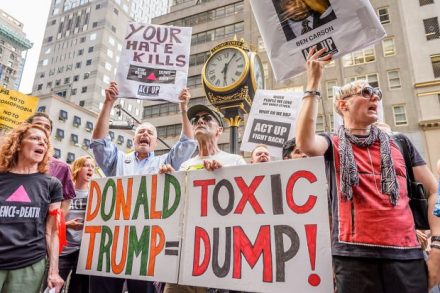
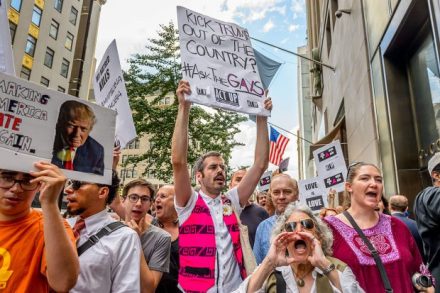
It is almost two months since Omar Mateen walked around the Pulse nightclub in Florida, gunning people down while shouting ‘Allahu Akbar’.  During the assault Mateen spoke to American law enforcement and swore allegiance to Isis.  Frustratingly Omar Mateen failed to call the group ‘so-called Islamic State’, thus betraying a woeful lack of linguistic sensitivity among his other crimes. A few days later, very much in the shadow of these events, there was a ‘gay pride’ parade in New York.  The huge banner leading the parade at the front read ‘Republican hate kills’.

The post-terror ‘good news’ story came from Islam’s most persecuted sect

From our UK edition

A few months back, after the Brussels terrorist attacks, I pointed out on Coffee House that there is a certain routine after any such atrocity. One part of it is that, after a couple of days pause, we always get the 'Muslim good news story'. This is the part when after a couple of days of everyone insisting Islam has nothing to do with the Islamist attack the national and international media gets to run almost as big a story suggesting that although Islam is not part of any problem, it is, however, a very major answer to almost everything. Fortunately the slaughter of Father Jacques Hamel last week has already got its good news story. Near the top of the news agenda on Sunday was news that Muslims had attended mass across France and Italy in solidarity.

Europe’s summer of terror

From our UK edition

How is your Merkelsommer going? For now, Britain seems to be missing the worst. True, a couple of men of Middle Eastern appearance tried to abduct a soldier near his base in Norfolk for what was unlikely to have been an interfaith dialogue session. But Britain’s geographical good fortune, relative success in limiting weapons and our justified scepticism of the undiscriminating ‘open borders’ brigade mean that we have so far been spared the delights of what Angela Merkel’s growing army of critics refer to as her summer of terror. Douglas Murray and Haras Rafiq discuss Europe's summer of terror: It is now a fortnight since Mohammed Lahouaiej-Bouhlel shouted ‘Allahu Akbar’ and ploughed a truck along the Nice seafront, killing 84 people.

Terror is the new normal for Germany and France

From our UK edition

Update: This piece was written yesterday and so is already out of date. This morning two armed men entered a church near Rouen during Mass.  They took the priest, two nuns and a number of congregants hostage. It appears that they slit the priest's throat before themselves being killed by French security forces.  Nobody can think of any possible motive, though people claiming that attacking Christians at prayer is not a traditional Islamist practice have clearly not paid attention to Iraq, Syria, Nigeria, Pakistan, Egypt or any number of other countries around the world. Well this is all going very well isn’t it?

Britain must avoid importing America’s culture of violence

From our UK edition

A couple of weeks ago I watched a ‘Black Lives Matter’ protest in the centre of London. It was a Sunday and the assembled group of perhaps 1,000 people marched up and down Oxford street a couple of times. This was shortly after the shootings of five police officers in Dallas, Texas while they policed a protest there. The sight of this American movement coming to London was not without its comic side. The crowd of mainly black young British people chanted a range of things, including ‘Hands up, don’t shoot’ (one of the group’s hallmark chants ever since these were erroneously claimed to be the final words of Michael Brown, shot by a police officer in Ferguson Missouri in 2014).

When the French mood finally snaps, Marine Le Pen will be waiting

From our UK edition

Last Friday I noted that you don’t have to go back many months to get the latest mass-casualty terrorist atrocity in Europe these days.  But even while people were still trying to find ways to portray the Nice truck driver as a victim of urban-planning laws we had the next attack. Yesterday it was an ‘Afghan asylum seeker’ who went around a train in Germany with an axe shouting ‘Allahu Akbar’.  That’s the same ‘Allahu Akbar’ (or ‘Allah is greatest’) that the man who drove the truck into the crowds in Nice was shouting as he ploughed through the crowded streets.  Like last week's Nice attacker, yesterday’s attacker in Germany also happened to be called Mohammed.

We need to tackle attacks like the one in Nice from the root

From our UK edition

The BBC headline says it all: ‘The killing of 84 people celebrating Bastille Day is the worst attack on France since the 13 November attacks.’ These day in Europe you don’t have to reach back many months to find carnage even exceeding that in Nice last night. We still don’t have many details about last night’s attacker. But we know that the man driving the truck was called Mohammed. Of course that doesn’t mean there is any connection to Mohammed Atta, Mohammed Merah, Mohammed Bouyeri, Mohammed Sadiq Khan, Mohammed Abrini or the most famous Mohammed of all – Mohammed. On the contrary, the striking prevalence of people called Mohammed going nuts and slaughtering everyone is just an unhappy coincidence.

MPs must stop indulging their bizarre Andrea Leadsom fantasy

From our UK edition

A specific nightmare keeps occurring to me.  It is an episode of Prime Minister’s Questions in which Jeremy Corbyn and Andrea Leadsom face each other across the dispatch boxes. Unlike most of the world, including most of the Conservative party, I had heard of Andrea Leadsom before a week last Friday – indeed had spent some time with her – and already knew her to be that type of incurious matron to whom the Tory party is liable to be attracted.  Back then it never occurred to me that she could make it further than MP.

A trick of the light

From our UK edition

There is a moment at the start of most authors’ careers when it is hard to get anything published, and there is a moment towards the latter stage of some authors’ careers when it is hard to stop everything being published. A.S. Byatt is in the latter stage of her career, and however great the claims for her back (and future) catalogue may be, it hard to see why Peacock and Vine came to be here. Byatt begins with an insight at the Palazzo Fortuny in Venice. Unfamiliar with the work of Mariano Fortuny, she describes something in the quality of the April light which brings to mind a very English green and thus William Morris. From this pleasant whimsy Byatt creates an essay that meanders through some connections between these men. These are not many.