Douglas Murray

Douglas Murray

Douglas Murray is associate editor of The Spectator and author of The War on the West: How to Prevail in the Age of Unreason, among other books.

Am I a libertarian after all?

From our UK edition

I have never been the greatest fan of libertarianism as a political ideology. Libertarians seem to me to be the bisexuals of politics – they want a bit of everything. But even I felt a slight twinge of libertarian sentiment this week when I read some remarks by our Home Secretary, Shabana Mahmood. The Labour minister had told MPs that artificial intelligence is an ‘incredibly powerful tool that can and should be used by our police forces’, though she added that it must be regulated in a way that is ‘always accurate’. I have never before read the words ‘police’ and ‘always accurate’ in the same sentence, so the novelty grabbed my attention.

Mickey Down, Charlie Gammell, Sean Thomas & Douglas Murray

From our UK edition

32 min listen

On this week’s Spectator Out Loud: Mickey Down, co-creator of Industry, reads his diary for the week; Charlie Gammell argues that US intervention could push Iran into civil war and terrorism – warning that there are more possibilities than just revolution or regime survival; false dichotomy at the heart of; Sean Thomas bemoans the bittersweet liberation from his libido; and, Douglas Murray believes Britain has a growing obsession with race. Produced and presented by Patrick Gibbons.

Reform’s real race problem

I think it was Zadie Smith who I first heard point out that race is in America what class is in Britain: the conversation underneath every conversation. When I first heard that remark I slightly baulked. Not least because one had rather hoped that class would be less of a thing in Britain in the 21st century. I suppose it is, although you do still meet people who treat the English language as though it is a minefield in which one incorrect vowel will suddenly take them out. But if the class stuff still lingers in Britain, the good news is that we now have the American race obsession too. For anyone who hasn’t lived in America, it is hard to describe just how permeated race is into every conversation in the culture.

The young women hypnotised by Polanski

From our UK edition

A friend mentioned to me last week that a third of young women in the UK are planning to vote for the Green party under its wonderful new leader, Zack Polanski. Bad as I tend to expect things to be, even I thought that surely things can’t be that bad. However I dutifully entered the terms ‘Polanski’ and ‘young women’ into Google, and promptly fell down a different rabbit hole. Defining my search terms a little more clearly, it turned out that my informant was correct. So badly deranged are the youngest cohort of female voters in this country that a third of them really do believe that they have found their saviour in a man who until recently promised that he had a technique to inflate women’s breasts through hypnotism but who also thinks that J.K. Rowling is a crank.

Alaa Abd el-Fattah and our misplaced priorities

From our UK edition

What would you like the priorities of His Majesty’s government to be? I have quite a long list. Sorting out the economy would certainly be up there, as would closing the border. But I imagine the government has had to put such things on the backburner because it turns out that one of its actual top priorities has been ensuring that Alaa Abd el-Fattah can come to the UK. Who, I hear you ask? El-Fattah turns out to be an Egyptian ‘activist’ who has lately spent a certain amount of time in the prisons of General Sisi. In 2021 he gained British citizenship through his mother, who lives in the UK. I think that clears up any fears of the anti-integrationist movement in this country by the way.

The pleasure in not knowing

A few years ago, the podcaster Lex Fridman published a list of books that he was hoping to read in the year ahead. It included works by George Orwell, Fyodor Dostoyevsky, Hermann Hesse and others. If he had published this in the world of print media he might have got back some encouraging noises. But because he put the list online – worse, on the platform then still known as Twitter – he received mostly mockery. “Who hasn’t read Animal Farm?” was the general tenor of the blowback, as though a man who had been a researcher at MIT was next to being a Neanderthal.

douglas knowing

The pleasure of not knowing

From our UK edition

A few years ago the podcaster Lex Fridman published a list of books that he was hoping to read in the year ahead. It included works by George Orwell, Fyodor Dostoyevsky, Hermann Hesse and others. If he had published this in the world of print media he might have got back some encouraging noises. But because he put the list online – worse, on the platform then still known as Twitter – he received mostly mockery. ‘Who hasn’t read Animal Farm?’ was the general tenor of the blowback, as though a man who had been a researcher at MIT was next to being a neanderthal.

Where was my invitation to Your Party?

From our UK edition

For perhaps the first time in my life I have experienced ‘fomo’ – fear of missing out. It is strange to feel this teenage sentiment now I am safely in my forties, and even odder that it should occur in relation to a party political conference in Liverpool. Yet as I sat watching videos from Your Party’s first conference this week, there was no way to avoid the feeling that I had missed out on something big – a feeling only intensified by the likelihood that Your Party’s first conference will also be its last.

Sir Tom Stoppard: ‘I aspire to write for posterity’

From our UK edition

Sir Tom Stoppard, the British playwright, died at his home in Dorset yesterday aged 88. In 2019, he gave a rare in-depth interview to Douglas Murray. Sir Tom Stoppard is Britain’s – perhaps the world’s – leading playwright. Born Tomas Straussler in Zlin, Czechoslovakia, in 1937, his family left as the German army moved in. The Strausslers were Jewish. In adulthood he learned that all four of his grandparents were killed by the Nazis. His father was killed by the Japanese on a boat out of Singapore as he tried to rejoin his wife and two sons. In India his mother married again, to an English Army man who gave his stepchildren his surname. Stoppard has lifted the lid on his early life only once before, in a piece for Talk magazine in 1999.

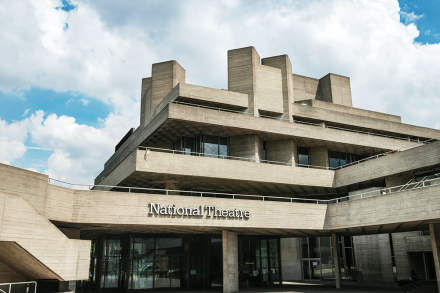
The theatre isn’t a thinktank

From our UK edition

Readers tend not to approve of rows between columnists, but I must take issue with something Lloyd Evans wrote in ‘No life’ last week. Our theatre critic claimed that his companionship ‘is very low calibre’, that he ‘can’t match anyone in conversation’ and that he ‘can barely recall making a witty or worthwhile comment’ in his life. I should like to disagree. Some time ago at a party in The Spectator’s garden I got talking with Lloyd and he said one of the most interesting things I’d heard in years. I had gone over to congratulate him on summing up the general awfulness of most of George Bernard Shaw’s plays in just a few paragraphs in a recent column, and then began commiserating with him. My sentiments went something along the lines of: how do you do it?

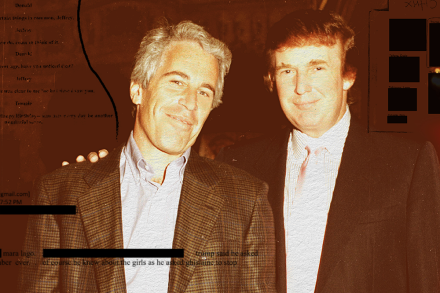
Trump’s Epstein gamble

It is always interesting to see who the American left claims are the leaders of the American right. There was a time during President Trump’s first term when Steve Bannon fitted the role – and relished playing it. Back then most days brought another media profile of the dark genius of the MAGA movement. The Guardian, New York Times and others were obsessed. Vanity Fair would send reporters to follow Bannon as he conquered America and, er, Europe. Documentary crews were perennially in tow. Indeed one documentary following Bannon around included a scene in which they followed him to the showing of another documentary about him from a crew who had similarly followed him around. At which point you felt that we might fall into some kind of vortex.

Justice in war is messy

From our UK edition

At the end of last month, a judge in Belfast issued a verdict that was both right and wrong. The case related to a man known to the public only as ‘Soldier F’. He was one of the members of the Parachute Regiment involved in the events of the day in January 1972 that became known as Bloody Sunday. That day 13 members of the public were shot dead during a civil rights march in Londonderry that turned violent. The precise details are probably more heavily documented than those of any other day in history thanks to the Saville Inquiry, which became the longest and costliest legal inquiry in British history. Indeed, it made the trial of Warren Hastings look like a snap verdict.

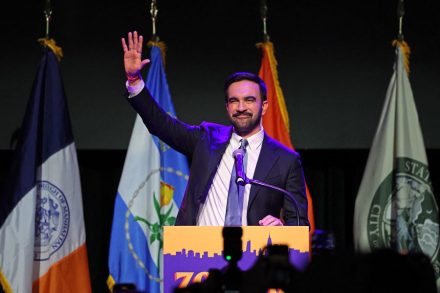
New York is not the city that Mamdani pretends it is

There is an unhappy history of left-wing Britons getting involved in US elections. Back in 2004, the Guardian organised a letter-writing campaign, urging voters in the swing state of Ohio not to re-elect George W. Bush. The good people of Ohio didn’t take kindly to a bunch of Islingtonians telling them how to vote, and although the Guardian’s campaign probably can’t be given all the credit, the voters of Ohio duly went to the polls and swung firmly behind Bush. One wishes that Sadiq Khan’s intervention in this week’s New York mayoral election might have had a similar result. Interviewed shortly before Zohran Mamdani was elected, the mayor of London praised the Democratic Socialist candidate for mayor of New York as ‘fun’ and ‘authentic’.

Don’t fear the bogeyman

From our UK edition

Britain is beset by a bogeyman. A giant, mystical beast that the public are forever being threatened with. Remember last year when a young Welsh choirboy stabbed three young girls to death at a Taylor Swift-themed dance party in Southport? Long before we were allowed to know the name of the culprit – Axel Rudakubana – we were warned about a much greater menace: a rallying by the ‘far right’. After impromptu protests and some rioting broke out in various cities, we were promised on an hourly basis that the ‘far right’ was mobilising. Soon there were crowds of Muslim men organising to counter any such threat.

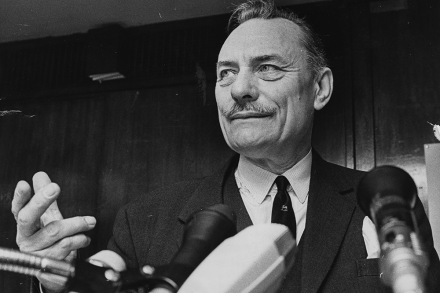
Imagine what Enoch Powell might have said

From our UK edition

The great John O’Sullivan has a story about Enoch Powell which he keeps promising to put into print. Since he still hasn’t done so, I will risk repeating it here. It occurred during a conversation some years after the Rivers of Blood speech. A group of conservatives were talking, and Powell was among them. At some point one of those present referred to the 1968 speech and asked Powell: ‘Why did you do it?’ Powell’s reply started something like this: ‘When the lark sings in the morning they do not say – “Oh lark why dost thou sing?” When the nightingale gives forth her song…’ and so on. After Powell had gone through an array of the bird kingdom metaphors, he came to his clincher: ‘And so it was with me that day in Birmingham.

The pathology of politics

From our UK edition

Researchers from Imperial College London this week released an analysis of the health of voters in the UK. In a publication associated with British Medical Journal, the experts claimed to have found that people who vote for Reform are disproportionately sick. I am sure that the researchers in question could not possibly have enjoyed coming to their conclusions. But they reported that the conditions Reform voters are most likely to suffer from include obesity, chronic obstructive pulmonary disease and epilepsy. The scientists did not go so far as to claim that voting Reform makes you epileptic. As every smart-aleck first-year at Imperial could tell you, correlation does not imply causation.

The increasing fear felt by Britain’s Jews

From our UK edition

If you walked down the Strand in London on Tuesday this week you would have been greeted by hundreds of people outside King’s College London. The gathering was organised by students from KCL, the London School of Economics and University College London. They chanted ‘Intifada, intifada’ and ‘Long live the intifada’. They had chosen the day well – Tuesday was the second anniversary of the 7 October massacre, in which some 1,200 Israelis were killed and hundreds more taken hostage. Tuesday’s hate-fest was not, of course, an unusual event. The first demonstrations in support of the 7 October massacre of Jews took place in west London on the day of the massacre itself. And the protests have not stopped since. In fact, they have only swelled in number.

The mainstreaming of leftist violence

In the wake of Charlie Kirk’s assassination, Democratic lawmakers and commentators found themselves in a quandary. On the one hand, most of them loathed Kirk. On the other, many felt that they should try to hold the line condemning the shooting through the throat of a young husband and father at an American university. These so-called ‘anti-fascists’ started behaving like nothing so much as the fascists they were searching for The New York Times’s Ezra Klein was among those who dipped his toe into the water, writing a piece within the day titled “Charlie Kirk was practicing politics the right way.

violence

The Murray Test for TV drama

From our UK edition

It is almost a century since Ronald Knox wrote his ‘Ten Commandments’ for detective fiction. Most of them still hold true. For example, his edict that twin brothers and other lookalikes must not be introduced to the story unless the reader has been prepared for them. Also the forbidding of more than one secret passageway or room in any story and the insistence that the sidekick, Dr Watson-like figure should never keep a thought to himself, while having thoughts slightly below the anticipated intelligence of the average reader. My favourite rule is number five. ‘No Chinaman must figure in the story.’ In reality this is an extension of rule one, which holds that the criminal must be someone who has appeared early in the story.

First they came for the Jews…

From our UK edition

It was moving to watch Keir Starmer announce this week, from a corridor in Downing Street, that his government has decided to recognise a state of Palestine. Starmer took this bold action at the same time as his French, Canadian and Australian counterparts. But as with Emmanuel Macron, Mark Carney and someone called Anthony Albanese, he seemed to be labouring under a number of misunderstandings. The first was that it makes any difference. Starmer and his counterparts overseas appear to be under the misapprehension that the creation of states still lies in their hands. I had thought that the present generation of leftists looked down on imperialist western powers making their colonialist interventions in foreign regions.