Douglas Murray

Douglas Murray

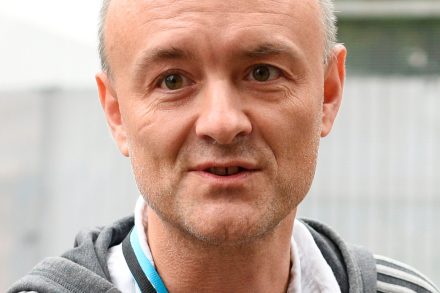
Douglas Murray is associate editor of The Spectator and author of The War on the West: How to Prevail in the Age of Unreason, among other books.

Audio Reads: Douglas Murray, Paul Dolan, and Andrew Watts

From our UK edition

19 min listen

On this week's Audio Reads, Douglas Murray advises Labour to get a new attack line, now that the Conservatives have become the party of the NHS. Professor Paul Dolan, a behavioural scientist at the LSE, ponders what would have happened had the pandemic started in Sweden, rather than China. And Andrew Watts says - if Brexit talks are scuppered because of fish, shouldn't Brits at least eat more of it?

X days to save the economy!

From our UK edition

I wonder what the Labour party will use as its scare slogan at the next election? After all, the usual one of ‘[Insert number] weeks/days/minutes to save the NHS’ may not work next time. Not that it worked every time before. But it has long been the favourite attack line of a British left that likes to portray the Conservative party as so ravenously right-wing that whenever it comes to power it wastes not a moment in dismantling Attlee’s post-war creation. And yet, although the Conservative party has been in power fairly often since 1945, not once has it managed to dismantle, privatise, or otherwise sell off the NHS. Its tendency, rather, has been to increase spending, ring-fence spending and more.

It’s time to take a stand against Chinese bullying

From our UK edition

A couple of weeks ago, I mentioned in the magazine how the Chinese Communist Party has been trying to bully our allies and friends in Australia. The government of that country having had the audacity to demand an independent and international inquiry into the origins of the Wuhan virus. Since then, the CCP has been upping its game, and not just with words, but by imposing huge tariffs on Australian products. Which I suppose means that the rest of us are going to have to make up for over a billion Chinese consumers and guzzle as much Australian shiraz as we can in the coming months. Can we do it? Possibly.

Coronavirus gives the New York Times another excuse to bash Britain

From our UK edition

Of course most people don’t read the New York Times. But the paper retains a certain cachet in America, and undoubtedly directs a lot of public thinking in that country, if not further afield. Which is why the paper’s anti-British animus (which has been noted here before) is worth highlighting. The trend has been going on since 2016, when the NYT seemed to have decided that the Brexit vote led the way for the election of Donald Trump. Since then the paper’s desire to attack Britain has appeared insatiable. A fact that leads the paper’s readers to be woefully ill-informed about this country.

Hugging China hasn’t done us any favours

From our UK edition

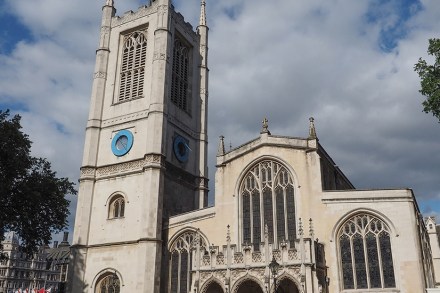
Like nearly everything named a ‘scandal’, ‘affair’ or given the suffix ‘gate’, almost nobody now remembers the Dalai Lama affair. But back in 2012, flush with recently acquired power and optimism, David Cameron and a man called Nick Clegg went to see the Dalai Lama while he was on a trip to London. Whether Cameron and Clegg knew what they were getting into wasn’t clear. The pair had a short meeting with the Lama at St Paul’s Cathedral — or at least in one of those bland conference ante-rooms English cathedrals constructed in the last century to atone for the splendours next door. Looking like a couple of travelling salesmen trying to flog the Dalai Lama a timeshare, Cameron and Clegg had the meeting and moved on. Not so Beijing.

Do Joe Biden’s supporters still ‘believe all women’?

From our UK edition

There is an obvious attraction in certain simple claims. ‘Believe all women’, for instance, is easy to utter, beneficial to the speaker and guaranteed to get applause from any live audience, terrified as they are into not clapping vigorously enough. It is also a deeply unwise piece of advice. As unwise as it would be to say ‘believe all men’ or ‘believe all humans.’ It suggests that the word of a woman is inevitably worth more than a man. Or that women do not lie, and could never be expected to. Or that while some women may lie it is worth accepting the consequences of this as collateral in order to make up for lost time.

I love my fellow hacks – even when I disagree with them

From our UK edition

It’s one way to keep in touch with people. Each morning, somewhere between the first coffee of the day and the first drink, I open my computer, log on to social media and see which of my friends or colleagues is ‘trending’ today. ‘Ooh,’ I think as I see their names flash up, ‘I wonder what Julie/Charles/Allison/James/Rod (usually Rod) has done now’. Then I click and read all about their crimes, usually through a filter of people labouring under the impression that a writer’s job is to say what everyone else has already agreed on. The howls, incidentally, mostly emanating from people who in no sense subscribe to the organ in which the crime is said to have occurred. This is one of the brightest moments of my day.

Audio Reads: Toby Young, Douglas Murray, and Melissa Kite

From our UK edition

19 min listen

The Spectator is meant for sharing. But in the age of coronavirus, that might not be possible. This new podcast will feature a few of our columnists reading out their articles from the issue each week, so that you don't miss out. It's a new format, so tell us what you think at podcast@spectator.co.uk.Toby Young on why Britain needs Boris; Douglas Murray on what he finds heartening about the national response to coronavirus; and Melissa Kite's Real Life column.

Monkeys, bats and our national trust

From our UK edition

There was always one key flaw in our species. Which is that someone always shags a monkey. I have expressed this thought fairly regularly in private, often to friends who don’t get the reference about the likely origin of Aids and look at me strangely ever after. Still, I find it a useful rule. We humans are — perhaps always have been — as weak as our weakest member makes us. And if just one of us chooses of an evening to force themselves on one of our simian cousins, then before long people across the planet start dropping dead. I suppose the monkey-shagger rule will now have to be updated to take into account the fact that someone will always blend a bat.

Four of the best Spectator pieces I’ve ever read

From our UK edition

One of the things that lockdown allows you to do is not just to read but to re-read. Obviously the smart thing to do is to say that you are ‘re-reading’ vast books you haven’t actually read (Gibbon, Macaulay etc). Easier, and often more enjoyable, is to re-read pieces you remember but haven’t read for a while.  Recent days have given me a good opportunity for doing that, among much else. And perhaps I should say at the outset that the editor has not asked me to do this. I have been offered no bribes, dangled no promotions and offered not even one bottle of Pol Roger. But I simply say, with honesty, that when the mind roams over various subjects and memories of recent years, pieces in The Spectator do stand out.

Audio Reads: Douglas Murray, Tanya Gold, and Mark Mason

From our UK edition

17 min listen

The Spectator is meant for sharing. But in the age of coronavirus, that might not be possible. This new podcast will feature a few of our columnists reading out their articles from the issue each week, so that you don't miss out. It's a new format, so tell us what you think at podcast@spectator.co.uk.Douglas Murray asks, where do we find purpose? Tanya Gold writes on the Cornish revolt against second-home owners, and Mark Mason's gives tips from history on working from home.

In this strange new world, where do we find purpose?

From our UK edition

Perhaps we are at least past the beginning of this crisis. The phase where the hunt for multipacks of loo-rolls briefly became the national sport. Now we are into the second, perhaps even less glorious stage, in which we all have to sit in our solitude and hope that the storm blows over us. And if this passivity is the great demand of our generation — a demand that brings its own ironies — then now is a good time to ask the question: ‘How do we spend our time well?’ The question is one we ought to ask more throughout our lives. But the truth is that most of us tend to ask it only at moments of personal crisis: when a job or relationship suddenly ends, or a loved one dies. By asking ‘How do we spend our time well?

The Guardian’s trans rights civil war rumbles on

From our UK edition

At times of great stress it is necessary to find your enjoyments where you can. And as I mentioned in the magazine last week there are few joys in the world comparable with that which comes from watching the left eating itself. Which brings me to a small but diverting set of events which are rolling on at the Guardian. Readers will remember that earlier this month that paper started to devour itself after the admirable columnist Suzanne Moore had the temerity to write a column about trans issues that did not exactly toe today’s leftist line on the issue. Hundreds of Moore’s colleagues signed a letter to the editor condemning Moore. Indeed the signatories comprised around a fifth of the total Guardian workforce.

Will the NHS drop its trans obsession when peak coronavirus hits?

From our UK edition

As coronavirus sweeps across the country, I am sure people will be reassured to know that the NHS is doing everything it can to address the pandemic, at such times when a health service’s resources are likely to be overstretched. So it must come as exactly no comfort to see what one section of the NHS was highlighting this Friday: Ensuring pregnant trans men get equal quality care. There may be some lucky people who had to read that twice. Or read it more than once and are still labouring under the impression that the headline includes a glaring misprint. Others, alive to the absurdities of the age, will know that the NHS is doing exactly what one would expect.

Don’t tell me what I can read

From our UK edition

At least none of us will have to pretend that we read Woody Allen’s memoirs. This week the publishers Hachette took that little responsibility away from us. After a staged walkout by staff in New York and Boston it was announced that the book (titled Apropos of Nothing) would be pulped rather than published next month. Allen has been accused of historic sexual abuse and the subject of allegations from his daughter and glassy-eyed son Ronan Farrow. No charges have ever been brought. Hachette’s announcement followed a number of other choices that have similarly been taken from us. The UK public did not get to choose whether to see Roman Polanski’s latest movie.

How Sinn Fein got away with murder

From our UK edition

The online world should be credited when it gets something right. And on Twitter an account titled ‘On This Day the IRA’ gets something very right. Granted, it’s not your usual internet fare. It includes no videos of cute animals sneezing. It is simply an archive-rich account which records what the IRA did on that day in history. Naturally, each day brings more than one thing to commemorate. On the day I’m writing, the account records James Keenan and Martin McGuigan, two Catholic 16-year-olds blown up by the IRA in 1979 while they were on their way to a Saturday night dance. There are also anniversaries from 1977 and 1988, and Reginald Williamson, a 46-year-old father of two who was killed in 1993.

How low can the BBC go?

From our UK edition

Last weekend’s papers claimed that the government desires a ‘massively pruned back’ BBC. Former Conservative cabinet minister Damian Green and someone called Huw Merriman spoke out against this, which allowed the BBC to put the headline ‘BBC licence fee: Tory MPs warn No. 10 against fight’ atop its characteristically impartial coverage. I suppose there are various reactions one can have to this, ranging from outrage at supposed ‘cultural vandalism’, via a vague shrug, all the way through to the full Charles Moore. In recent years I have moved through all these stages. The discovery that mattered most was the realisation that the less BBC I had in my life, the better.

I’ve seen wars more amusing than BBC comedy

From our UK edition

Last weekend’s papers claimed that the government desires a ‘massively pruned back’ BBC. Former Conservative cabinet minister Damian Green and someone called Huw Merriman spoke out against this, which allowed the BBC to put the headline ‘BBC licence fee: Tory MPs warn No. 10 against fight’ atop its characteristically impartial coverage. I suppose there are various reactions one can have to this, ranging from outrage at supposed ‘cultural vandalism’, via a vague shrug, all the way through to the full Charles Moore. In recent years I have moved through all these stages. The discovery that mattered most was the realisation that the less BBC I had in my life, the better.