Douglas Murray

Douglas Murray

Douglas Murray is associate editor of The Spectator and author of The War on the West: How to Prevail in the Age of Unreason, among other books.

What the demise of Quilliam teaches us about Britain and Islam

From our UK edition

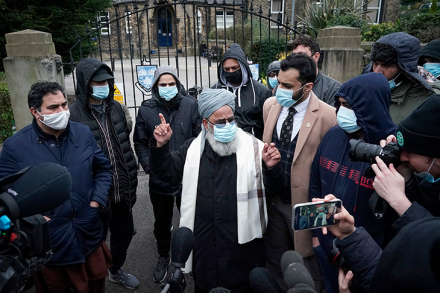
There was much rejoicing among Britain’s Islamists last week when the thinktank and campaigning organisation Quilliam announced that it was closing. The Islamists were pleased because for the 14 years since its founding Quilliam has been the most prominent Muslim-run organisation arguing for a progressive, non-Islamist Islam. The exact reasons why Quilliam has shut down are not clear. The co-founder, Maajid Nawaz, has blamed the difficulties of sustaining a non-profit in the era of Covid. Perhaps it is that, or perhaps it is something else. The group never had an easy ride. But the fact that it didn’t, and that so many prominent British Muslims are celebrating its demise, points to a problem worth noting. I was there in 2007 when Quilliam started.

Want to see your friends? Call it a protest

From our UK edition

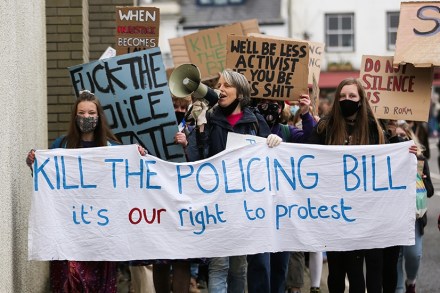
I wonder exactly when we agreed that it is more of a priority to gather with strangers than to meet loved ones? You might chart a number of moments, but the presumption seems to have become fixed. You might say that it started before the pandemic with the idea that truanting from school is worthy, even admirable, so long as it is done in opposition to climate change. Indeed as we learned this week, if you leave school for long enough then you may eventually have a statue erected to you in an English town known for its cathedral and school but not for its university. If you were an adult you could close down major cities, prevent newspapers from leaving the print-works and much more for the same cause. So long as you were saving the planet.

We don’t need a law against ‘conversion therapy’

From our UK edition

Earlier this month, with the citizenry still confined to their houses, borrowing at record highs and GDP in a record slump, there was a debate in Westminster Hall about ‘conversion therapy’. An internet petition has called on the government to ‘Make LGBT conversion therapy illegal in the UK’. And so for a couple of hours MPs from across the major parties competed with each other to express their horror at gay and trans people being subjected to this practice. Feelings ran high. Nobody spoke against. One Conservative MP arguing for criminalisation, Alicia Kearns, claimed that she had come into parliament with ‘one legislative change I wanted to deliver, which was to ban conversion therapy’.

Leading article, Douglas Murray and Philip Hensher

From our UK edition

26 min listen

On this episode, Cindy Yu starts by reading the leader - The Spectator has a fight on it's hands as the Scottish Crown Office threatens a six-figure fine. (01:30) Then, Douglas Murray says the Church of England has morphed beyond recognition. (06:40) Finally, Philip Hensher says Jordan Peterson's new book, Beyond Order, is 'pretty odd'.

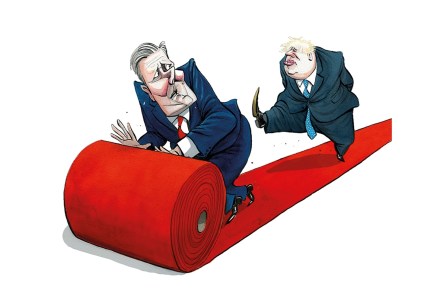
Unopposed: Why is Starmer making life easy for the PM?

From our UK edition

42 min listen

Is Keir Starmer becoming irrelevant? (00:50) Do the Oscars really celebrate the best that film has to offer? (15:55) Jordon Peterson is back with his new book, Beyond Order, but is it beyond readable? (25:40)With the Spectator's political editor James Forsyth; broadcaster and former Labour adviser Ayesha Hazarika; writer Fiona Mountford; the Spectator's arts editor Igor Toronyi-Lalic; novelist Philip Hensher; and the Spectator's associate editor Douglas Murray. Presented by Lara Prendergast.Produced by Max Jeffery, Sam Russell and Arsalan Mohammad.

The new religion of the Church of England

From our UK edition

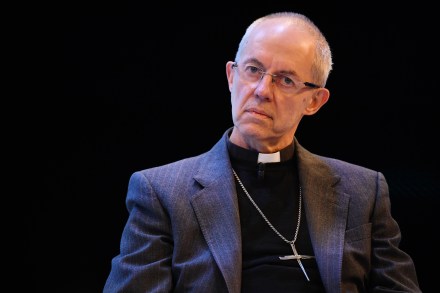
With a heavy heart I must return once more to the subject of the Church of England. I recognise that is not a subject for everybody, and occasionally someone implies that it should not be a subject for me. But I am concerned about the fate of the national church because as the new religion heaves ever clearer into view, I realise that I prefer the old religion to the new one. I would rather attempts to influence the country’s morals were preached from a pulpit than through group stampede on Twitter. And though we haven’t heard much from actual pulpits for more than a year, the church hierarchy has not slumbered. It has been busying itself with the question of anti-racism.

Will Alan Rusbridger apologise for the Guardian’s Republican cell?

From our UK edition

Subscribers will know that I wrote in my column for the magazine this week about the revelations by former journalist Roy Greenslade that he was an active supporter of the IRA throughout the Troubles. But there are a number of people who we should still hear from on this, and have not. One is Greenslade’s long-term editor and defender at the Guardian, Alan Rusbridger, now the Principal of Lady Margaret Hall, Oxford. As I mentioned in my column, in 2000 The Spectator ran a piece by Stephen Glover identifying a Republican cell within the Guardian. Rusbridger responded furiously to this, denouncing the piece, The Spectator, the magazine’s then-editor Boris Johnson, and demanding an apology. Naturally the piece was completely right.

There is no justification for supporting the IRA

From our UK edition

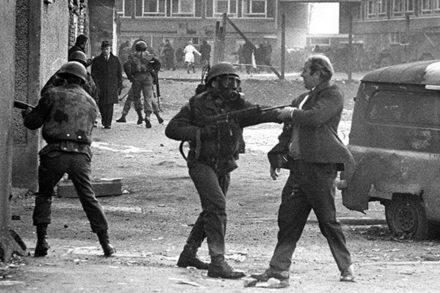
Roy Greenslade held a number of prominent positions in Fleet Street over the course of a long career. But he spent the largest part of it at the Guardian, where he berated other journalists for their writings. A similar stance was adopted by him from his position as professor of journalism at City, University of London, from where he lectured students on media ethics and gave evidence to the Leveson Inquiry. At the same time he became slightly notorious outside of Islington for his support of the IRA. Whenever Gerry Adams had something self-pitying or self--exculpating to say, Roy was there as his loyal mouthpiece. In 2000 this magazine ran a piece by Stephen Glover which identified ‘a pro-Republican cell within the Guardian’.

My entry to the Martin McGuinness poetry prize

From our UK edition

In these winter months, we must find our amusements where we can. And like many people I was amused to learn recently that the ‘Martin McGuinness Peace Foundation’ has announced a poetry competition in honour of the late IRA leader. As Ian Acheson has noted here, there will be those who think that the last years of his life, when McGuinness entered government in Northern Ireland, are the years to be commemorated in rhyme. A certain type of leftist even tends to tut at any mention of the earlier, bloodier phase of McGuinness’s career. The Green party MP Caroline Lucas did just that to me some years ago when we were on a programme together and I mentioned the earlier, more noteworthy phase of McGuinness’s life.

Will freedom always be just over the horizon?

From our UK edition

We should talk about horizons, and the setting of desirable ones. A newspaper gave it a go the other day with the front-page news that it is possible pubs may reopen in April rather than May. Given that we read elsewhere that when pubs do reopen, they may not be allowed to serve alcohol, the thrill from this news was limited. This cannot be our best hope: that if everybody behaves themselves and everything goes according to plan then we might be allowed to drink an orange juice in public sometime after Easter. This horizon is not sufficiently motivating. And societies, like the people within them, need motivation. There can’t be a person who hasn’t spent at least part of the past year feeling listless or even hopeless.

What has the New York Times got against Ayaan Hirsi Ali?

From our UK edition

Ayaan Hirsi Ali is not an easy person to cancel. She has survived the brutal murder of her colleague Theo van Gogh, lived through more than two decades of serious threats to her life and fled more countries than many people have visited. Perhaps it is for these reasons, rather than in spite of them, that she generates such hatred from what used to be called ‘liberal’ quarters. Hirsi Ali has a new book out this week. ‘Prey’ is a forensically detailed, careful and brave analysis of (as the subtitle says) ‘immigration, Islam and the erosion of women’s rights'. It looks at questions that most people turn away from: horrors that result from the mass immigration into Europe of recent decades.

The disconnect of Davos Man

From our UK edition

You may have missed Ursula von der Leyen’s big speech at Davos last week. Most people did. Perhaps because Davos was a more low-key affair than normal this year. Ordinarily the annual summit of the World Economic Forum allows various world leaders to jet into the Swiss Alps in order to lecture the rest of us on the virtues of zero carbon. But this year the head of the Forum — Klaus Schwab — greeted his guests virtually and alone. Welcoming the President of the European Commission down the line, the two reminisced about last year’s summit and such pleasures as being lectured by Greta Thunberg. Although they tried to pretend that last year’s meeting in some way foresaw the era we are now in, of course it did no such thing. It never does.

Where will the American right turn now?

From our UK edition

Here’s a trick question: who said the following, and when? ‘Serious questions have arisen about the accuracy and reliability of new electronic voting machines, including concerns that they can be susceptible to fraud and computer hacking.’ A box of Roses chocolates for anyone who guessed correctly. That was Dianne Feinstein, Democrat senator for California, speaking aeons back in 2006. One decade later and another Democrat declared that she had lost the presidential election that year because Vladimir Putin had hacked the US voting system. A month after losing the 2016 race, a still-sore Hillary Clinton told party donors: ‘This is not just an attack on me and my campaign. This is an attack against our country.

The questions no one wants to ask about the Reading terror attack

From our UK edition

There is an awful lot going on at the moment. So much, indeed, that stories that might once have detained us now rush past unobserved and all but un-commented upon. One such story is the conviction and sentencing of Khairi Saadallah for the murders of James Furlong, David Wails and Joseph Ritchie-Bennett on 20 June last year. Some readers may recall that I wrote about that attack here at the time. The UK had just been through its first lockdown, so it was understandable if people were somewhat preoccupied. Yet still it seemed significant that three men, all identified by the UK media as ‘members of the LGBTQ community’, should have been stabbed to death while enjoying the sun in a park in Reading one un-locked down evening.

History shouldn’t be used against us

From our UK edition

Can you feel the fascism yet? You ought to by now, more than a week after Britain leaving the EU. So many people warned us of this moment. There was the former journalist Paul Mason, who claimed to see crowds of fascists thronging the streets of London. The former Labour spin doctor Alastair Campbell became so disturbed by our national turn that at one stage he dressed up in a sort of regimental uniform and sang a song about Boris Johnson and Dominic Cummings. And then there was the cruelly titled Lord Adonis. The once-sensible former Blairite schools minister spent recent years so apparently worried about the dangers of Brexit that he became not just hysterical but homosexual too. It has been a disturbed few years for these, among other, people.

Only Trump is to blame for the Capitol chaos

From our UK edition

On a recent visit to Central Europe I heard a joke that was going around in those parts, as well as further East. The joke — such as it was — was that America spent so much time trying to export democracy in recent years that it forgot to keep any for itself at home. The joke isn’t great, but it is telling. And it is a tale whose ugliest reverberation could be seen on Wednesday when supporters of President Trump stormed the Capitol building in Washington DC. After a year of protests, these protests — in support of the President — will join the many others from the last year whose images have gone around the world.

The never-ending smugness of the NeverTrumpers

From our UK edition

In March 2016 as Donald Trump looked likely to be the Republican party’s nominee to run for president, more than 100 foreign policy professionals signed a letter vowing not only that they wouldn’t work for him should he become president but that they would work ‘energetically’ to prevent his election. As the months wore on, the light in which the signatories appeared often shifted. Once Trump became the nominee, and then the President, these representatives of the ‘national security community’ appeared to have demonstrated one of the most damaging things any such group could demonstrate: their own irrelevance.

Most-read 2020: What isn’t being said about the Reading attack victims?

From our UK edition

We're closing 2020 by republishing our ten most-read articles of the year. Here's No. 9: Douglas Murray on June's Reading attack Imagine if on Saturday evening a white neo-Nazi had stabbed three men to death. Imagine, furthermore, if in the wake of the killings it had turned out that all three of the victims were gay. Or ‘members of the LGBT community’, to use the lexicon of the time. And then imagine if two days later nobody in the UK or anywhere else was very interested in any of this. So what if the victims were all gay? Why bother sifting around for motives. What are you trying to say? Bigot. Well something that might well be analogous to that happened in Reading on Saturday evening and over the days since.

Liz Truss is right to take on the ‘equalities’ cartel

From our UK edition

Yesterday the equalities minister, Liz Truss, gave a speech in which she attempted to lay-out a new direction for the British government. The speech (which can be read here) rejected the identity-group politicking of the radical left which has dominated ‘equalities’ discussions in recent years. It tried to describe not just how wrong this has been, but how inadequate it is. One way in which Truss did this was by describing how this government aims to focus on geographic and socio-economic inequality. She is completely right on this, and the whole racket of groups in the UK which focus on alleged racial or sexual inequality have little to say about such issues.