Douglas Murray

Douglas Murray

Douglas Murray is associate editor of The Spectator and author of The War on the West: How to Prevail in the Age of Unreason, among other books.

Our growing unwillingness to understand the past

From our UK edition

I was recently reading the works of the 17th-century antiquary John Aubrey, who at one point mentions a ghost craze that had broken out in Cirencester. The ‘apparition’ was reported to have disappeared with ‘a curious perfume and most melodious twang’. Reading this I unconsciously got ready for a man as wise as Aubrey to pooh-pooh the whole thing, pouring scorn on such superstition. But no; while Aubrey does indeed have a correction, it comes via his friend — one Mr W. Lilly — who ventures that the common view is wrong, for he ‘believes it was a fairy’. One of the most familiar joys of reading is the moment of recognition, when a hand seems to reach out across the centuries and a voice seems to say: ‘I was there too.

Douglas Murray, Mary Wakefield, Peter Hitchens

From our UK edition

22 min listen

On this week's episode, we’ll hear from Douglas Murray on the political fate of US vice president Kamala Harris. (00:58)Next, Mary Wakefield on her experience during storm Arwen and subsequent media coverage. (09:39)And finally, Peter Hitchens on his fears regarding the future of the city of Oxford. (15:58)Produced and presented by Sam HolmesSubscribe to The Spectator today and get a £20 Amazon gift voucher: spectator.

Does Kamala Harris deserve to be vice president?

From our UK edition

Is it rude to refer to the Vice President of the USA as the world’s most famous diversity hire? Possibly. But it is the same with so many things that are true. You needn’t take my word for it. Joe Biden made his selection priorities clear when he was confirmed as his party’s nominee last year. He immediately declared that his search for a running mate was going to focus on non-white women. And in some ways it was a savvy move. Like John McCain in 2008, he knew that the US media might not thrill to a ticket made up of a couple of white, male soon-to-be octogenarians. Yet the decision left him with a relatively small list of qualified people to choose from. It would be the same if he’d decided that his running mate had to be a gay.

‘The type of person who makes the world work’: remembering Anthony Smith

From our UK edition

I’m not sure how many readers know the name of Anthony Smith, who died on Sunday aged 83, but a fair number will. He spent almost a decade at the BBC, helped start Channel 4, directed the British Film Institute, chaired many committees and for 17 years was president of Magdalen College, Oxford. But while not every reader will know him, you are lucky if you know the type: that rare person whose passion is helping other people — the type, in other words, who makes the world work. I first met him when I was a precocious schoolboy of 16. I had asked permission from Magdalen’s librarian to look at some manuscripts for a book I was researching. Tony was clearly alerted to this and made the effort to introduce himself and take me for a walk around the college grounds.

Douglas Murray, Henry Eliot, Sam Holmes

From our UK edition

21 min listen

On this week's episode, we’ll hear from Douglas Murray who says that the case of Kyle Rittenhouse shows nothing in America matters more than your identity. (00:55)Next, Henry Eliot wonders, what makes a book a classic? (08:30)And finally, Sam Holmes tells us about his time as a Hamleys Christmas elf. (16:31)Produced and presented by Max JefferySubscribe to The Spectator today and we'll send you a bottle of Johnnie Walker Black Label worth £30spectator.

The American identity crisis

From our UK edition

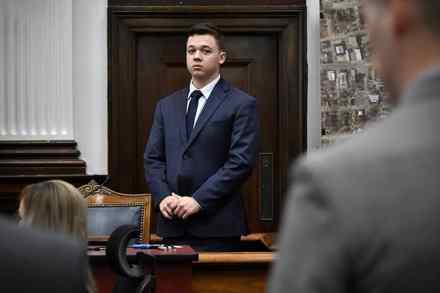
There was no reason for the world ever to hear the name Kyle Rittenhouse. Except that in the summer of 2020 the USA was staring over a precipice. The Covid lockdowns effectively ended after the killing of George Floyd by a Minnesotan policeman. Suddenly mass gatherings in the name of BLM were a public-health duty and, because it was an election year, neither Democrats nor Republicans seemed to know how to react to protests that soon degenerated into serious disorder. For a country that is only one bad police interaction away from meltdown, it was inevitable that something would happen again. Sure enough in August a man called Jacob Blake was shot by police in Kenosha, Wisconsin.

I’m getting sick of the Tories

From our UK edition

I suppose this happens to all of us at different speeds, but I am getting a little fed up of this government. In particular, I am getting fed up of the gap between its rhetoric and its actions. Most of the time this is most noticeable with the Prime Minister, who gives his base the occasional morsel of right-wingery only to then force-feed them great dollops of lefty-greenery. On a trip to Washington, Priti Patel has demonstrated that she is also no stranger to this tactic. So far we have had Patel (the DC version) talk about ‘the mass migration crisis’, as though she is merely an observer of the crisis in the Channel rather than one of the only people actually able to solve it.

MPs aren’t the elite – faceless bureaucrats are

From our UK edition

I see that the most boring conversation in the nation is back. The one even worse than people in the country telling you that the only real difficulty in getting to their part of Gloucestershire/Norfolk/the Orkneys is the drive out of London. I refer to, of course, the reform of the House of Lords. The debate is perennial because there is no good answer to it. The ‘cash for peerages’ scandal comes around every few years because it is unsolvable. If you don’t offer inducements for political donations then what sane person would give millions of pounds to a political party? Besides which, all the constitutional alternatives are worse.

What if Clinton had come clean?

From our UK edition

What if Bill Clinton had told the truth? Would America’s sexual and political history be different? The thought occurs because of the new TV drama Impeachment (being shown in Britain on BBC2) about the Monica Lewinsky affair. Somewhat unfairly to both main parties, it is part of the American Crime Story series. Previous subjects have included O.J. Simpson and Andrew Cunanan, who killed Gianni Versace. It’s a bit rich putting Bill Clinton in the same bracket as these murder cases. Nonetheless, the result is intriguing, not just because of the magnificent acting and production — and not only because in the quarter of a century since the world’s most famous blow job a certain axis of society seems to have turned.

Douglas Murray, Owen Matthews, Lionel Shriver

From our UK edition

29 min listen

On this week's episode, we’ll hear Douglas Murray on how the Prevent scheme has lost sight of its founding intention. (00:43)Then Owen Matthews on Rome’s rubbish. (12:35)And finally, Lionel Shriver gives her review of Dave Chappelle’s transgressive new Netflix Special.

Plan Z: the rise of Éric Zemmour

From our UK edition

34 min listen

In this week’s episode: Who is Eric Zemmour – can he take on President Macron? In our cover story this week, Freddy Gray looks at the rise of Eric Zemmour, the TV presenter who looks set to stir up French politics ahead of next year’s election. Freddy is joined on the podcast by Sophie Pedder, Paris bureau chief for The Economist and a biographer of French President Emmanuel Macron to discuss. (00:46) Also this week: Is the Prevent anti-radicalisation programme failing?Douglas Murray says in this week’s issue that Prevent is failing to tackle Islamic extremism in the UK. He talks about the changes Prevent needs to make along with William Baldet, a Prevent Coordinator. (11:46) And finally: what’s it like to dine naked?

Britain’s fatal unwillingness to confront Islamic extremism

From our UK edition

More than any other country in the West, Britain has become practised in the arts of self-deception and subject avoidance. If a politician in France had been butchered by a Muslim of Somali descent, the French media and political class would have gone through a cycle of debate about the ideology that propelled the killer. Government and security sources would have talked about the networks surrounding the suspect. And the whole society would have learned a little more about what might have led to such an outrage. In Britain the situation is otherwise. David Amess was stabbed to death in a church while holding a surgery for his constituents. The man apprehended for his killing is a 25-year-old of Somali descent named Ali Harbi Ali.

Douglas Murray, Paul Wood, Tanya Gold

From our UK edition

19 min listen

On this week's episode, we’ll hear Douglas Murray on how the pandemic has made cynics of us all. (00:50)Paul Wood on why after 10 years he and his family are leaving Lebanon. (08:02)And finally Tanya Gold gives her review of a Batman-themed restaurant.

The pandemic has made cynics of us all

From our UK edition

A report by MPs into the spread of the coronavirus has concluded that the government’s approach constituted one of this country’s worst ever public health failures. The MPs say the early fondness for herd immunity plus the delay in locking the country down ended up costing thousands of lives. What makes this worse is that everything the government did was done at the suggestion of its leading scientific advisers, Whitty, Vallance and Sage. And so one feels another slippage of faith. On this occasion relating to the imperium not of government, but of scientists. I know some people will be amazed that I should have any remaining trust in government scientific advisers. But everybody has to trust somebody, and I tend to trust people who know about things I do not.

Douglas Murray, Katy Balls, James Walton

From our UK edition

15 min listen

On this week's episode, Douglas Murray examines the left's tactics of victimhood in the wake of the Labour conference. (00:48) Then James Walton gives us his review of the new Bond film, No Time to Die. (08:34)And finally, Katy Balls talks about how the CO2 shortage could lead to a lack of her beloved Irn Bru.

The tactics of victimhood

From our UK edition

Late last week the Labour deputy leader was the subject of a glowing profile in the Times. The piece described Angela Rayner’s alleged physical similarity to Nicole Kidman, spoke indulgently of her ‘outspokenness’ and otherwise confirmed my suspicion that most of the people who go into politics should never be allowed near the stuff. Rayner described herself as having ‘thrived’ off the ‘chaos’ of recent years. Apparently ‘the trauma, the screaming, the unpredictability — this is my bread and butter’. She continued: ‘In fact, I think it’s strange when people are nice. I find taking compliments more difficult than taking abuse, to be honest. I’ve never had that love and affection, so I don’t crave it.

Farewell to Cambridge’s disastrous Vice-Chancellor

From our UK edition

So farewell then, Stephen Toope. The undistinguished Canadian lawyer who has spent recent years trying to run Cambridge University into the ground has just sent an announcement to all faculty, alumni and students. In it he informs them that he has decided to step down from his position as Vice-Chancellor at the end of this academic year. The reason he gives is that he has decided to spend more time with his family. You do not have to read between the lines to realise that Toope is leaving because his brief tenure at Cambridge has been an unmitigated disaster, a fact that has become increasingly clear. Among the highlights of his career at Cambridge have been: Overseeing the trashing of academic freedom.

Where has the truth gone?

From our UK edition

There were two remarkable things about Emma Raducanu’s wonderful win at the US open last week. The first was the win itself. The second was the reaction to it. For the fact that Raducanu happens to be of Romanian-Chinese descent and was born in Canada meant that her triumph was immediately spun through the same political cycle as everything else. Mayor of London Sadiq Khan proclaimed that the star’s story is ‘London’s story’ and showed the virtue of ‘diversity’. Other politicians and hacks joined him.

What can we learn about Afghanistan from Alastair Campbell?

From our UK edition

Alastair Campbell can’t write. If that sounds like one of the less significant charges one might level against Tony Blair’s former spin-doctor then stick with me. Because anyone who can spill out thousands of words and still be so unoriginal and lacking in insight or self-perception must have things they are trying to hide. That is why the laborious ‘long-think’ that Campbell wrote this week for the equally laborious ‘Tortoise’ website is worth pausing over. For those who have missed it, Campbell was this week invited by Tortoise to write a multi-thousand word piece on the recent events in Afghanistan.

America, the Taliban and a farewell to arms

From our UK edition

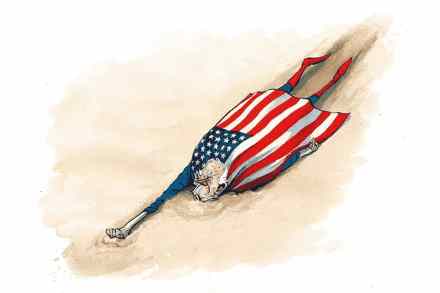
It was quite the handover at Kabul airport this week. The last American troops to exit Afghanistan reportedly left facing an ‘elite unit’ of the Taliban. In a season finale that the most dystopian screenwriter would have struggled to invent, the elite Taliban unit was itself bedecked in US military kit. That is, they were not only wearing uniforms and protective kit provided by the fleeing US army, but were parading the airport with US-provided guns in US-provided vehicles. This was the culmination of a fortnight that the White House is still trying to present as a success. One of the biggest airlifts in history, they insist. In reality the Biden administration has pulled off a feat few of us thought possible.