Douglas Murray

Douglas Murray

Douglas Murray is associate editor of The Spectator and author of The War on the West: How to Prevail in the Age of Unreason, among other books.

What America gets right about the abortion debate

From our UK edition

There are two things non-Americans can almost never understand about America and should probably never speak about. The first is guns. If you have a British accent and arrive in America, or talk about America, you should be very careful before opining on the Second Amendment. It isn’t a precise analogy, but you might compare it to an American arriving in Britain and suddenly talking about the rights and wrongs of hereditary monarchy. There are lots of reasons why countries end up with the institutions they have. And though Her Majesty the Queen is clearly responsible for fewer fatalities each year than America’s right to bear arms, the Second Amendment is as much a centrepiece of American democracy as the monarchy is of our own.

Fractured: can the West fix itself?

From our UK edition

There are many ways to fracture a people. But one of the best is to destroy all the remaining ties that bind them. To persuade them that to the extent they have anything of their own, it is not very special, and in the final analysis, hardly worth preserving. This is a process that has gone on across the western world for over a generation: a remorseless, daily assault on everything that most of us were brought up to believe was good about ourselves. Take our national heroes – the people who used to form the epicentre of our feelings of national pride. Twenty years ago, Winston Churchill easily won the BBC’s competition to find out who the nation thought to be the Greatest Briton.

The art of changing your mind

From our UK edition

Some years ago there was a study at Harvard that tried to find out what people did when they held an incorrect opinion. Not an opinion of the kind that the era happens to deem incorrect, but one that is actually, provably not the case. The study looked at what happened when that factually incorrect view was introduced to the evidence that it was wrong. We might hope that the results would be clear: man holding wrong view meets the right view, immediately throws up his hands and asks himself how he could have been such a dolt. Alas, as anyone who has ever been married will know, people do not always concede wrongly held views as swiftly as that. And so the Harvard study showed.

I feel sorry for Rishi Sunak

From our UK edition

Perhaps I should stress from the get-go that I do not know Rishi Sunak. So far as I know, we’ve only met once, some years ago when he was working at the think-tank Policy Exchange. He showed me to my seat when I arrived late for an event. It is one of those things you must get used to in this life – that the person you last saw helping you into a folding chair will just a few years later be Chancellor of the Exchequer. When I first noticed this tendency, a wise older friend cautioned me against feeling concern about it. Best to accept it as part of life’s great dance. In fact, my friend stressed, you shouldn’t even worry about it when some of the dimmest people you’ve met (not that Sunak fits that bill) arrive into the great offices of state.

How to lose elections XXXX

From our UK edition

I have remarked here before about our era’s tendency to accept election results if your side wins but to reject them if they lose. Happily in the UK there is no significant body of opinion which believes that Jeremy Corbyn won the 2019 election. True, there are a few Momentum loons who still think that Corbyn would have won had the Tories not somehow got more votes. But even among the most diehard Momentum-ites few actually come up with stories of ballot rigging, high-level corruption and more. Still, our country is not immune to the ‘I only accept the results if my side wins’ tendency. After all, we had Carole Cadwalladr and others insisting for years that the Kremlin had somehow mysteriously manipulated the 2016 Brexit vote.

How should Prince William respond to questions about slavery?

From our UK edition

It is uncanny how swiftly British culture imitates the worst of American culture. Take Whoopi Goldberg, who distinguished herself again last week on The View. For anyone who does not know, The View is a long-running US TV show in which a collection of the dimmest women in America are invited to opine angrily on things they know nothing about. Goldberg is a long-term resident of this asylum, though she recently had to take a break from the show after declaring that the Holocaust had nothing to do with race, was some white-on-white thing, and in any case (as a woman of colour) didn’t concern her.

The American right shouldn’t look up to Putin

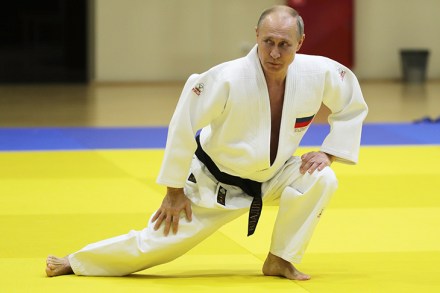
A fracture of the international right may seem minor given everything that is going on right now. But it is worth loitering over. Because in recent years an interesting divide has grown among conservatives on both sides of the Atlantic. On one side are the Cold War warriors and their successors, who have continued to view Vladimir Putin’s Russia as a strategic threat. Meanwhile, a new generation has arrived at a different view. While the West has deranged itself with assaults on its own history, on biology and much more, an assortment of conservatives has come to see Putin as some kind of counterweight. A bulwark — even an admirable corrective — to the madness of our own societies.

putin judo

The day I nearly brought RT down

From our UK edition

It is interesting to watch Ofcom finally remove the broadcasting licence from the Russian propaganda channel Russia Today (RT). I almost managed to do the job myself about 12 years ago. Back in the 2000s, a number of bad regimes were rushing into the broadcasting space to try to give themselves a better international image. The Chinese Communist party set up a London branch of its state television network called CCTV, apparently unaware of the hilarity this would cause in the English language. Meanwhile, the Iranian government started PressTV to push the ayatollahs’ views of the world. It set up its propaganda channel from a roundabout on the Hanger Lane gyratory system, proving again that totalitarian regimes are not always brilliant.

The West has rediscovered its purpose

From our UK edition

Over recent days I have been reflecting on War and Peace. Or Special Operation and Peace as it must now be known in Russia, unless you want to spend 15 years in prison. And I am reminded once again of how utterly unpredictable war always is. On this occasion almost every-thing that people imagined just a couple of weeks back has been completely inverted. In no particular order the list includes the following. A few weeks ago Vladimir Putin looked like a strongman. Today he looks like a weak and deluded leader. A few weeks ago Volodymyr Zelensky looked like an ex-comedian who might soon be out of his depth, if not his country. Today he looks like a remarkable wartime leader and an actual strong man. A few weeks back the Russian military seemed vast and unassailable.

Douglas Murray, Mary Wakefield and Nicola Shulman

From our UK edition

29 min listen

On this episode of Spectator Out Loud, Douglas Murray starts by explaining why C. S. Lewis was right about war. (00:56) Mary Wakefield is up next, looking at the founding myth that Russia and Ukraine are fighting over. (10:18) Nicola Shulman finishes the podcast, reading her piece about Philip Larkin's big problem.

Why C.S. Lewis was right about war

From our UK edition

Well, at least Covid is over. No sooner had Vladimir Putin’s tanks rolled into Ukraine than the UK’s Covid advisory group Sage disbanded. The same effect was felt in the US, where the outbreak of war in Europe led to the immediate, unlamented disappearance of Dr Anthony Fauci. After two years on primetime, suddenly the good doctor was nowhere to be seen. Covid already seems so very last season. The ‘climate emergency’ likewise seems to have drifted away. For years, whenever the world was facing no more proximate emergency, every politician from the Scottish parliament upwards insisted that we were all doomed and heading to hellfire.

What the right gets wrong about Putin

From our UK edition

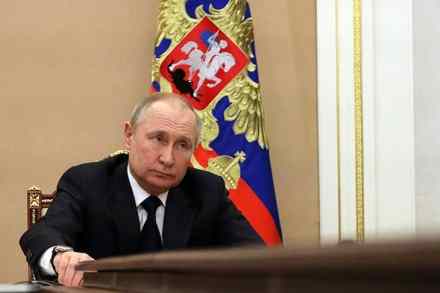
A fracture on the international right may seem small fry given everything that is going on right now. But it is worth loitering over. Because in recent years an interesting divide has grown among conservatives on both sides of the Atlantic. On one side are the Cold War warriors and their successors who have continued to view Vladimir Putin’s Russia as a strategic threat. Meanwhile, a new generation has arrived at a different view. While the West has deranged itself with assaults on its own history, on biology and much more, an assortment of conservatives have come to see Putin as some kind of counterweight. A bulwark – even an admirable corrective – to the madness of our own societies.

The tyranny of Trudeau

From our UK edition

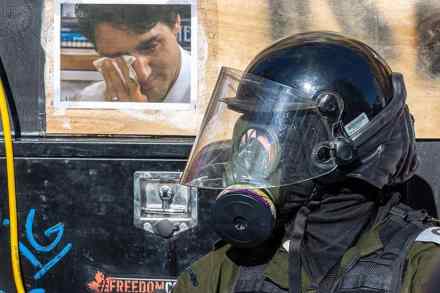
Early in the corona era the historian David Starkey gave some thoughts on Covid. ‘We’ve got a Chinese virus,’ he said, ‘and we’ll finish up with a Chinese society.’ I remember at the time thinking the phrase neat, but doubtful. Fast forward a couple of years and the doubts have eroded. Although Britain seems to have avoided becoming a permanent Covid state (and is indeed one of the first societies to try leaping out of the Covid age), other parts of the West certainly do seem to be trying to meet the CCP more than halfway. Foremost among them is Justin Trudeau’s Canada. There is no shortage of things going on in the world at the moment. But you know that the world is in an especially perilous place when even Canada has become interesting.

Katy Balls, Julie Bindel and Douglas Murray

From our UK edition

22 min listen

On this week's episode, we’ll hear from Katy Balls on Labour’s strategy – would Starmer actually prefer Boris Johnson to stay in place? (00:51)Next, Julie Bindel on the rise of lesbian divorce (06:12)And finally, Douglas Murray on the hellish new trend of having to bring your ‘whole self’ to work. (14:00)Produced and presented by Sam HolmesSubscribe to The Spectator today and get a £20 Amazon gift voucher.

Work is no place for your ‘whole self’

From our UK edition

One of the few things I have learned in this life is that Dante Alighieri was wrong. In the Inferno portion of The Divine Comedy (the only part most people read), the great Florentine poet describes hell as having just nine circles. Whereas whenever I survey matters it has always seemed me that this figure is on the low side. In fact I would go further. I would say that if you look down there is always a circle below every circle. The other week I wrote about our nation’s ambassador to the Ukraine — a woman who seems to think that expressions of vulnerability and not-quite-coping are somehow helpful public attributes in her job. What I did not get into is that Melinda Simmons is not alone. She is part of a movement.

Boris’s bunker: the PM’s defensive strategy

From our UK edition

33 min listen

In this week’s episode: What’s the mood like in Boris’s bunker?For this week’s cover story, James Forsyth writes about the defensive bunker mentality inside No. 10 and the PM’s strategy of keeping MPs sweet to hold back a no confidence vote. James joins the podcast along with Spectator Editor Fraser Nelson to discuss. (00:50)Also this week: Have we forgotten how to take a joke?Jimmy Carr has caused an online outcry after an off-colour joke from his new show, His Dark Material was clipped and posted without context on social media. Ministers, such as Nadine Dorries and Sajid Javid, have now criticised a comedian for telling a joke. In the Spectator this week both in print and online, two of our writers came to Carr’s defence.

In defence of bad jokes

From our UK edition

I was once at a terrific Shabbat dinner where late in the evening one of the other guests suddenly said: ‘OK, who’s got the best Holocaust joke?’ Even people who know something about Jewish humour might be surprised by this. I said that one Holocaust-related joke I knew was the story from the 1970s of the Monty Python crew being invited to Germany to film a television series there. The Germans had called the Pythons to say that of course they had no humour of their own in Germany and would like to import some. The Pythons agreed, arrived in Munich and were promptly taken to Dachau. In retrospect, this must have been some kind of signal from their hosts that they were accepting of their history and wanted there to be no awkwardness.

Is our Ukrainian ambassador OK?

From our UK edition

I know the following sentence is going to get me into trouble. Still, there are times when you wonder whether highly feminised people should perform certain jobs. I am not saying ‘women’ and I am not saying ‘always’, just ‘times’. Still, I can hear you say: what sort of a dinosaur are you? Well, join me in the Jurassic period for a moment by contemplating the social media activity of our lead diplomatic representative and ambassador in the Ukraine, Melinda Simmons. Simmons is in a rather important position at present, yet her social-media account suggests otherwise. Here is Simmons a few months ago, writing on Instagram about a photograph of her at a podium with a chaplain to one side and a military guard at the other.

This government’s greatest failure is economic

From our UK edition

‘The main job of a government is to ensure that the economics don’t go wrong.’ So argued an economist friend of mine to me many years back. And I must admit that my first response was uncommonly cynical. ‘Well, you would say that, wouldn’t you?’ I replied. ‘You’re a political economist.’ It is to be expected. In the same way a military-defence type might say that the most vital job of government is to be able to defend these islands and project military force. Or Lulu Lytle might explain that the most important thing in government is to get the interiors right. But as the years have gone by, I have realised that my cynicism was wrong and my friend’s argument was true.

‘Operation Red Meat’ won’t beef up the government

From our UK edition

Are you ready for ‘Operation Red Meat’? If not, then you should brace yourself. For it looks set to be one of the most fearsome operations of modern political times, liable to make Conservative voters quiver with excitement and feel almost too stimulated. Alert readers will have noticed that Boris Johnson did not have the best end to 2021. Unfortunately he hasn’t had the best start to 2022 either. Hardly a day has gone by when we haven’t learned of some new shocker from No. 10. The impression has been not just of shambolic-ness but of dishonesty, double standards and general incompetence. The point is that the Prime Minister and the fawning court around him seem to have noticed that he has lost his lustre. The joke has worn thin.