Dot Wordsworth

Lost for words

From our UK edition

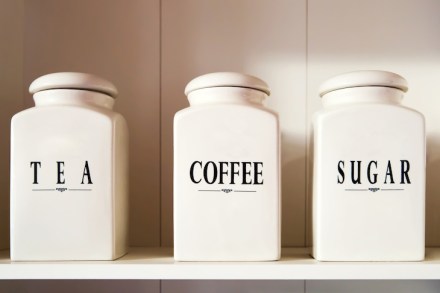
Emma Bridgewater has, since 1985, produced pottery acceptable in tasteful middle-class kitchens. Some jars had Coffee on and some Biscuits. Coffee meant ‘coffee’ and Biscuits meant ‘biscuits’. In a similar attempt to achieve popularity, Theresa May told us that Brexit meant ‘Brexit’. It said so on the jar. But as the Emma Bridgewater range grew, it included a plate bearing the words ‘Bacon & Egg. Bubble & Squeak’. The ampersands were attractive, but it was unlikely that the plate would really accommodate the items suggested. Now Brexit, once an admirably plain portmanteau of Britain and exit, became a mug’s game.
Words of the year

From our UK edition

In Amsterdam the courts have given leave to ban the bierfiets. Fiets is the Dutch for ‘bike’. (The plural is fietsen.) A bierfiets is a float on which a dozen people sit on high seats facing each other across a narrow bar running fore and aft, enjoying their beer and pedalling away to power the vehicle. Someone sits at the front to steer and brake. Some suggest that bierfiets has entered the English language as the name of this newish thing. I’m not sure it really has, any more than many another name in a foreign language for foreign things (churros or currywürste). If the bierfiets itself survives it is as likey to be called a beer-bike in English.

Pissily

From our UK edition

‘It’s up there on the shelf you can’t reach,’ said my husband in an unhelpfully helpful tone. The ‘it’ was a copy of The King’s English, Kingsley Amis’s book on usage. I quoted it the other week on the deployment of the. On the same page is a Kingsleyish word I wanted to follow up — pissily. ‘Until quite recently,’ Amis wrote, ‘it looked as if you could write of Greene’s Confidential Agent and Burgess’s Clockwork Orange and Kafka’s Castle, but indexers unnecessarily and pissily put a stop to that by throwing The and A and so on back in front of the main body of the title.’ Pissily figures nowhere in the Oxford English Dictionary. That is not out of prissiness.

Call out

From our UK edition

The inventor of the verse form known as the clerihew, Edmund Clerihew Bentley, had a way with this seemingly simple vehicle. Take this example: ‘Sir Christopher Wren / Said, ‘I am going to dine with some men. / If anybody calls / Say I am designing St Paul’s.’ My interest just now is with call. Bentley meant ‘call at a house’. The default meaning now, I think, is ‘to telephone’, a usage that has largely displaced ring or phone. But call is also very productive of phrasal verbs: call off, call for, call in, call on, call upon or call out.

Unacceptable

From our UK edition

‘When is physical contact “unacceptable”?’ asked Charles Moore in the Daily Telegraph. He may well ask. Sir Michael Fallon said after his resignation that some things were acceptable ten or 15 years ago that weren’t today. But the panel of Any Questions? last week were invited to say whether inappropriate behaviour wasn’t always unacceptable. It’s not just Westminster. Marseille football fans’ subjection of Patrice Evra to ‘hateful attacks’ was ‘unacceptable behaviour’, the club said, but his response in aiming a kick at a fan’s head was ‘inappropriate’.

Medicine

From our UK edition

John Farquhar of Salisbury writes to say he is irritated. He is not just irritated, he has long been long irritated, which is either a virtue or a vice, depending on the irritant. In his case, the grain of sand in the oyster is the pronunciation ‘by those in the medical fraternity’ of medicine as ‘medcin’. He’d like to know whether this is an affectation — French perhaps — or whether it has some justification. Mr Farquhar’s name may not be irrelevant here. It’s a good Scottish name, pronounced ‘farkar’, deriving from Celtic elements meaning ‘man’ and ‘dear’. Now in Scotland, even 100 years ago, the predominant pronunciation of medicine was as three syllables.

The | 26 October 2017

From our UK edition

Veronica, who looks at Twitter, told me of an exchange she thought would interest me, about the use of the. She was right. The is one of my favourite words. The exchange concerned Sam Leith’s splendid new book, Write to the Point: How to be Clear, Correct and Persuasive on the Page. He begins one chapter thus: ‘In his The Nigger of the Narcissus (1897), Joseph Conrad…’. Should he have written that yoking of ‘his The’? A friend of Veronica’s recommended Kingsley Amis on the subject. In (his) The King’s English, Amis is characteristically forthright. ‘Kafka’s The Castle,’ he writes, ‘is the sort of thing that people never say but make no bones about writing.

Einstein vs Weinstein

From our UK edition

Before I forget, I was cheered by the letter from Keith Aitken in last week’s issue noting another sense for tube (Mind your language, 7 October). ‘What are ye on about, ya tube?’ people shout as an insult in western Scotland, he says. He derives the term from the idea of their digestive functions dominating their lives, like tube-worms: just one big alimentary canal. I fear, though, that the origin lies in another bodily part. As Joyce wrote in Ulysses: ‘I suppose the people gave him that nickname [Mr de Kock] going about with his tube from one woman to another.’ Yes, tube in this slang sense means nothing other than ‘cock’, ‘prick’ or ‘wiener’.

Not so much

From our UK edition

‘Kiss me mucho,’ sang my husband with a revolting leer, ‘and we’ll soar. And we’ll dance the dance of love forevermore.’ I poured myself a whisky in a vain attempt to catch up, and returned to my task. Not so much was the subject of my researches, and I soon wondered why it had only recently begun to annoy me. It qualifies as a catchphrase, I think, though some dictionaries of slang list it too. Much has been very productive of slang. Ben Jonson had characters exclaiming ‘Much!’ and meaning ‘not much’, 400 years ago. Contrariwise, since the second world war, Not much! has been used to contradict a statement such as ‘I seldom drink’.

Tube

From our UK edition

When George Eliot wrote ‘The tube-journey can never lend much to picture and narrative,’ she was not making an observant remark about commuting on the Underground. She was developing a thought she’d had of travellers of the future being ‘shot, like a bullet through a tube, by atmospheric pressure from Winchester to Newcastle’. She was writing in 1861, and the world’s first Underground, the Metropolitan Railway, opened in 1863. Two years before her musings (in her introduction to Felix Holt, the Radical), the London Pneumatic Despatch Company was founded to send packages and mailbags from Holborn to Gresham Street. The Central London Railway, from Bank to Shepherd’s Bush opened in 1900.

Boo

From our UK edition

In 1872, the 27-stone figure of the Tichborne Claimant was insisting he was Sir Roger Tichborne Bt, an heir thought lost at sea as a slim young man. To raise funds he undertook a series of public meetings, and at one in the East End, the cry ‘Three groans for the Attorney-General’ was repeated every five minutes. Dickens describes the classic 19th-century groan in The Pickwick Papers (1836) at the Eatanswill election hustings. When Horatio Fitzkin is proposed, ‘the Fizkinites applauded, and the Slumkeyites groaned, so long, and so loudly, that both he and the seconder might have sung comic songs in lieu of speaking, without anybody’s being a bit the wiser’.

Shocking bad hat

From our UK edition

My husband complains that the disposition of teenagers in London is one of mocking hostility. I seem to suffer less from such encounters, and console him by saying it was ever thus. In the 1790s ostlers’ boys would shout ‘Quoz!’ to disconcert an uncertain-looking passer-by. It was a word of doubtful meaning, perhaps connected with quiz. A generation later, young loafers would call out ‘Oh, what a shocking bad hat!’ — enough to instil doubt in the most carefully dressed shopman or clerk. Neither men nor women were seen out in public without a hat.

Gorblimey trousers

From our UK edition

Piles of black plastic rubbish sacks lie in the streets of Birmingham because, since the end of June, the dustmen have been on strike. That is not quite what the BBC tells us. On its website the corporation says that ‘refuse workers have resumed strike action’. I complained here a year ago that dustcarts were disappearing in favour of bin lorries, and now the very dustmen are returning to the dust — dust and ashes. ‘Memento homo, quia pulvis es, et in pulverem reverteris,’ the priest says, ‘Remember thou art dust and to dust thou shalt return,’ as he marks a cross of ashes on our foreheads on Ash Wednesday. The BBC prefers sex workers to prostitutes and refuse workers to dustmen.

Go ballistic

From our UK edition

I had always thought that to go ballistic was the same as to go nuclear, metaphorically. But the ballistic figure of speech had a rather different origin. I was glad to learn this before Mr Kim sends the balloon up. I did know, despite being a girl without the advantage of a proper classical education like the males in my family, that the Greek for ‘throw’ is ballein. Ballistic missiles take their name from a Latin derivative, the Roman ballista, an engine like a giant crossbow stretched with cords and thongs, and used to propel heavy bolts and other missiles.

Bacteria

From our UK edition

It’s like whipping cream. All of a sudden it goes stiff and you can turn the bowl upside down without it falling out. In the same way, a common mistake in speech solidifies and becomes firmly attached to the language. I don’t think bacteria has quite been whipped into a singular shape yet, even though one is always reading thing like ‘bacteria’s ability to evolve its way around antibiotics’. Such mistakes often occur in newspapers, where rush preserves erroneous forms that in oral speech bubble up and burst, to be lost to any record. A word just on the turn is media. The first example of it found by the Oxford English Dictionary, in the sense of ‘means of communication’, was used, or misused, as a singular entity.

Sixteen-hundreds

From our UK edition

I was puzzled by the caption to a picture in the Times Literary Supplement. The picture showed a model of the church of the Holy Sepulchre in Jerusalem. The caption said that it had been made in the ‘late 1600s’, but it was clear from other evidence that it dated from the later 17th century. I had supposed that the use of 1600s to mean the whole century was an unlearned usage embraced by people easily confused by being presented with the term 17th century for years beginning with 16, or, on their behalf, by those who talk down to them. In Italy, they manage these things differently, quattrocento referring to the century beginning with 14. In a paper like the TLS I’d expect readers to be able to cope with the 17th century or the quattrocento unaided by explanation.

Mechanistic insight

From our UK edition

No, hang on, don’t turn to Dear Mary yet. This is not as dull as it sounds. It’s just that I was mystified by not having heard of the term mechanistic insight when, to my husband, it was a common as an August blackberry on a Sussex hedgerow. ‘Look,’ he said, shaking some printouts from medical journals. ‘Mechanistic insights are two a penny.’ At first I thought it was simply a silly scientistic way of saying ‘How it works’. For example, one paper had the title: ‘Mechanistic insight into how multidrug resistant Acinetobacter baumannii response regulator AdeR recognises an intercistronic region.’ There is no need to know what any of this is about (except Acinetobacter baumannii is a bacterium that does nasty things in hospitals).

Wuthering

From our UK edition

Haworth is in a constant simmer of Brontë anniversary fever. It is looking forward to Emily Brontë’s 200th birthday next year. (This year is poor old Branwell’s.) I can’t think of a book title more widely mispronounced than Wuthering Heights. Soft, effete southerners pronounce it with a short u. But the wuthering in the title is a good Yorkshire word and its first vowel must be pronounced like the vowel in good. Yet if you look up wuthering in the big fat Oxford English Dictionary, you’ll find it under whither, the main English form deriving from the Old English hwitha.

Greenland and India

From our UK edition

‘Remember what the fellow said — it’s not a bally bit of use every prospect pleasing if man is vile,’ Bertie Wooster remarked. (In this case, the man was Aunt Agatha’s second husband.) Now Bertram was quite widely, if not exactly, versed in the gems of English literature, and older readers will, like Wodehouse’s, recognise the most quotable line from Bishop Heber’s celebrated hymn, ‘From Greenland’s icy mountains’. Language is not only vocabulary and syntax, but also shared references. Wodehouse’s joke works only if we share Bertie’s acquaintance with Heber’s lines. Heber had written them barely a century earlier, in a few minutes one night in 1819, as a hymn for his parson father to use the next morning.

Epiphanic

From our UK edition

‘I love the pumping station,’ said my husband, waving a copy of the Docklands and East London Advertiser which reported the architectural listing of the Isle of Dogs storm water pumping station. ‘I’d been looking for that,’ I said patiently (I thought). ‘The listing is not the point.’ A reader had sent the paper to me because of the strange language used by John Outram, the architect of the Grade II* building, put up between 1986 and 1988: ‘Decoration is the origin and essence of architecture. It can mediate, in the theatre of a built room or a big city, the epiphany of a meaning. I aimed to invent that “meaning” and confirm those epiphanic techniques.