Dot Wordsworth

Teacake

From our UK edition

The Sunday Telegraph has been running a correspondence on the origin and nature of teacakes. One reader averred that in the north no smear of jam is permitted to spoil one. On this, the earliest quotations found by the Oxford English Dictionary do not help, indeed — heavens! — they almost suggest an American origin. The first (1832) is in The American Frugal Housewife, by Lydia M. Child. Her recipe is: ‘Three cups of sugar, three eggs, one cup of butter, one cup of milk, a spoonful of dissolved pearlash, and four cups of flour, well beat up.’ Pearlash (pearl-ash, rather than pear-lash) is potassium carbonate, used as a raising agent, though I wouldn’t. Eggs would also make those teacakes quite different from today’s items.

Optics

From our UK edition

If you’d like to buy a copy of Newton’s Opticks: or, A Treatise of the Reflexions, Refractions, Inflexions and Colours of Light, published in 1704, there’s one on AbeBooks for £131,245.03, plus £12 P&P. Do people just click on such items, I wonder, and wait for the book to plop through the letterbox a few days later? Anyway, there is a meaning of optics now being heavily used that Newton wouldn’t have understood. It is not the first time this has happened, because, for pub-going folk, optics are the measures attached to upside-down bottle of spirits to dispense reliably mean doses. Optic in this sense began as a trade name and has been in use only since 1926. Newton did not invent the term optics for the science of visible light.

Slang of the 1880s

From our UK edition

‘I want my money back,’ said my husband. ‘This is from the 1880s, not the 1980s.’ He looked up from my copy of Soho in the Eighties by my neighbour at the other end of the mag, Christopher Howse (CSH of Portrait of the Week, who also recalls his drinking days in the Coach and Horses).  My husband had not, of course, paid a penny for it. What caught his interest surprised me too. It was a canting song by W.E. Henley (author of ‘Invictus’: ‘I am the captain of my soul’), published in 1887 under the title (which Mr Howse doesn’t mention) ‘Villon’s Straight Tip to All Cross Coves’, it being a sort of translation of his ballade with the refrain Tout aux tavernes et aux filles.

Relish the opportunity

From our UK edition

The Sun gave a sad picture of British loneliness recently in a report about the national yearning to play a board game like Monopoly, which could only be fulfilled about five times a year when someone could be found to play it with. In passing, the paper remarked: ‘Two-thirds of Brits would also relish the opportunity to play a life-size version of their favourite board game.’ Whether or not this unlikely claim is true, there’s an awful lot of relishing going on these days, and opportunity is usually the thing relished. What, according to the Telegraph gardening pages, will you do with the opportunity for a relaxed afternoon in such a blissful spot as Longwitton Hall, Northumberland?

Petrichor

From our UK edition

I’m not too sure about the word petrichor, invented in 1964 as a label for the pleasant smell frequently accompanying the first rain after a long period of warm, dry weather. Some things about it are awkward. Two Australians, Richard Thomas and Joy Bear, had been working for the Commonwealth Scientific and Industrial Research Organisation on the chemistry behind the smell. They found it comes from the ‘blue haze’ of hot summer days, part of the 450 million tons of volatile compounds released by plants into the atmosphere each year. But in the air the compounds do not smell attractive, as they do after being catalysed on the surfaces of rocks and soil. Rain washes them out of the rocky pores and gives us the welcome whiff.

Crest

From our UK edition

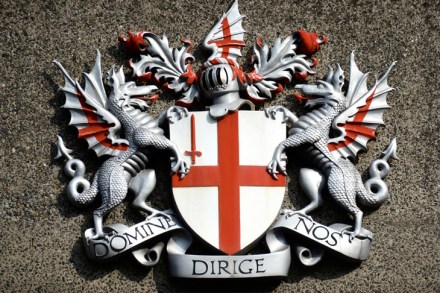
A friend of my husband’s, yet a well-educated man, said in conversation as we walked to Tate Modern: ‘Is that the crest of the City of London?’ It wasn’t just the crest, but the coat of arms of the City, the whole achievement, with shield and supporters and motto and crest and all. What is it about heraldry that makes most people unrepentantly misuse a term such as crest? It is partly that heraldry demands a completely new vocabulary, in which or means ‘gold’, proper means ‘as in nature’ and sinister means ‘the right-hand side of the shield’ (the left, of course, for the man carrying it).

Signage

From our UK edition

My husband, in company with a similarly superannuated medic on the unfamiliar London Underground, was bidden at Baker Street to ‘follow the signage’. When do signs, he wondered, become signage? At the same level, I suspect, that rooms become roomage. Hardy wrote in his beguiling way: ‘When moiling seems at cease/ In the vague void of night-time, /And heaven’s wide roomage stormless/ Between the dusk and light-time,/And fear at last is formless,/ We call the allurement Peace.’ Suffixes function in a subconscious way. We use them without explicit intent. Signage, roomage or cellarage belong to Type 1 of four types of nouns ending in -age. Signage is the whole caboodle made up of individual signs.

County lines

From our UK edition

We are suddenly all expected to know that county lines are to do with the selling of illegal drugs in rural Britain. There is, I think, a confusion built into the term, though language is capable of accommodating such inconsistencies. Most of the stuff in the papers and on television on the subject derives from County Lines, Violence, Exploitation & Drug Supply, a report published last year by the National Crime Agency. It says that the phrase county lines refers to the supply of Class A drugs ‘from an urban hub into rural towns or county locations’. It adds: ‘A key feature of county lines drug supply is the use of a branded mobile phone line.’ Just tap the number stored on your phone and the drugs come along like a pizza or Uber.

Living with

From our UK edition

I’m not at all sure about the formula a person living with, followed by something unwelcome, such as Alzheimer’s disease, HIV or psoriasis. Perhaps I should describe myself as a person living with my husband. The formula is recommended by many Aids organisations that follow the ‘terminology guidelines’ of the UN Programme on HIV/Aids. Instead of saying that someone is infected with HIV, we should call them a person living with HIV. It is meant to be less patronising and avoids suggesting someone is ‘powerless, with no control over his or her life’. No one should even be called a patient, but must be called a client, which is ‘more empowering’. Tell that to clients of Southern railways.

Turd

From our UK edition

I have never lost my admiration for Boris Johnson’s summary of British ambitions over Brexit as ‘having our cake and eating it’. It taught a generation of EU bureaucrats an important English idiom. So it is with renewed admiration, if involuntary distaste, that I regard his success in reintroducing turd into polite conversation. It has been used openly on Radio 4 at breakfast-time, ever since Mr Johnson was reported to have remarked during the Chequers cabinet meeting (or kidnapping) that defending the Brexit plan would be like ‘polishing a turd’. The Oxford English Dictionary gives the proverb ‘You can’t polish a turd’, comparing it to ‘You can’t make a silk purse out of a sow’s ear’.

Ideation

From our UK edition

‘Suicide!’ yelled my husband, while performing an inappropriate mime of a hangman’s noose. That was his reply when I asked him what ideation suggested to him. Unknown to him, ideation has, since my husband’s day, made an unlikely leap from psychiatry to management theory. ‘Management gurus,’ wrote Arwa Mahdawi in the Guardian, ‘seem inordinately obsessed with free office pizza and open-plan offices where people can bump into each other for out-of-the-box ideation opportunities.’ Ideation only means coming up with ideas. While that is essential to any business, this technical-sounding term has been recruited to the task of making it seem that coming up with ideas is scientific and susceptible to being harnessed for profit.

Azulejos

From our UK edition

A friend sent a nice postcard from Portugal showing the outside of a church covered with old blue tiles. She said it reminded her of delft ware. That word has its own historical peculiarity. We used to call it delf, as you can find in Dickens and his contemporaries. That is because the town of Delf was spelt in the same way, taking its name from its chief canal. The Dutch shared with the English (though we have largely forgotten it) a word delf meaning ‘ditch’ — something delved or dug. But then the town added a t to its name to make it Delft, and the English followed suit in the spelling of the earthenware. Anyway, the blue of Portuguese tiles is caught in an even less likely knot of language. Tiles in Portuguese are azulejos (the same word as in Spanish).

Iteration

From our UK edition

‘They should say, irritation, not iteration,’ exclaimed my husband as a voice on the wireless spoke about men’s fashion and the promise of ‘a new iteration of softer suiting’. Suiting in itself is a comical word when found outside the technical pages of Tailor and Cutter. In that respect it belongs to the same family as trouserings, which P.G. Wodehouse (already convinced that trousers are inherently absurd) liked to deploy. Bertie Wooster often referred to evening-wear trouserings. Similarly, the determinedly humorous Owen Seaman, born over an artificial-flower shop, and editor of Punch from 1906 to 1932, cheered up a parody of The Rubaiyat of Omar Khayyam with lines like ‘We sit in sable Trouserings and Boots.

Activist

From our UK edition

Rudolf Eucken had a beard and a way of tucking the ends of his bow tie under his collar that I remember Macmillan using in the 1970s. But it was in 1908, a year after Kipling, that Eucken won the Nobel prize for literature. (Anyone read a book by him?) His belief was that truth is arrived at through active striving after the spiritual life, and he called this principle activism. Within a decade, Eucken’s fellow Germans were concentrating on quite a different meaning of activism. It was the name of a movement, in neutral Sweden and among Flemish nationalists in Belgium in particular, in favour of the Axis Powers. Neither of these ideas of activism are invoked today by people who call themselves activists. Implicit in the word today is that activism is by its nature a good thing.

Unconscious bias

From our UK edition

Starbucks closed its 8,000 American coffee shops for half a day to give staff unconscious bias training. Training is to unconscious bias what Roundup is to Japanese knotweed. ‘I have to say when you get to a certain stage it is not unconscious any more,’ commented Maria Miller on a decision to appoint the only man on a five-person shortlist for a place on the Bank of England monetary policy committee. Mrs Miller herself chairs the Commons Women and Equalities committee, which has two men among its 11 members, but that’s fine.

Spasmodic

From our UK edition

To find out why the poetry of Ebenezer Jones was thought execrably bad, I turned to The Spectator of September 13, 1879. It carried a review of a new edition (encouraged by Dante Gabriel Rossetti) of Jones’s Studies of Sensation and Event, first published in 1843 and mercilessly mocked. Poor Jones had been so upset that he wrote no more poetry until the eve of his death aged 40 in 1860. It was all the worse because he’d hoped to escape through poetry the City counting house where, since he was 17 and his father died, he had slaved for 12 hours a day. Already a victim of unrequited love, he married unhappily. He suffered dyspepsia and pulmonary consumption.

Similar to

From our UK edition

I’m often annoyed by like being misused in different ways. (In place of as, for example: ‘Like I expected, he was late.’) But I’m now surprised by baffling uses of similar to. The Sun provided three examples in discussing the little internet craze for listening to an audio clip that either says ‘Laurel’ or ‘Yanny’. (If this has passed you by, don’t trouble.) ‘The Yanny v Laurel debate,’ said the Sun, ‘has taken the internet by storm — similar to The Dress in 2015.’ There I’d probably say like, or more formally as did. In a different edition, the Sun hazarded: ‘Similar to the dress colour debate way back in 2014, there is a scientific reason.’ That should be as with.

Bonkers

From our UK edition

John Kelly, the White House Chief of Staff, has a way with words. During the invasion of Iraq in 2003 he was asked if the Marine Corps forces he led might be defeated by the strong Iraqi army defending Baghdad. ‘Hell these are Marines,’ he said. ‘Men like them held Guadalcanal and took Iwo Jima. Baghdad ain’t shit.’ Now he must cope with Donald Trump. At the end of last month it was reported, from an anonymous source, that he had remarked that the President was ‘becoming unhinged’. Before midnight that day, Mr Trump tweeted that ‘the Fake News is going crazy’ and ‘are totally unhinged’. Eleven minutes later, another tweet from him said: ‘Fake News is going “bonkers”!

Paranoid

From our UK edition

I sat up with a jerk, after contemplating the wallpaper in the television dramatisation of The Woman in White, when a character wondered aloud if he was paranoid. Paranoid? How could he be? The novel was finished by 1860 and paranoid was not invented till 1902 (in a translation of a book by the psychiatrist Emil Kraepelin) Kraepelin applied paranoid to delusions in what he called dementia praecox. From 1912 dementia praecox began to be supplanted by schizophrenia. None of this was dreamt of by Wilkie Collins. The TV adaptor, Fiona Seres, would never have introduced references to Tesla cars. On the other hand, she no doubt used invisibly anachronistic turns of phrase. It’s the in-between anachronisms that catch me in the ribs.

Terf

From our UK edition

Fiore de Henriquez, a sculptor, had a wonderfully high-windowed studio at the bottom of Cadogan Square, where I sometimes visited her. She was passionate and outspoken. My husband was of course terrified of her. She did not mind mentioning that she was a hermaphrodite. ‘If God made me hermaphrodite, that is how I stay,’ she said. I mention Fiore because if she were alive today she would come in for public obloquy. Sex and gender are a battleground, and words are made shibboleths. Take terf. Terf is an unlikely acronym, deriving from trans-exclusionary radical feminist. It is a label given by their enemies to feminists who reject alliances in their struggle with people who used to be men.