David Whitehouse

Wannabes: are any of them ready?

From our UK edition

36 min listen

On this week's Edition: Wannabes - are any of them ready? Our cover piece takes a look at the state of the parties a week into the UK general election campaign. The election announcement took everyone by surprise, including Tory MPs, so what’s been the fallout since? To provide the latest analysis, The Spectator’s political editor Katy Balls joins the podcast (2:00). Then: Angus Colwell reports on how the election is playing out on social media, and the increasing role of the political ‘spinfluencer’. These accounts have millions of likes, but how influential could they be during the election? Alongside Angus, Harry Boeken, aka @thechampagne_socialist on TikTok, joins us to share their thoughts on who is winning the social media war (15:08).

The moon matters to China

From our UK edition

China’s Chang’e-6 moon mission was launched on 3 May. It reached lunar orbit a few days later and began waiting for sunrise over its landing site on the moon’s far side. Chang’e-6 is named after the Chinese goddess of the moon and it will land on Sunday in a crater called Apollo – an ancient double-ringed walled plain caused by an asteroid smashing into the young moon. Apollo has been heavily damaged by subsequent impacts and in many places covered with lava flows and sprinkled with particles from newer impacts. It is as Buzz Aldrin said, a magnificent desolation. It is a region of great geological significance, since it contains rocks from the moon’s lower crust and the deeper mantle – a treasure trove of planetary history.

Will Biden support Ukraine’s attacks on Russia?

From our UK edition

46 min listen

This week: will Biden support Ukraine’s attacks on Russia? Owen Matthews writes the cover piece in light of the Zelensky drone offensive. Ukraine’s most successful strategy to date has been its ingenious use of homemade, long-range drones, which it has used to strike military targets as well as oil refineries and petrol storage facilities in Russia. The strikes are working but have alienated the US, who draw a red line when it comes to attacks on Russian soil. Owen joins the podcast alongside Svitlana Morenets, author of The Spectator’s Ukraine in Focus newsletter to debate what comes next.

Farewell, Voyager 1

From our UK edition

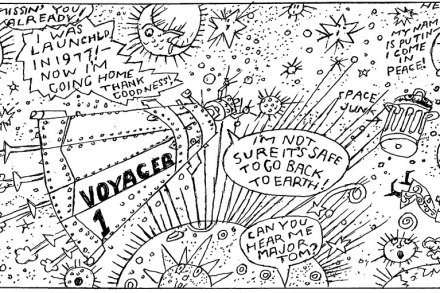
Some time soon we will have to say farewell to our most distant emissary – the Voyager 1 spacecraft. After almost 50 years in space, it’s 15 billion miles away and showing signs of wear and could soon stop transmitting. Late last year, Voyager 1 began to decline, sending back spools of gibberish to its handlers on this planet. A few days ago, Nasa engineers finally traced the problem back to a single chip but it’s clear that Voyager 1 will shortly have to cut contact and make its way out across the universe on its own. It’s strange to think that it will be exploring on out into deep space long after its makers – humans – have become extinct.

The truth about the global warming pause

From our UK edition

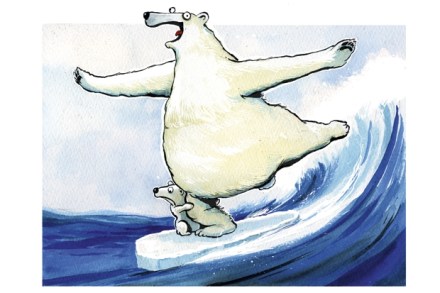
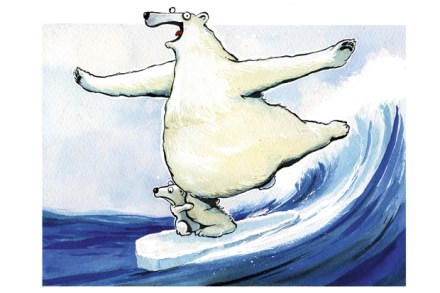
Between the start of 1997 and the end of 2014, average global surface temperature stalled. This 18-year period is known as the global warming pause, also sometimes referred to as the global warming hiatus. The rise in global temperatures that alarmed climate campaigners in the 1990s had slowed so much that the trend was no longer statistically significant. It has been the subject of much research and debate in peer-reviewed scientific journals. [caption id="attachment_9890412" align="alignnone" width="620"] Global surface temperature between January 1997 and December 2014[/caption] Then, in the spring of 2015, El Niño, a warm ocean phase in the equatorial Pacific developed. It rapidly drove up global temperatures by 0.5°C in less than a year.

The death of the global warming ‘pause’ has been greatly exaggerated

From our UK edition

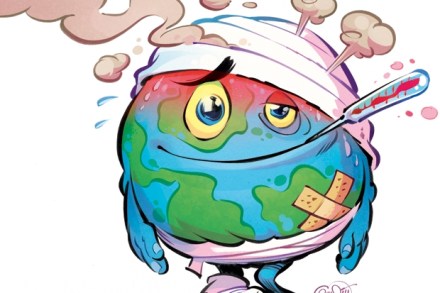
The global warming 'pause' never existed, say the headlines. It's a claim that has been made before, only to be refuted, yet now it's back again. If there is one topic that sends a small subset of climate scientists' temperature into the stratosphere, it's the topic of the global warming 'pause' or 'hiatus'. This is the idea that global surface temperatures haven't changed much for almost 20 years. Never in my experience of science have I come across a topic like it, and that's because it means nothing, and everything. Global warming is about energy imbalance. Greenhouse gasses stop heat leaving the earth, so the planet is getting warmer. This is fundamental physics. Temperature goes up; oceans warm up, expand and sea level rises; pole caps melt.

The alluring prospect of life on Mars

From our UK edition

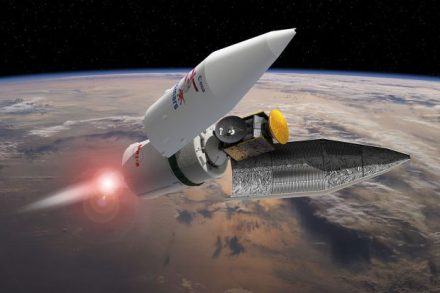
If you happened to be standing today on the reddish sand of Meridiani Planum - a vast, flat, expanse just south of the Martian equator - you might well spot a dark spec in the distance against the peach-coloured sky, moving towards you. In the next few hours, the European Space Agency's Schiaparelli probe will make its final, six-minute decent through the Martian atmosphere. If it succeeds in touching down safely, the probe will be one of the very few to make it to the Martian surface. But after a journey of 500 million kilometres, it's only then that the probe's work will really start: scientists hope the Schiaparelli lander will act as a Martian weather station, sending data all the way back to earth in preparation for a future, more ambitious probe.

A new paper in a prestigious journal proves a 15-year hiatus in global warming. Why is it being ignored?

From our UK edition

This article, in Nature magazine, ought to have been front page news - and might have been, had it suggested that global warming was worse than we had thought.  Instead, it underlines the sound science behind an inconvenient truth: that there has been a 15-year hiatus in global warming. To those of us who have been following the debate, this is no surprise. In 2007 I pointed out that it was curious that in recent years the global annual average temperature had not increased at a time when greenhouse gasses were increasing rapidly and when the media was full of claims that the earth's temperature was getting higher and higher. I proposed no explanation but said that it was a curious observation that would probably change in the near future.

In defence of Nigel Lawson, and his fellow climate sceptics

From our UK edition

Some people find climate change ‘deniers’ the most irritating people on God's green earth. On her Telegraph blog Martha Gill equates them with flat-earthers, which says a lot for the depth of her analysis. She points to a piece on the Huffington Post by Bob Ward of the Grantham Research Institute on Climate Change and the Environment (funded by billionaire Greenpeace contributor Jeremy Grantham, who also sponsors an $80,000 prize for environmental reporting – which this article will stand no chance of winning) and says it demolishes the deniers’ arguments. The problem is that it doesn't. Those who think ‘deniers’ are a problem and seek to put them down are in doing so misrepresenting the science they want to uphold.