David Butterfield

David Butterfield is professor of Latin at Ralston College, senior fellow at the Pharos Foundation, literary editor of the Critic and editor of Antigone.

A tribute to Woolworths, the naff hero of the high street

From our UK edition

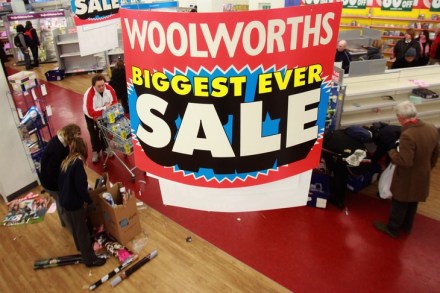
Won’t somebody think of the Woolwennials this weekend? Precisely one decade has passed since Britain lost the true hero of the high street. And for those aged over 24, whose childhood weekends were wasted in its labyrinth of kitsch, this Woolworths anniversary stirs up communal grief. So spare a knowing nod to fellow rustlers of the DVD bargain-bucket, a reassuring squeeze to the hand clutching the cola-bottle scooper, and a sympathetic cheek-stroke to the vacant-eyed browser of discounted superhero pyjamas. Together, somehow, we’ll muddle on. Nostalgia, like love, is blind – and the world is filled with hackneyed wasn’t-it-wonderful articles of bygone Britain. And, yes, Woolworth worship is the very stuff of satire.

What’s the truth about university grade inflation?

From our UK edition

It's a well-worn complaint that universities are dishing out firsts as never before. Today, a report by the Office for Students (OfS) confirms the true extent of 'grade inflation' at our universities: 124 of the 148 higher-education providers they assessed in England show ‘a statistically significant unexplained increase’ in the proportion of firsts and 2.1s awarded, compared with figures in 2010-11. Between 2011 and 2017, the average percentage of firsts and 2.1 degrees rose from 67 per cent to 78 per cent. The figures uniformly document the same upwards trend.

No satisfaction

From our UK edition

Should university students really feel ‘satisfied’? Or would we rather they felt challenged? For the honchos of higher education, the answer is clear — and alarming. The National Student Survey (NSS), which was introduced in 2005, collects data that allows crude comparisons to be made between universities. The survey asks 300,000 final-year undergraduates to answer 27 questions about their experience of teaching, academic support, assessment and feedback. Some of these are entirely unproblematic: all universities should want students to find that ‘staff are good at explaining things’, or that feedback on work has been ‘timely’. But others are double-edged.

Gordon Brown still hasn’t learned his lesson from Bigotgate

From our UK edition

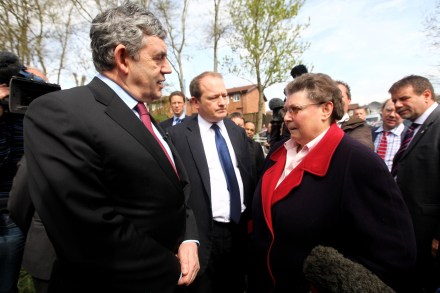
As Gordon Brown’s new memoir, My Life, Our Times, sends mild ripples across the political play pool, the rest of the country tends to its own business. But there’s an episode from Brown’s turbulent spell as Prime Minister that merits revisiting: ‘Bigotgate’. Not only was it the moment that perhaps secured Labour’s dramatic fall from power but Brown’s finessing of what happened has worrying signs for politicians’ private frankness. You remember it well: while pressing the flesh in Rochdale as part of the 2010 election campaign, Brown found himself in conversation with a lifelong Labour voter. For a savvy politician, this was a golden opportunity to play the crowd and reiterate the party’s core beliefs.

British street names

From our UK edition

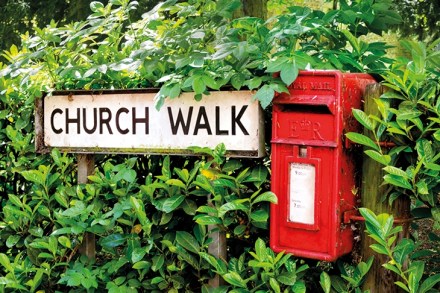
You know where you are with a British street name. I don’t mean literally. I mean there’s a tacit humility to our islands’ hodonyms: they are short, simple and unpretentious. Not for us the long-winded commemorations of national heroes or local worthies: no Avenue du Révérend Père Corentin Cloarec or Burgemeester Baron van Voerst van Lyndenstraat. Our street names are soundest away from the city. The High Street is thriving: it’s the commonest name in England and Wales, while Main Street leads the field in Scotland. Great Britain has some 3,600 of the two. A ‘street’ used to refer to a properly paved road, a practice imported by the Romans for their great connecting roads (Watling, Ermine, Stane, Dere).

No mere Spectator

From our UK edition

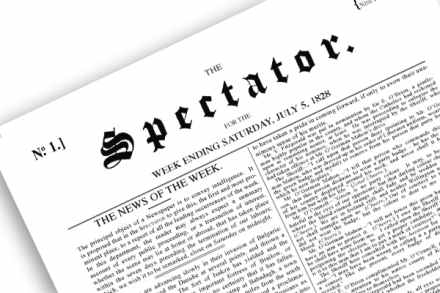
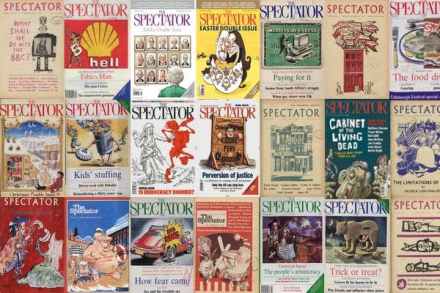
Although The Spectator (literally) defined ‘The Establishment’, it has never been its organ. In fact, it was founded as a vehicle for root-and-branch reform that sought from the outset to upend the establishment. Its first editor, the Scottish firebrand Robert Stephen Rintoul, argued that, in spite of the magazine’s pointedly chosen title, ‘It is difficult to be a mere spectator in times like these.’ Its pages complained bitterly about an out-of-touch establishment: that too many ‘of the bons mots vented in the House of Commons appear stale and flat by the time they have travelled as far as Wellington Street’. The remedy it sought was the Great Reform Act, whose passage in 1832 it helped secure.

Are grammar schools unfair?

From our UK edition

Those dread words ‘Grammar schools’ are back in the news again. The education secretary, Damian Hinds, has today announced a new fund that will allow established academically selective schools, i.e. the 163 grammars clustered around the country, to found new ‘satellite’ schools. The proposal could increase pupil numbers at grammar schools by 16,000 over the next four years. The news has been met with the typical mixture of surprise and outrage; amidst the tried-and-tested to-and-fro, it is hard to find much reasoned and sustained argument. Everyone, it seems, knows where they – and everyone else – stand. But, dig a little deeper into the issues at stake, and Hinds is found to be asking the nation the two difficult questions it needs to answer.

How the spirit of The Spectator dates back to 1711

From our UK edition

Few sights are commoner in the second-hand bookshop than battered sets of the eighteenth-century Spectator. Common enough too is the misconception that these elegant octavos formed the first instalment of the magazine you are now browsing. A moment’s investigation will prove that the two are entirely distinct. Look closer, however, and the modern Spectator reveals how much inspiration it drew from its predecessor – and not just in name. Although the original Spectator flourished so briefly, emerging on 1 March 1711 before disappearing on 6 December 1712, its influence was instant and immense. After the Bible, no prose work was as ubiquitous in Georgian libraries. The collection of 555 diurnal essays delighted readers with urbane observations on matters trivial and serious.

Are we entering a golden age of backbench politics?

From our UK edition

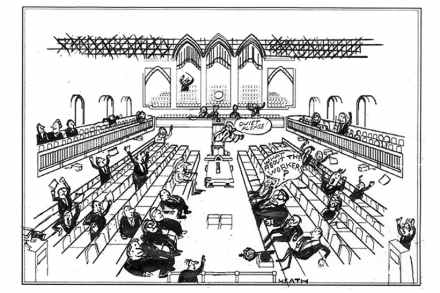
It’s been a while since the young H.H. Asquith told Spectator readers that ‘no third Party has ever been able to stand its ground in England.’ His leader, ‘The English Extreme Left’, appeared in 1876, when the enervated Liberal Party seemed destined to split. His core contention was that Britain would not, in fact could not, brook multi-party politics: For the last two hundred years there always have been two great Parties, and two only; and though that is in itself no reason why a third should not now be formed, it is a very serious practical obstacle in the way of its success. Parties, like other institutions, at any rate in England, grow, and are not manufactured.

A reason to be optimistic in 2018 – from The Spectator in 1847

From our UK edition

2018 will doubtless be a stiff test for the UK – but there’s nothing new in that. When The Spectator ushered in 1847, for instance, its founder and editor R.S. Rintoul (1787-1858) used that year’s opening column to outline the looming challenges and reaffirm the country’s urgent need of strong and capable leadership: The New Year opens for England with heavy clouds in the sky, but with no sunless horizon. Never did the country enter upon a year with more work to be done. Ireland alone presents a task without precedent: England has there to reorganize an old country... The progress of the new Free-trade policy has to be looked after. The public law of Europe is unsettled, and an eye must be kept on that.

The Guardian’s tabloid switch is a big mistake

From our UK edition

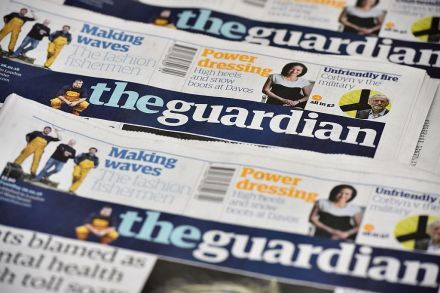
'Since you’re here...we have a small favour to ask’. These words may ring a bell for you – or just sound the spam alarm, coming as they do at the end of any Guardian online piece. For times are hard in Graunville: in recent years, the Guardian has lost tens of millions annually and, as a result, the paper has got out the begging bowl. Now its editor, Katharine Viner, has announced the latest cost-cutting ruse: lopping the paper down – from January next year – to a tabloid format. This is a great shame. Viner claims that the shrinkage would preserve ‘the same amount of journalism’ and went on to justify the change by saying: The role of a newspaper in people’s lives is changing all the time.

The Watford Gap

From our UK edition

In a shallow dip between two unremarkable Northamptonshire hills you will find a road, a motorway, a railway and a canal jostling for position. It is neither a place of natural beauty nor a spectacle of human ingenuity. Yet it has been the subject of books, art exhibitions, pop songs and even a (mini) musical. This is Watford Gap, a three-mile break in the limestone ridge that runs from the Cotswolds to Lincolnshire. Perched between Daventry and Rugby, it subtly marks the watershed of the Nene and Avon to the east and west. However understated the depression geographically, it’s of high status culturally. For this is the gateway between the South and All Things North: the Midlands, northern England and Scotland.

The Spectator’s support for free trade is nothing new

From our UK edition

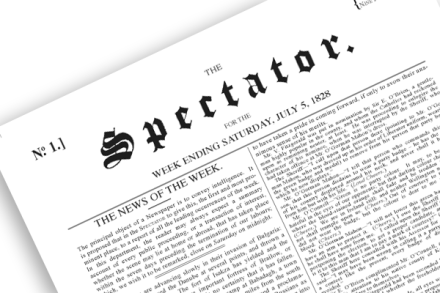
Free trade hasn’t always been a British tradition. When the first issue of The Spectator hit the newsstands in July 1828, the country was firmly under the thumb of the Corn Laws. Introduced in 1815 to protect the vested interests of the land-owning classes, these measures propped up the price of British grain, artificially high since the disturbance of the Napoleonic Wars. Protectionism was proving profitable: in June that year, the palatial London Corn Exchange was opened; in July, Parliament readily approved the Duke of Wellington’s Corn Bill, which introduced a sliding scale of duties that continued to prohibit free access to foreign grain.

Persistent buggers

From our UK edition

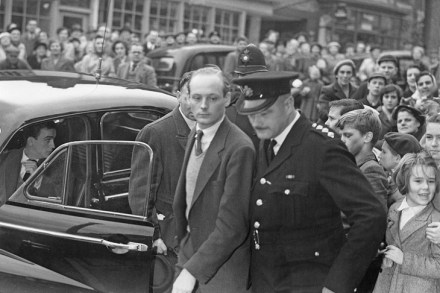
The credit for decriminalising male homosexuality in 1967 — for those over 21 in England and Wales at least — goes to Harold Wilson’s government, the Labour MP Leo Abse, and the Conservative peer Arthur Gore, 8th Earl of Arran. Yet more than a decade before the Sexual Offences Act received royal assent, a journalistic campaign to overturn an unjust and unworkable law had begun in the pages of The Spectator. After the dust had settled in post-war Britain, disparate MPs held the sincere but mostly tacit belief that the law criminalising homosexuality desperately needed amendment, if not scrapping entirely.

Persistent buggers: how The Spectator fought to decriminalise homosexuality

From our UK edition

Fifty years ago today, on 27 July 1967, the Sexual Offences Act received royal assent, at last decriminalising male homosexuality - for those over 21 in England and Wales, anyway. The credit for finally getting the bill through Parliament is due to Harold Wilson’s Labour government, inspired by the strenuous efforts of the Labour MP Leo Abse, and the Conservative peer Arthur Gore, 8th Earl of Arran. However, a journalistic campaign to overturn an unjust and unworkable law began with The Spectator, which had for the previous dozen years been the lead supporter of the cause in the press.

Would Jane Austen be amused or bemused by her £10 note quotation?

From our UK edition

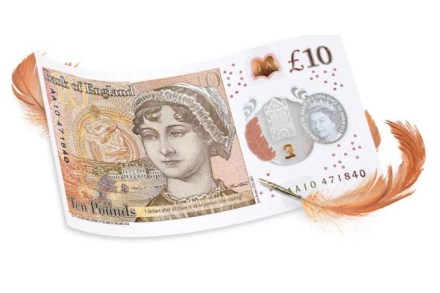
So, the new tenner has been unveiled today. Two centuries after her death, Jane Austen replaces Charles Darwin, who has enjoyed a 25-year sojourn with his hummingbirds. And yet it feels like this new note has been in the air for a while, though obscured by the hazy fug of controversy. First there was the (largely vegan) stew about animal tallow remaining part of the production process. All protests about what we’re doing with the natural world are worth hearing, so long as they are proportional. Quite what percentage of society occupies the intersection of the Venn diagram where strict boycotters of plastic bags, soap and cosmetics overlap with those who shun vehicular transport (tyres), candles and latex, I’m not sure.

Why The Spectator is the world’s oldest weekly magazine

From our UK edition

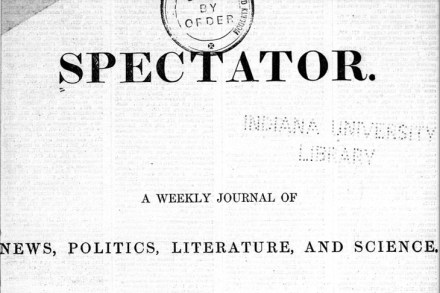
Founded in 1828, The Spectator has been proud to describe itself as ‘the oldest continuously-published weekly in the English language’. But this is rather modest, for it is both the oldest weekly magazine in the world, and the oldest general-interest magazine continuously in print. Yes, the internet is full of claims and counter-claims in this most competitive of fields, but the facts prove to be unambiguous. First things first. The oldest cultural and literary magazine that is still on the go is the Serbian monthly Letopis Matice srpske, which first appeared in 1825, three years before The Spectator. However, this magazine has had a number of breaks in publication: it didn’t appear in 1835-6, 1849 and 1942-5, a total of some six years.

She-devils on horseback

From our UK edition

Rumour will run wild about a society of warrior women, somehow free from the world of men. We all feel we know the Amazons, even if we struggle to connect them with the planet’s largest rainforest, river and internet company. But the historical reality of that thrilling and threatening tribe proves to be elusive. Even two millennia ago, the Greek geographer Strabo marvelled at his fellow men’s credulity about the Amazons: ‘the same stories are told now as in early times, although they are wondrous and beyond belief.’ Now John Man, the enthusiastic historian of Asia, dissects the Amazons with sharp scalpel and acute scepticism.

Theresa May isn’t the first to make the mistake of claiming to be ‘strong and stable’

From our UK edition

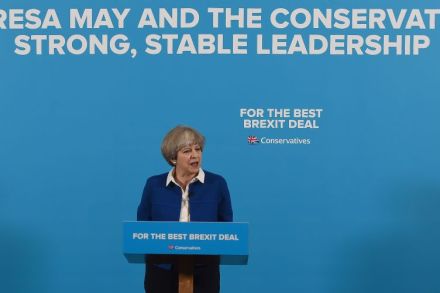
Theresa May's ‘strong and stable’ strapline has apparently been withdrawn after the electorate started to sway with nausea. Yet the words remain emblazoned on the ‘battle bus’, still crop up in interviews, and continue to litter campaign material across the country. To little effect. The phrase was soon found to be a blunt weapon, not cutting through to voters but bludgeoning them into a stupor. To be ‘strong and stable’ is so self-evidently desirable that to say so is vacuous and empty. In fact, as we have seen, this limp phrase has recently rebounded with some force: ‘strong and stable’ has become the benchmark against which to judge a Prime Minister stymied by handbrake U-turns and dithering imprecision.

Writing wrongs

From our UK edition

Does anyone still care about handwriting? Although it was for centuries the medium and motor of daily life, handwriting has become, like public libraries and secondhand bookshops, a rare sight. One in three British adults now uses pens only to sign their names. Starved of opportunity, most people’s writing has regressed into a near-illegible scrawl. When even the leader of the opposition confesses that he can’t read his own writing, something is up. So should we cut our losses and follow Finland, which since 2015 has taught keyboard lessons in lieu of handwriting? Emphatically not. Handwriting remains the most cogent vehicle for personal expression. If we let the skill lapse, we all lose out.