David Blackburn

No way to lead a nation

From our UK edition

It's been terrible a morning for Gordon Brown in the editorials and on the front pages. And David Cameron, scenting blood, has condemned Gordon Brown’s leadership over the al-Megrahi affair. These pieces share the same basic analysis: Brown’s calculated caution is the cause of his problems. John Rentoul, admittedly no fan of the PM, writes in today’s Independent: ‘This has everything to do with a pattern of behaviour, an inbuilt caution that served Brown well enough on the road to No 10, but which is disastrous in anyone actually holding the top job.

Brown faces another backbench revolt  

From our UK edition

Despite protesting to the contrary, it turns out the government have been cutting all along. The Times reports that, buried in the small print of the budget, there is a commitment to abolish the £780 per year surplus housing benefit allowance, which encourages families to pay their rent and trade quality of accommodation for cash. These changes come into force on April 1, probably a month before the election. Labour backbenchers condemn the saving, worth £160 million per year, and plan to table amendments. Frank Field, who draws a comparison between this cut and the 10p rate revolt, tells the Times:  “At one stroke, they get rid of a reform aimed at getting flexibility into a fairly inflexible market by giving people incentives to shop around.

Delicately poised in Scotland

From our UK edition

Despite a week of international codemnation, a YouGov poll shows that 42 per cent of Scottish voters still agree with Kenny MacAskill’s decision to release al-Megrahi, whereas 51 per cent oppose it. Channel Four’s Gary Gibbon notes that this undermines Labour’s arguments that the SNP’s decision is not backed by the Scottish working class, and that Labour will find the Glasgow North East by-election hard going. I’m not so sure. Clearly it’s going to be tight, but Labour will take heart from this poll, which also reveals voting intentions. The SNP is down 6 points to 33 per cent and Labour is up 5 to 33 per cent. It was expected that the al-Megrahi decision could end up doing the SNP more harm than good.

The case for naval investment

From our UK edition

Over at ConHome, Tim Montgomerie debates Will Inboden’s review of the main themes of the Tories foreign policy. I urge CoffeeHousers to read both articles, but the section on the relationship between energy and defence struck me particularly, recalling Liam Fox’s 2006 Chatham House speech on the subject. Here’s the premise of Fox’s argument: “We are all competing for the same natural resources to feed the economic system. The potential for terrorists or even nation states to interrupt this supply to cause widespread – rather than just local – disruption increases enormously.” Fox pointed out that global energy competition requirements had evolved beyond Britain’s defence strategies and capabilities.

We’re all Lib-Cons now

From our UK edition

In an article in this morning’s Guardian, Geoffrey Wheatcroft voices his concern that the Tory party is becoming infested with Blairite neo-conservatives. Here is the crucial passage: ‘And yet Gove – who is "happy to be called a neocon" – insists that Cameron has "given the strongest possible support for our mission in Afghanistan", which is "part of a broader struggle against Islamist fundamentalism". Those words must make anyone despair, and certainly think twice about voting Tory.’ Foreign policy is one issue where Cameron is emphatically not the “heir to Blair”.

Senator Edward Kennedy, 1932 – 2009

From our UK edition

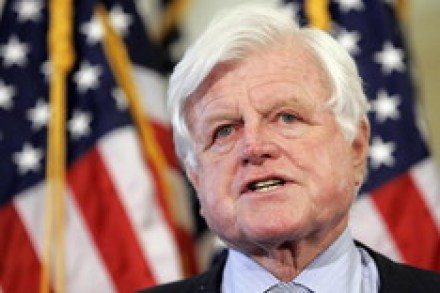
Teddy Kennedy has died aged 77 after a battle with brain cancer. Kennedy was a towering member of the senate for nearly fifty years. Even after the centrist “New Democrats” had abandoned them, Kennedy championed the American Left’s traditional causes, such as healthcare provision, which he described as “the cause of my life”. He was integral to the passage of civil and labour rights legislation, and worked to limit global nuclear proliferation. In 1980, Kennedy lost the Democrat nomination to incumbent President Jimmy Carter; others might have retired, but the Senator continued to fight inequality up to his death. Explaining his motivation, he told Reuters in 2006: “There’s a lot to do.

It’s written in the stars

From our UK edition

The gods of fortune have spoken: Gordon Brown is not finished. According to the Independent’s Andrew Buncombe, an Indian astrologer has cast the embattled PM’s horoscope and predicts that we “can expect sudden positive changes in the economy from 19th November 2009”; that Mr Brown will win the election; and that “the year 2011 will be the best year of his lifetime, with many achievements”. “Why must the British people endure another term as tennis balls for the gods’ sport?” I hear you ask. Well, because Gordon’s got good karma - the position of the moon in his chart suggests that Brown “did good for the marine animals” of yesteryear. Lucky old them - wherever they are now, I'm sure they're pitying us.

Brown breaks his silence

From our UK edition

At last, Gordon Brown has something to say about the Lockerbie bomber’s release. He said he was “angry and repulsed” by the welcome the Lockerbie bomber receive in Libya. And he also added: “I made it clear to Gadaffi in July that we could have no role in the release of al-Megrahi”. This doesn't draw a line under the controversy. As William Hague has argued, the story is now about why it took Brown so long to say those few words and still managed to say nothing. And he hasn't answered any of the serious questions being asked of the government.

A very risky strategy

From our UK edition

Labour’s attempt to create a new dividing line on cuts is intriguing because it suggests that the government reckons we are pulling out of recession – a message Alistair Darling has been stressing recently. Central to Labour’s argument is that their initial interventions, opposed by the Tories, preserved public services through the recession. By claiming that now is the time to make extensive cuts, beyond mere efficiency savings, suggests that they think the economy is robust enough to survive sweeping public spending cuts. If an economic boom couldn’t save John Major, I doubt a modest recovery will save Brown from defeat.

Would Cameron govern differently?

From our UK edition

In an episode of Yes Prime Minister, a tobacco mogul asks Sir Humphrey: “Does he carry any clout in Whitehall?” The Mandarin replies: “None at all, he’s only a minister.” The context has changed but the essential truth remains – most Cabinet ministers have no clout in government whatsoever. That at least is the view of four former Sir Humphreys. Lords Turnbull, Wilson, Butler, and Armstrong are quoted in the Guardian saying that New Labour has centralised government around a clique of special advisers. The result? The marginalisation of the cabinet and the breakdown of what they term ‘the efficient and proper conduct of government’.

There’s no one like Macavity

From our UK edition

Paul Waugh’s spot on: Brown has been reluctant to congratulate England for their Ashes victory because he is so desperate to avoid being dragged into the international furore surrounding al-Megrahi's release. A Number.10 spokesman described Kenny MacAskill’s release order as a “uniquely sensitive and difficult decision" and one that (surprise, surprise) was taken completely independently of the British government. But, as yet, Macavity's not here. I suppose I could be doing the PM a disservice. Braying about our Ashes victory would, of course, be uniquely insensitive to our Australian brothers. And besides, giving congratulations is probably someone else’s job.

Cameron must set out health plans

From our UK edition

For some time now at Coffee House, we’ve questioned the sense of Cameron’s pledge to increase NHS spending in real terms. And in today’s Independent, a ComRes poll suggests that 62 percent of Tory MPs do not think the NHS should receive guaranteed spending increases. Indeed, their opposition to Mr Cameron’s plans runs deeper: only 33 percent believe the current model of care free at the point of delivery is sustainable. Additionally, the Independent quotes an anonymous Tory MP saying:  "The hope is that we would be more radical on health in office than we say now, that he [Mr Cameron] is anxious not to frighten the horses. But there are concerns about cutting other areas and allowing the health budget to carry on rising regardless.

Thank God they’re not running a war

From our UK edition

Last week, defence maestro Kevan Jones launched his master-strategy to smear General Sir Richard Dannatt. It was ingenious. An FOI request would reveal the General to be a spendthrift, abusing taxpayers' generosity by lavishing their money on his grace and favour accommodation and on raucous parties for his army mates. To borrow a phrase, there was just one small flaw in the plan: it was rubbish. The Mail reveals that General Dannatt’s grace and favour apartment is a stable block, not a palace, and that he pays tax on it because he views it as a perk. His other claims are modest. Audiciously, Sir Richard secured £19,270.77p in expenses between 2005 and 2009.

The stench of realpolitik

From our UK edition

Suggesting that al-Megrahi’s release was the result of a deal being struck to protect commercial interests should be offensive, but there are a number of questions the government need to answer. First, was al-Megrahi’s transfer a condition of the Blair-Gadaffi Deal in the Desert? On Friday, Saif al-Islam said: “In all commercial contracts for oil and gas with Britain, Megrahi was always on the negotiating table”. The Foreign Office deny this and yesterday Lord Mandelson said: “The issue of the prisoner’s release is quite separate from the general matter of our relations and indeed the prisoner’s release has not been influenced in any way by the British government.

MI6, insider dealing and robbery: it’s another Harold Wilson conspiracy theory

From our UK edition

The timing of Harold Wilson’s resignation on March 16 1976 is an enduring mystery and conspiracy theories abound. Had the onset of Alzheimer’s unnerved him? Was he about to be denounced as a Soviet spy? There’s even a preposterous suggestion that Lord Mountbatten gave up his regular lunches with Barbara Cartland to plan a military coup against Wilson. The eminent lawyer, Sir Desmond de Silva, adds a further theory in today’s Times: stolen documents proving that Wilson was involved in insider trading were for sale to continental magazines, and that might have forced Wilson out. Sir Desmond, who later defended one of the alleged thieves, said: “I had known nothing about this burglary.

The ‘Dear Leader’s Children’

From our UK edition

A major political headache is how to ensure the recession doesn’t claim another lost generation. Official figures suggest that nearly 1 million people under the age of 25 are already on the dole, with a further 1.5 million being economically inactive. These figures will only get worse. Polly Toynbee thinks that Germany is pulling out of recession because they have the answer: ‘Labour's efforts are directed towards getting people into work. But Germany focuses on stopping people falling out of work, by contributing to wages. A study this week says a ¤6bn scheme prevented a major rise in unemployment, and helps explain why Germany is already pulling out of recession.

Widdecombe: I’ve just had enough

From our UK edition

It's worth reading Iain Dale’s interview with Ann Widdecombe in the latest issue of Total Politics. Widdecombe is, of course, standing down at the next election, and much of the interview concerns her future plans: she wants to appear on Strictly Come Dancing, for instance, perhaps as the feminine answer to John Sergeant. But, naturally, the outspoken MP makes some forceful points about the current state of British politics. Her conclusion?  That things are so bad she’s had enough. First, she attacks Cameron’s ‘A-list’ candidate selection policy: ‘We have gone for category rather than ability. We're looking for more women.

A man of few words

From our UK edition

The Evening Standard reports that General Sir Richard Dannatt is “absolutely unrepentant” about demanding better equipment for British forces serving in Afghanistan. Attending a Help for Heroes charity event, he said: "We have got some very good equipment but with an increase in the forces overseas, we have got to get more out there." He doesn't say much, but every time Dannatt opens his mouth the contrast between his no-nonsense honesty and the connivances of defence ministers becomes starker. And, because the government’s response is so infantile, Dannatt’s few words are doing Gordon Brown potentially irreparable damage. Sir Richard is yet to elaborate on what it is that blocks the transfer of equipment. But there’s no smoke without fire.

Why global climate change policy must change 

From our UK edition

A co-founder of Greenpeace, Rex Wayler, wrote last December: ‘We’re not going to recover from global recession by consuming more resources and energy. Growth cannot solve the problems created by growth.’ Austerity is the key to an environmentally friendly future. In today’s Times, Oliver Kamm brands this smug and inflexible assumption as counter-factual – that economic consumption and growth will drive human ingenuity to find alternatives to the finite and environmentally damaging carbon economy. Here are the important sections:    ‘Green campaigners are rightly concerned with environmental degradation. There is copious evidence of global warming due to man-made emissions of carbon dioxide and other gases that trap heat.

July budget deficit is the largest since records began 

From our UK edition

The figures for last month’s borrowing are terrifying. In a month when revenues are supposed to exceed spending, the government borrowed £8.016bn. As ever, John Redwood has some incisive analysis: ‘In the April-July period last year the government borrowed an extra £16 billion. This year they have borrowed an extra £50 billion. It means we are on course to exceed the eye wateringly large sums they forecast for this year’s total borrowing. Spending is up a massive £19 billion on last year in the first four months, and revenue is down a predictable £21 billion thanks to the VAT cuts and the fall in activity. No wonder the Governor thinks we ought to print some more money - who is going to lend us all this?