Daniel Rey

Daniel Rey is the author of 'Checkmate or Top Trumps: Cuba's Geopolitical Game of the Century'. He lives in New York.

Book banning has come back to bite US conservatives

From our UK edition

If you thought American book-banning couldn’t get any more ridiculous, think again. A school district in Utah, one of the most religious states in the country, has banned the Bible.  The Bible – fundamental to the state’s Protestant, Catholic and Mormon churches – is to be removed from elementary and middle school libraries for containing ‘vulgarity or violence’. The authorities for the school district of Davis County, just north of Salt Lake City, upheld a parental complaint that the Bible contained ‘incest, onanism, bestiality, prostitution, genital mutilation, fellatio, dildos, rape, and even infanticide’. The parent, who attached an eight-page list of verses unsuitable for children, wrote: ‘Get this PORN out of our schools.

Test cricket is being sabotaged

From our UK edition

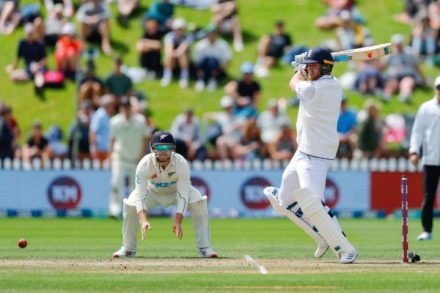
Test cricket should be in its prime. England is the most aggressive team in history, India and Australia are uncommonly good, and New Zealand has just played two of the most exciting matches of all time. Yet from Marylebone to Melbourne to Mumbai, administrators are sabotaging cricket’s finest form.  Every cricket lover knows that the charm of the five-day format relies on pitches that provide a balance of power between bat and ball. Too many pitches this winter failed to meet that basic requirement. Australia played South Africa on an overgrown Queensland meadow and won within two days.

Mario Vargas Llosa’s Damascene conversion to liberalism

From our UK edition

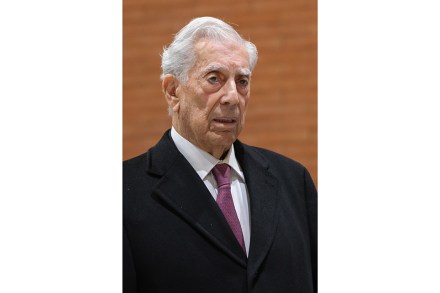
Mario Vargas Llosa wasn’t always a liberal. From his youth until his early thirties the Peruvian writer, born in 1936, was enthused by the utopian promises of socialism. He joined a communist cell at university, and in the 1950s spent half his salary on a subscription to Les Temps Modernes, the leftist journal founded by Jean-Paul Sartre and Simone de Beauvoir. Vargas Llosa’s world view changed radically in the late 1960s, as he watched the Cuban revolution silence local writers and put homosexuals in forced labour camps. During a visit to the USSR in 1968, he realised that had he been a Soviet citizen his disregard for authority would have condemned him to the gulag.

A bitter sectarian divide: Young Mungo, by Douglas Stuart, reviewed

From our UK edition

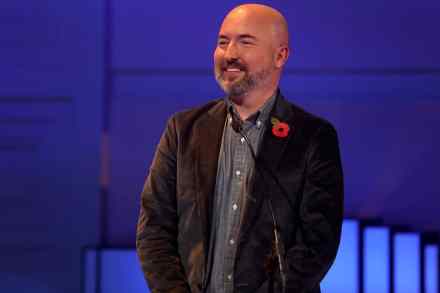
Douglas Stuart has a rare gift. The Scottish writer, whose debut novel Shuggie Bain deservedly won the 2020 Booker Prize, creates vivid characters, settings and images without letting his literary skill get in the way of plot. His second novel, Young Mungo, has a similar feel and is in many ways a kind of sequel. The characters are different, as is the Glaswegian housing scheme and the year – we are now in 1993 rather than the 1980s – but the milieu is familiar. The protagonist, Mungo Hamilton, is a frail, fatherless 15-year-old, but appears much younger. His complexion, vocal tic and poor-fitting clothes lead people to think he’s ‘thirteen, tops’.

Emperor for three years: the doomed reign of Maximilian I of Mexico

From our UK edition

On 8 April 1864 an Austrian archduke with a penchant for daydreaming agreed to be emperor of Mexico. As Edward Shawcross describes in his majestic history The Last Emperor of Mexico, the process to install Maximilian of Habsburg began two and half years earlier. The plan was proposed by a determined clique of Mexican Conservatives and developed by Napoleon III, the scheming emperor of France. The Conservatives, who had just lost a four-year civil war, wanted to repeal the Liberal constitution that confiscated the assets and privileges of the Catholic church. They saw Maximilian as a symbol of the imperial family that had brought the faith to Mexico. Napoleon III, who wanted to expand French influence and trade, saw a potential puppet.

Why England lost the Ashes

From our UK edition

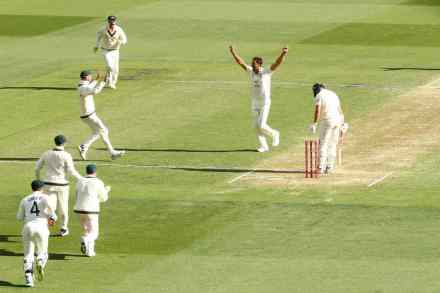
England’s wretched performance in the Ashes – which saw the side lose three tests and so the series to Australia last week – has been more abject than even the most inspired pessimist could have imagined. No sane observer expected England to win against Australia, but to lose the five match series little more than two days into the third test was a pitiful show. Inevitably, even as England continue to play the fourth test this week, there have been calls for a cricketing inquest. The standard of the domestic game, the structure of the English season and England’s pivot towards the one day and T20 formats are all expected to be blamed for the woeful performance.

A fatal clash of civilizations

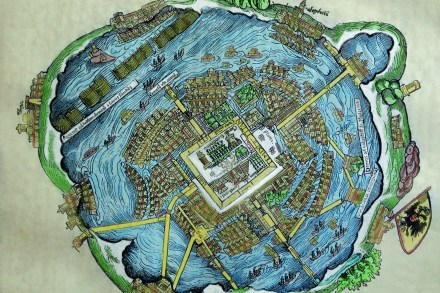
Many books claim to describe junctures that changed the world, but few examine ones as consequential as Conquistadores. Hailed by the Romantics as courageous explorers, the Spanish conquerors are increasingly seen as violent and rapacious exploiters. That, says Fernando Cervantes, oversimplifies the complexities of the early modern period. Cervantes, a Mexican historian, places the conquest of the Americas in Spain’s political context. In 1492, at great cost to the royal purse, Spain recovered Andalucía from the Moors. So when a charismatic Genoese navigator proposed to sail southwest in search of a new trade route to Asia, Ferdinand and Isabella approved. Columbus’s voyage was the first step to transforming a young nation into the greatest imperial power on Earth.

Conquistadores

What was the point of the war in Afghanistan?

From our UK edition

On 7 October 2001 President George W. Bush launched Operation Enduring Freedom – the invasion of Afghanistan. The operation sought to bring the architects of 9/11 to justice and reduce the threat of terrorism. Twenty years later, President Joe Biden has pledged to withdraw all troops from Afghanistan by 31 August, bringing to a close the United States’s longest-ever conflict – known colloquially as ‘the forever war’. But Biden, who supported the invasion, is pulling out at a time when the Taliban – the highly-conservative Islamic organisation that was harbouring al-Qaeda in 2001 – is sweeping through half the country, killing civilians and human-rights defenders and besieging three cities.

A death foretold: the last days of Gabriel García Márquez

From our UK edition

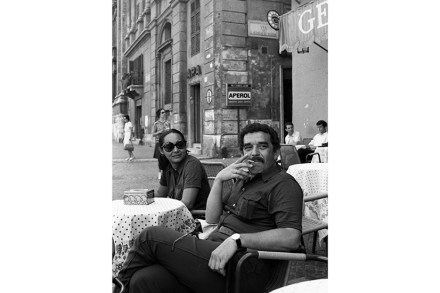
In March 2014 Gabriel García Márquez went down with a cold. The man who wrote beautifully about ageing was approaching his end. As his wife told their son Rodrigo: ‘I don’t think we’ll get out of this one.’ In A Farewell to Gabo and Mercedes, García, a film director and screenwriter, remembers his father and mother — one of the world’s greatest novelists and his muse. Comprised of short chapters, some of which reflect the journal he wrote while travelling back and forth between his LA cutting room and the family home in Mexico City, the book turns the venerable writer into a lively protagonist. The García Márquez who emerges is a quintessentially García Márquezian character.

Could street protests finally topple Cuba’s communist regime?

From our UK edition

Could the growing tide of protests finally topple Cuba's communist government? Many Cubans are certainly angry: Sunday marked the largest-ever demonstration against the island’s regime. Organised through social media, the protests, which began in a town twenty miles outside Havana, quickly spread across Cuba. Thousands of demonstrators marched along some of Havana’s most iconic streets, chanting ‘Freedom!’, ‘Fatherland and Life’ and ‘Down with the dictatorship!’ Discontent with the regime, which took power in 1959, has been rising for the past year. Before this weekend, the most high-profile protests had been from artists and intellectuals demanding freedom of expression. But this discontent is spreading rapidly.

Snakes alive! Playing cricket in Latin America

From our UK edition

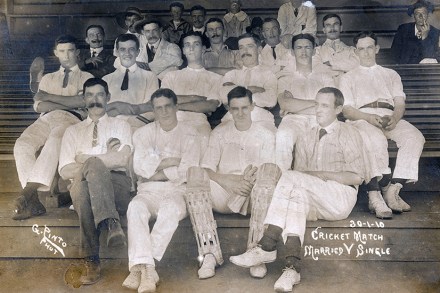
Cricket in Latin America sounds like an oxymoron. Yet in almost every country in the region willow was hitting leather before feet were kicking pigs’ bladders. England vs Australia, first played in 1877, may be cricket’s iconic series, but the Ashes cedes ten years of history to the contest between Argentina and Uruguay — the rivalry of the River Plate. In Evita Burned Down Our Pavilion, James Coyne and Timothy Abraham, cricket journalists with a fondness for Latin America, travel from Mexico to Argentina with bat in rucksack and dates with fusty archives. A social history with elements of travelogue, the book tells a story of new horizons and false dawns, as the most English of pastimes tried to drop anchor amid scorpions, populist regimes and general bafflement.

It’s time to scrap the Best Actress Oscar award

From our UK edition

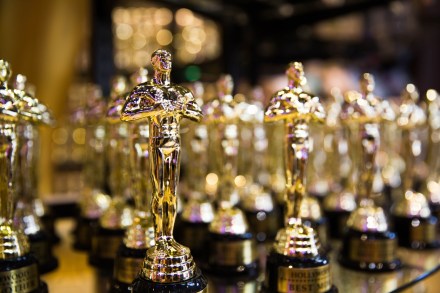
If you tune in to the Oscars during the early hours of Monday morning, you’ll note – along with sickly fawning about contemporary motion pictures being high art, beautiful people in beautiful clothes, and the kind of feigned surprise that wouldn’t look out of place in a school production – two glaring anomalies in the line-up: ‘Best Actress’ and ‘Best Supporting Actress’. The Academy of Motion Picture Arts and Sciences has recognised a leading actress every year since 1929. It’s one of the oldest prizes for women in the arts. Back in the Twenties, when there was even less of a chance a studio would let a woman write or direct a film, winning Best Actress was the pinnacle of female achievement.

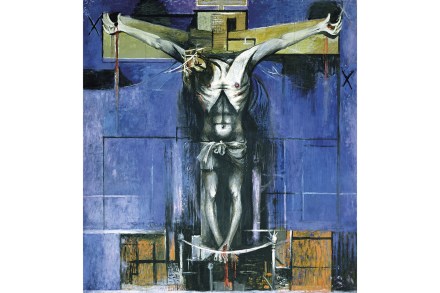
How 20th-century artists rescued the Crucifixion

From our UK edition

Two millennia ago, in the outer reaches of the empire, the Romans performed a routine execution of a Galilean rebel. Tortured and publicly humiliated in front of family and friends, Jesus of Nazareth was slowly asphyxiated over six hours. The Crucifixion is the centrepiece of Christianity. But artists have long adapted the devotional image of the Cross for their own purposes. As far back as the early 5th century, woodcarvers working on a door for the Basilica of Santa Sabina in Rome crafted a Christ whose palms are impaled with nails, but who is not hung on a cross. A devotional statue in Panama dating from the 17th century made Christ not Middle Eastern, but black African. James Tissot (c.

Born out of suffering: the inspiration of Dostoevsky’s great novels

From our UK edition

A death sentence, prison in Siberia, and chronic epilepsy. The death of his young children, a gambling addiction, and possible manic depression. Few writers endure such dark lives or possess such bright creativity as Fyodor Dostoevsky. His incomparable experiences inform many of his novels’ most powerful scenes, from accounts of innocent suffering and crazed revolutionaries to nightmarish epileptic fits. He intended to reflect on his traumatic life by writing a memoir but, aged 59, he died of a pulmonary haemorrhage. In 1867, Dostoevsky had four months to write two novels (which amounted to 752 pages) Noting this literary vacuum, Alex Christofi challenges himself to write a sort of third-person memoir for Dostoevsky.

Playing devil’s advocate: a Mexican historian defends the Conquistadors

From our UK edition

Many books claim to describe junctures that changed the world but few examine ones as consequential as Conquistadores: A New History. Hailed by the Romantics as courageous explorers, the Spanish conquerors are increasingly seen as violent and rapacious exploiters. That, says Fernando Cervantes, oversimplifies the complexities of the early modern period. Cervantes, a Mexican historian, places the conquest of the Americas in Spain’s political context. In 1492, at great cost to the royal purse, Spain recovered Andalucía from the Moors. So when a charismatic Genoese navigator proposed to sail southwest in search of a new trade route to Asia, Ferdinand and Isabella approved.

The High Court should not give up Venezuela’s gold

From our UK edition

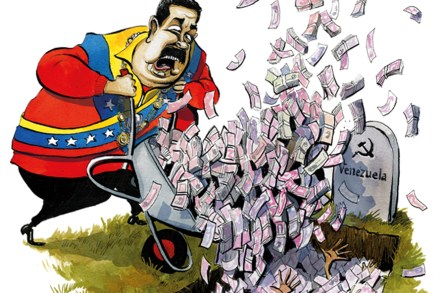
Britain’s judicial system may be about to give $1 billion (£770 million) to one of the world’s most notorious dictators. Nicolás Maduro, the Venezuelan strongman, wants access to gold reserves held by the Bank of England. The leader, internationally condemned for chronic mismanagement of the economy and facilitating vast corruption, says he’ll use the funds to fight the coronavirus. The Bank of England holds assets belonging to many countries, and the Venezuelan gold has been with the bank since 2008, when it was deposited by Maduro’s mentor, Hugo Chávez. The High Court of England and Wales ruled against Maduro’s claim to the gold in July, asserting that in Britain’s view, Maduro is not the legitimate Venezuelan president.

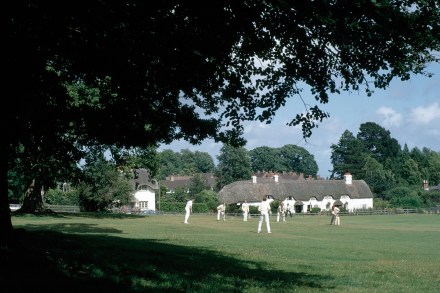
The deserted village green: is this the end of cricket as we know it?

From our UK edition

Imagine an archetypal English scene and it’s likely you’re picturing somewhere rural. Despite losing fields and fields each year to developers, the countryside is ingrained in our collective consciousness as our unspoiled national haven. It is Albion’s Garden of Eden, with its Holy Trinity of village church, local pub and cricket ground.Englishness itself, as much as cricket, is the main theme of Michael Henderson’s genre-melding And That Will Be England Gone: The Last Summer of Cricket. The title alludes to Philip Larkin’s poem ‘Going, Going’, and the last summer was 2019, when Henderson, sportswriter and cultural critic, took a journey around the cricket grounds of his past.

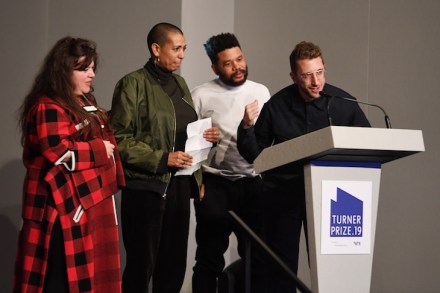
The latest Turner Prize stunt is a step too far

From our UK edition

This year’s Turner Prize has four winners rather than one. In a letter to the jury, the artists claimed that it would be wrong to adjudicate between the social causes championed in their art. So in the end, they split the spoils between them. The judges had one job: to judge. Instead, they acquiesced to the candidates they were meant to be assessing. Instead of one name, poor Edward Enninful, the editor of Vogue, charged with opening the envelope at the ceremony in Margate, saw four: Oscar Murillo, Tai Shani, Helen Cammock and Lawrence Abu Hamdan. 'Here’s something quite extraordinary,' Enninful said, presumably off the cuff.

What I’ve learned from talking to Americans about Brexit

From our UK edition

I’m an Oxbridge graduate in my twenties and a native speaker of a Romance language. I’m a citizen of nowhere rather than somewhere, and two years ago I moved to the United States. I could be the illustrated dictionary’s definition of a Remoaner. And I am. So why is it that, whenever I have a proper conversation with a liberal, knowledgeable American who criticises the idiocy of leaving the EU, I find myself leaping to the defence of Camp Brexit? For a few minutes, mid-conversation, I’m manning the barricades of Thanet with Nigel Farage, throwing real ale at the Provençal set. Except that, being British, I don’t dare voice my objections. I nod and smile while the repute of my country is crushed like a bulldog sat on by a bison.

Prince Charles’s trip to Cuba is a big mistake

From our UK edition

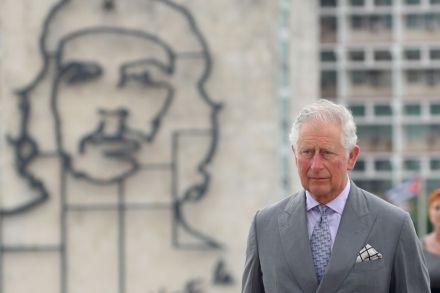
More than 120 years ago, Winston Churchill sailed to Cuba. While there, he dreamt of a country ‘free and prosperous…throwing open her ports to the commerce of the world, sending her ponies to Hurlingham and her cricketers to Lords.’ Now, in spite of Cuba’s communist revolution, the British government seems to have the same optimistic view as Churchill. But is it right to do so? On Sunday, the Prince of Wales and the Duchess of Cornwall landed in Havana. Their tour is the first official royal appointment in Cuba, a four-day trip the British government hopes will strengthen economic and diplomatic relations with the communist country. The royal trip may be historic, but no matter how you spin it, commercially, it is a complete waste of time.