Daniel McCarthy

Daniel McCarthy

Daniel McCarthy is a US columnist for The Spectator and is the editor of Modern Age: A Conservative Review.

What would Buckley do?

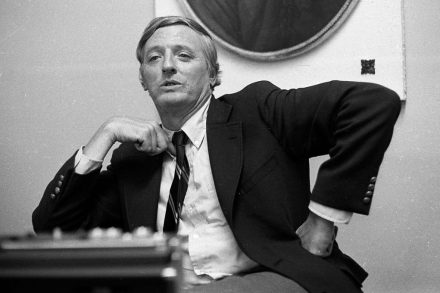
When Sam Tanenhaus’s monumental biography Buckley was published in June, I began a review by noting that William F. Buckley Jr.’s memory is as ill-served by some of his admirers as it is by his critics. The two have in fact largely converged on a single characterization of National Review’s founder: Buckley as the patron saint of purges, who excommunicated anti-Semites and conspiracists (as one side emphasizes) or antiwar dissenters and populists (as the other sees it) from the conservative movement.

william f. buckley jr

Trump is being misled on Venezuela

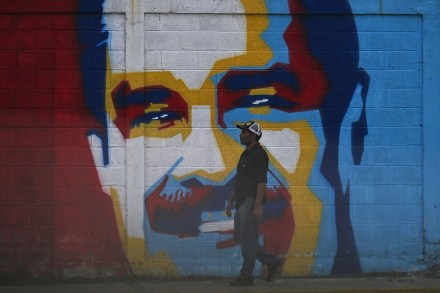
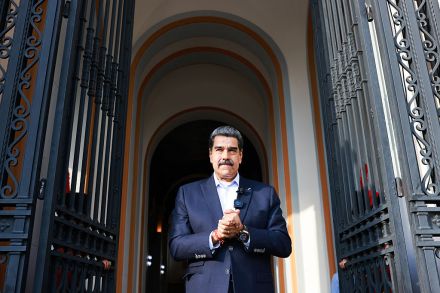
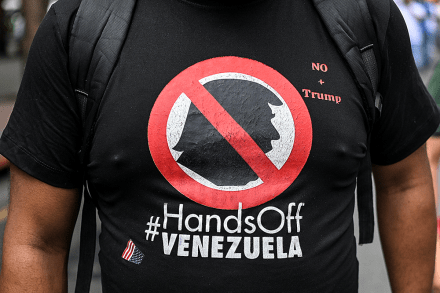
President Trump is being misled into a regime-change war close to home. Few Americans nowadays find much to celebrate in the Iraq War or the intervention that overthrew Libya’s Muammar Gaddafi. Regimes were successfully changed both times, but what came after the dictators’ downfall was civil war, regional instability and mass-migration flows that exported many of those nations’ troubles to their neighbors. Now the Trump administration wants to do to Venezuela’s despot, Nicolás Maduro, what George W. Bush did to Saddam Hussein and Barack Obama did to Gaddafi. That will predictably do to the Americas – including the US – what the War on Terror did to the Middle East, North Africa and Europe. Why would Donald Trump make such a mistake?

venezuela

Luke Coppen, Mary Wakefield, Daniel McCarthy, Michael Simmons & Hugh Thomson

From our UK edition

35 min listen

On this week’s Spectator Out Loud: Luke Coppen looks at a new musical subgenre of Roman Catholic black metal; Mary Wakefield celebrates cartoonist Michael Heath as he turns 90 – meaning he has drawn for the Spectator for 75 years; looking to Venezuela, Daniel McCarthy warns Trump about the perils of regime change; Michael Simmons bemoans how Britain is beholden to bad data; and, Hugh Thomson looks at celebrity terrorists as he reviews Jason Burke’s The Revolutionists. Produced and presented by Patrick Gibbons.

Trump should beware of backing regime change in Venezuela

From our UK edition

Few Americans find much to celebrate in the Iraq War or the intervention in Libya. Regimes were successfully changed, but what came after Saddam Hussein and Muammar Gaddafi was civil war, regional instability and mass migration that exported many of those nations’ troubles to their neighbours. Now the Donald Trump administration wants to do to Venezuela’s despot, Nicolas Maduro, what George W. Bush did to Saddam and Barack Obama did to Gaddafi. But that will also do to the Americas, including the United States, what the war on terror did to the Middle East, North Africa and Europe.

The Clinton curse

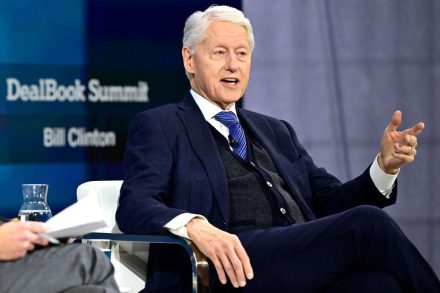
Democrats have almost lost hope. Nearly a year after Donald Trump defeated Kamala Harris, the party is rudderless. It opposes Trump, of course, but it can’t afford to oppose Trumpism. Denouncing the President for a short war against Iran’s nuclear program or for negotiating a Gaza ceasefire wouldn’t be smart. Criticizing his tariffs is safer – yet Democrats don’t want to be branded the party of free trade. Likewise, while they’re prepared to condemn the way the President is getting immigration under control, they know it would be suicidal for them to campaign for more immigration. Even on cultural questions, Democrats are Trump’s prisoners.

Clinton

Is the religious right shifting?

In 2021, for the first time in 1,400-odd years, Britain ceased to have a Christian majority. The United Kingdom, the political entity of which the island of Great Britain has been a part since 1801, has had its share of not-quite-Christian prime ministers over the years, with a handful of agnostics and quiet atheists. But in 2022, for the first time, the UK had a prime minister who practiced a non-Christian religion – and Hinduism had the distinction of claiming the first post-Christian head of state, Rishi Sunak. The West’s ethnic and religious foundations have already shifted in our great cities It may be some time before an American president is Hindu. Already, however, there are several prominent Hindus in the Trump orbit and near the top of the Republican party.

religious

No, Trump has not changed course on Ukraine

President Trump has once again played the global foreign-policy commentariat for fools. They have taken a startling statement from Trump’s Truth social-media account on Tuesday as a sign of a new policy – or at least a new attitude – toward the Russia-Ukraine war. Yet what Trump actually wrote says nothing of the sort.  If Trump really were newly committing himself to Ukraine, why would say, as he’s so often said before, “I wish both countries well”? One country has invaded the other; wishing one of them well means wishing defeat on the other. Wishing them both well indicates indifference.

Trump Ukraine

The blurred lines between politics and common morality

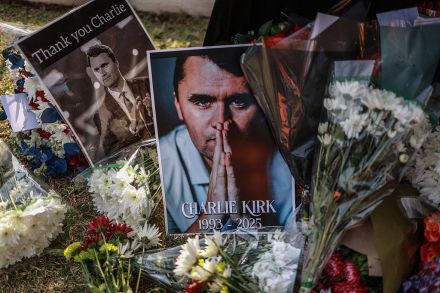
Some 238 years ago Thomas Jefferson wrote that “the tree of liberty must be refreshed from time to time with the blood of patriots and tyrants.” Charlie Kirk was a patriot and his blood, shed by an assassin’s bullet, is making Americans take their free-speech liberties seriously once again. Jefferson wrote his famous line in response to an insurrection – a real, armed one quite unlike the ugly out-of-control protest at the US Capitol on January 6, 2021. The author of the Declaration of Independence wasn’t defending the rebels who had risen up under the command of Daniel Shays. His letter was instead a warning against overreaction to the rebellion on the part of the national government.

morality

After Charlie Kirk, Trump should crack down on campus ‘safetyism’

An assassin who wants to silence a debate in America’s colleges can’t do it just by killing Charlie Kirk. Although Kirk was an exceptionally effective campus speaker – maybe the most effective since William F. Buckley Jr. in his heyday – he was far from alone in voicing conservative ideas in academic settings where they are generally unwelcome and at times violently opposed. There are others who will pick up Kirk’s microphone. But Kirk’s murderer has allies who can do systematically what the gunman could only do once. His allies in silencing voices like Charlie Kirk’s are university administrators who respond to violence by imposing stifling security costs on the targets of violence and intimidation.

Charlie Kirk

How the right learned to love the state

These are dark days for free-market conservatives. A socialist, Zohran Mamdani, leads most polls in the race to become the next mayor of New York. The Republican President, meanwhile, is not only a “tariff man,” he’s lately been directing the federal government to take a stake in ownership of companies such as US Steel and Intel. Even before the rise of Donald Trump, the Republicans were increasingly becoming the preferred party of America’s working class. But before Trump, the free-market right could imagine the GOP’s blue-collar voters were only interested in social conservatism and wouldn’t demand a change in the party’s economic orientation. Now, things look very different.

Right

Donald Trump has bent reality to his will for 200 days

Donald Trump remains the master of political reality 200 days into his second term. His administration drives the headlines, not the other way around. Take the fracas that erupted over last week’s downward adjustment to the previous month’s employment numbers. Any other president would have been put immediately on the defensive, desperate to justify his performance to the whole country. Trump simply fired the chief of the Bureau of Labor Statistics – and all the headlines since then have been about the firing, not the numbers. Not only is President Trump not a prisoner of the press, he’s not a prisoner to his own legacy. In his first term, Trump involved America in no new wars. Less than six months into his second term, he took America to war with Iran.

200 days

The lessons of Ron Paul

From our UK edition

As Elon Musk feuds with Donald Trump and looks to launch a political party of his own – the America party – he should stop to consider the lessons of Ron Paul. The former Republican congressman, who turns 90 on August 20, is best known as the leader of the GOP’s libertarian wing – which for years was practically a one-man faction. In 2008, however, Paul ran for the Republican presidential nomination and touched off a grassroots insurgency. It wasn’t enough to win him any primaries, but it laid the groundwork for the GOP’s populist turn, leading directly to the Tea Party movement and lighting the way for Trump’s arrival a few years later. Dr.

Paul
Paul

The lessons of Ron Paul

As Elon Musk feuds with Donald Trump and looks to launch a political party of his own – the America party – he should stop to consider the lessons of Ron Paul. The former Republican congressman, who turns 90 on August 20, is best known as the leader of the GOP’s libertarian wing – which for years was practically a one-man faction. In 2008, however, Paul ran for the Republican presidential nomination and touched off a grassroots insurgency. It wasn’t enough to win him any primaries, but it laid the groundwork for the GOP’s populist turn, leading directly to the Tea Party movement and lighting the way for Trump’s arrival a few years later. Dr.

Trump won’t be dragged into a regime-change war

The handsome pages of The Spectator World’s July issue readers will find an essay of mine arguing that the United States doesn’t win wars anymore because we don’t even understand what a modern war is. From the French Revolution to the Cold War, and in the long, warm afterglow—thankfully, non-nuclear—of Cold War success, Western elites have tended to think about wars in terms of regimes and ideologies. Winning a war is all about changing the opponent’s regime so that it endorses one’s own ideology: turning a “dictatorship” into a “liberal democracy” through the magic of bombs and bullets.

Regime change

The un-American revolution 

The riots raging in Los Angeles are an unwelcome present ahead of America’s birthday, which is less than a month away. But they’re also a timely reminder of just what that birthday, the Fourth of July, is about. After all, American independence was conceived in rioting and brazen defiance of law enforcement.  Some 250 years ago, Boston was aflame with the spirit of resistance. Then, too, as in LA today, soldiers had to be called out to quell the mobs. In 1770, that led to an incident known to history as the Boston massacre. Violently harassed by hundreds of protesters, seven British soldiers fired into the crowd, killing three people on the spot and wounding several more, two of whom later died.

revolution

America no longer knows how to fight a war

When educated Americans think about war, they’re apt to think of it in ideological terms. Wars are fought between dictatorships and democracies and the goal is to establish one form of government or the other in the defeated opponent’s territory. That’s certainly been the way American policymakers have thought about the wars of this century and it was the framework during the Cold War as well, when the conflict was said to be, fundamentally, a clash of ideologies. The French Revolution is probably the source of this concept, as the wars it set off were indeed largely about regime change, if not that alone.

war

Donald Trump would have made a great sheik

From our UK edition

President Trump is an America Firster, but he has an undeniable affinity for the Arab world. He would have made a good sheik: he doesn’t drink, he loves developing flashy properties to show off his power and wealth, and he’s brutally realistic about the role of oil (and other commodities) in world politics. In his first run for president eight years ago, Trump not only surprised the Republican establishment by criticising the Iraq War, he surprised the war’s critics by saying that if America was going to invade, we should at least have seized the oilfields.

Why Trump should put himself on the Supreme Court

Legend has it that after subduing Greece, Egypt, Persia, wide swaths of India and what’s now Afghanistan, Alexander the Great wept, lamenting “there are no worlds left to conquer.” Donald Trump is close to knowing how that feels. “I run the country and the world,” he declared in a recent Atlantic interview. Trump’s second term has barely begun, but already the thought must cross his mind: “What next?” Alexander was lucky to die young, at 32 and at the peak of his power. The President is in rude health and leads a charmed life. The grim reaper missed him last year when an assassin’s bullet grazed his ear in Butler, Pennsylvania. As it stands, Trump can look forward to leaving office, aged 82, in January 2029. He’s conquered the world only to lose it to term limits.

supreme court trump

Trump is a Large Hadron Collider

By conventional measures President Trump’s first 100 days back in office have not been a success. He hasn’t (at time of writing) restored peace for Europe’s frontier with Russia or tamed inflation in America’s supermarkets. Instead, he’s given the stock market a shock the likes of which it hasn’t felt in decades and blown up some apartment buildings in Yemen. Elon Musk’s Department of Government Efficiency has taken apart entire federal agencies, but the very small-government conservatives and libertarians who might be expected to be enthusiastic about this are instead signaling that they were pretty comfortable with the way Washington was – or at least that they don’t want those ways changed unless they’re done by the most proper possible playbook.

hadron

Will a new era of tariffs really stop China’s rise?

If free trade and globalization enabled Communist China to become a superpower, will a new era of tariffs and trade war halt China’s rise? The Trump administration is betting the opposite of the policies that turned China into America’s most formidable rival will strengthen us and weaken them. Even before the President announced his sweeping new tariffs – including cripplingly high ones on China – the State Department was indicating that nations from the Caribbean to Europe faced a choice between doing business with Washington and doing business with Beijing.