Daniel McCarthy

Daniel McCarthy

Daniel McCarthy is a US columnist for The Spectator and is the editor of Modern Age: A Conservative Review.

Donald Trump has bent reality to his will for 200 days

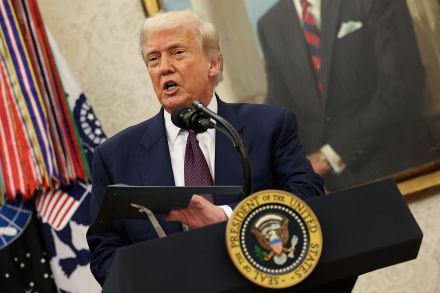
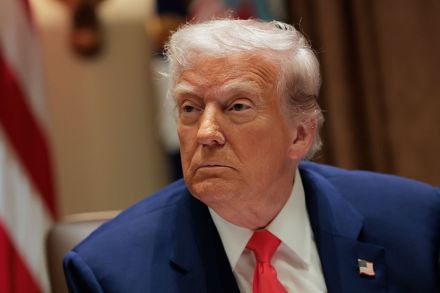
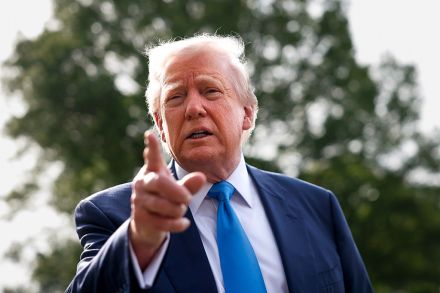
Donald Trump remains the master of political reality 200 days into his second term. His administration drives the headlines, not the other way around. Take the fracas that erupted over last week’s downward adjustment to the previous month’s employment numbers. Any other president would have been put immediately on the defensive, desperate to justify his performance to the whole country. Trump simply fired the chief of the Bureau of Labor Statistics – and all the headlines since then have been about the firing, not the numbers. Not only is President Trump not a prisoner of the press, he’s not a prisoner to his own legacy. In his first term, Trump involved America in no new wars. Less than six months into his second term, he took America to war with Iran.

200 days

The lessons of Ron Paul

From our UK edition

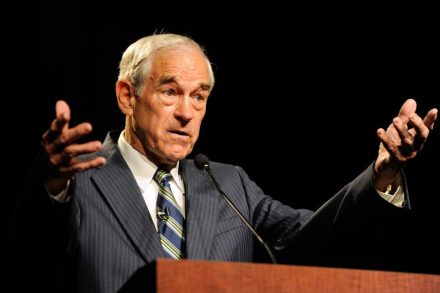
As Elon Musk feuds with Donald Trump and looks to launch a political party of his own – the America party – he should stop to consider the lessons of Ron Paul. The former Republican congressman, who turns 90 on August 20, is best known as the leader of the GOP’s libertarian wing – which for years was practically a one-man faction. In 2008, however, Paul ran for the Republican presidential nomination and touched off a grassroots insurgency. It wasn’t enough to win him any primaries, but it laid the groundwork for the GOP’s populist turn, leading directly to the Tea Party movement and lighting the way for Trump’s arrival a few years later. Dr.

Paul
Paul

The lessons of Ron Paul

As Elon Musk feuds with Donald Trump and looks to launch a political party of his own – the America party – he should stop to consider the lessons of Ron Paul. The former Republican congressman, who turns 90 on August 20, is best known as the leader of the GOP’s libertarian wing – which for years was practically a one-man faction. In 2008, however, Paul ran for the Republican presidential nomination and touched off a grassroots insurgency. It wasn’t enough to win him any primaries, but it laid the groundwork for the GOP’s populist turn, leading directly to the Tea Party movement and lighting the way for Trump’s arrival a few years later. Dr.

Trump won’t be dragged into a regime-change war

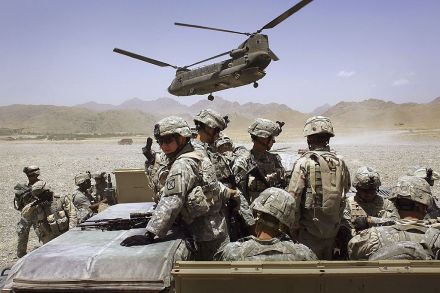
The handsome pages of The Spectator World’s July issue readers will find an essay of mine arguing that the United States doesn’t win wars anymore because we don’t even understand what a modern war is. From the French Revolution to the Cold War, and in the long, warm afterglow—thankfully, non-nuclear—of Cold War success, Western elites have tended to think about wars in terms of regimes and ideologies. Winning a war is all about changing the opponent’s regime so that it endorses one’s own ideology: turning a “dictatorship” into a “liberal democracy” through the magic of bombs and bullets.

Regime change

The un-American revolution 

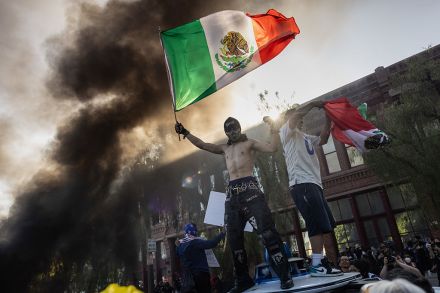
The riots raging in Los Angeles are an unwelcome present ahead of America’s birthday, which is less than a month away. But they’re also a timely reminder of just what that birthday, the Fourth of July, is about. After all, American independence was conceived in rioting and brazen defiance of law enforcement.  Some 250 years ago, Boston was aflame with the spirit of resistance. Then, too, as in LA today, soldiers had to be called out to quell the mobs. In 1770, that led to an incident known to history as the Boston massacre. Violently harassed by hundreds of protesters, seven British soldiers fired into the crowd, killing three people on the spot and wounding several more, two of whom later died.

revolution

America no longer knows how to fight a war

When educated Americans think about war, they’re apt to think of it in ideological terms. Wars are fought between dictatorships and democracies and the goal is to establish one form of government or the other in the defeated opponent’s territory. That’s certainly been the way American policymakers have thought about the wars of this century and it was the framework during the Cold War as well, when the conflict was said to be, fundamentally, a clash of ideologies. The French Revolution is probably the source of this concept, as the wars it set off were indeed largely about regime change, if not that alone.

war

Donald Trump would have made a great sheik

From our UK edition

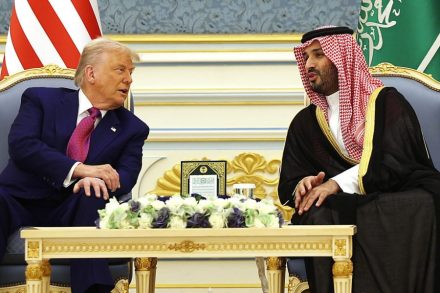
President Trump is an America Firster, but he has an undeniable affinity for the Arab world. He would have made a good sheik: he doesn’t drink, he loves developing flashy properties to show off his power and wealth, and he’s brutally realistic about the role of oil (and other commodities) in world politics. In his first run for president eight years ago, Trump not only surprised the Republican establishment by criticising the Iraq War, he surprised the war’s critics by saying that if America was going to invade, we should at least have seized the oilfields.

Why Trump should put himself on the Supreme Court

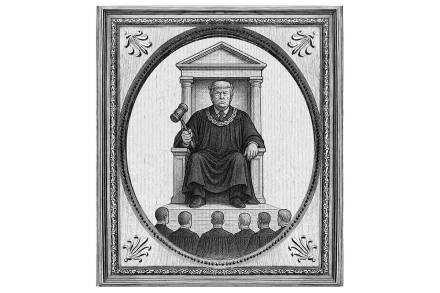
Legend has it that after subduing Greece, Egypt, Persia, wide swaths of India and what’s now Afghanistan, Alexander the Great wept, lamenting “there are no worlds left to conquer.” Donald Trump is close to knowing how that feels. “I run the country and the world,” he declared in a recent Atlantic interview. Trump’s second term has barely begun, but already the thought must cross his mind: “What next?” Alexander was lucky to die young, at 32 and at the peak of his power. The President is in rude health and leads a charmed life. The grim reaper missed him last year when an assassin’s bullet grazed his ear in Butler, Pennsylvania. As it stands, Trump can look forward to leaving office, aged 82, in January 2029. He’s conquered the world only to lose it to term limits.

supreme court trump

Trump is a Large Hadron Collider

By conventional measures President Trump’s first 100 days back in office have not been a success. He hasn’t (at time of writing) restored peace for Europe’s frontier with Russia or tamed inflation in America’s supermarkets. Instead, he’s given the stock market a shock the likes of which it hasn’t felt in decades and blown up some apartment buildings in Yemen. Elon Musk’s Department of Government Efficiency has taken apart entire federal agencies, but the very small-government conservatives and libertarians who might be expected to be enthusiastic about this are instead signaling that they were pretty comfortable with the way Washington was – or at least that they don’t want those ways changed unless they’re done by the most proper possible playbook.

hadron

Will a new era of tariffs really stop China’s rise?

If free trade and globalization enabled Communist China to become a superpower, will a new era of tariffs and trade war halt China’s rise? The Trump administration is betting the opposite of the policies that turned China into America’s most formidable rival will strengthen us and weaken them. Even before the President announced his sweeping new tariffs – including cripplingly high ones on China – the State Department was indicating that nations from the Caribbean to Europe faced a choice between doing business with Washington and doing business with Beijing.

Democratic

The Democratic war machine

To understand what’s wrong with the American left and the Democratic party – two different but entwined things, to be sure – look to Vladimir Ilyich Lenin. Look also to the work of the historian Sean McMeekin, including his latest book, To Overthrow the World: The Rise and Fall and Rise of Communism. Earlier this spring I emceed an event in McMeekin’s honor, as he received the award for “Conservative Book of the Year” from the Intercollegiate Studies Institute. It gave me the opportunity to chat with him about Lenin’s doctrine of “revolutionary defeatism” and much else, including the fairy tale the West tells itself about how communism ended.

The grandeur of Trump’s tariffs

The first thing revealed by the high and wide-ranging new tariffs President Trump announced on “Liberation Day” is just how limited other recent American presidents have been in their thinking. Their ambition was to get elected and re-elected, then retire comfortably into a tranquil post-presidency. They would finish their days lending their names to charities and writing their memoirs (or rather, commissioning ghostwriters to fulfill their publishing contracts).   The idea of destroying and remaking the global economic order never crossed their minds. But Trump is thinking bigger. He doesn’t want to go to his grave as just another has-been ex-president.

tariffs grandeur

Landlord Trump, the tenants’ best bet

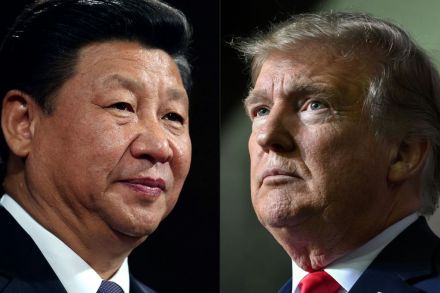
Donald Trump is the world’s largest landlord — not in his own capacity, perhaps, but in his role as leader of the most powerful nation on earth. He’s the CEO of America, and his development corporation owns the Western hemisphere. It also owns property in Europe, where the tenants are troublesome and are always behind on their rent. There are just a few other landlords on the planet, notably Vladimir Putin, who isn’t a rival, and Xi Jinping, who is. This might sound like a perspective on world politics for someone who rose to prominence in the cutthroat environs of New York real estate. Yet the truth is that government is always about who’s the landlord and who’s the tenant.

landlord

How Trump is revolutionizing Washington

Weeks into his second term, it’s clear President Trump intends to be the most transformative force our politics has seen in a century. He seems equally determined to change the course of the world — and perhaps its map, too. Trump’s enemies can blame themselves for making this possible. They showed him that impeachment is nothing to fear: securing conviction in the Senate is nigh impossible and whatever damage impeachment might do to a president’s reputation has already been inflicted on Trump. Two impeachments and a welter of post-presidential criminal prosecutions and even convictions failed to stain Trump in voters’ eyes. On the contrary, they left him more popular than ever and discredited the institutions his opponents employed as weapons of their “lawfare.

Trump

Shooing away the ghosts of Clinton and Blair

Donald Trump didn’t just win an election last year, he performed an exorcism. He cast out spirits that have directed Western politics for a generation, not least the ghosts of Bill Clinton and Tony Blair. Those particular left-liberal leaders haven’t been in power for many years, of course. But the style of politics they pioneered on both sides of the Atlantic didn’t end with their terms as president or prime minister. The world before Trump was still very much the world that Clinton and Blair had made. For decades Republicans and Conservatives found themselves having to accept the terms of what might be called the Clinton Blair settlement.

Trump

The Democrats need a new rulebook

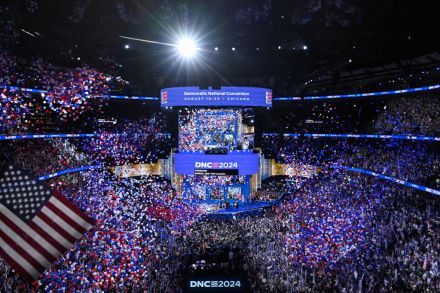
Donald Trump’s triumphal return to the White House is the end of more than just the Joe Biden era. Since Bill Clinton’s presidency, Democrats had adhered to a formula they thought unbeatable: They would be socially progressive, economically centrist and staunchly internationalist. Republicans, they thought, had staked their future on demographics that were in decline — whites and the most conservative Christians. Democrats were the party of twenty-first-century America, an ethnically diverse and more secular, or at least religiously liberal, land. What went wrong? When Trump won in 2016, Democrats dismissed it as a fluke.

Democrats

Panicking over the planet and population is pointless

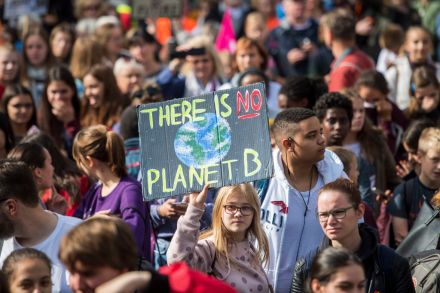
One sign of moral panic is that when the facts change, the fears remain the same. In the 1970s, the Washington Post, TIME and Newsweek stoked fears of “a new ice age.” As soon as scientists updated their models to show a trend in the other direction, “global warming” became as threatening as global cooling. And when winters stubbornly kept happening and the direst predictions of new-age prophets like Al Gore failed to come to pass, the whole thing was rebranded as “climate change.” Whatever the label, and whatever the underlying phenomenon was thought to be, the moral implication remained the same — human beings were ruining the earth and must curtail their comforts to save the planet. Bad weather used to be God’s punishment for human sinfulness.

panic

How a Latino wave carried Trump to victory

From our UK edition

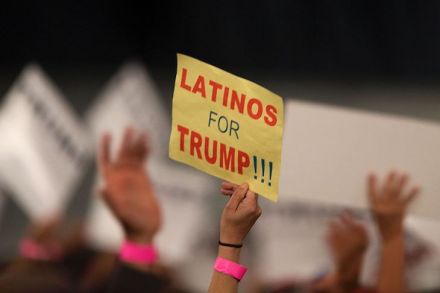
Donald Trump’s victory this time may not be the surprise that his 2016 win was, but for his critics it’s even more of a shock. Trump has been impeached, arrested, convicted, shot at, and relentlessly demonised as a 'fascist' over the last four years. None of that was enough to stop him. Just the opposite: Trump is more popular than ever, and appears to have won a national majority of the vote for the first time. Just how this happened is a question that will be analysed for weeks and months, or years, to come. But one intriguing possibility suggested by exit poll data is that multiculturalism committed suicide. Trump appears to have won a much larger percentage of the Latino population, especially men, than Democrats had ever thought possible.

A ripple, not a wave, will decide the US election

From our UK edition

What can the 2020 and 2016 elections, the previous votes in which Donald Trump was the Republican nominee, tell us about today's race for the White House? There are three layers to a presidential election, only two of which really matter. The overall ‘popular’ vote only counts for bragging rights. Trump has never won it. The popular vote in individual states, however, is the critical second layer of the election. Trump won the 2016 election because he eked out slender popular pluralities in Pennsylvania, Michigan, Wisconsin, and Arizona – four states that are battlegrounds this year as well – and in Florida, which since 2000 had been the biggest prize on the map where the winner couldn’t be taken for granted.

Can Trump ‘Get Out the Vote’?

From our UK edition

35 min listen

Freddy keeps up Americano tradition by speaking to Daniel McCarthy ahead of the election. On the podcast they discuss how Trump’s get-out-the-vote project is working and the impact low-propensity voters could have on the result, whether this election will be plagued by inefficiencies in the American electoral system and if J.D. Vance is actually the heir apparent to the MAGA title.