Daniel DePetris

Daniel DePetris is a fellow at Defense Priorities, a syndicated foreign affairs columnist at the Chicago Tribune and a foreign affairs writer for Newsweek.

Robert Mueller keeps everyone guessing

Robert Mueller, the former Director of the FBI and special counsel in the soap opera that is the Russia collusion investigation, has been on the case for ten months now. His team of attorneys and Washington prosecutors has interviewed dozens of witnesses, scanned hundreds of thousands of pages of documents, sent an unknown number of subpoenas to members of Donald Trump’s campaign for information or testimony, and is in the process of scheduling an interview with President Trump himself. Through it all, Mueller’s camp has shown impressive self-discipline; unlike Kenneth Starr’s inquest against President Bill Clinton two decades ago, the special counsel’s office is keeping its work in-house.


America’s involvement in the Yemen war is unconstitutional — and stupid

Only very rarely in today’s Washington, D.C. is a cause so strong that it brings together America’s most famous progressive with one of the country’s most ideological conservatives. But the nasty, bloody, and intractable proxy war in Yemen - and the U.S. military’s involvement in it - is one of those causes. Yesterday afternoon, Vermont Senator Bernie Sanders and Utah Senator Mike Lee held a press conference on Capitol Hill to unveil the introduction of a resolution that, if passed by both houses of Congress, would compel a withdrawal of all U.S. military assets from the Saudi-led campaign against the Houthi rebels.

Mitt Romney is back. Will he be a thorn in Trump’s side?

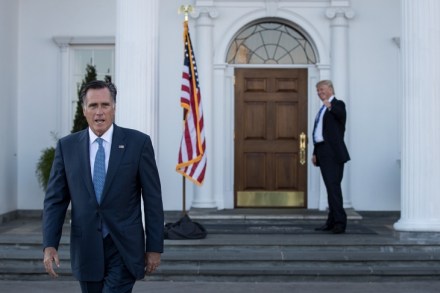
One of President Donald Trump’s chief political foils in the Republican Party — a party that increasingly resembles a Trump fan club more than a group of partisan but independent thinkers — is about to storm the national scene and send a jolt of energy to the dwindling and listless #NeverTrump movement. Mitt Romney, the former Governor of Massachusetts, 2012 Republican presidential nominee, and wealthy businessman, is reportedly preparing to announce his formal campaign to be the next US Senator from Utah.  And with no serious Republican in the heavily-Mormon state willing to throw a hat in the ring to challenge Romney, it is a virtual assurance that he will win the election.

Mike Pence missed a diplomatic opportunity at the Winter Olympics

From our UK edition

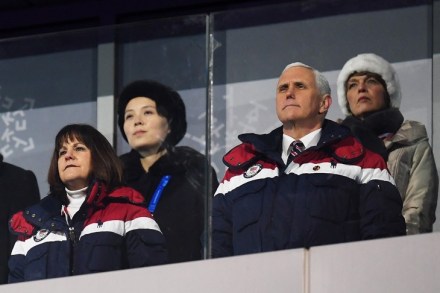
The opening ceremony of the 2018 Winter Olympics in Pyeongchang, South Korea was a miraculous site.  The lights.  The fireworks.  The dancing.  The choreography.  It was everything we have come to expect from a world-class Olympic Games, a coordinated and ritzy show on behalf the entire planet. The Games in Pyeongchang, however, do stand out for one big reason: the massive sporting event is taking the form of a detente between North and South Korea, a minor easing of inter-Korean tensions that have plagued the bilateral relationship since the previous South Korean government shut down the joint industrial complex in Kaesong and Pyongyang stopped answering South Korea’s calls.

The GOP is now the Party of Trump

From our UK edition

There was a time not so long ago when the political establishment of the Republican Party - the Mitt Romneys, Paul Ryans, and Lindsey Grahams of the world - were strong Donald Trump antagonists.  Trump would utter a racially charged remark about a Mexican-American district court judge being biased against him because he was Mexican, and Speaker Ryan would blast the comment as 'the definition of a racist comment'.  Lindsey Graham, an also-ran in the 2016 GOP presidential primary, acted like a South Carolina preacher with a southern drawl, warning Republican voters of how dangerous Trump would be as Commander-in-Chief.

Trump’s State of the Union address will change very little

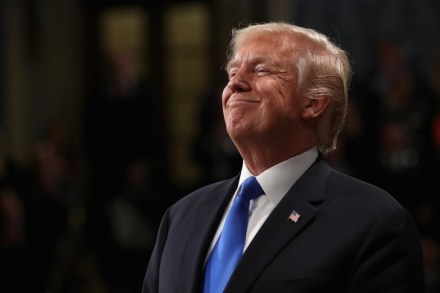
Donald Trump had a lot to prove during his first ever State of the Union address this week. He had to demonstrate to the millions of Americans watching on television that he could deliver a semi-unifying and presidential speech and stay in one place for more than an hour without diverging into tangents. He had to show his Republican colleagues on Capitol Hill that he is a take-charge kind of guy — somebody who has bold, transformational plans for America’s infrastructure and for the country’s immigration system. To Democrats and independents, he wanted to exhibit a kind of conciliatory persona, not one of his favourite character traits.

US shutdown: how the ‘Common Sense Coalition’ saved the day

From our UK edition

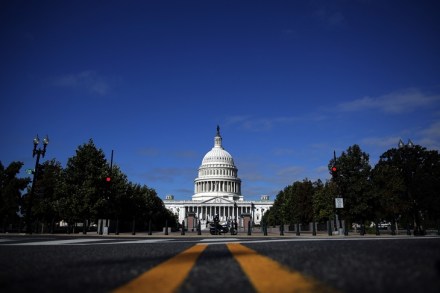
Compared to previous instances in US history when political paralysis and dysfunction shut down Washington for weeks at a time, the three-day government shutdown that ended on Monday was a rather mundane and unremarkable occurrence.  Indeed, unlike the 21-day saga in 1995-1996 between President Bill Clinton and House Republicans or the 16-day clash between House Republicans and President Barack Obama in 2013, this weekend’s fight had nothing to do with budget numbers, federal spending, tax rates, entitlements, or health care policy.  It was, instead, largely a crisis manufactured by Senate Democrats in an attempt to pressure their Republican colleagues on the immigration issue, one of the most controversial topics in American politics.