Damien Phillips

Damien Phillips is a fellow of the Cobden Centre

The end is nigh for Opec

From our UK edition

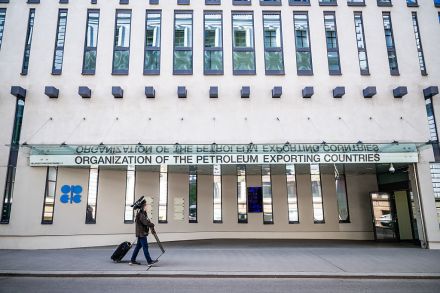
The United Arab Emirates (UAE) choosing to quit the Opec oil cartel after nearly 60 years of membership is, to use President Trump’s parlance, ‘bigly’ big. The UAE’s departure removes around 15 per cent of the cartel’s production capacity, with some analysts already describing the move as ‘the beginning of the end of Opec’. Established in 1960 by Iran, Iraq, Kuwait, Saudi Arabia and Venezuela, Opec’s ostensive mission has been to defend the interests of major oil exporters. Its core membership expanded in the years that followed and now includes Algeria, Nigeria and the Congo amongst others, as well as ten non-Opec members in the broader Opec+.
How Pakistan became central to ending the Iran war

From our UK edition

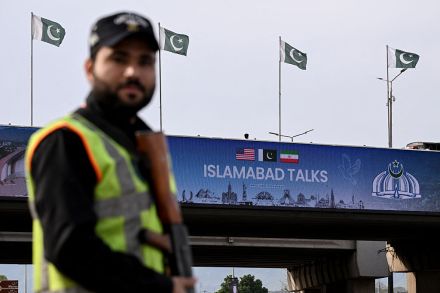
When the Iran war kicked off in late February, if you’d been asked to place a bet on which country would have the Herculean task of mediating between the combatants, Pakistan would have been a long shot. But through a combination of the scorched earth military tactics of the Islamic Republic, happenstance, and the current Pakistani leadership’s ‘economy first’ foreign policy, Pakistan emerged as the crucial broker for the recent ceasefire and is hosting negotiations between the two countries this weekend. Pakistan leveraged its ties with Iran and its rekindled relationship with the United States to manoeuvre itself into the role as the only country acceptable to all the key players It has the Iranian regime to thank for narrowing the field of candidates for the role.

Would Israel carry out assassinations in Britain?

From our UK edition

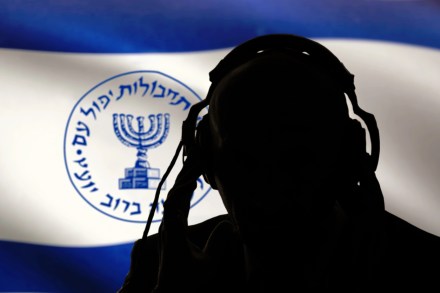
In October 1972, Wael Zwaiter, the representative for the Palestinian Liberation Organisation in Rome, returned to his apartment building on Piazza Annibaliano. After entering the lobby and pressing the button for the lift, he was ambushed by two Mossad operatives lying in wait who shot him 11 times and left him to die in a pool of blood.  Within hours, the four-man hit squad and their large support team had left Italy to return to Israel. The first retribution killing in response to the massacre of 11 Israeli athletes by Palestinian terrorists at the Munich Olympics in September 1972 had been successful. Operation ‘Wrath of God’ was underway.

Can the high street still be saved?

From our UK edition

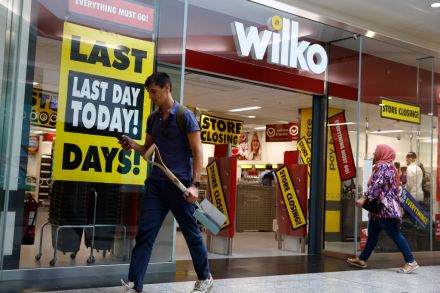
The closure of 400 Wilko stores – at the cost of 12,500 jobs – spells more misery for the high street. Wilko joins a pantheon of big brand names who have been forced to shut their doors since the pandemic. We have seen the loss of Debenhams, the Arcadia Group (which owned Dorothy Perkins, Topshop and Topman), Victoria’s Secret, Paperchase, Oasis and Warehouse, Made.com and Cath Kidston among many others.  According to the British Retail Consortium, the crisis on our high streets goes back further, with 6,000 storefronts closing since 2018. Last year was the worst year for retail in five years, seeing the loss of 150,000 jobs from the high street and out of town shopping centres.

The US-Iran nuclear talks are doomed to fail

From our UK edition

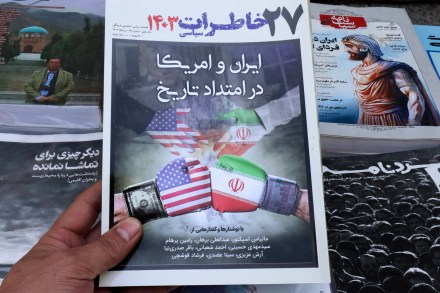
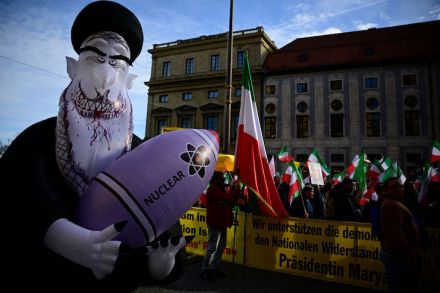
US and Iranian diplomats are meeting in Rome this weekend for further talks on Iran’s nuclear programme, in what looks set to be another forlorn bid to rein in the world’s largest state sponsor of terrorism – and a regime which makes North Korea look like a paragon of good faith. In some ways, the new talks feel like déjà vu. The Gulf state of Oman has resumed its role as the go-between for the US and Iran, with its embassy in Rome providing the venue for the latest phase of talks and its foreign minister Badr Al Busaidi mediating what the Iranians insist will be ‘indirect’ negotiations.

Saudi Arabia could be the only winner in Russia-US peace talks

From our UK edition

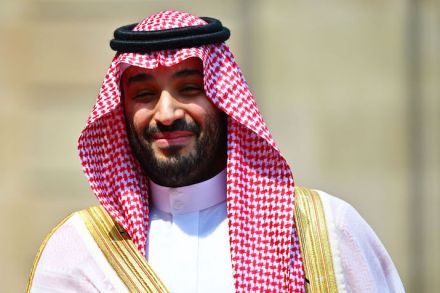
As the US and Russia meet in the Saudi capital, Riyadh, to discuss a ceasefire in Ukraine, the talks potentially mark the end of a battle over who would get to serve as the mediator to help bring the war to an end. The diplomatic tussle to be the Ukraine war’s peace broker has been fractious. So how did Saudi Arabia come out on top? It comes down to the Kingdom's cordial relations with both Vladimir Putin’s Russia and Donald Trump's White House – and, of course, a lot of money. MBS is said to be Trump’s favourite foreign leader Saudi Arabia's triumph was not a foregone conclusion.

Egypt’s Gaza peace plan will never work

From our UK edition

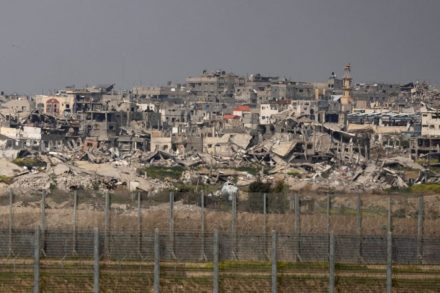
Another week, another peace plan for a seemingly intractable conflict. This time it’s Gaza’s turn, with the launch of a new peace and reconstruction plan for the rubble-strewn Strip. The proposal, created by Egypt and endorsed by the Arab League (a 22-strong group of Arab states) at a summit in Cairo, provides an alternative to President Trump’s ‘Gaza Riviera’ model. Trump’s idea to place Gaza under US control, depopulate it to redevelop the enclave, and decant its residents to nearby Egypt and Jordan was rejected out of hand by the Arab states. The US has signalled that it is open to hearing what an Arab plan for Gaza’s post-war reconstruction would be. So, is this new scheme any better?

Why Britain is rolling out the red carpet for Qatar

From our UK edition

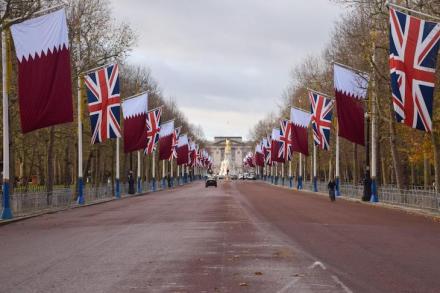
This week’s state visit by the Emir of Qatar is the first of any Arab leader since King Charles ascended the throne. This is no coincidence: while its role is often misunderstood, Qatar has skilfully positioned itself as one of the West’s most important allies in the Middle East. Doha’s role as the world’s mediator-in-chief is only going to become more important With the current conflict in the Levant showing no signs of slowing, the Russo-Ukrainian War entering a critical phase, and events in Syria and Yemen increasing the risk of a wider conflict, Doha’s role as the world’s mediator-in-chief is only going to become more important.

The Laos methanol poisonings shine a light on a deeper tragedy

From our UK edition

The death of British lawyer Simone White, 28, and five other tourists as a result of a suspected mass poisoning in Laos has rightly cast a spotlight on the serious methanol problem with which poorer parts of Southeast Asia are grappling. But that shouldn’t be allowed to obscure what was almost certainly another critical factor in this tragedy: the absolutely abysmal condition of the Laotian healthcare system. Laos has been stagnating for almost half a century Those unfamiliar with the country might have wondered why almost all the tourists who were poisoned with tainted alcohol were flown or driven to neighbouring Thailand, delaying urgent treatment by hours, despite falling sick just a couple of hours north of the Laotian capital of Vientiane.

Labour can’t afford to ignore the war in Sudan

From our UK edition

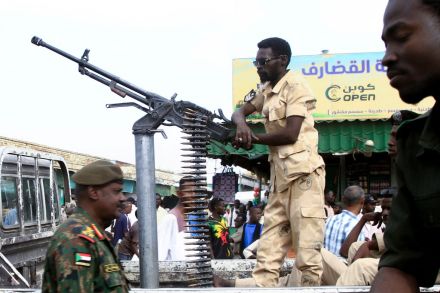
'The UK-UAE relationship is central to driving economic growth – it's our largest trading partner in the region.' So tweeted David Lammy earlier this month following a meeting with Sheikh Abdullah Bin Zayed, the Emirati foreign minister. Perhaps the Foreign Secretary should think twice before making such boasts. The UAE is up to its neck in the crisis unfolding in Sudan – and the United Kingdom’s warm relations with Abu Dhabi may soon develop into a diplomatic minefield for the government. Between the latest offensives in the Russo-Ukrainian war and the ongoing conflict in Gaza, there has been too little space even in the international pages of the papers for the horror story unfolding in Sudan.

What will Labour do about Iran?

From our UK edition

Labour isn’t typically known for offering a more hawkish foreign policy platform than the Conservatives, but at the last election there was an exception: Iran. Yvette Cooper and David Lammy have spoken in strong terms about toughening up Britain’s approach to Iran George Robertson, the former defence secretary and Nato secretary general leading the government’s defence review, has described Tehran as part of the 'deadly quartet' of nations working together to challenge the Western-led global order. Both Yvette Cooper and David Lammy have also previously spoken in strong terms about toughening up Britain’s approach to Iran.

We’re better off with Hamas in Qatar, than out

From our UK edition

The news that Qatar is ‘re-evaluating’ its role as mediator in the ceasefire talks between Israel and Hamas, amid claims by the Qatari Prime Minister that its efforts are being ‘misused for narrow political interests’, will have been met with consternation in many western and Middle Eastern capitals. Qatar’s potential withdrawal comes at a time when talks to secure a truce and the release of the hostages still being held in Gaza have stalled. A ground assault into the final Hamas stronghold of Rafah looks likely to be the next chapter in a gruelling war.  The threat is most likely a negotiating ploy to force progress in the talks Should Qatar cease its mediation efforts, this might also spell the end of the West’s backchannel with Hamas.

What happened to the post-Brexit free trade deals?

From our UK edition

When people talk about the ways the Conservatives have squandered this parliament, and with it their first and best opportunity to demonstrate to voters the benefits of Brexit, they often focus on domestic concerns: the failure to tackle legacy EU red tape, or the lack of progress on levelling up. But one of the biggest disappointments of the past few years must be the United Kingdom’s dismal record on international trade.

Netanyahu’s post-war Gaza plan looks dead on arrival

From our UK edition

Israel's government has finally begun to turn its attention to what happens once the war in Gaza is over. The ‘basic contours’ of a hostage deal – and possible second Gaza ceasefire – continue to take shape, with further talks set to take place this week in Qatar’s capital Doha between Israel’s intelligence services, the United States, and Hamas via Qatari and Egyptian mediators. Israeli prime minister Benjamin Netanyahu’s plan for post-war Gaza has been a long time coming, with his government constantly dogged by the question of what its goals are beyond destroying Hamas and what the endgame for the Palestinians might look like.

The Body Shop won’t be the last high street chain to collapse

From our UK edition

The collapse of the retail chain The Body Shop marks a new low in the sorry tale of Britain’s shops and their struggle for survival. The brand was put into administration by private equity firm Aurelius only a few weeks after it had been acquired from its former owners Natura & Co for £207 million. The demise of The Body Shop could see the loss of its 199 shops across the UK and an uncertain future for nearly 2,000 employees – but sadly it is only the latest in a long line of big retail closures. Only last month, Lloyds Pharmacy entered liquidation owing nearly £300 million to its creditors. In 2020, Lloyds was the second largest pharmacy retailer in the UK with over 1,000 community pharmacies across the country.

Is Opec’s power finally failing?

From our UK edition

Since 1973, much of global politics has been conducted in the long shadow of the Organisation of Petroleum Exporting Countries (Opec) cartel. That was the year Opec first set its stamp on global affairs by engineering an oil crisis in response to Western governments’ support for Israel in the Yom Kippur War. Prices quadrupled and exports to western Europe, the United States, and Japan were banned altogether. The result was a deep recession and spiralling inflation, the effects of which endured long after the oil embargo was lifted in 1974. In the years since, the steady flow of petrodollars has propped up authoritarian regimes from Latin America to the Arabian Gulf. Most recently, Opec has played a crucial role in keeping Vladimir Putin’s creaking war economy afloat.

Opec’s split is good for the West

From our UK edition

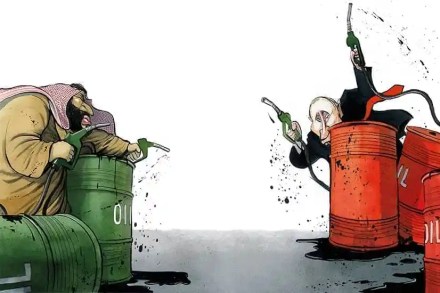
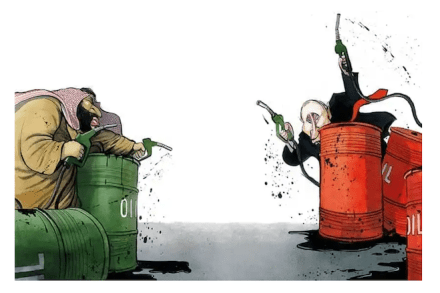
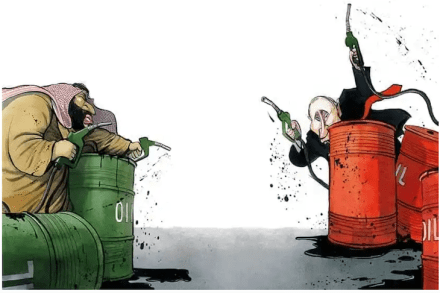
It largely slipped under the radar, but there was a rare bit of good news for hard-pressed consumers and businesses this week: the next meeting of Opec+, originally scheduled for today, has been pushed back almost a week amidst rumours of splits between its members. Most people struggling with inflation and the cost of living probably don’t look for salvation in the depths of the international and business pages. Few organisations cast a longer shadow over economic life in the West than the Organisation of Petroleum Exporting Countries (Opec) and its tag-alongs in Opec+. Ever since it was first established in 1960, the purpose and mission of this organisation has been to coordinate global oil production in the name of fixing prices.

Hamas has made the same fatal mistake as the IRA

From our UK edition

As Israel releases body cam footage showing the stark reality of Hamas terrorists’ brutal attacks on civilians during their assault on 7 October – and as its forces begin launching limited raids into Gaza to prepare the ground for a full-scale offensive by land, sea and air – the severity of Hamas’s situation is finally dawning on its militants. The mood amongst its members in the labyrinthine tunnels beneath Gaza is likely to have darkened dramatically. Despite Hamas’s delusional boasting of bravely fighting to the death and ‘saving Palestine’, the penny is beginning to drop that these are the final days, both for the terrorists, and for Hamas as an organisation.

How to take on Opec’s oil barons

From our UK edition

Beyond the environment, one of the most persuasive arguments for reducing western nations’ dependence on fossil fuels is the extraordinary power that our current arrangements give to authoritarian and aggressive regimes. How many times have noble sentiments from British and allied politicians about human rights and the international order been undermined by the need to cosy up to Saudi Arabia? How much western treasure has, indirectly and despite sanctions, been poured into Vladimir Putin’s war machine? In contrast, those governments have no such gap between their economic and geopolitical positions.

Putin’s anti-western oil alliance is coming unstuck

From our UK edition

As Russia frantically attempts to hold on to its territorial gains in the face of the much-anticipated Ukrainian counteroffensive, there are early signs that it is also failing to retain its diplomatic and foreign policy advances. The anti-Western energy alliances it had constructed around the world with many of the leading oil and gas producers, which had endured despite the invasion, are beginning to fracture. Its attempts to shutdown competitors to Russian oil and gas have proved futile. It all went wrong so quickly for Russia. Back in 2016, the Organisation of Petroleum Exporting Countries (OPEC) expanded to include Russia as part of OPEC+. The deal, painstakingly brokered by Saudi Arabia, was seen as a personal victory for de facto ruler Crown Prince Mohammed Bin Salman (MBS).