Damian Thompson

Damian Thompson

Damian Thompson is an associate editor of The Spectator

Recovering the Sacred: listen to our unique Spectator event celebrating the rediscovery of tradition by young Christians

From our UK edition

75 min listen

Last week The Spectator held a live event entitled ‘Recovering the Sacred’ in the glorious surroundings of St Bartholomew the Great, the oldest parish church in the City of London. The speakers included two London parish priests – one Anglican, one Catholic – who have contributed much to the growing interest among young people in traditional liturgy and Christian theology, a development that the hierarchy of their respective churches certainly didn’t foresee. They were the Rev Marcus Walker, Rector of St Bart’s, whose Prayer Book Evensongs and Eucharists attract large numbers of young professionals to his ancient church; and Fr Julian Large, the Provost of the Brompton Oratory, where an increasingly youthful congregation flocks to Latin Masses.

It’s time for Pope Leo XIV to make some tough decisions

From our UK edition

13 min listen

Nearly everyone loves Robert Prevost, the unassuming baseball fan from Chicago who unexpectedly became Pope Leo XIV this year. But as he prepares to spend his summer in Castel Gandolfo he has some difficult decisions to make. Is he prepared to clear up all the doctrinal confusion created by his predecessor Pope Francis? And will he allow liberal bishop to continue to persecute Catholics who prefer the ancient Latin form of Mass?  Damian Thompson gives us his thoughts in advance of Recovering the Sacred, a Spectator event at St Bartholomew-the-Great in the City of London on July 8 featuring debate and sacred music illustrating the recovery of tradition by a new generation of Christians. For tickets and more information, go to spectator.co.uk/church.

Alfred Brendel was peerless – but he wasn’t universally loved

From our UK edition

In middle age Alfred Brendel looked disconcertingly like Eric Morecambe – but, unlike the comedian in his legendary encounter with André Previn, he played all the right notes in the right order. OK, so perhaps I’m selling the maestro a bit short: I do think Brendel, who died on 17 June at the age of 94, was a peerless interpreter of the Austro-German repertoire, and for a time in the 1970s had a better claim than any other pianist to ‘own’ the Beethoven and late Schubert piano sonatas. But some of the media tributes have been embarrassingly uncritical, implying that Brendel was universally loved. He wasn’t, and he didn’t want to be.

Astonishing ‘lost tapes’ from a piano great

From our UK edition

These days the heart sinks when Deutsche Grammophon announces its new releases. I still shudder at the memory of Lang Lang’s 2024 French album, in which he drooled over Ravel’s Pavane pour une infante défunte; when I reviewed it I suggested that if the poor girl wasn’t dead when he started, then she certainly was by the time he’d finished. Now she’s been killed again, this time by the guitarist Robin Scherpen, whose Ravel Reimagined offers us ‘a peaceful and serene soundscape’. Then there’s Rêverie from Nemo Filou, a trio whose cocktail-lounge noodling allows ‘the listener to drift off into bliss’, and Sleep Circle, a ‘re-recorded version of the 2012 project Sleep’ by DG’s in-house snoozemeister Max Richter.

Why are young Christians returning to tradition?

From our UK edition

41 min listen

Today’s Holy Smoke is a curtain-raiser for ‘Recovering the Sacred’, a Spectator event at St Bartholow-the-Great in the City of London in which a panel of experts will explore the rediscovery of traditional worship and theology by young Anglicans and Catholics. The event will be held on Tuesday 8th July; for more details, and to book tickets, go to: spectator.co.uk/church In today’s episode Damian Thompson talks to Anglican James Vitali and Catholic Georgia Clarke, two Generation Z professionals bursting with enthusiasm for their faith. It’s an exhilarating discussion; don’t miss it.  Produced by Patrick Gibbons.

Can Pope Leo end the liturgy wars?

From our UK edition

Last weekend, under windswept banners depicting the Sacred Heart of Jesus and the Virgin Mary, nearly 20,000 young pilgrims marched through fields and forests between the cathedrals of Paris and Chartres. All of them carried rosaries and chanted in Latin, sometimes breathlessly: it’s a punishing 60-mile trek through mud and rocks. Each ‘chapter’ of the column was accompanied by priests. Like the lay pilgrims – drawn from 30 countries but dominated by French teenagers in scouting uniform – they wore backpacks and trainers, but also full-length cassocks or habits. They were traditionalists and so were the young people: despite their informality, they were utterly committed to intricate Latin worship.

A Jewish guide to arguing 

From our UK edition

52 min listen

Daniel Taub, former Israeli Ambassador to the UK, joins Damian Thompson to talk about his new book Beyond Dispute: Rediscovering the Jewish art of constructive disagreement. In a fast-moving interview, Daniel explains how the art of arguing has shaped Jewish humour and scholarship, and Damian asks him about keeping kosher, life after death – and the influence of the Talmud on Curb Your Enthusiasm.  Produced by Patrick Gibbons.
Is God an Englishman?

From our UK edition

32 min listen

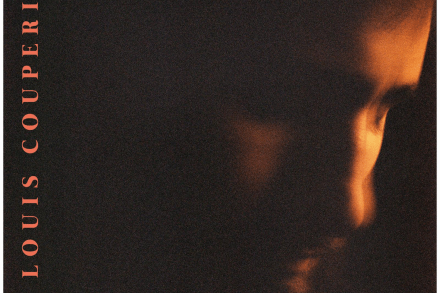
Bijan Omrani joins Damian Thompson to talk about his new book God is an Englishman: Christianity and the Creation of England. They discuss the spiritual and cultural debt the country owes to Christianity. The central question of Bijan’s book is ‘does it matter that Christianity is dying in England?’. The faith has historically played a disproportionate role in many areas of English life that we take for granted now – for example, by shaping both charity and the welfare state. Yet this is influence is often ignored as congregations shrink and the UK slides into secularism. But are there unexpected grounds for hope?

The mystifying process – and problems – behind choosing the next Archbishop of Canterbury

From our UK edition

39 min listen

After Pope Francis died, it took the Roman Catholic Church just 17 days to choose a successor in Pope Leo XIV. It has been well over 6 months since Archbishop of Canterbury Justin Welby resigned and we are only just making sense of those chosen to sit on the Crown Nominations Commission (CNC), that will recommend his successor. Even then, it’s unlikely we will know more until the autumn. Why has it taken so long? Journalist, commentator – and quite frankly expert – Andrew Graystone joins Damian Thompson and William Moore, the Spectator’s features editor, to take listeners through the process.

Finding spiritual treasure in César Franck

From our UK edition

36 min listen

The Belgian composer César Franck – unfairly associated with kitsch and sentimentality by certain cultural sophisticates – wrote some of the most spiritually inspiring music of the late 19th century.  In this episode of Holy Smoke, Damian Thompson talks to the British-Israeli pianist Ariel Lanyi, who has just recorded Franck’s late masterpiece Prélude, Aria et Final on the Linn label. Ariel discusses the influence of Catholicism and the anti-Catholic Richard Wagner on the devout Franck, who was organist of a church in Paris for 30 years – but reserved his most profound thoughts for ostensibly secular works.  Produced by Patrick Gibbons and Damian Thompson.

Leo XIV’s papacy is off to a surprisingly promising start

From our UK edition

Rome In the days before the conclave that elected Pope Leo XIV, traditionalist Catholics were so worried about interference from evil spirits that, according to reliable sources, they arranged for a priest to conduct what’s known as a ‘minor exorcism’ outside the walls of the Vatican. Such ceremonies, which typically involve the sprinkling of holy water mixed with blessed salt, aren’t such a big deal as the major exorcisms of a demon from a person; they are blessings intended to remove Satan’s influence from places where it may occur. But the fact that some clergy in Rome thought the Sistine Chapel might be one of those places reveals the depth of the wounds inflicted on the Church during the turbulent reign of Pope Francis.

Does Pope Leo XIV represent continuity or change?

From our UK edition

20 min listen

From Rome Fr Benedict Kiely and Damian Thompson react to the election of Cardinal Robert Prevost as the successor to Pope Francis. The first American Pope, Prevost is also a citizen of Peru, having spent years working as first a parish pastor and teacher, and later as a bishop. The 267th Bishop of Rome is also the first native English-speaking pope for almost 900 years.  The election of Prevost, now Pope Leo XIV, is seen as a surprise but is being heralded by both liberal and conservative factions of the Catholic Church. Does he represent continuity or change with his predecessor?

The knives are out for the conclave front-runner Parolin

From our UK edition

The 133 cardinal electors who will process into the Sistine Chapel tomorrow are feeling battered and confused by the prospect of choosing a new pope in a ruthless digital age. Many of them show it in the faces, flinching at the sight of the press. The cardinal-electors must elect a man of shining moral integrity. It doesn’t take a cynic to work out which of the candidates don’t fit that description But the journalists are struggling, too. For centuries, the interregnum between a pope’s death and the vote has been a season of mud-slinging – an opportunity for supporters of various cardinals to kick their rivals. But nothing in recent history compares to the damaging online stories now appearing several times a day. A week ago, there was a consensus.

Conclave: who is likely to succeed Francis?

From our UK edition

41 min listen

The papal conclave is due to begin on Wednesday 7 May to elect a successor to Pope Francis. As host Damian Thompson says, Rome – and the entire Church – is in a state of ‘fevered excitement’. While this is to be expected, most commentators agree that this conclave will be one of the most consequential elections for centuries. At stake are both the future direction of the Church and Francis’s legacy – will his work be amended, continued or even rejected? The Pillar’s Luke Coppen joins Damian to try to make sense of the noise, gossip and political intrigue. They discuss the favourites to emerge as the new Pope, including Parolin, Pizzaballa and Sarah. Who is likely to succeed Francis? Produced by Patrick Gibbons and Oscar Edmondson.

What can we expect from the papal conclave?

From our UK edition

54 min listen

Earlier this year Dr Kurt Martens, Professor of Canon Law at the Catholic University of America, joined Damian Thompson on Holy Smoke to unpack what happens during a papal conclave. There was heightened interest in the process due to the film Conclave, which swept the awards season, but also because Pope Francis was hospitalised at the time.  Despite showing some signs of recovery – including being able to meet world leaders such as King Charles III and J.D. Vance – Pope Francis died on Easter Monday. Here we reissue the episode with Dr Martens, looking at what happens when a pope dies, with a new introduction from Damian.

See change, A.I. ghouls & long live the long lunch!

From our UK edition

38 min listen

This week: the many crises awaiting the next pope‘Francis was a charismatic pope loved by most of the world’s 1.4 billion Catholics’ writes Damian Thompson in the cover article this week. But few of them ‘grasp the scale of the crisis in the Church… The next Vicar of Christ, liberal or conservative’ faces ‘challenges that dwarf those that confronted any incoming pope in living memory’.   Ahead of Pope Francis’s funeral this weekend, Damian joined the podcast alongside the Catholic theologian Fr Alexander Lucie-Smith to unpack all the political intrigue underpinning the upcoming papal conclave. They say that he who enters the conclave as a pope, leaves as a cardinal – do we have any clues to who could emerge as Francis’s successor?

‘I’ve seen controllers come and go’: Radio 3’s Michael Berkeley interviewed

From our UK edition

A few years ago I had a panic-stricken phone call from a female friend. ‘Help!’ she wailed. ‘Remind me what classical music I like. I think I’m going to be a guest on Private Passions.’ I could understand her anxiety. The programme, which celebrated its 30th birthday this month, is BBC Radio 3’s lofty version of  Desert Island Discs. Eminent writers, scientists, artists and businessmen, plus the occasional book-plugging celeb, explain how music – mostly but not exclusively classical – is, well, one of their private passions. Even if, as in the case of my friend, it isn’t. It’s an honour to be asked on the show, which is presented by Michael Berkeley – the first classical composer since Benjamin Britten to be elevated to the House of Lords.

The extraordinary scale of the crisis facing the next pope

From our UK edition

At 9.47 a.m. on Easter Monday we heard the words ‘con profondo dolore’ from a cardinal standing in the chapel of the Casa Santa Marta. Two hours earlier, Pope Francis ‘è tornato alla casa del Padre’ – ‘had returned to the house of the Father’. Most people won’t have noticed a curious detail: the cardinal was speaking Italian with a pronounced Irish brogue. The incoming pope will face challenges that dwarf those that confronted any in living memory Cardinal Kevin Farrell, the papal ‘Camerlengo’, was born in a Dublin suburb. Or, as a tabloid put it: ‘Interim Pope is a bloke called Kevin from Dublin.’ That’s an exaggeration, but the Camerlengo does occupy centre stage when the See of Peter falls vacant. He confirms that the Pope is dead.

Pope Francis dies – what will his legacy be?

From our UK edition

29 min listen

Pope Francis, the head of the Roman Catholic Church, has died. The Argentinian, the first Latin American – and the first Jesuit – to lead the Church, has been the head of the Holy See for 12 years, succeeding Pope Benedict XVI who resigned in 2013. Francis presided over the funeral of his predecessor, who died in 2022 – a first in modern history. But Francis’s leadership has been historic for many other reasons. In fact, says Damian Thompson, his reign has been ‘one of the most memorable, if controversial – not just in recent years but in recent centuries’. Liberals lauded his position on a number of social issues, while Conservatives saw the papacy as over-reaching and out of touch with every-day Catholics. But is it really that simple?

How should Christians embrace ‘faithful dissent’ today?

From our UK edition

This is an excerpt from the latest episode of the Holy Smoke podcast with Damian Thompson, which you can find at the bottom of this page: The Easter issue of the Spectator includes two provocative articles exploring aspects of Christianity. Nigel Biggar, Regius professor emeritus of moral theology at Oxford University, now a Conservative peer, celebrates the heroic ‘faithful dissent’ of Christian heroes such as Thomas More and Helmuth von Moltke, who lost their lives rather than defend injustice.  Meanwhile Spectator columnist Mary Wakefield interviews Roman Williams, former Archbishop of Canterbury. She’s inspired by his holiness but depressed by his use of ‘C of E bureaucratese’ to uphold liberal orthodoxy on subjects such as gender ideology.