Damian Thompson

Damian Thompson

Damian Thompson is an associate editor of The Spectator

How the occult captured the modern mind

The British science-fiction writer Arthur C. Clarke, author of 2001: A Space Odyssey, proposed a ‘law of science’ in 1968: ‘Any sufficiently advanced technology is indistinguishable from magic.’ Clarke’s proposition had a quality of rightness, of stating the obvious with sparkling clarity, that propelled it into dictionaries of quotations. The timing was perfect: Concorde would soon be flying over rock festivals packed with hippies obsessed with ‘magick’. Naturally Clarke’s readers understood the difference between aerodynamics and sky gods.

Is the Anglican Communion dead?

From our UK edition

29 min listen

In the space of a month, the Church of England has acquired its first female Archbishop of Canterbury, a majority of the world’s Anglicans have left the Anglican Communion in protest at the mother Church’s willingness to bless same-sex relationships – and the House of Bishops has suddenly backed away from introducing stand-alone gay blessings. The situation is chaotic. In this week’s Holy Smoke, theologian Andrew Graystone talks to Damian Thompson about the almost insoluble problems that will face Archbishop Mullally after she is enthroned in January.  Produced by Patrick Gibbons.

How did faith shape Thatcher?

From our UK edition

38 min listen

How did faith shape Margaret Thatcher’s politics? To mark the centenary month of Margaret Thatcher’s birth, Damian Thompson introduces a conversation between the Spectator’s Natasha Feroze, Thatcher’s biographer Lord Moore and Bishop Chartres who delivered the eulogy at her funeral. They discuss her relationship with faith, how both her family background and her training as a scientist influenced her beliefs and her understanding of the relationship between wealth and society based on Jesus’s parables. Plus – what would Thatcher have made of the much talked about ‘Christian revival’ in the West? Produced by Patrick Gibbons and Natasha Feroze.

What does it mean ‘to forgive’?

From our UK edition

34 min listen

The announcement by Erika Kirk – the widow of assassinated political activist Charlie Kirk – that she forgave her husband's killer, has led many to question the nature of Christian forgiveness. Granting forgiveness can seem hard for the smallest of crimes, let alone the murder of a close family member, so how can other people follow Erika's example? One person who sadly knows better than most is Professor Everett Worthington. Prof. Worthington is Professor Emeritus at Virginia Commonwealth University and a clinical psychologist who has studied forgiveness throughout his career. However, it isn't just through academia that he understands forgiveness; when his mother was murdered, he also made the decision to forgive his mother's killer. Prof.

Jewish fear, ‘the elimination of motherhood’ & remembering Jilly Cooper

From our UK edition

25 min listen

The Spectator’s cover story this week looks at ‘the fear’ gripping Jewish people amidst rising antisemitism. Reflecting on last week’s attack in Manchester, Douglas Murray says that ‘no-one in the Jewish community was surprised’ – a damning inditement on Britain today. How do we tackle religious intolerance? And is there room for nuance in the debate about Israel and Palestine?  Host Lara Prendergast is joined by the Spectator’s US editor Freddy Gray, associate editor – and host of our religious affairs podcast Holy Smoke – Damian Thompson and commissioning editor Mary Wakefield.

The mind-bendingly creative works of Louis Couperin

From our UK edition

The French lutenist Charles Fleury, Sieur de Blancrocher, is one of those unfortunate historical figures who are chiefly remembered because of how they died. He was climbing the stairs to his apartment near the Louvre after a court dinner in November 1652 when he slipped, fell head over heels and was dead a few hours later. We don’t know, though people have wondered, whether the wine was to blame. Only one piece of music by him survives, and he would probably be forgotten if he hadn’t been memorialised in several tombeaux – slow memorial dances – by royal composers, one of whom was a young harpsichordist whose genius is only now being fully recognised. Louis Couperin (c.1626-1661) will always be overshadowed by his nephew François (1668-1733).

What can we expect from the first female Archbishop of Canterbury?

From our UK edition

19 min listen

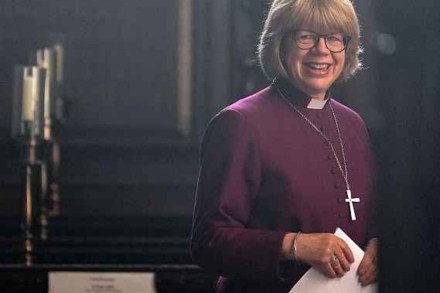
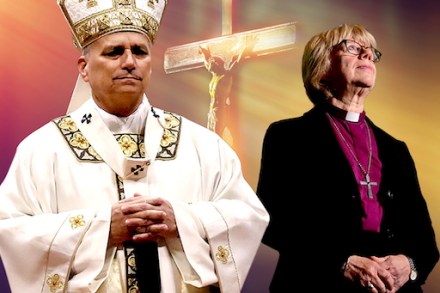
Dame Sarah Mullally has been announced as the new Archbishop of Canterbury. Previously the Bishop of London, she becomes the first woman to lead the Church in its almost 500 year history. She also had a 40 year career as a professional nurse, rising to be the most senior nurse in England and Wales. The Rev'd Marcus Walker, rector at St Bartholemew the Great in the City of London, joins Damian Thompson to react to the news – what can we expect from her leadership? Produced by Patrick Gibbons.

Labour’s Terminator, Silicon Valley’s ‘Antichrist’ obsession & can charity shops survive?

From our UK edition

37 min listen

First: who has the Home Secretary got in her sights? Political editor Tim Shipman profiles Shabana Mahmood in the Spectator’s cover article this week. Given Keir Starmer’s dismal approval ratings, politicos are consumed by gossip about who could be his heir-apparent – even more so, following Angela Rayner’s defenestration a few weeks ago. Mahmood may not be the most high-profile of the Starmer movement, but she is now talked about alongside Wes Streeting and Andy Burnham as a potential successor to Starmer. But – it all depends on what she can achieve at the Home Office. So, who does she have in her sights?

Reparations: the tyranny of imaginary guilt, with Nigel Biggar & Katie Lam

From our UK edition

19 min listen

The past few years have seen growing calls for countries in the global west to pay reparations to former colonies for their role in the transatlantic slave trade. The debate over reparations was already part of the so-called ‘culture wars’, but became louder following the Black Lives Matter movement, as many groups sought to re-examine their histories. Calls for reparations have been embraced by the Church of England which set up a £100 million fund, with the aim of raising £1 billion, to pay reparations for the role the Church played in the slave trade. But do the arguments in favour of reparations really stand up?

The Antichrist is back

From our UK edition

The monster known as the Antichrist has been stalking Christians for nearly 2,000 years. Mostly it has fed the nightmares of frightened peasants or credulous fundamentalists. But now it has emerged from the most secular place on Earth, Silicon Valley, and its prophet is a billionaire venture capitalist married to a man. The origins of the Antichrist legend lie in the Book of Revelation, in which the nations submit to a Beast whose name is concealed by the number 666. He forces everyone to receive a mysterious ‘mark on their right hands or foreheads’ without which they cannot buy or sell anything. This triggers the return of Jesus at the Battle of Armageddon.

800 years on, why is Aquinas Gen Z’s favourite philosopher? 

From our UK edition

26 min listen

This year marks 800 years since the birth of the theologian St Thomas Aquinas. Aquinas, best known for his theory of natural law and his magnum opus the Summa Theologia, argued for the existence of God through faith-based reason. The influence of the 13th Century theologian on the philosophy of religion is unquestionable, but what is curious is his resurgent popularity amongst Generation Z – particularly in America. Is this part of the recovery of the sacred seen across the global west? Fr Gregory Pine OP, professor of dogmatic and moral theology at the Dominican House of Studies, joins Damian Thompson to talk about Aquinas’s legacy, unpack some of the philosopher’s more complicated arguments and describe his own personal journey within the Order of Preachers.

Archbishop of Canterbury: who’s on the shortlist?

From our UK edition

22 min listen

It is 10 months since the resignation of Justin Welby as Archbishop of Canterbury. Now, finally, the Crown Nominations Commission is believed to have drawn up a shortlist of candidates, and a successor to Welby could be approved by October. Theologian and author Andrew Graystone joins Damian Thompson to talk through what he calls ‘a weak list’ of potential candidates – weak because there are no obvious frontrunners and the Commission is choosing between ‘half a dozen equals’.

Why the canonisation of the first millennial saint is a cause to celebrate

From our UK edition

37 min listen

On Sunday the Catholic Church will acquire its first millennial saint, when Pope Leo XIV canonises someone who, if he were alive today, would be young enough to be his son.  Carlo Acutis, a ‘computer geek’ from a prosperous Italian family, died aged just 15 in 2006. In this episode of Holy Smoke, Damian Thompson talks to Mgr Anthony Figueiredo and the Italian-based journalist Nicholas Farrell about the extraordinary phenomenon of St Carlo, the miracles associated with him – and the scepticism they arouse – and a mean-spirited attack on him by one of the late Pope Francis’s closest advisers.  Produced by Patrick Gibbons.

The coming crash, a failing foster system & ‘DeathTok’

From our UK edition

45 min listen

First: an economic reckoning is looming ‘Britain’s numbers… don’t add up’, says economics editor Michael Simmons. We are ‘an ageing population with too few taxpayers’. ‘If the picture looks bad now,’ he warns, ‘the next few years will be disastrous.’ Governments have consistently spent more than they raised; Britain’s debt costs ‘are the worst in the developed world’, with markets fearful about Rachel Reeves’s Budget plans. A market meltdown, a delayed crash, or prolonged stagnation looms. The third scenario, he warns, would be the bleakest, keeping politicians from confronting Britain’s spendthrift state. We need ‘austerity shock therapy’ – but voters don’t want it.

Which are the ‘Twelve Churches’ that made Christianity?

From our UK edition

40 min listen

What links the Church of the Nativity in Bethlehem and St Peter's in Rome with the 16th Street Baptist Church in Birmingham, Alabama, and Canaanland in Ota, Nigeria? These are just some of the churches that Anglican priest and writer the Revd Fergus Butler-Gallie highlights in his new book Twelve Churches: An Unlikely History of the Buildings that made Christianity. The Anglican priest and writer joins Damian Thompson on Holy Smoke to explain how each Church not only tells a story but also raises a surprising dilemma for modern believers. Fergus aims to tell the history of the Churches 'warts and all' and argues that, from Turkey to Britain, today’s Christians must be prepared to defend their religious spaces.

The unsettling rise of DeathTok

From our UK edition

For teenage girls on TikTok, the makeup routine is an almost sacred ritual. Manicured fingertips dart around at virtuosic speed, applying dabs of foundation, blush and highlighter with precise artistry. Normally the commentary is about the nuances of brushing and blending – but Sophie, a bewitchingly pretty 18-year-old from New Zealand, has something more pressing to discuss. ‘I’d been having headaches for about two months,’ she says, placing dots of concealer under her blue eyes. ‘And then one night – it was my [high school] graduation – I was having a few drinks, which you’re not meant to do when you have glandular fever, which is what we all thought I had. So I kind of expected to wake up hungover.

A new Beethoven cycle to keep – but hide

From our UK edition

Grade: C In the 1990s the young Italian pianist Giovanni Bellucci gave us a reading of Beethoven’s Hammerklavier Sonata whose thrilling athleticism bore comparison with those of Maurizio Pollini and Charles Rosen. A few years later Bellucci began a complete cycle of the piano sonatas – but, rather than include his existing Hammerklavier, he produced a version that was in keeping with the style of the cycle: deliberately perverse, reinterpreting (that is, ignoring) the composer’s precise instructions in the score. Only now has Bellucci finished the cycle, explaining in his pretentious liner notes that he was held up by his meditations on Beethoven’s true intentions.

From the Bible to Tolkien: the risks & rewards of collecting rare books

From our UK edition

27 min listen

The Bible is widely said to be the most published book of all time. Despite this, many older versions of the Bible are still sought after. This is because, as Tom Ayling tells Damian Thompson on this episode of Holy Smoke, there is a great deal of diversity amongst the editions precisely because it has been so widely published. Tom, a young antiquarian bookseller who set up his own business, joins the podcast to talk about the risks and rewards behind collecting rare books. Tom explains why, for him, books are ‘most than just a text’; takes us through the various religious books in his collection, from old editions of the Holy Bible to the Book of Common Prayer; and reveals some of the more amusing mistakes he has come across. For more from Tom, go to: www.tomwayling.co.

How has John Henry Newman inspired Pope Leo XIV?

From our UK edition

31 min listen

St John Henry Newman (1801-90) is perhaps the most influential theologian in the history of English Christianity. Yet, as Damian Thompson discusses with Fr Rod Strange – one of the world’s leading authorities on Newman – he was a divisive figure, though perhaps not in the way one might imagine. One of the founders of the Oxford Movement, Newman was widely acknowledged as the most gifted intellectual in the Church of England. In 1845 he converted to Rome and was eventually made a cardinal. Thus he had a unique viewpoint on Church doctrine and dogma. But what is Newman’s significance today? Although he is universally celebrated, conservative and liberal Christians, and especially Catholics, are still fighting over his legacy.

Massacres in Syria & the Congo: why aren’t Western elites drawing attention to religious persecution?

From our UK edition

28 min listen

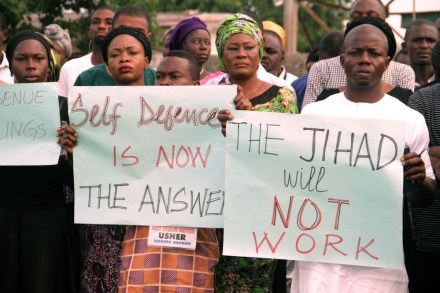
After the fall of the Assad regime in Syria, many people voiced fears that the religious minorities in the country could face increased persecution. This could be at the hands of the new government’s supporters, or simply because the new regime can't protect them. Now those fears appear to have been realised. There is rising sectarian violence against Christians, the Alawites and the Druze (pictured). There are also frequent barbaric attacks on Christians in parts of Africa: more than 40 Christians have just been murdered by Islamists in the Democratic Republic of the Congo while attending church.