Damian Thompson

Damian Thompson

Damian Thompson is an associate editor of The Spectator and presenter of The Spectator’s Holy Smoke podcast

The joy of listening to old pianists

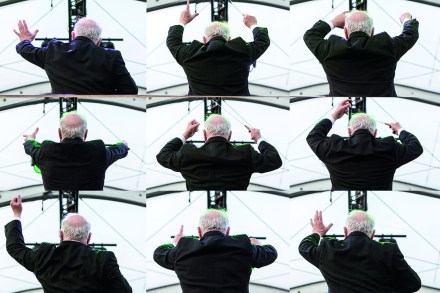
One of my friends has a freakishly sharp ear for tiny nuances in the performance of classical music. God knows how he acquired it, because his personal tastes don’t extend much beyond early Madonna and late Beyoncé (‘far more vocally secure than Rihanna’). That’s sad for him but handy for me. If I catch him in a good mood I can make him sit through five interpretations of La Mer, and he’ll give me fresh thoughts on which conductor has the best grasp of Debussy’s tonal architecture. They’re fresh because he’s coming to it without preconceptions about how the piece ought to sound: he’s never heard it before and probably never will again.

old pianists barenboim

How the Vatican tried to suppress criticism of the new president

From our UK edition

28 min listen

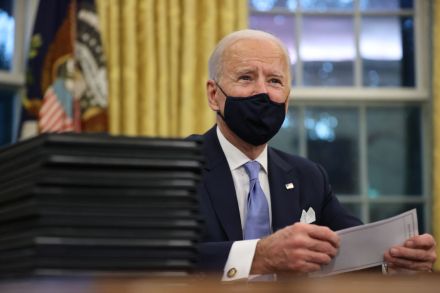
Cardinal Blase Cupich, the ambitious left-wing archbishop of Chicago, must have imagined that Joe Biden's inauguration last week would be a moment to savour. He and a small number of his liberal colleagues, known as 'the Biden bishops', have been working tremendously hard to make sure that, once their candidate was elected, any mention of his radical support for abortion would be sotto voce and preferably inaudible. They thought they'd succeeded.But then things went spectacularly wrong.

The death of the English parish – and the politics that killed it

From our UK edition

27 min listen

The English parish has been a source of spiritual consolation, and a certain amount of social comedy, for more than 1,000 years. So it's very old – and, it turns out, frighteningly vulnerable to the coronavirus. Countless parish churches, both Anglican and Catholic, will quietly shut their doors forever over the next few months. Bishops will blame Covid-19, but they bear a heavy responsibility for the fragile state of parish life before it was hit by the epidemic. In this episode of Holy Smoke, former Church of England vicar Dr Gavin Ashenden tells us what it was like running a parish, and reveals his strategies for dealing with difficult personalities in the congregation, some of whom really did resemble the stereotypes of British sitcoms.

Alfred Brendel the Dadaist

From our UK edition

How many people are celebrating the fact that, last week, one of Europe’s most inspired writers about music, modern art and aesthetics celebrated his 90th birthday? The answer is relatively few, which might seem surprising. He is a world-renowned authority on the grotesque and the absurd — territory through which he darts mischievously in his poems, originally composed in his native German. But you have to turn to his essays written in English to experience his refined sarcasm, which is either delicious or mortifying, depending on whether you feel incriminated by his strictures against intellectual laziness.

The problem of paranoia on the Catholic Right

From our UK edition

25 min listen

Every day there’s some sort conspiracy theory being aired by right-wing Catholics on social media involving the globalist agenda of the Pope’s UN/Chinese/Masonic/Soros foundation puppet-masters. No surprise, perhaps, given the fervour with which the Pope promotes a globalist agenda while his diplomats kowtow to Beijing. Some left-wing Catholics are into the conspiracy business, too: in their imaginations it’s the feisty conservative broadcaster EWTN taking the role of the Soros Foundation.

Goodbye to Catholic Ireland

From our UK edition

46 min listen

Rarely has a religious culture collapsed more rapidly than that of Catholic Ireland, which just 30 years ago seemed indestructible. Incredibly, it looks as if the Irish Church will have ordained more bishops than priests in 2020. It goes without saying that the Irish abuse crisis has hugely accelerated the process of secularisation in what was once the most Catholic of countries. Young people in Ireland now refer to the clergy with a withering disdain verging on hatred. My guest today, the celebrated Irish journalist, broadcaster and playwright Mary Kenny, offers a more nuanced analysis of the powerful and paradoxical world in which she grew up: one in which Catholic clergy and lay people could be simultaneously fervently pious, warm-hearted and yet paralysed by petty snobbery.

Beethoven’s spirituality: a conversation with Sir James MacMillan

From our UK edition

34 min listen

It's the 250th anniversary of the birth of Ludwig van Beethoven – in my opinion, the greatest creative genius in history and a man of extraordinary moral courage. In this episode of Holy Smoke, I'm joined by his fellow composer Sir James MacMillan to discuss a side of Beethoven that the postmodern artistic establishment prefers to ignore: his unwavering faith in God and the surprisingly strict morality that arose from it. One of the questions I ask Sir James is whether Beethoven was really a Catholic. His answer is a resounding yes. He may not have gone to Mass very often, but before he died he asked to see a priest and during years of intense suffering composed one of the greatest of all settings of the liturgy, the Missa Solemnis.

Should devout Christians be scared of a Joe Biden presidency?

From our UK edition

17 min listen

The next president of the United States is, we are told, a devout Catholic who scrupulously attends Sunday Mass. This is in sharp contrast to the current president, who has never been more than an occasional churchgoer with, to put it politely, ill-defined religious views. So why are many Christians worried that a Joe Biden presidency poses an unprecedented threat to America’s constitutional guarantee of religious freedom?  In this episode of Holy Smoke I talk to Andrea Picciotti Bayer, director of the Washington-based Conscience Project, about the continuing ideological assault by US officialdom on religious believers whose passionately held convictions challenge the closest thing the 21st-century United States has to an official creed – identity politics.

The Vatican’s McCarrick report is a shameful whitewash

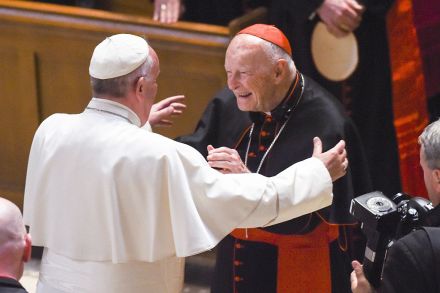
On Tuesday the Vatican published its long-delayed report on the subject of ex-cardinal Theodore McCarrick, the insatiable sexual predator who served as archbishop of Washington from 2001 to 2006 but continued to wield huge influence in the Catholic Church until 2018, when he was finally exposed by the media and forced to resign as a cardinal.Less than a week later, it’s becoming clear that the document is a laborious but clumsy whitewash. Let me explain why.The ostensible purpose of the 500-page report was to explain how McCarrick rose to high episcopal office despite the fact that his beach-house assaults on seminarians were common knowledge among US bishops and Vatican officials for decades. And this it succeeded in doing, more or less.

mccarrick

‘If necessary I’ll be arrested’: the lockdown defying priest

From our UK edition

20 min listen

Has there been a single Covid death as a result of someone attending a socially distanced church service? The answer is no, as you'd expect it to be. But, despite this, the Government will ban public acts of worship from Thursday. This decision is so perverse that even the Catholic bishops of England and Wales – who fell over each other during the last lockdown in their eagerness to shut churches – have written to the government asking for the scientific evidence indicating that properly supervised Masses pose a threat to the people attending them. So far they haven't received the courtesy of a reply, probably because there is no evidence.

The Pope really doesn’t like Republicans

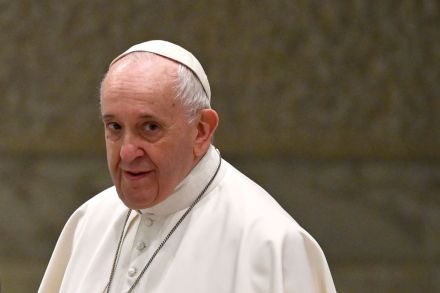
Last week we learned that Pope Francis has torn up the Catholic Church’s teaching that same-sex civil partnerships are gravely immoral. This week he will be rooting for the pro-abortion candidate in the US presidential election. These two surreal developments are causing distress bordering on spiritual despair to conservative American Catholics. Whether you feel any sympathy for them depends on your point of view. The Pope, it is safe to say, is unlikely to lose any sleep over the matter. Francis dislikes the United States in general and its president in particular. That’s not surprising; so do most Argentinians. What is surprising is the depth of his contempt for conservative American Catholics.

pope

While other charities virtue-signal, here’s one that transforms lives: Team Domenica

From our UK edition

19 min listen

Ask yourself: who are the most vulnerable and marginalised people in British society? My answer would be young adults suffering from learning disabilities, who attract sympathy when they are children but, once they enter their 20s, simply drop off the map of public consciousness The consequences of this are dreadful: 95 per cent of them are unemployed. But four years ago that situation began to change, when Rosa Monckton founded Team Domenica, named after her daughter, now aged 25, who has Down's syndrome. Domenica was the last godchild of Diana Princess of Wales, who was a close friend of Rosa's.

Is Pope Francis’s Vatican turning into Richard Nixon’s White House?

From our UK edition

11 min listen

There was a point in the Watergate scandal when revelations came so thick and fast that journalists struggled to keep up with them. And we seem to have reached an equivalent point in respect to the scandals engulfing Pope Francis's Vatican.  Last week I interviewed Vatican expert Ed Condon about the sacking of Cardinal Angelo Becciu, accused by the Pope of stealing or misusing unimaginable sums of Church money, something he denies. Since Ed and I spoke, there have been two developments, both in their own way hard to believe.  First, Angelo Becciu is now accused of overseeing the transfer of large amounts of money to Australia during the trial on fabricated sex abuse charges of his arch-adversary Cardinal George Pell, who had rumbled him.

Why did Balakirev’s beautiful, inventive works go out of fashion?

From our UK edition

Anyone who invited the Russian composer Mily Balakirev to dinner had to be jolly careful about the fish they served. How had it died? Balakirev — mentor of Mussorgsky and Rimsky-Korsakov and regarded as the founder of the Russian nationalist school of music — would want to know. If the fish had perished on a hook, then he wouldn’t touch it. But if it had been clubbed on the head, fine. The many eccentricities of Balakirev (1837–1910) were regarded with amusement, horror and dismay by his contemporaries. Though, to be fair, the fish thing wasn’t a mad obsession of his own. Formerly an atheist, in his thirties he converted to an ultra-strict Russian Orthodox sect with firm views on the proper way to kill fish.

The sinister Vatican plot against Cardinal Pell

From our UK edition

Cardinal George Pell isn’t the sort of man to say ‘so there is a God after all!’ – but plenty of his long-time supporters must be thinking exactly that right now. It was always baffling that until earlier this year Pell seemed certain to die in an Australian jail on the basis of obviously fabricated sex abuse charges. How could a second jury – the first was split– find him unanimously guilty of abusing a teenage altar server in a busy cathedral right after Sunday Mass when he didn’t have either time or the opportunity to commit such a gross act? And on the basis of the testimony of one accuser, his supposed victim? (Another boy had also claimed to have been abused, but confessed that it was a lie before his tragically early death.

Godforsaken: religion is vanishing from American politics

The United States has always been the world’s leading religious marketplace. Even before independence, the American colonies were more fervently Protestant than any country in Europe. The Pilgrim Fathers turned Massachusetts into a witch-hunting Calvinist theocracy, and no sooner had Puritan power begun to wane than New England was seized by a ‘Great Awakening’ in which vast crowds declared their faith in Jesus with hysterical enthusiasm. But it was the Founding Fathers’ decision to deregulate religion completely that really set America apart from the Old World. In successive ‘awakenings’ lasting well into the 20th century, thousands of sects sprang up, some barely Christian but all of them 100 percent American.

religion

The real reason for Pope Francis’s disgraceful Pompeo snub

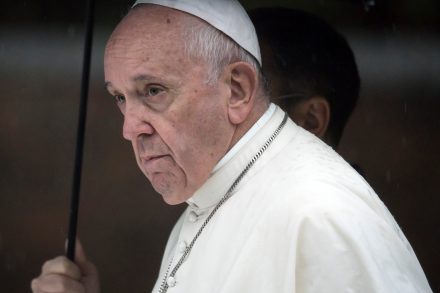
Why did Pope Francis refuse to meet Secretary Pompeo in Rome this week? The obvious answer is that he didn’t want to confront the diabolical consequences of renewing the Vatican’s 2018 deal with the Chinese Communist party. These go beyond the harassment of loyal Chinese Catholics who now find themselves forced by the Pope to recognize party stooges as their own bishops. We’ve never seen the text of the Vatican-Beijing pact, and we won’t be informed about the terms of its renewal, but it’s clear that somehow President Xi has also secured Francis’s silence on China’s genocidal campaign against the Uighurs.

pope francis

The humiliation of Becciu and the return of Pell: what lies behind this spectacular reversal of fortunes at the Vatican?

From our UK edition

24 min listen

The Vatican is this week in the grip of a paranoia reminiscent of the days when Renaissance popes (and their dinner guests) were forced to employ food-tasters. Cardinal Angelo Becciu, until 2018 the sostituto at the Secretariat of State – that is, the Pope's hugely powerful chief of staff – has been sacked by Francis, who has accused him of stealing vast amounts of money. It's now a matter of record that Becciu organised a series of bizarre investments, costing the Vatican hundreds of millions of dollars, in a former Harrods warehouse converted into luxury flats and an African oil company.

Is it time for Christianity to go underground?

From our UK edition

38 min listen

Boris Johnson's package of Covid restrictions announced this week included a rule that weddings will be limited to 15 people and funerals to 30 – numbers plucked out of thin air that will have questionable effect on the transmission of the virus. You might think that a ruling that affects only weddings and funerals isn't such a big deal for the churches, but that is to underestimate the fanatical zeal of their leaders for implementing, and expanding, restrictions on their own worship. The control-freak Archbishop of Canterbury, predictably, seemed quite thrilled by the government's intervention.