Dalibor Rohac

Dalibor Rohac is a senior fellow at the American Enterprise Institute in Washington DC. He tweets @DaliborRohac

The EU shares in Biden’s shame over Afghanistan

From our UK edition

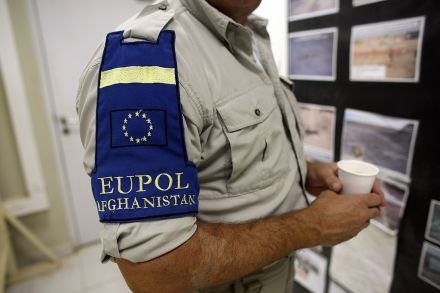
Among America’s self-described foreign policy ‘realists,’ there is a common trope according to which the best way for the United States to get its allies to do more is to show them some tough love – particularly by doing less. That theory has just been put to a test in Afghanistan. It has failed spectacularly. Contrary to the caricature of the protracted conflict in Afghanistan as a distinctly American endeavour, both the combat operations and the efforts at reconstruction were supported by an extraordinarily diverse coalition of countries, from New Zealand, through much of Europe, to Turkey. Of some 150,000 British troops who served in Afghanistan during the past two decades, almost 500 were killed and 2,000 wounded.
The EU’s woeful response to the collapse of Tunisian democracy

From our UK edition

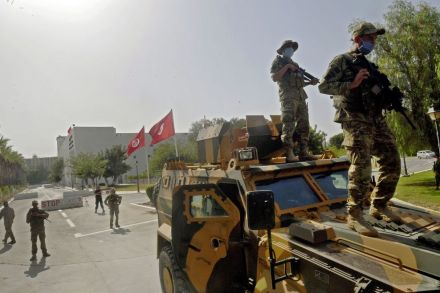
For a political actor that ‘believes in the universal value of democracy and the rights of the individual,’ as the European Commission’s President Ursula von der Leyen put it in her state of the union speech last September, the EU is becoming strikingly inured to threats to democracy in its immediate neighbourhood. Tunisia has been the lone success story of the Arab spring. It has delicately nurtured a parliamentary democracy which has managed to reconcile secular constitutionalism with conservative, Islamist political impulses – until last week, that is. Assisted by the military, the country’s President Kais Saied has suspended Tunisia’s parliament for 30 days, dismissed the prime minister, and has started arresting opposition figures.

Why is the EU copying China’s Belt and Road initiative?

From our UK edition

Much like Mark Twain’s apocryphal quote about arguing with idiots who ‘drag you down to their level and beat you with experience,’ Europeans should think twice about whether they want to try to compete with China when it comes to the use of economic power in pursuit of geopolitical ends. ‘It’s useless moaning about it,’ the German foreign minister Heiko Maas (correctly) told journalists last week, when discussing Chinese economic power at a meeting of EU foreign ministers in Brussels. The EU foreign ministers tasked the European Commission on Monday with preparing a European ‘strategic response’ to China’s Belt and Road Initiative (BRI).

Europe should be wary of Biden’s cuddly capitalism

From our UK edition

Judging by the European press’ reaction to his address to Congress this week, US president Joe Biden’s domestic agenda is popular outside of the United States as well.  'In the choice between going big and going bipartisan, big is winning, remaking America with government at the centre,' the Guardian writes approvingly. Biden embarks on 'a historic battle against inequality,' a Le Monde headline announces. 'America's democracy can no longer endure the growing gap in income and education, so Biden has to fight for the middle,' the Süddeutsche Zeitung piles on. Notwithstanding the president’s unassuming demeanour, there can be no question about the his ambitions. After the sizeable Covid-19 relief package, worth $1.9 trillion (£1.

On vaccines, the EU is getting what it paid for

From our UK edition

Remember when the EU was going to provide an antidote to the spectre of vaccine nationalism? While Italian authorities are raiding pharmaceutical plants for vaccines, the European Commission is pushing for measures to block vaccine exports to countries that do not 'reciprocate'. Unfortunately, European authorities have it exactly backward. Instead of seeking to expand the existing supply, their ham-fisted policies risk having the opposite effect. The ongoing war on AstraZeneca is bound to make every pharmaceutical firm think twice before signing a contract with the EU. And with vaccine production chains spanning across numerous jurisdictions, including non-members of the EU, export restrictions increase legal uncertainty and can disrupt supplies further.

Welcome to Trump’s second term

From our UK edition

President Biden’s emphatic assertion that 'America is back' at the Munich Security Conference last month was met with a lukewarm reaction from European leaders. 'Europe has moved', William Galston explained in a Wall Street Journal column pointing to a recent survey by the European Council on Foreign Relations that revealed a persistent distrust of the United States among Europeans and a resistance to taking the US side in America’s competition with China. Yet there is another side to the story. America is not really back. True, president Biden was quick to rejoin the Paris Climate Accord and to extend warm and fuzzy feelings toward our traditional allies.

The UK’s Global Engagement Begins in Europe

From our UK edition

The advocates of Brexit like to paint an optimistic picture of a post-EU Britain as an active, globally engaged power. 'Who has the parochial mindset here,' asks Dan Hannan, 'those who want a global role of the United Kingdom, or those who think that our role must be mediated by Federica Mogherini, the EU’s Foreign Minister?' Eurosceptics rarely outline the details of the UK that they have in mind. At most, they say that once the UK leaves, the British government could negotiate free-trade agreements with countries overseas – most notably those in the Commonwealth. But there is much more to international engagement than trade.

What Margaret Thatcher did for Eastern Europe

From our UK edition

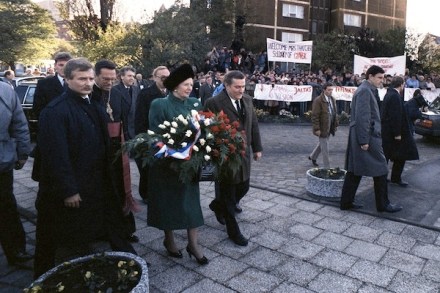
When Václav Havel first visited the United Kingdom as Czechoslovak President in March 1990, Margaret Thatcher hosted a dinner in his honour at 10 Downing Street. By then, Havel’s team, populated partly by chain-smoking dissidents, had been in active politics for only a couple of months. The Prime Minister did not hesitate to use the opportunity to coach the group of unlikely Czechoslovak leaders. 'She was very direct in giving us advice about economic transition, about what we should and should not be doing,' remembers Havel’s former press secretary, Michael Žantovský, who is currently serving as the Czech Ambassador in London.

Going ethnic

From our UK edition

Tyler Cowen, a professor of economics at George Mason University, has been keenly interested in food for years. Besides being a blogger, scholar and the youngest chess champion in the history of New Jersey, he is also the author of an online dining guide to the Washington DC area and an opinionated foodie. This is a delightful book that will broaden horizons to people uninitiated to the economic way of thinking. Cowen’s fans will enjoy it too — although some of the arguments will be second nature to followers of his blog, MarginalRevolution.com. It answers the question of why American food got so bad over the course of the 20th century. Hint: the commercialisation of food was not to blame.