Dalibor Rohac

Dalibor Rohac is a senior fellow at the American Enterprise Institute in Washington DC. He tweets @DaliborRohac

What the UAW strikers reveal about Europe’s looming green backlash

From our UK edition

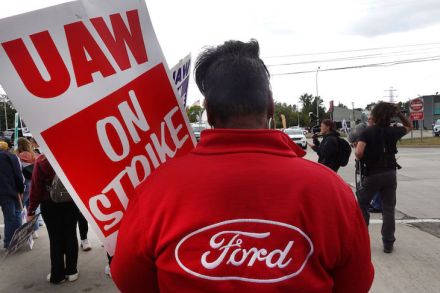
Brits or Europeans might not have taken note of the ongoing strike by United Auto Workers (UAW) nor of the fact that Donald Trump has chosen to host them at a rally in Michigan instead of participating in the GOP primary debate last night – just a day after president Joe Biden had joined the workers on the picket line near Detroit.  Yet the strike’s relevance lies not only in Michigan’s central place in America’s complicated electoral politics. It is also a harbinger of political battles as the Western world, and Europe in particular, transition to electric mobility. Most importantly, it is a warning to Europe that an overly ambitious green agenda can have unintended consequences, especially given the extraordinary size of its car industry.

Poland and Hungary could come to regret their Ukraine grain ban

From our UK edition

The row over Ukrainian grain imports shows that politicians in Eastern Europe can be their own worst enemies. Five Eastern European countries – Bulgaria, Romania and Slovakia, led by Poland and Hungary – failed to convince other EU member states that the existing ban on imports of grain from Ukraine, imposed earlier this year, should be extended beyond 15 September. As a result, at least three of them – Poland, Hungary and Slovakia – will now adopt their own restrictions, in defiance of the EU. What is all too clear is that the countries seeking a ban, particularly Poland, have elevated short-term political considerations above their own long-term interest in Ukraine.

Nato membership for Ukraine would guarantee peace in Europe

From our UK edition

Although Western support to Ukraine’s defence effort continues unabated, the honeymoon between Kyiv and even its staunchest allies is decidedly over. In a recent interview, President Zelensky’s advisor Mykhailo Podolyak, said that Ukraine sees Poland as its close friend 'until the end of the war.' Then, he added, 'competition between the countries will begin.' The quote, which was immediately seized upon by Russian propaganda as evidence of a fracture in Ukraine’s key relationship, came off the back of a spat between Warsaw and Kyiv over the ban on imports of Ukrainian grain to Poland. The policy is due to remain in place until at least mid-September, even as Ukraine’s maritime export infrastructure is being destroyed by Russian bombing.

Nato would be wrong to reject Ukraine’s membership plea

From our UK edition

US president Joe Biden has been busy curbing expectations about Nato’s looming decision over Ukraine’s future membership. Starting the accession process at the summit in Lithuania this week would be ‘premature’, Biden said. Ukraine still needs to meet other qualifications for membership, ‘including democratisation’, the president added. Biden’s hesitation is misplaced. The Vilnius summit offers an opportunity for Nato to redress the historic mistake of the 2008 meeting in Bucharest. Back then, Nato failed to offer membership action plans to Ukraine and Georgia and thus invited Russian aggression – including the current war.

Macron has no idea how to pay for ‘reindustrialisation’

From our UK edition

Emmanuel Macron is playing the emperor again. Last week he proudly announced a grand new strategy, but without any indication of how to pay for it. The French President said that ‘“Made in Europe” should be our motto,’ and urged Europeans to ‘take back control of our supply chains, energy and innovation’. Macron’s call for Europe’s reindustrialisation reflects a new transatlantic consensus. The age of ‘globalisation’ and ‘neoliberalism’ is over. We were too naive about our trading partners during the 1990s and the 2000s, and we now need to build up national resilience. Heavy-handed industrial policy and protectionism are making a comeback in the United States and Europe alike.

A Chinese diplomat has let slip the truth about Beijing’s foreign policy

From our UK edition

The off-colour comment by Lu Shaye, China’s ambassador to France, that post-Soviet countries such as Estonia, Latvia and Lithuania did not enjoy 'an effective status within international law' was not a gaffe or a case of a Chinese official gone rogue. Instead, Shaye's remark, which he made on Friday night on France’s LCI channel, must be seen for what it is: a telling admission of Beijing’s real thinking about international relations, which is far cruder and Hobbesian than most Europeans are willing to admit. Why should we take Lu at his word when he says that for Soviet Republics including the Baltic states 'there’s no international accord to concretise their status as a sovereign country'? For a start, Lu is a veteran of both Chinese communist politics and foreign service.

Will the EU finally see sense over its Common Agricultural Policy?

From our UK edition

What should be done about Ukraine’s grain exports? Ongoing controversy in Poland over the country’s imports into the EU, which currently face zero tariffs, gives a flavour of the fights to come if Ukraine becomes a fully-fledged member of the bloc. It also presents an opportunity to start a much-overdue conversation about the EU’s worst, most damaging policy programme: the Common Agricultural Policy (CAP). In a striking move, Poland’s agriculture minister Henryk Kowalczyk announced his resignation yesterday – the day of Ukrainian President Volodymyr Zelenskyy’s official visit to Warsaw on his third trip outside Ukraine since Russia’s invasion last year.

Slovakia risks following in the footsteps of Orban’s Hungary

From our UK edition

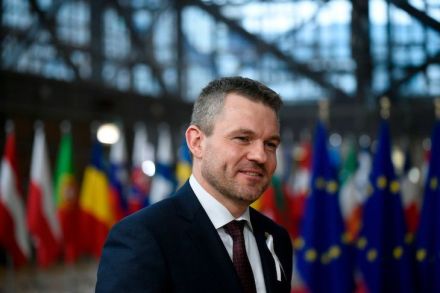
With an early election just six months away, the most pressing question facing Slovak politics is whether the country is about to turn down the path of Viktor Orbán’s Hungary. The decision might come down to just one individual: former prime minister Peter Pellegrini. A lot is pointing in direction of Orbánism. With the collapse of a ramshackle, though staunchly pro-Western and pro-Ukrainian, coalition of broadly centre-right parties, the promise of the putative leader of the opposition and Pellegrini’s predecessor in office, Robert Fico, to form a government 'as stable as the one led by Mr. Orbán in Hungary' carries understandable appeal.  Unfortunately, so do Fico’s attacks on Brussels and Washington over the war in Ukraine.

The EU is sleepwalking into a debt trap

From our UK edition

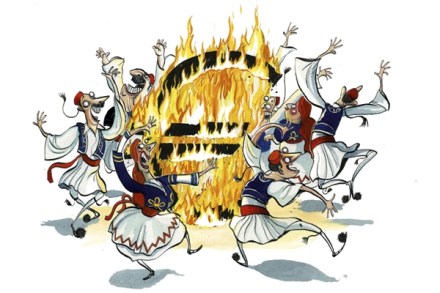
It’s been less than three years since the EU made the unprecedented decision to issue €750 billion of its own debt to help finance the EU’s post-pandemic recovery. Despite this supposedly being a one-time policy, the idea of issuing new debt is now rearing its head again – this time to fund the EU’s industrial policies. The European Commission is pressing ahead with a ‘European Sovereignty Fund’, as a way of responding to the Biden administration’s Chips Act and Inflation Reduction Act, which created subsidies for electric vehicles. By doing so the Commission hopes to prevent member states from introducing their own national industrial policies that could fragment and distort Europe’s common market.

The EU is letting itself be blackmailed by Hungary

From our UK edition

For Hungarian prime minister Viktor Orbán, there is only one lesson to be learned from the compromise reached with the EU this week: blackmail works. With the deal, Hungary has managed to partly unblock EU pay-outs in exchange for lifting its veto on an EU aid package to Ukraine and a minimum global corporate tax rate. After the EU threatened to suspend €7.5 billion in funds for Hungary, Budapest vetoed the €18 billion aid package that the EU had prepared for Ukraine to keep its economy afloat during the war. Now, thanks to the compromise, the suspended amount of Hungary’s funds will be lower – only € 6.3 billion, or 18 per cent of the total amount that Hungary is set to receive. This is not a complete victory for Orbán.

The EU and America are sliding into protectionism

From our UK edition

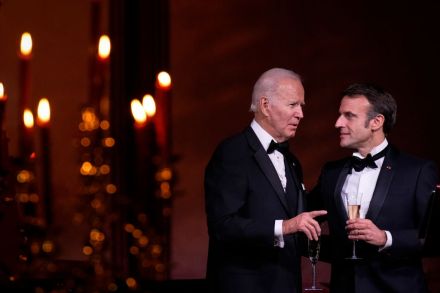
Emmanuel Macron’s state visit to Washington this week and the upcoming meeting of the US-EU Trade and Technology Council on Monday are important tests of whether the western world can avoid a return of destructive beggar-thy-neighbour policies which already once destroyed the global trading system in the 1930s.  The most recent point of contention centres on the American Inflation Reduction Act’s provisions aimed at supporting US manufacturers of electric vehicles, to the exclusion of European ones. While at a joint press conference with his French counterpart, the US President Biden vowed to fix the ‘glitch’ in his signature piece of legislation. But doing so remains a tall order, particularly with a Republican-controlled House of Representatives.

Many Europeans continue to yearn for British leadership

From our UK edition

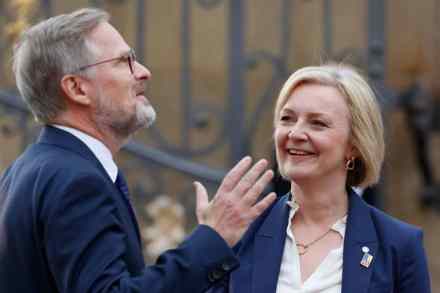
Liz Truss's mind was probably elsewhere when she arrived in Prague for the inaugural summit of the European Political Community (EPC) today. After precipitating a financial panic, backtracking on tax reform plans, and seeing her approval rating plummet to -37 within a week, the Prime Minister has a lot on her plate. It would be a mistake, however, for the PM not to seize the opportunity to strengthen the leadership role the UK is currently enjoying among much of Central and Eastern Europe, and the Nordic states. Despite its French DNA, the idea of an EPC is a sound one.

The EU needs to work with Poland, not push it away

From our UK edition

Today, Europe needs nothing more than a strong Polish leadership. Poland already counts among the largest providers of military and financial assistance to Ukraine, and Poles have admirably shouldered the burden of Ukrainian refugees flowing into the country. Diplomatically, however, Warsaw punches well below its weight in the EU. That is a problem in an age when the EU’s natural leader, Germany, has lost its way. Just two days into the exhumations in Izyum, which have exposed yet more alleged war crimes by Russian forces, Germany’s chancellor Olaf Scholz characterised the tone of his phone conversations with Vladimir Putin as ‘friendly’, notwithstanding their ‘very, very different, indeed widely differing views’.

Orbán is doubling down on Russian energy

From our UK edition

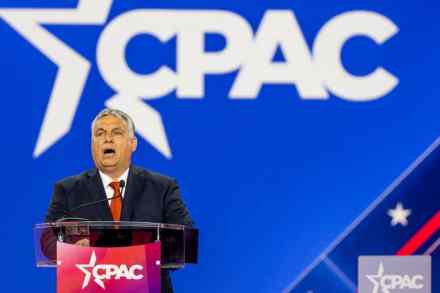
Viktor Orbán’s speech at the Conservative Political Action Conference (CPAC) in Dallas, Texas, delivered everything the audience could have asked for. From an emphasis on 'winning', through an equivalence between the modern-day left and Cold War communism, to extolling the virtues of Hungary’s border 'wall', he covered it all. Its concluding segment, dedicated to Russia’s war against Ukraine, however, was significant by what it conveniently omitted: Hungary’s deepening energy dependence on Russia.

Appeasing Putin isn’t the answer

From our UK edition

Oddly enough, a visitor to Kyiv these days is unwittingly reminded of Israel, of all places. With sunbathers on the beach by the Dnipro, busy (though not completely full) restaurants and cafés, and hipsters and skateboarders, it is sometimes hard to wrap one’s head around the fact that this is a country at war. Yet the war is omnipresent. Each day is punctuated by air raids, mostly ignored by the locals. Roadblocks and checkpoints around the city are being fortified instead of removed in anticipation of another possible attack on the capital.

How Poland came back from the brink

From our UK edition

Poland is back. Not so long ago, the country was seen as an effigy of democratic backsliding, rather than a post-communist success story. In 2017, the European Commission made its first use of the Article 7 procedure against Poland over concerns about eroding separation of powers between the executive and the judiciary. On the campaign trail in 2020, Joe Biden warned about ‘what’s happening from Belarus through Poland and Hungary and the rise of totalitarian regimes in the world’. In doing so, he placed the Polish government in the company of some of the worst dictators on the planet. But within days of Russia’s invasion of Ukraine, Poland managed to reclaim its place as a sober regional power.

Is Putin about to invade Moldova?

From our UK edition

'If you don't like how the table is set, turn over the table,' said Frank Underwood, the Machiavellian character played by Kevin Spacey in the US version of House of Cards. One needs to look no further than Vladimir Putin’s body language in his recent meeting with defence minister Sergei Shoigu to conclude that Russia’s 'special military operation' in Ukraine is not going according to plan. While that is good news, the Russian dictator might be moving to turn over the table in the neighbouring Moldova. On Tuesday morning, two explosions destroyed a radio tower re-broadcasting Russian stations into Transnistria and Ukraine and a 'terror attack' targeted a military unit near the capital of the self-declared republic.

Is the West deceiving itself about Russia’s ‘defeat’ in Ukraine?

From our UK edition

Following his fateful decision to invade Ukraine, Russia’s dictator Vladimir Putin has been customarily described as a high-stakes gambler. Yet the embarrassing underperformance of the Russian military in Ukraine and the bite of Western sanctions suggest that Putin is no genius mastermind strategist but a risk taker who has bitten off more than he can chew. As yesterday’s series of summits in Brussels – Nato, EU, and G7 – is showing, the West has also made a dangerous gamble of its own: expecting that it can stay out of the war and also get the outcome that we all want, namely a decisive Russian defeat and a downfall of Putin’s regime.

Europe can’t expect America to ride to its rescue against Putin

From our UK edition

Joe Biden received a lot of flak for suggesting that Nato might be divided about what to do next if Vladimir Putin limits Russia's aggression against Ukraine to a 'minor incursion'. While clumsy and ill-advised, the comments were what Americans call a ‘Kingsley Gaffe’ – a situation when a politician accidentally tells the truth. After all, Nato does have a problem, and has had it for a while. Back in 2019, Emmanuel Macron raised eyebrows for claiming that Nato was becoming brain dead due to waning American interest in Europe.

The battle for Ukraine has already been lost

From our UK edition

Forget the 'commitment' of the US Secretary of State Antony Blinken to Ukraine’s sovereignty, the EU’s 'firm and decisive' support, and Liz Truss's vow to 'stand firm' with Ukraine. The hard truth is that the West has already lost, or rather abandoned, Ukraine. Even if it is not overrun by Russian tanks this winter, the Kremlin has a free hand to destabilise, threaten, and undercut Ukraine – including by intensifying the conflict in Ukraine’s east. After all, that war, initiated by Vladimir Putin, has been ongoing since 2014. And for all the tough rhetoric, countless sanctions, and the two bargains struck in Minsk, Russia continues to occupy Crimea and treat Donbas as its own territory.