Constantin Eckner

Constantin Eckner is a Berlin-based journalist and historian. He works for numerous German newspapers and broadcasters

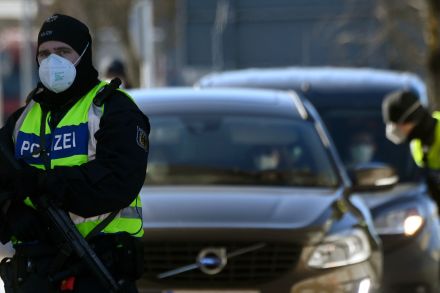
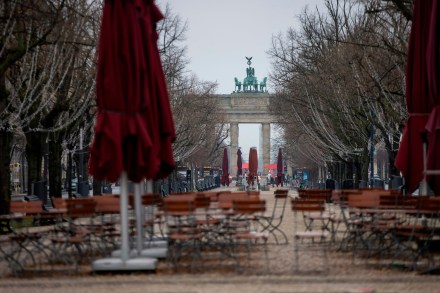
How anti-lockdown protesters are outwitting German police

From our UK edition

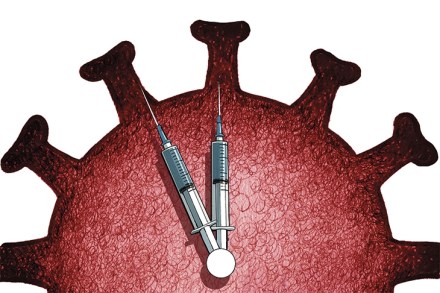
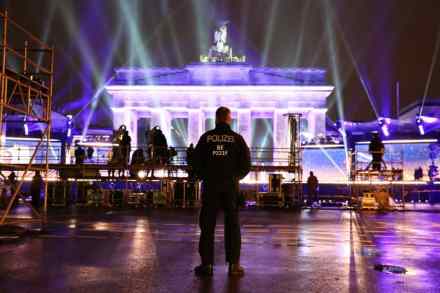
As Germans marked the new year last night, Chancellor Olaf Scholz’s message was somewhat muted: 'It’s clear to all of us: the pandemic is not over', Scholz said in a televised address: 'I appeal to all of you: let yourself be vaccinated.' His message was aimed at the large number of Germans who are yet to be jabbed. Only 71.2 per cent of Germans are fully vaccinated, one of the lowest rates in western Europe. As well as encouraging his countrymen to get vaccinated, Scholz and Germany's other leaders face another problem: how to deal with protests following the introduction of new restrictions. Social gatherings across Germany have been limited to ten people since 28 December and there was no exception for New Year's Eve.
Merkel’s radical lockdown plan could quickly backfire

From our UK edition

In its flailing response to the Covid crisis, the German government appears to have finally given up on federalism. Angela Merkel's latest idea is to introduce nationwide ‘emergency brake’ measures to combat rising case numbers, replacing a patchwork system across the 16 federal states. But will it help bring Germany's third wave under control? Legal changes to grant the federal government unprecedented power to enforce coronavirus regulations in all states have been backed by ministers. The final obstacle for the German Infection Protection Act is parliament. If Merkel's plan is approved, it will mark a big change in the way Germany is governed. It will also make it clear that Merkel is increasingly desperate for answers.

Merkel’s blundering lockdown U-turn

From our UK edition

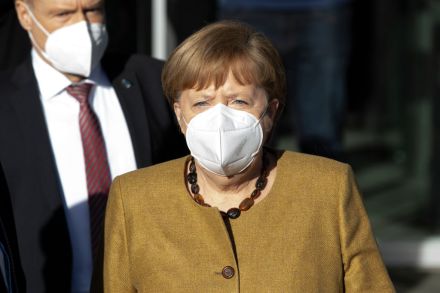
During her 16 years in office, Angela Merkel has produced a couple of memorable sentences that will be imprinted into her legacy. She added a few more on Wednesday, when she announced that the government rescinds plans of a radical Easter shutdown, saying: ‘This mistake is my mistake alone.’ Merkel’s CDU is rapidly losing the support of voters — their approval rating has dropped 9 per cent to just 26 within a week It is quite remarkable to see a leader taking the full blame for what has been perceived as a hasty and impetuous decision. Merkel and Germany’s 16 state premiers had agreed on a radical lockdown over the Easter holidays in yet another attempt to curb the rise of coronavirus infections.

Merkel declares a ‘new pandemic’ as Germany locks down again

From our UK edition

A year on from the onset of the Covid crisis, Angela Merkel had grim news for Germans this morning: our country is in the midst of a 'new pandemic'. 'The British mutation has become dominant,' she warned, as she announced a strict new lockdown, which will shut almost all shops and churches over Easter.  The new lockdown rules were thrashed out in a tetchy 12-hour meeting between the chancellor and Germany’s state premiers. It used to be EU summits that prevented Merkel from catching some sleep. Not any longer. The leaders struggled to find common ground on an approach to contain the spread of coronavirus, amidst a worrying spike in infections which has seen cases climb to 7,500 a day.

Germany’s vaccine debacle goes from bad to worse

From our UK edition

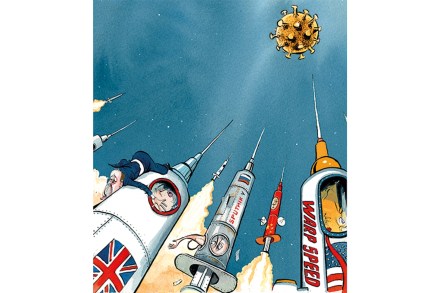
Germany's decision to stop using the AstraZeneca Covid vaccine has been condemned internationally. It has also gone down badly with Germans. Once again, the country's health minister Jens Spahn is under fire.  A year into the pandemic, Germans are fed up with what they see as a government which is too cautious to use its only weapon out of this crisis. Even before the suspension of the vaccine this week, the rollout was painfully slow. While Britain has issued 22million doses, Germany is lagging way behind: only 9.3million of its people have received their vaccinations. This latest hold-up will only further slow down the vaccine programme. And Germans fear that this means the anticipated end of most corona-related restrictions by summer is now more and more unlikely.

The mask scandal threatening to destroy Merkel’s legacy

From our UK edition

In Germany, masks have been one of the least controversial elements of this pandemic. Most people have accepted that they have to be worn in the supermarket or on public transportation. But now these items of PPE are at the centre of a full-throttle political scandal that risks badly damaging Angela Merkel’s Christian Democrats in this important election year. The Christian Democrats Georg Nüßlein and Nikolas Löbel are accused of profiting from government deals to purchase face masks. Löbel is alleged to have received £200,000 in payments as part of a state purchase of masks, while Nüßlein is accused of making £500,000 through a consultancy firm.

Germany is regretting its criticism of the Oxford Covid jab

From our UK edition

Germany’s fridges are filled with Oxford jabs. But there's a problem: 80 per cent of the 735,000 doses delivered to Germany so far have not been used. The vaccine is being described in the German press as a 'shelf warmer'. There are even reports of people missing appointments at vaccination centres if they have been notified that they will receive the AstraZeneca product. While this is alarming, a lukewarm reaction to the vaccine might not come as a surprise. The vaccine's reputation has been repeatedly undermined by reports about its efficacy. A decision in Germany not to use the vaccine for over-65-year-olds, despite the European Medicines Agency having approved it to be given to all adults, has hardly helped.

Are Germans losing faith in the European project?

From our UK edition

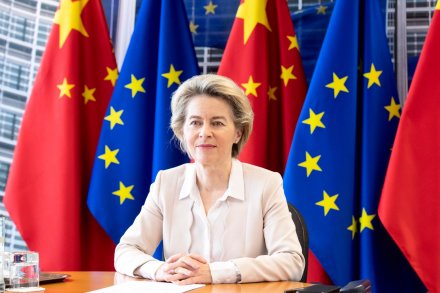
Germans are increasingly losing faith in the European Union due to its bungled handling of the vaccine roll-out. Germany and the other member states have assigned Brussels to organise and oversee the procurement and distribution of Covid jabs. But, so far, the roll-out has been a logistic mess. According to a poll by Civey, commissioned by the German newspaper Der Spiegel, more than 60 per cent of German citizens said their view of Brussels had worsened in light of the disastrous vaccination management. Almost 70 per cent laid the blame at the feet of fellow German Ursula von der Leyen, the President of the European Commission, who admitted last week that ‘mistakes were made’ in the bloc’s approach to the procurement of jabs.

Germany’s border controls risk an EU rupture

From our UK edition

On Sunday, Germany halted most travel for those moving between the country and its neighbouring Czech Republic and Austria. After the South African variant was found in Austria and the British variant was detected in the Czech Republic, Germany designated these regions as ‘virus mutation areas’ and announced the measures on its east and southern borders on Thursday. Initially, the German government wanted to avoid any new border controls after briefly bringing in restrictions last year. However, the fear of aggressive variants and their threat to the end of lockdown in mid-March has exceeded any concerns over the negative fallout from border controls.

Why Germany is eyeing up the Sputnik V vaccine

From our UK edition

After the EU’s vaccine distribution disaster, German lawmakers are now taking a closer look at Russia’s Sputnik V jab. If approved by EU regulators, Sputnik V could be the fourth vaccine available in the bloc after the BioNTech-Pfizer, Moderna and AstraZeneca vaccines. It’s easy to see why Germany could be tempted by the Sputnik V vaccine. The rollout of the BioNTech-Pfizer and Moderna jabs has been hampered by delivery delays and political blunders. And European regulators have remained wary of AstraZeneca’s vaccine – a scepticism that was solidified by a recent trial showing that the shot may not significantly reduce the risk of mild or moderate disease caused by the 501Y.V2 variant, also known as the South African strain.

The EU goes to war over the vaccine

From our UK edition

German politics is backing Brussels in the ongoing dispute between the EU and AstraZeneca over Covid vaccine shipments. The European Union alleges that the pharma firm, which is producing the Oxford-developed vaccine, is planning to supply the UK faster and while failing to fulfil its contract with Brussels. A meeting on Wednesday between officials and representatives from the Cambridge-based company was described as 'constructive' but no solution was found. Meanwhile, Martin Schulz, the former president of the European Parliament and prominent German Social Democrat, called for hard action against AstraZeneca. ‘This company is heavily dominated by the Brits and has apparently clear priorities as to which countries it supplies,’ he said.

Merkel is making a mess of Germany’s Covid vaccine rollout

From our UK edition

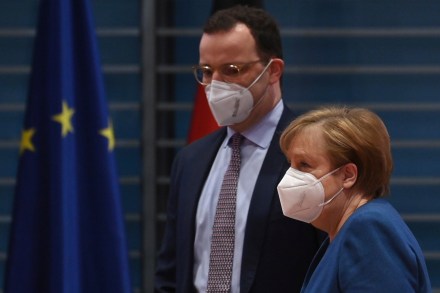
Angela Merkel is known for her competency, yet even Mutti's defenders would struggle to use that word to describe Germany's rollout of the Covid-19 vaccine. German firm BioNTech won the race to develop a vaccine, but this has not prevented crippling supply shortages, which has forced states including North Rhine-Westphalia, in the west of the country, to suspend jabs.  German health minister Jens Spahn has come under fire and his insistence that 'the vaccine is a scarce product worldwide' rings hollow when Germans look at the speed of the vaccine rollout in Britain. Now, to make matters worse, German's health ministry has found itself caught in a fresh row: over the effectiveness of the AstraZeneca Covid-19 vaccine.

Who is Merkel’s successor, Armin Laschet?

From our UK edition

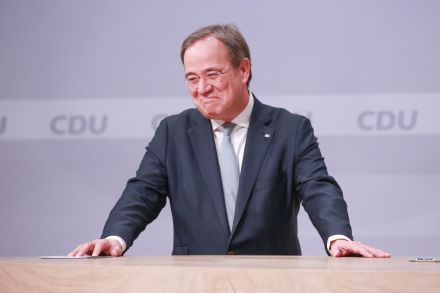
Armin Laschet is the new chairman of Germany’s Christian Democrats – the party that was led by Angela Merkel for almost two decades. Laschet was elected in a runoff vote during the digital party conference on Saturday, beating centre-right candidate Friedrich Merz, by 521 votes to 466, to resolve a three-way contest that had also featured the foreign policy expert Norbert Röttgen. Among the three candidates, Laschet, who since 2017 has been the premier of Germany's most populous state, North Rhine-Westphalia, is the one who stands most strongly for a continuation of Merkel’s centrist course.

Germany’s latest restrictions are stoking division

From our UK edition

Germany’s new lockdown has hit its people like a lightning bolt. On Tuesday, Angela Merkel and the 16 federal state leaders decided that those in coronavirus hotspots should not be allowed to travel beyond a nine-mile radius (15 kilometres) if they don’t have a valid reason.     Valid reasons include a visit to a doctor’s office, shopping for necessities and commuting to work. Yet many Germans feel that the new regulations are arbitrary and affect rural areas much more than cities. The nine-mile radius as a metric is added to the edge of the town, meaning that those living in a large city still have a lot of space where they can move freely. Meanwhile, those in rural areas might not even be able to visit their relatives who live three villages away.

Merkel’s government faces civil war over vaccine failures

From our UK edition

European health ministries have not been happy places of late. Earlier this week, the German daily Bild reported a spat between national governments and the EU, frustrated at the bloc’s failure to procure vaccine doses in any serious numbers. That failure has now ricocheted back from Brussels, destabilising Germany’s increasingly fragile coalition government. So infuriated are Angela Merkel’s junior partners that they are now calling for a parliamentary inquiry into Germany’s vaccine failures, centring on one of her possible successors. Problems began when health ministers in Germany, France, Italy and the Netherlands (the four countries with the most advanced pharmaceutical industries in the EU) joined forces to try to get their order books filled.

The EU is taking a gamble with China

From our UK edition

It took Brussels and Beijing seven years to agree an investment deal. A deal that, until its conclusion a few days ago, had been largely eclipsed by the Brexit process. Once the negotiations had concluded, however, the European side suddenly came under intense criticism — China, detractors said, was not the sort of country the EU should be cosying up to. That the deal was finalised on the penultimate day of the year was a sure sign that Angela Merkel was pushing for closure. She had stated before the pandemic that advancing EU-China relations would be one of the goals of Germany’s EU Council presidency (now passed on to Portugal). A goal for Germany perhaps, but there was substantial opposition to the deal among European heads of states.

Why a row about the rise of Hitler has erupted in the German press

From our UK edition

A debate is playing out in the German-speaking media about whether inflation or deflation was behind the rise of Adolf Hitler in the 1930s. Conservative economists have been arguing that public overspending and the 1923 hyperinflation destroyed the middle class and thus paved the way for the National Socialists. Most recently, Hans Werner Sinn, a well-renowned economist and former chairman of the Ifo Institute for Economic Research, reiterated that argument in an interview with Swiss newspaper Neue Zürcher Zeitung (NZZ), saying: ‘People lost their savings and life insurances which became worthless. Ten years later, Adolf Hitler became chancellor. I don’t say that something like that will happen again, but we need policies that prevent it from the outset.

Germany is in the grip of a Covid crisis

From our UK edition

Germany’s ‘lockdown light’ strategy has failed: the country, which has been widely-praised for its response to the pandemic, recorded a daily record of 952 coronavirus-related deaths last night. After experiencing relatively low numbers of infections and fatalities compared with other European countries in the spring, Germany has plunged into a crisis. It's true that Wednesday’s number was artificially inflated by delayed reporting of data from the state of Saxony, one of the coronavirus hotspots in Germany. But even without the 153 coronavirus-related deaths recorded in that region, the grim tally marks a new peak.

Germans face a ‘lockdown light’ for Christmas

From our UK edition

Germans, just like Britons, will have to cope with restrictions during this year’s Christmas holidays. Yesterday, Angela Merkel and the heads of Germany’s federal states agreed on an updated catalogue of regulations that will allow ten adults to meet for a Christmas party. After three weeks of what is widely called a ‘lockdown light’, the infection rates in German cities and regions continue to remain above the threshold that has been set by medical experts. The vast majority of Landkreise (regional districts) have recorded an incidence proportion of higher than 50 cases per 1,000 inhabitants within the last week.

Berlin is banking on Biden

From our UK edition

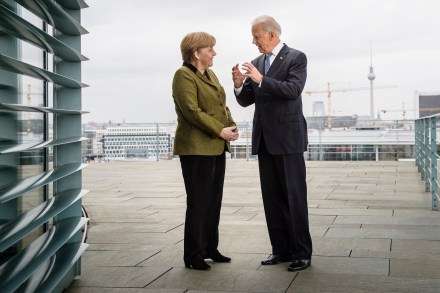
Germany’s foreign minister, Heiko Maas, has said he wants to revitalise his country's relationship with the United States following the presidential election. Tensions between the Trump-led White House and Berlin have been rising for years — to the point where, during the campaign, Trump told his supporters that ‘Germany wants me out’, mentioning the long-time transatlantic partner in the same breath as China and Iran. Trump may be right with his assessment. Chancellor Angela Merkel and her German officials have been put off by Trump’s erratic behaviour, with regular briefings against the President emanating from the Chancellery.