Lessons learnt from Germany’s coronavirus response
From our UK edition
17 min listen
Throughout recent weeks, Germany has been held up as an example of how to tackle coronavirus. So what exactly makes its response quite so effective?
Constantin Eckner is a Berlin-based journalist and historian. He works for numerous German newspapers and broadcasters
From our UK edition
17 min listen
Throughout recent weeks, Germany has been held up as an example of how to tackle coronavirus. So what exactly makes its response quite so effective?
From our UK edition
‘Desperate times call for desperate measures’ is the expression of the moment when it comes to summing up how countries are addressing the coronavirus crunch. Germany is no exception. Even before the pandemic, the country's economy was heading towards a mild recession, according to plenty of projections. But once the virus spread across the Hubei province, Germany’s manufacturers started to get hit in a painful spot: their supply chains. The early supply shock stemming from reduced production capacity in China again exposed Germany’s dependency on its trade relations with the economic giant in the east. For years now, Germany has been leaning on China for cheap supply and as a market for its exports.
From our UK edition
Over the past few weeks there has been widespread curiosity about the German healthcare system. Since the coronavirus outbreak, the infection curve in Germany has risen just as steeply as in Italy, and the measures it has imposed are quite similar to those elsewhere. Yet, its death rate is noticeably lower. Of 100,132 Germans who have tested positive, only 1,584 have died, as of this morning. Compared to fatality rates above 6 per cent in neighbouring France, Netherlands or Belgium, that seems remarkable. The most important reason for Germany’s rate is intense testing, using the South Korean model where widespread testing and isolation helped flatten the curve of new infections.
From our UK edition
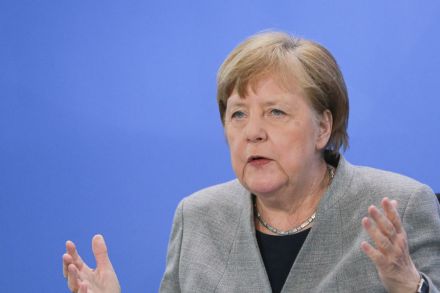
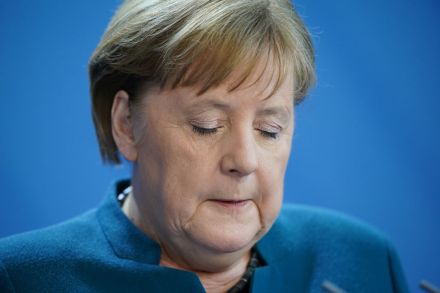
When Emmanuel Macron told the French people how his government would tackle coronavirus, he used the word 'war' six times. Boris Johnson adopted a similar stance, invoking wartime language to tell Brits we will 'win the fight' and beat the enemy'. In her recent televised speech, chancellor Angela Merkel specifically avoided suggesting that Germany is 'at war' with the coronavirus. Such over-the-top rhetoric wouldn‘t fit Merkel‘s persona, and to declare war would unsettle rather than motivate Germans. But the softer language doesn't mean that this isn't a pivotal moment in Germany's history. The country went into lockdown on 23 March to battle the continuing spread of the coronavirus.