Clarissa Tan

Last chance for the Shiva Naipaul Prize 2012

From our UK edition

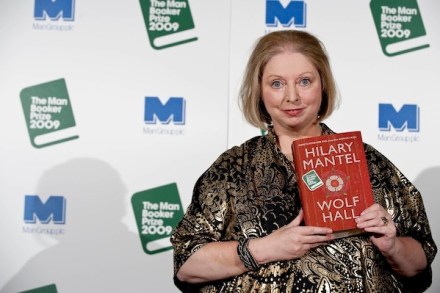
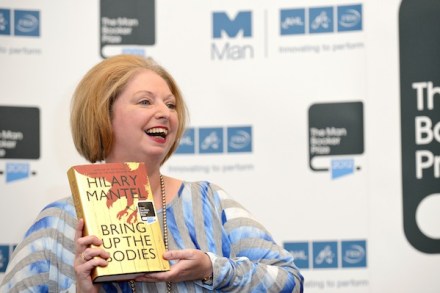
Hilary Mantel recently won her second Booker Prize, having clinched two Bookers in a row, the latest for the second book of a planned trilogy - surely a first. As we never tire of mentioning here at the Spectator, Hilary was the inaugural winner of our Shiva Naipaul Memorial Prize, back in 1987. Her stunning essay, on living a strange, segregated life in Saudi Arabia, can be found here. The Shiva Naipaul prize, named after the late great Trinidadian author and brother of VS Naipaul, celebrates travel writing but not in the conventional sense. It is awarded every year to an essay that gives the most acute and profound observation of a culture alien to the writer.
I am not my cancer

From our UK edition

In the evenings the kidneys came. The helicopter, a bright yellow, would land on the grey cement disc, its blades chopping slower, slower, slow — stop. People in blue scurried from an opening in the building and ran towards the aircraft, hauling from it boxes and bags. These containers held hearts, lungs, livers. The organs were brought into the body of the main building then dispatched in all directions. I could see all this from the high window of my room in Siena. I also saw spectacular Tuscan sunsets, and if it weren’t for the chunky, rounded plastic furniture in the room and the drips in my arms, I would have thought I was in a smart hotel.

The Visit – Shiva Naipaul Prize, 2007

From our UK edition

The 2007 Spectator/ Shiva Naipaul Memorial Prize was won by Clarissa Tan. The prize, named after the late Trinidadian author, is for 'the most acute and profound observation of a culture evidently alien to the writer'. The judges that year included William Boyd, Matthew d’Ancona (then editor of The Spectator) and Mark Amory (literary editor of The Spectator). Clarissa is now a staff writer at The Spectator. To find out more about the Shiva Naipaul competition, and how you can enter, click here.   The Visit Clarissa Tan I wish to write about a place of which I know everything yet nothing, where everything is familiar yet strange, a place where I feel I go too often, but never quite enough. This place is the same for everyone, only different.

When hunger strikes

From our UK edition

How many of history’s great revolutions were sparked by sheer, human hunger? In 2008, global food prices spiked, with the cost of basic crops doubling. In the two years that followed, Egyptians saw their food prices increase by some 40 per cent – in 2011, as we know, the Arab Spring broke across the Middle East, triggered by the self-immolation of a Tunisian food seller. How likely are such spates of unrest to happen again? Very likely, given that – due to the worst drought in the US in living memory – the price of wheat and maize have soared 50 per cent in past weeks, and the G20 may hold an emergency meeting on food very soon. We like to think of the Arab Spring as being the pure cry of an oppressed people for lofty ideals such as freedom, equality and democracy.

The Robin Hood tax, unlike Olympic archery, won’t hit its target

From our UK edition

The Robin Hood tax has galloped into France, and once again Britain is being pressured to introduce the same thing in its financial sector. It's a thankless job defending the City at the moment, what with UK banks mired in one scandal after another and Libor-gate still unresolved, but the UK must stand firm in rejecting a tax that, in the words of George Osborne, would be 'economic suicide for Britain'. François Hollande has slapped a 0.2 per cent levy on share trading in France, a precursor to a wider European law. Technically a financial transactions tax, 'Robin Hood' taxes are so-called because they aim to redistribute wealth from the rich to the poor.

Be ‘unafraid’, Hilary Mantel tells Shiva Naipaul Prize contenders

From our UK edition

Hilary Mantel has just been long-listed for the Booker Prize for Bring Up the Bodies, her brilliant follow-up to Wolf Hall, which netted the coveted Booker itself in 2009. We at The Spectator can't trumpet this enough - you see, Hilary was the first-ever winner of our Shiva Naipaul Memorial Prize in 1987. The prize, awarded for 'the most acute and profound observation of a culture alien to the writer', is named after the author of Fireflies and North of South, the late younger brother of VS Naipaul. In 2007, we thought we'd be giving our last-ever Shiva Naipaul award, but we have decided to revive the annual prize, which this year will be judged by Colin Thubron and Joanna Kavenna.

Everybody duck! It’s macho Merv

From our UK edition

Just as Mervyn King, as Isabel flags in her blog, is being dragged into the Libor scandal, comes a truly remarkable article from the FT headlined 'The bank that roared'. This bank, in case you are wondering, refers to the Bank of England. The FT says the central bank - led by the good ol' Governor - is 'back in charge' and showing that 'it means business'. The Old Lady of Threadneedle Street, which in past years had been taking a more 'laissez-faire' approach to bank funding and lending, is firmly in the saddle once again. The BoE has a 'new attitude' and is now 'more muscular'. By way of illustrating this, the FT describes how Mervyn on 2 July called in Barclays chairman Marcus Agius and 'handed him the regulatory equivalent of a loaded revolver'.

China’s economy runs out of gas

From our UK edition

Today’s news on the Chinese economy - that growth has slowed for the sixth quarter running - is no big surprise: the question for months now has been whether China’s landing will be hard or soft, not whether there will be a landing. Indeed, some analysts feel that the numbers suggest a recovery in the second half, and both Asian and European markets are buoyed by apparent relief the data isn’t worse.  Official Chinese statistics have to be taken with a large pinch of salt, obviously. Looking at the headline GDP numbers isn't enough, as we pointed out recently - electricity consumption is probably a better gauge.

Even the Chinese aren’t buying the ‘Chinese model’

From our UK edition

It’s immensely difficult to manage such a huge and complex country as China, we are constantly told by its mandarins. Indeed it is. Tens of thousands of Hong Kongers took to the streets over the weekend to protest their new leader, the Chinese Communist Party-friendly Leung Chun-ying. There have been demonstrations annually on 1 July to mark the 1997 handover of Hong Kong from Britain, but Sunday’s was the biggest in years. The numbers of protestors range from 65,000 to 400,000 depending on whether you ask the police or the demo organisers. They’re unhappy about everything from corruption to pollution to the widening income gap to a construction scandal surrounding Leung.

Sir Mervyn and money-fixing

From our UK edition

Is manipulating interest rates really as shocking to the Chancellor and the Governor of the Bank of England as they make it out to be? The Libor and Euribor fixing scandal has shown several bankers at it, yet this weekend there were suggestions that at least some of these bankers thought that the regulators, the Bank of England and even the Treasury were aware of the scam - and had a shared interest in keeping the official borrowing rate down so as not to spread panic. This reminds us what an extraordinary situation the Old Lady of Threadneedle St finds herself in. On Friday, Governor Mervyn King lambasted banks and bankers for being ‘shoddy’ and ‘deceitful’ over the Libor scandal. The BoE is not directly responsible for Libor (though this article [http://specc.

China’s civilising mission

From our UK edition

Last week, a distinguished Chinese thinker arrived in Oxford University to give a talk. His mission was audacious: to explain to Britain’s brightest young things that far from being a repressive or unhappy place, China is in fact pretty perfect. More to the point: now that Europe is on the rocks, China will be the next great world-shaping civilisation. He began boldly: ‘China is a unique country,’ he said. ‘It is the world’s longest continual civilisation. It is like the Roman Empire, but as if the Roman Empire had continued to this day! The western media presents China as insecure, as if the people are unhappy and the leadership afraid, but it’s not true. The Chinese are happy.

Burma’s fragile future

From our UK edition

It would be tempting to think of Aung San Suu Kyi's return to Oxford University today as the end of a long journey — but it is, of course, just the beginning. As the Burmese opposition leader herself said at the Encaenia ceremony after she finally accepted her honorary doctorate — awarded to her 19 years ago — her country's road is yet unformed and has to be built 'inch by difficult inch'. She also pointed out that 'too many people are expecting too much' from her country. Decades of house arrest do not appear to have sapped the spirit of Suu Kyi, who spoke, apparently without notes, with humour and charm of her old student days at Oxford. Yet she will be 70 when Burma has its all-important national elections in 2015.

Meryvn has his case for more QE

From our UK edition

Last Thursday Mervyn King said ‘the case for further monetary easing is growing’, and today’s surprise inflation figures give the Governor and his policymakers more leeway to introduce the next round of QE, probably as early as next month. Consumer price inflation fell to 2.8 per cent in May from 3.0 per cent in April, below analysts’ average forecast of a flat reading. It’s the weakest monthly inflation since November 2009, with the main contributors being falling food and oil prices. This is good news indeed, especially given that inflation has been – and still is – eroding savers’ earnings by about 8 per cent over five years.

‘Communism’ vs socialism

From our UK edition

Two bits of interesting news yesterday: 1. France – while the eurozone is in financial meltdown – is allowing some of its workers to retire early; 2. China – while the eurozone is in financial meltdown – is on a shopping spree, buying European assets on the cheap. Perhaps there we have, in a nutshell, the pattern of what is to follow in the coming months. Francois Hollande’s lowering of the pension age by two years to 60 applies to only a small class of workers, but it appears to be just the start of a slew of changes to employment laws — today, his government announced it would make it more expensive for companies to lay off workers.

Do we really need the upcoming G20?

From our UK edition

We’re all familiar with the eurozone boom-bust news cycle by now. First, there are reports of more European banks in trouble, then news of governments seeking bailouts, closely followed by speculation over the future of the euro. Then, as if to crown it all, there will be news that global political leaders and finance ministers are about to hop on planes to attend one G-Digit meeting or another. This time, as it happens, it’s the G20, in about a fortnight’s time, in Mexico.   With Spain in deep financial crisis, German banks downgraded by Moody’s, the US economy apparently stuck in a rut and the Chinese growth engine sputtering, are such international summits more, or less, necessary than ever?

God save the Queen

From our UK edition

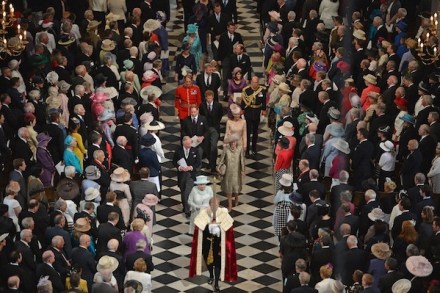
It was beautiful and a bit strange this morning, sitting in St Paul's Cathedral with the rest of the congregation, waiting for the Queen to make her entrance for the national thanksgiving service. We were hushed and awed — I was up in the press gallery — under the great dome of the stupendous cathedral. This was a religious occasion, yet there was no escaping the fact that it was also a high society event, everyone in their finest feathers. A reporter next to me whispered to her colleague the details of the outfit Her Majesty would be wearing (something ‘mint green, Swarovski-studded’) and the designer brands of the Duchess of Cambridge's dress and hat. We in the press pack were not, as a whole, aligning ourselves to the things of the spirit.

Egan-Jones cuts UK credit rating

From our UK edition

Even as the Queen’s Diamond Jubilee BBC Concert rocked on outside Buckingham Palace (amid the slightly worrying news that the Duke of Edinburgh is in hospital), some bad economic news came in — rating agency Egan-Jones has cut the UK’s credit rating to AA-minus with a negative outlook, from AA. ‘The over-riding concern is whether the country will be able to continue to cut its deficit in the face of weaker economic conditions and a possible deterioration in the country's financial sector,’ Egan-Jones said in its statement, according to Reuters. ‘Unfortunately, we expect that the UK's debt-GDP [ratio] will continue to rise and the country will remain pressed.

Queen of the world

From our UK edition

A Jubilee for the Commonwealth – and beyond Recently I took a flight to my native Malaysia to celebrate my mum’s 79th birthday. I knew that, since I am currently living in London, a birthday present that screamed BRITAIN was in order — a ‘Keep Calm and Carry On’ notepaper set wrapped in tartan and placed in a Harrods shopping bag, say, or silver tea caddies in the shape of double-decker buses. At one of the tourist shops in Heathrow, my eyes fell on a shelf of bone china Diamond Jubilee plates all emblazoned in gold, many with HRH Elizabeth II’s visage beaming from the centre. I bought one.

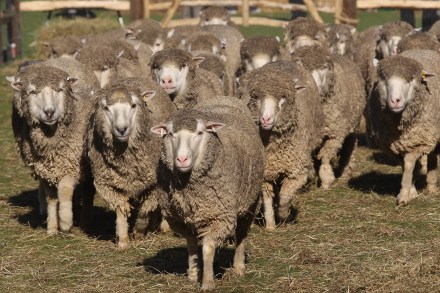
Bondholders are sheep — and they’re flocking out of the euro pen

From our UK edition

Sweden’s Anders Borg (Fraser’s favourite finance minister) is wrong, says Citigroup. Bondholders and deposit holders are not like wolves, as Borg has made them out to be. They’re more like sheep — and currently they’re baa-a-a-cking out of the eurozone pretty quickly. We all know that money's leaving the Continent — but how much and how rapidly? Citi’s credit strategist Matt King, basing his analysis on imbalances in TARGET2 (the euro area’s main payment settlement system) relative to eurozone countries’ current accounts, has come up with a few interesting observations.

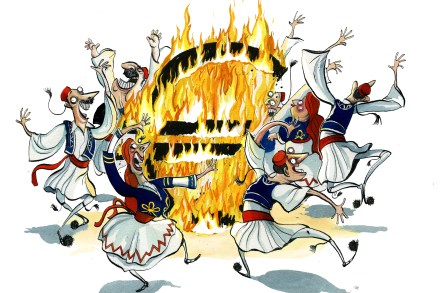
UK banknote printer is ready for any drachma call

From our UK edition

Even in the most economically tumultuous of times, there are people who stand to make money — some of them literally. British money printer De La Rue has told Reuters it’s made contingency plans to print drachma notes, in case Greece makes a euro exit. If Greece leaves the common-currency zone, there’d be such a huge demand for drachmas that Athens may have to outsource its money-making to companies abroad, says the unnamed industry source (one assumes hopefully). ‘It will be a huge job which the state printing works will do, but they will probably pull in some additional volume from outside and De La Rue will be in with a chance,’ the source tells Reuters.